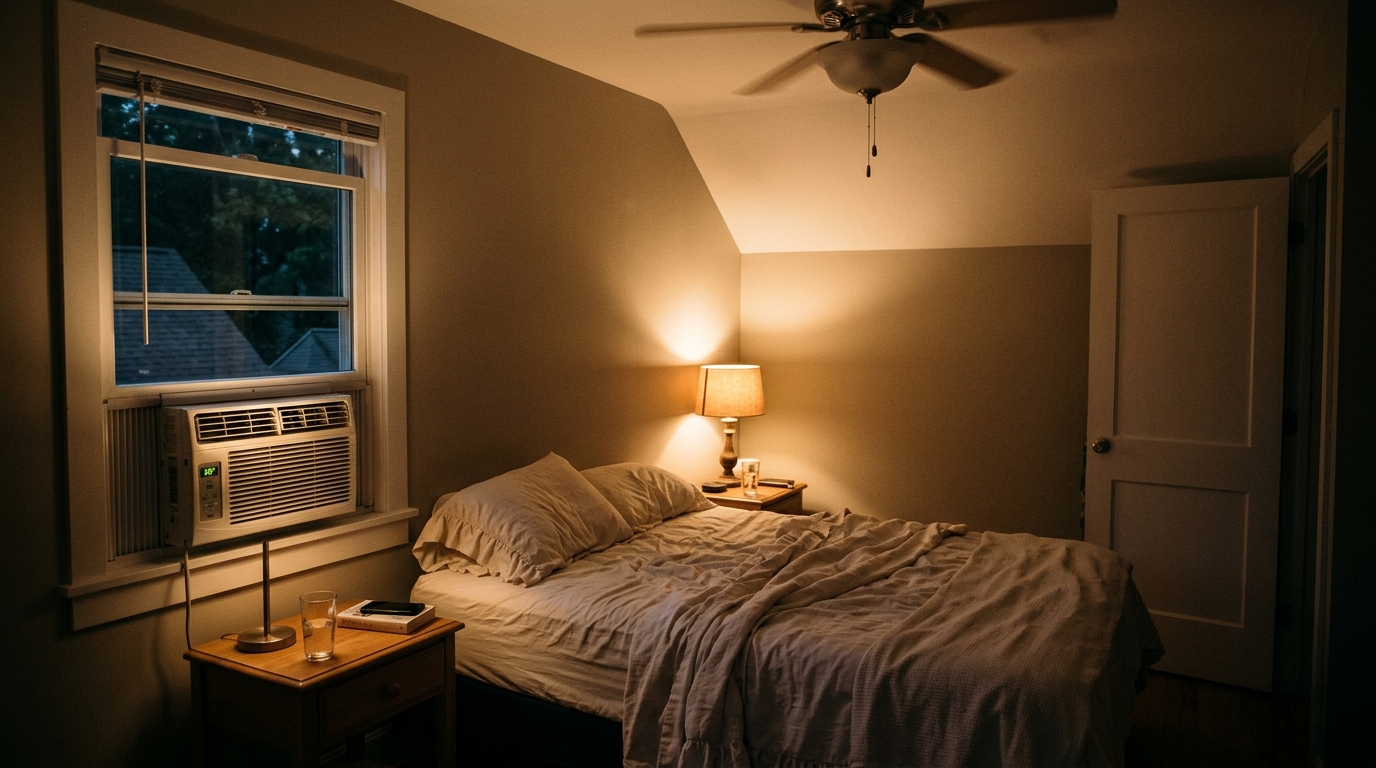
Heat rises, so your upstairs bedroom can sit 5 to 10 degrees warmer than the main floor while the thermostat downstairs says everything is fine. The fix is targeted airflow, smarter shading, and a few duct tweaks that cool the room you sleep in without overcooling the rooms you do not.
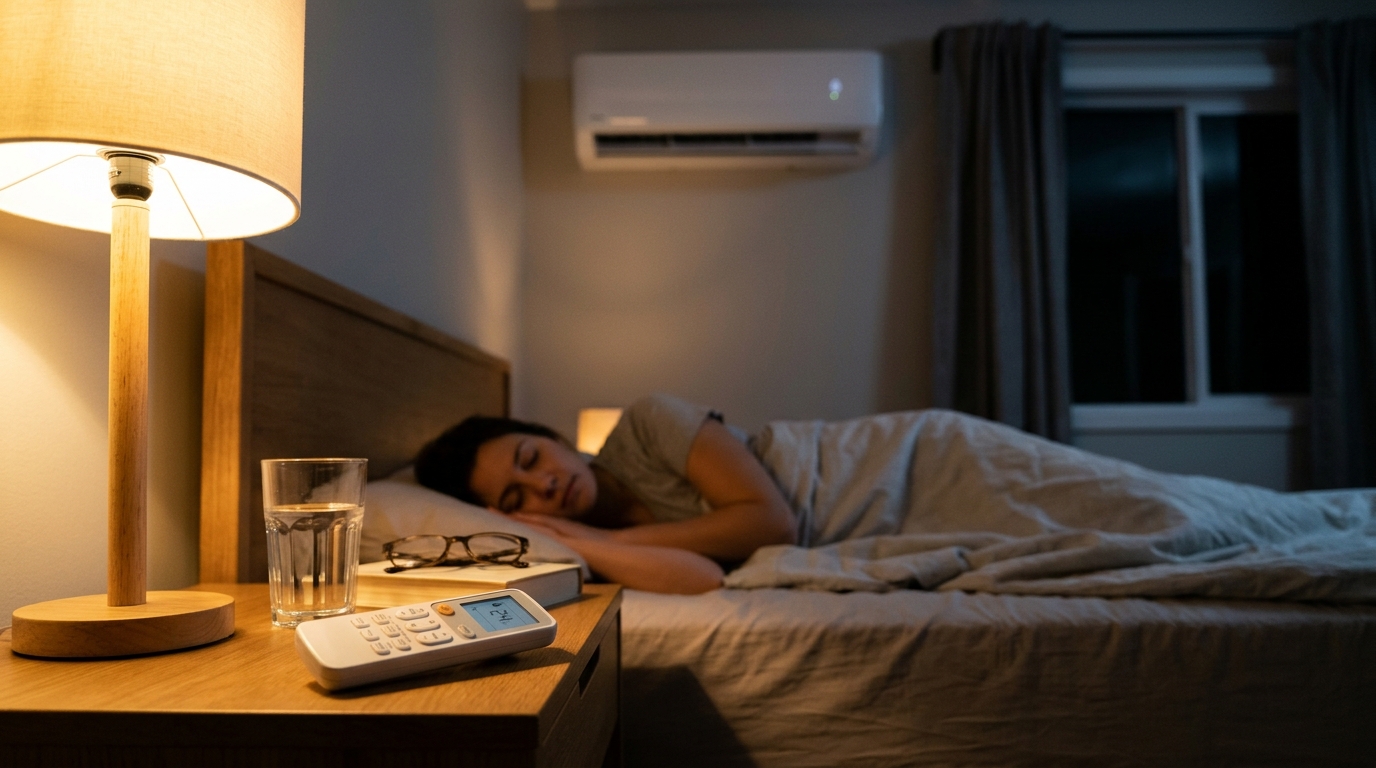
Waking up to a clammy bedroom even though your AC ran all night is a sign your system is cooling the air but not drying it. A few overnight settings changes, plus an optional hardware upgrade, can pull humidity down to a comfortable 45 to 55% without turning your bedroom into a meat locker.
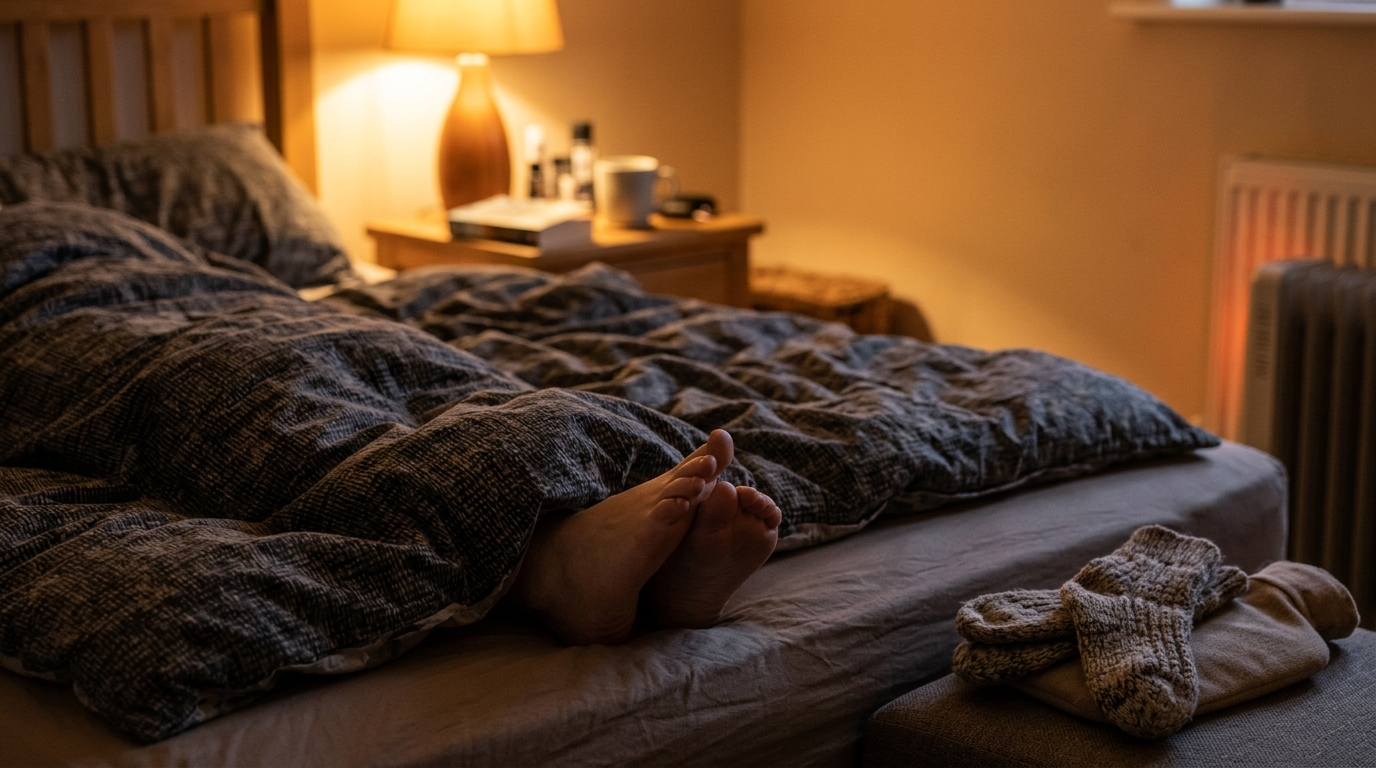
Your thermostat says 70 degrees, yet your feet feel like ice under the covers. The cause is usually a mix of cold floor surfaces, air stratification, drafts at floor level, and how your body shifts blood flow at night, and most of it can be fixed for under $200.
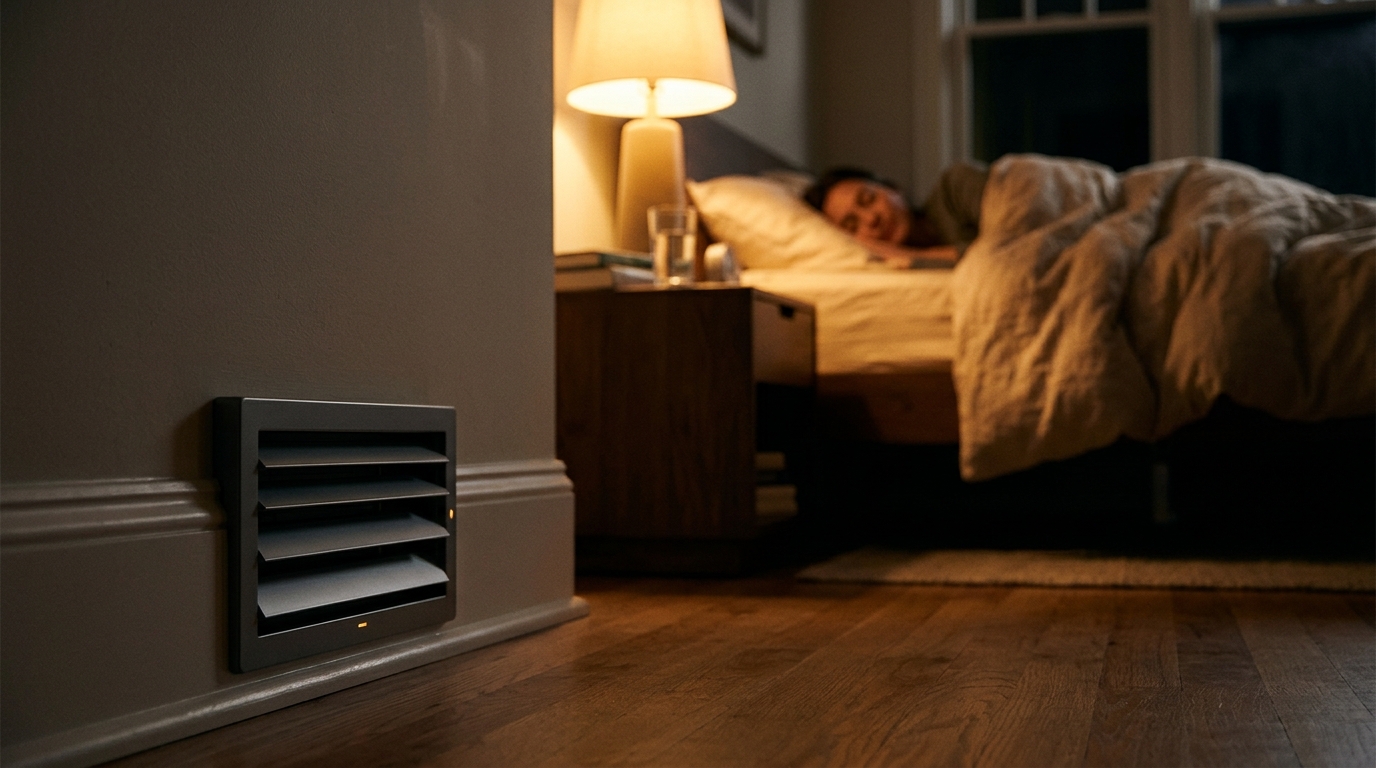
Most homes heat every room equally all night, even though nobody is in the living room, office, or guest bedroom after 10 p.m. Smart vents and zoned airflow redirect warm air to occupied bedrooms, cutting wasted heating and fixing the cold-bedroom problem for roughly $0 to $1,800 depending on the approach you choose.
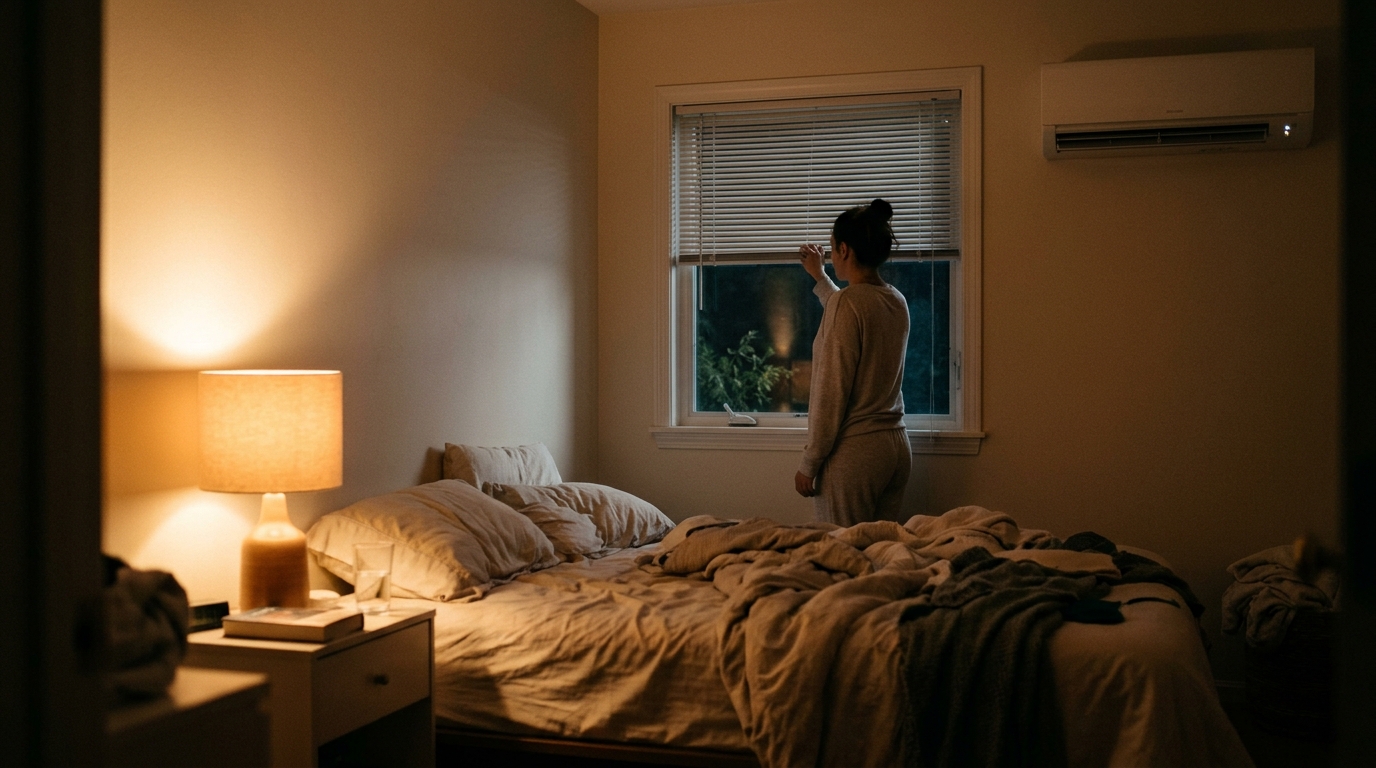
Windows soak up heat all day and keep releasing it into your bedroom long after sunset, forcing your AC to work harder while you sleep. Closing your blinds before bed (and choosing the right window coverings) can trim overnight cooling loads by 10 to 25% for almost no cost.
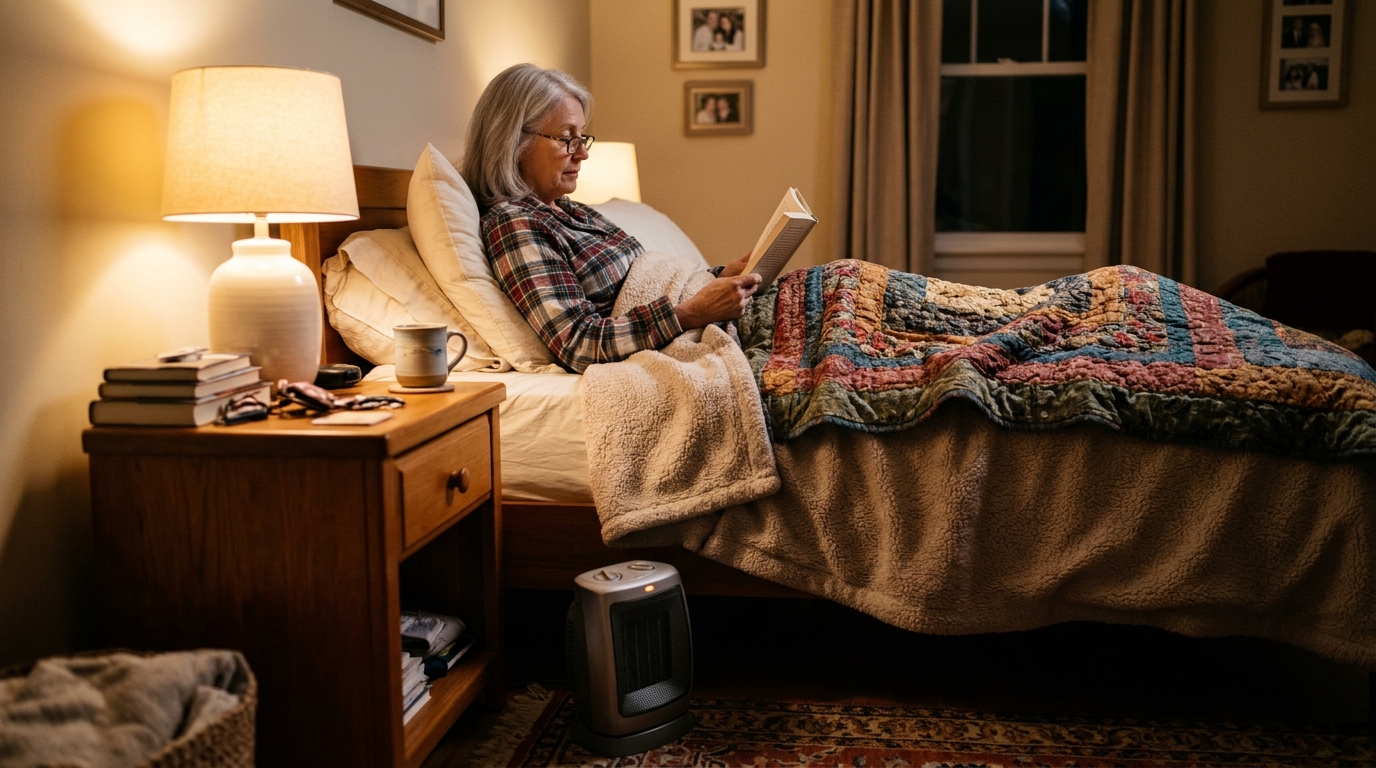
As we age, our bodies lose the ability to regulate temperature as well, which is why a bedroom that felt fine at 40 can feel chilly at 70. Targeting warmth at the bed and the bedroom itself costs far less than turning up the whole-house thermostat, and it can improve sleep and safety at the same time.
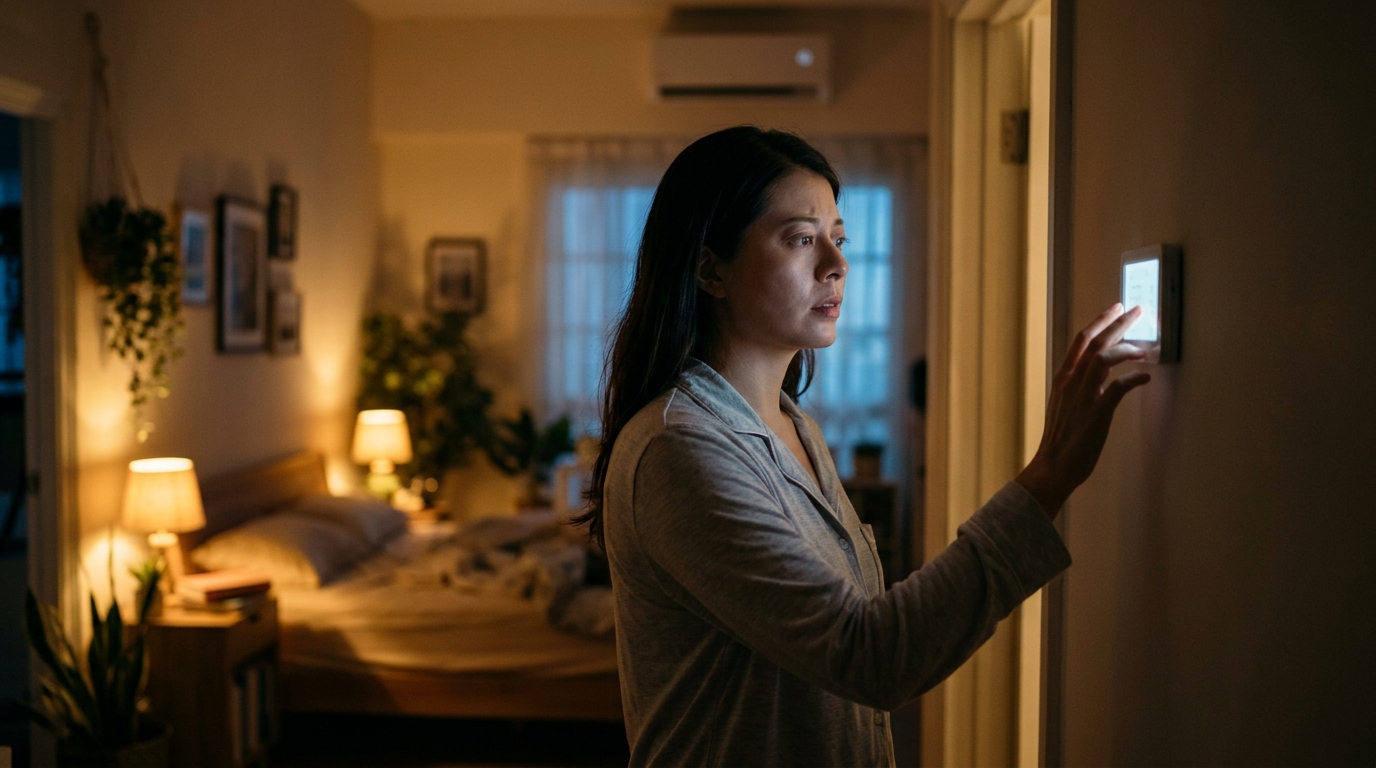
Many homeowners switch their thermostat to Fan On or Fan Only at night, hoping to save money while keeping air moving. But in humid climates this habit can raise indoor humidity, make bedrooms feel clammy, and even encourage mold growth, so here is what is really happening and how to fix it.
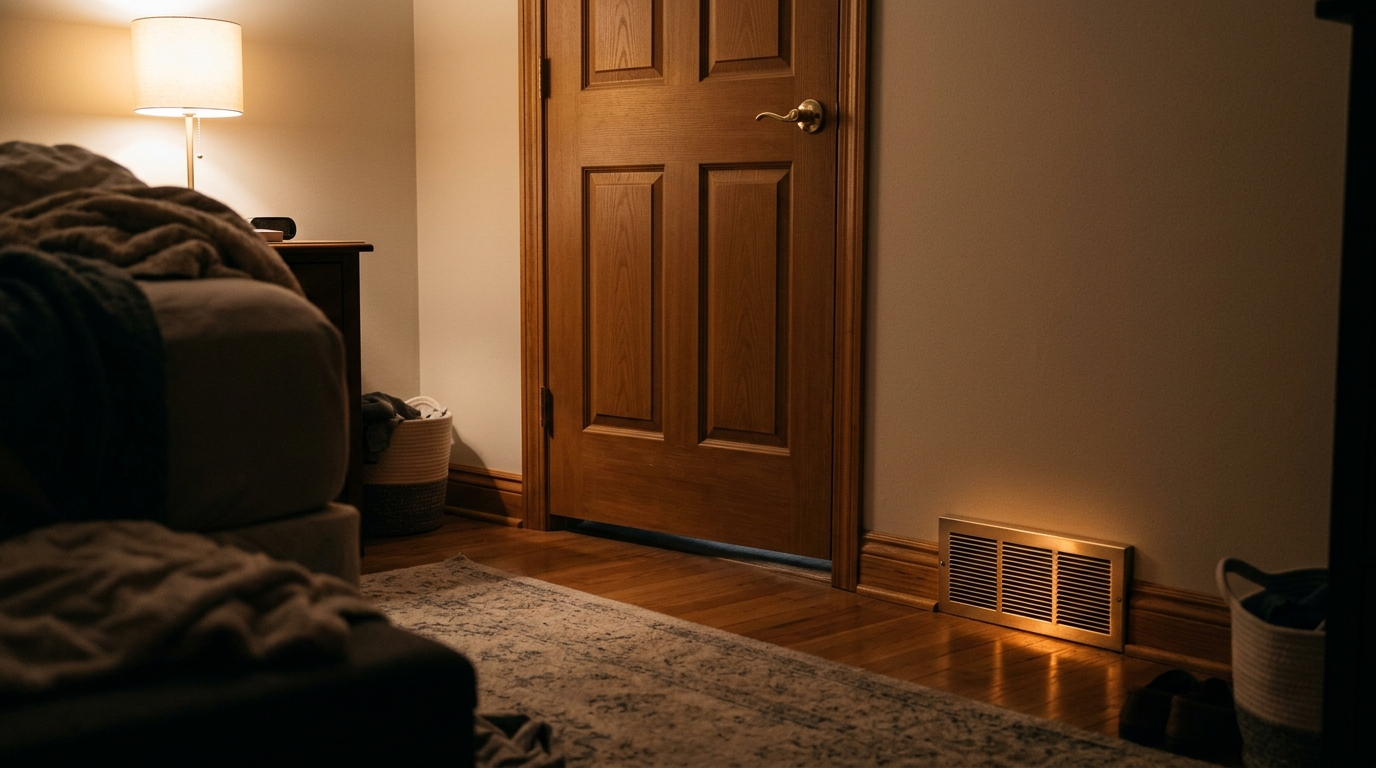
Shutting bedroom doors for privacy and quiet can quietly turn your HVAC system into a pressure-fighting, energy-wasting machine. A few simple airflow fixes can restore comfort and trim your heating and cooling bills by up to 10 to 15%.