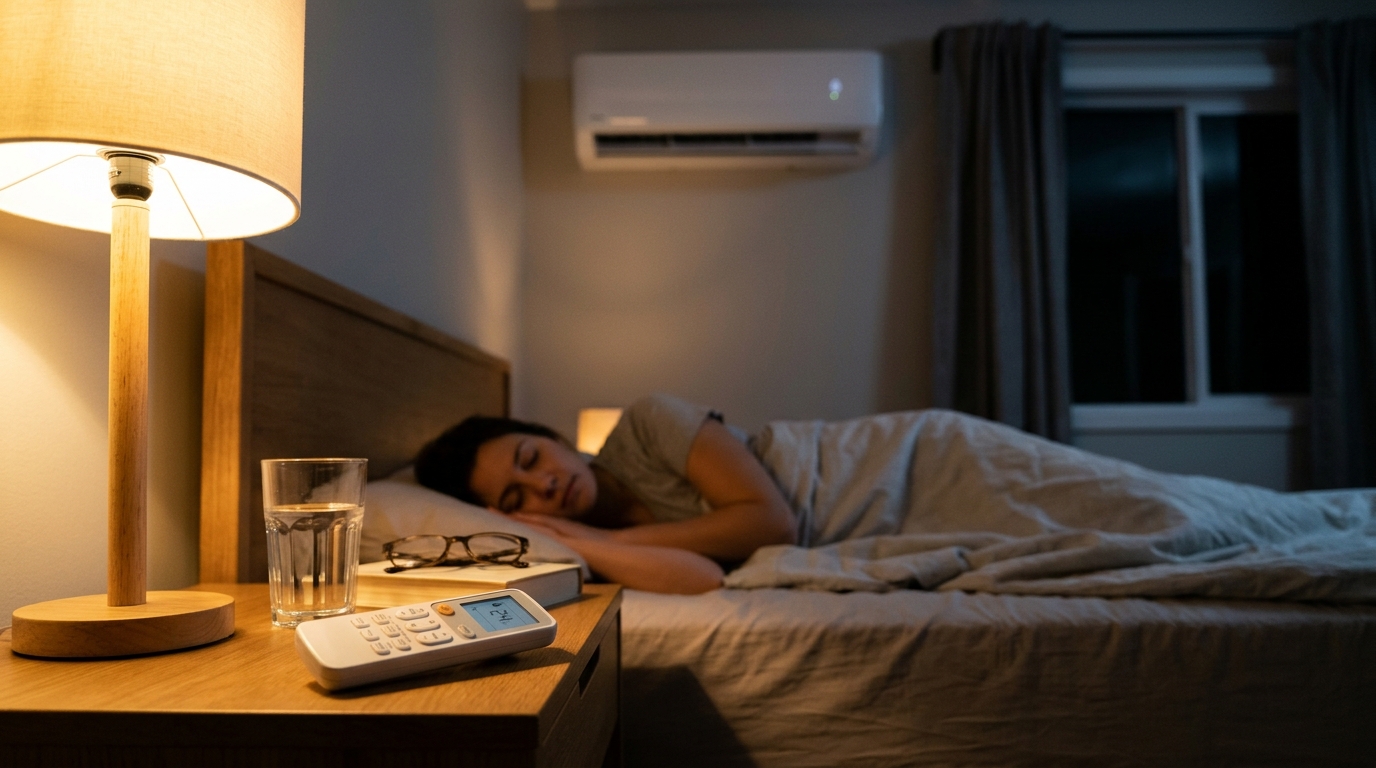
You set the thermostat to 74 degrees before bed, the AC hums along all night, and you still wake up feeling sticky. The sheets feel damp, the air smells a little musty, and the thermostat says the temperature is fine. That is because temperature and humidity are two different problems, and most thermostats only solve the first one.
Here is the catch. Your air conditioner removes moisture only while the compressor is actually running and the evaporator coil is cold. Overnight, when outdoor temperatures drop, your system often satisfies the thermostat in short bursts, then shuts off. Those short cycles cool the air but barely dry it. The result is cool, clammy air, which feels worse than warm, dry air and encourages mold, dust mites, and a higher bill from over-cooling to compensate.
This post covers the overnight settings that fix that problem. You will learn how to use fan settings, setpoints, and dehumidify modes to pull moisture out of the air without dropping the temperature too far, plus when it makes sense to add a dedicated dehumidifier or a smarter thermostat.
What You’ll Need
Click on an item below to shop for the recommended items for this recipe on Amazon.
As an Amazon Associate, we earn from qualifying purchases.
How to Do It
- Set the fan to AUTO, not ON. This stops moisture on the coil from being blown back into your rooms after each cycle.
- Raise your overnight setpoint to 74 to 76 degrees rather than dropping it to 70 or below. A higher setpoint prevents over-cooling while the AC still runs enough to dehumidify.
- If your thermostat has a DRY, DEHUMIDIFY, or similar mode, switch to it at bedtime. This mode runs the compressor with a slower fan speed to extract more moisture per cycle.
- If you have a multi-speed or variable-speed blower, choose the lowest fan speed for overnight. Slower airflow across the coil removes more moisture.
- Check your thermostat after two nights. Aim for indoor humidity of 45 to 55% and cycles of at least 10 to 15 minutes.
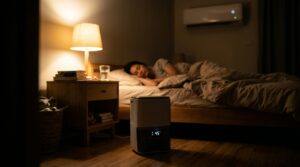
- Buy a $15 to $25 digital hygrometer and place it in your bedroom for a few nights. This tells you your real overnight humidity so you are not guessing.
- If your humidity stays above 55% even with the tune-up, install a thermostat with humidity control or a dehumidify-on-demand feature ($100 to $250). It can run the AC longer to dry the air even after the temperature is met.
- For rooms that stay damp, add a 35 to 50 pint ENERGY STAR dehumidifier ($180 to $300) and run it overnight. Aim to set it to 50% relative humidity.
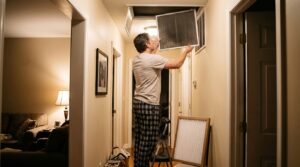
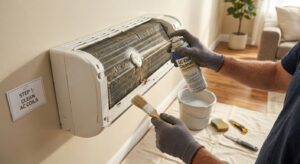
- Replace a dirty filter with a clean MERV 8 to 11 filter and clean the outdoor condenser coil with a garden hose. Restricted airflow hurts both cooling and drying.
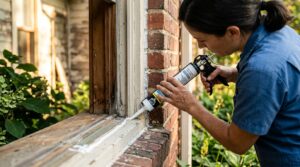
- Seal obvious air leaks around windows, doors, and attic hatches to stop humid outdoor air from sneaking in overnight.
- Ask an HVAC technician to measure run time, airflow, and refrigerant charge. Low charge or poor airflow can cripple dehumidification.
- Have them check whether your system is oversized. A unit that is too large cools quickly and shuts off before removing moisture.
- Ask about adjusting blower speed settings or adding a variable-speed blower to improve moisture removal.
- Consider a whole-home dehumidifier tied into your ductwork if you live in a humid climate. These typically remove 70 to 130 pints per day and run independently of the AC.
Why It Works: The Benefits
Holding indoor humidity at 45 to 55% makes 76 degrees feel as comfortable as 72 degrees at 65% humidity.
Every degree you raise the setpoint can save 3 to 5% on cooling costs. Drier air lets you do that without feeling warmer.
Keeping humidity under 60% significantly slows mold growth on walls, closets, and bedding, which supports better sleep and air quality.
Longer, steadier cycles are easier on compressors than frequent starts and stops, which can extend system life.
Sleep research links bedroom humidity of 40 to 60% and temperatures of 65 to 72 degrees with deeper, less interrupted sleep.
💰 Savings Impact by Action
Raising the overnight setpoint from 70 to 75 degrees can cut cooling energy by roughly 3 to 5% per degree.
Switching from fan ON to AUTO eliminates up to 24 hours a day of blower energy and stops moisture re-evaporation.
Replacing a clogged filter can reduce AC energy use by 5 to 15% by restoring proper airflow.
Sealing leaks reduces humid outdoor air infiltration and can lower total heating and cooling costs by up to 15%.
Drier air at 50% humidity lets you feel comfortable 2 to 4 degrees warmer, stretching savings further.
🏠 Key Concepts Explained
The Science Behind It
Air conditioners dehumidify as a side effect of cooling. Warm, humid air passes over a cold evaporator coil, and when the air temperature drops below its dew point, water vapor condenses into liquid and drains away. The colder the coil and the longer air spends in contact with it, the more moisture comes out. That is why long, slow cycles dry better than short, fast ones.
Overnight is a tricky window. Outdoor temperatures drop and the sun is no longer heating the roof and walls, so the cooling load shrinks. The thermostat is satisfied faster, and the AC runs in shorter bursts. But the moisture load barely changes, because people breathe and perspire, and humid air still leaks in. The system delivers plenty of sensible cooling and very little latent cooling, which is how you end up with cold, clammy air.
Raising the setpoint slightly, lowering fan speed, and using a dehumidify mode all work by extending run time or reducing airflow across the coil. Lower airflow keeps the coil colder and gives the air more time to shed moisture. Keeping the fan on AUTO prevents condensate on the coil from re-evaporating. When those steps are not enough, a dedicated dehumidifier removes moisture independently of the cooling cycle, letting you hold 50% humidity at a comfortable, efficient temperature.
Frequently Asked Questions
▼ Why is my AC still running all day even after I tried these fixes?
Long run times are normal during peak heat, but constant running with poor cooling suggests a dirty filter, low refrigerant, or a failing component. Replace the filter, clean the outdoor coil, and make sure vents are unblocked. If it still struggles to hold temperature, schedule an HVAC inspection.
▼ Can renters do this without landlord permission?
Yes. Adjusting the thermostat, switching to AUTO fan, using a dehumidify mode, and running a portable dehumidifier all require no modifications. A plug-in hygrometer and a bedroom fan are also renter-friendly and cost under $50 combined.
▼ How long before I actually notice savings on my bill?
Comfort improvements show up within one to two nights. Bill savings appear in the next billing cycle, typically 5 to 15% lower cooling costs if you raise your setpoint 2 to 4 degrees. A dehumidifier adds about $0.50 to $1.50 per day in electricity, so weigh that against the comfort gain.
▼ What if my home is older than 30 years?
Older homes often have more air leakage and less insulation, which brings in extra humid air overnight. Start with the settings tune-up, then seal gaps around windows, doors, and attic penetrations. A room dehumidifier is often more cost-effective than replacing the AC just for humidity control.
▼ Is it better to leave the fan on to circulate air overnight?
In humid climates, no. Fan ON mode can blow moisture off the wet coil back into your home, raising humidity by several points. Use AUTO for the AC and a separate bedroom fan if you want air movement.
Quick Tips
- Aim for 45 to 55% relative humidity and check it with an inexpensive hygrometer rather than guessing.
- Run bathroom exhaust fans for 20 minutes after evening showers so moisture does not linger overnight.
- Keep bedroom doors open or ensure return air pathways so the AC can circulate and dry the whole space.
- Replace your air filter every 1 to 3 months during cooling season to maintain strong airflow and coil performance.
Variations for Your Situation
- Apartment/Rental: You usually cannot change central HVAC, so focus on thermostat settings, AUTO fan, and a 20 to 35 pint portable dehumidifier ($150 to $250) for the bedroom. Add a $15 hygrometer and a quiet oscillating fan so you can keep the setpoint at 75 to 76 degrees comfortably.
- Tight Budget (under $50): Set the fan to AUTO, raise the overnight setpoint to 75 degrees, and use a box fan on low for air movement. Spend $15 to $20 on a hygrometer to confirm results, and run bathroom exhaust fans after showers to cut moisture at the source.
- Older Home (pre-1980): Expect more humid outdoor air leaking in, so pair the settings tune-up with weatherstripping ($15 to $40) and attic hatch sealing. Consider a 50 pint dehumidifier for the bedroom or basement, and have an HVAC pro check ducts for leaks that pull in humid attic or crawlspace air.