If you wake up damp, kick off the covers at 2 a.m., or flip your pillow to find the cool side again and again, you are a hot sleeper. The usual fix is to drop the thermostat or run a window unit all night. That works, but it is an expensive way to solve a problem that lives on the surface of your mattress. Foam and many modern mattresses trap body heat, and your body can only shed that heat if the bed lets it escape.
That is where cooling gel toppers come in. They promise a cooler sleep surface without touching your HVAC system. Some deliver. Others feel cool for ten minutes and then turn into a warm sponge. The difference comes down to materials, thickness, and how the topper is built, not the marketing on the box.
This post compares the main types of cooling toppers, explains the science of why some work and others fail, and gives you two practical routes: a quick fix you can do tonight, and a DIY upgrade that combines a topper with bedroom changes to lower your cooling costs. We will use real numbers so you can decide whether it is worth it for your home.
What You’ll Need
Click on an item below to shop for the recommended items for this recipe on Amazon.
As an Amazon Associate, we earn from qualifying purchases.
How to Do It
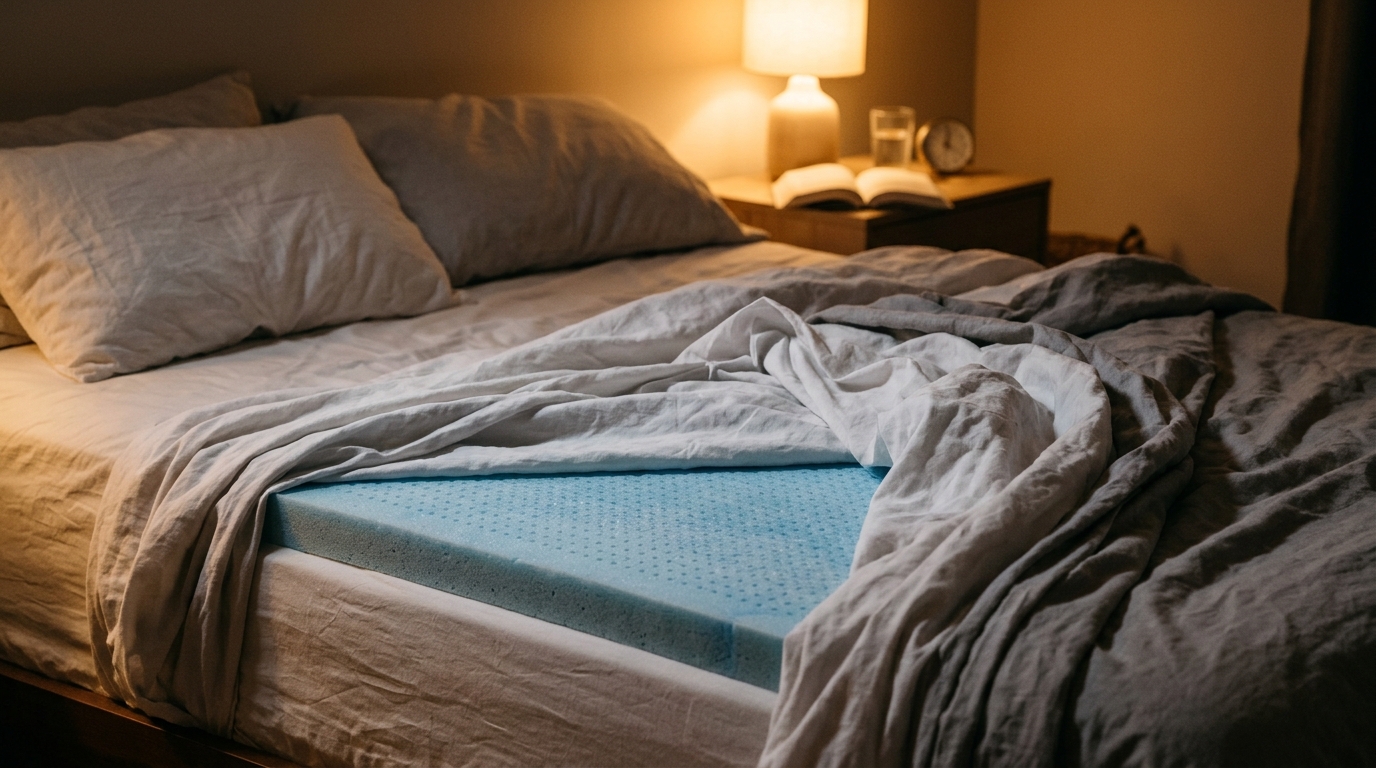
- Choose a topper material based on your sleep style: perforated or open-cell gel foam for budget and decent cooling ($80 to $150), natural latex with pin-core holes for the best airflow and durability ($150 to $300), or a PCM-covered topper for the coolest first hour ($120 to $250).
- Check the specs for 2 to 3 inch thickness, a removable breathable cover (Tencel, bamboo-derived, or cooling knit), and CertiPUR-US or OEKO-TEX certification to avoid off-gassing issues.
- Unbox the topper and let it air out for 24 to 48 hours in a ventilated room so it fully expands and any odor dissipates before use.
- Place the topper directly on the mattress and secure it with the included straps or elastic corners so it does not shift and bunch overnight.
- Use a thin, breathable sheet set (percale cotton, linen, or Tencel) and skip heavy mattress pads or waterproof protectors that block airflow. If you need a protector, choose a breathable, cooling version.
- Install the topper using the quick-fix steps above, and sleep on it for 7 to 10 nights before changing your thermostat so you know how it performs for you.
- Replace heavy comforters with a lightweight breathable layer, such as a cotton or linen quilt, and add a lightweight throw you can kick off if needed.
- Raise your nighttime thermostat in 1-degree steps every two to three nights, from 68 toward 72 degrees. Stop when you notice warmth returning, then step back by one degree.
- Add a ceiling fan on low (counterclockwise in summer) or a quiet bedside fan. Moving air makes you feel about 4 degrees cooler, so you can raise the thermostat without sacrificing comfort. Turn the fan off if you leave the room, since fans cool people, not spaces.
- Block heat gain before bedtime: close blinds or use blackout curtains on west-facing windows, and avoid running the oven or dryer in the evening so the bedroom starts cooler.
- Track your results for a month. Compare your electric bill to the same month last year (adjusted for weather) to confirm the savings.
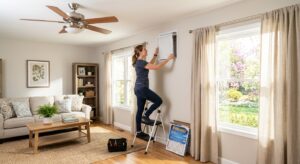
- Add a programmable or smart thermostat if you do not have one ($30 to $150). Set a bedroom or whole-home schedule that runs 3 to 4 degrees warmer overnight than you currently use.
- Consider a dual-zone cooling mattress pad system with water-circulating technology for the hottest sleepers. These run $400 to $1,000 and use about 50 to 100 watts, far less than a window AC.
- Use a split-style topper or two twin XL toppers on one king mattress so each partner controls their own sleep surface.
- Pair the system with cooling pillows and a breathable duvet, and keep the bedroom humidity between 40 and 50% with a dehumidifier if needed.
Why It Works: The Benefits
Raising your bedroom thermostat from 68 to 72 degrees can cut cooling energy by roughly 3% per degree, so a 4-degree change can save around 10 to 12% on those hours.
Studies on bedding and thermal comfort link cooler skin temperature with deeper sleep, and many hot sleepers report cutting overnight wakeups by about half.
A topper adds a replaceable comfort layer for $80 to $250, versus $1,000 or more to replace a mattress that sleeps too warm.
If one person runs hot and the other runs cold, a topper on only the hot side (or a split-king setup) avoids fighting over the thermostat.
A bedroom window AC draws 500 to 900 watts. Running it 8 hours nightly adds roughly $15 to $30 per month, which a good topper can help you avoid.
💰 Savings Impact by Action
Raising the nighttime thermostat 4 degrees, from 68 to 72, can cut cooling energy by about 10 to 12% for those hours.
A fan lets you feel about 4 degrees cooler, supporting a warmer thermostat while using only 15 to 75 watts.
Skipping a bedroom window AC that draws 500 to 900 watts can save $15 to $30 per month in peak season.
Lightweight sheets and a breathable protector help the topper work, adding comfort that supports a warmer setting.
Closing insulated or blackout curtains on sunny windows can reduce solar heat gain by 20 to 30% in that room.
🏠 Key Concepts Explained
The Science Behind It
Your body sheds heat in four ways: conduction (touching a surface), convection (air moving past you), radiation, and evaporation. A mattress mainly affects conduction. Foam is a poor conductor, so it slows heat leaving your body and builds a warm pocket around you. Gel infusions, copper, and graphite raise the thermal conductivity of that foam, which pulls heat away faster at first.
The catch is that any material only stays cool while it can dump the heat somewhere else. Once the topper reaches body temperature, conduction slows to almost nothing. That is why breathability matters more than the gel itself. Perforated foam, latex pin-cores, and open-cell structures let air move through the topper so heat is carried away by convection instead of building up.
Phase change materials work differently. They absorb a burst of heat as they shift state around the temperature of your skin, which keeps the surface cool during the first few hours when your core temperature is dropping. Combined with moving air from a fan and a slightly cooler room, this lets you sleep comfortably at a thermostat setting that uses noticeably less energy.
Frequently Asked Questions
▼ Why does my gel topper feel hot after an hour even though it felt cool at first?
The gel absorbed your body heat and reached the same temperature as your skin, which is normal if heat cannot escape. Check that your protector and sheets are breathable, add a fan for airflow, and consider a thinner or perforated topper. If it is over 3 inches thick, it may simply be too insulating for you.
▼ Can renters use a cooling topper without any issues?
Yes. A topper sits on top of your mattress and requires no installation or permission from your landlord. Pair it with a plug-in fan and blackout curtains on a tension rod to improve nighttime comfort without altering the unit.
▼ How long before I notice savings on my bill?
Comfort improves right away, but bill savings show up once you actually raise the thermostat. Expect to see a difference within the first full billing cycle, typically 5 to 12% on cooling costs if you move your nighttime setting up 3 to 4 degrees.
▼ Is a cooling topper worth it if I already have a cooling mattress?
Often not. If your mattress already uses breathable foam or hybrid coils, add a breathable cover first and a fan before spending on a topper. If the mattress is more than 7 to 8 years old and has body impressions, a topper can extend its life, but a replacement may be the better value.
▼ What if my partner runs cold and I run hot?
Use a topper on just your side, such as a split-king topper or a twin XL on one half, and give your partner a heavier blanket on theirs. Dual-zone water-based cooling pads also let each person set their own temperature.
Quick Tips
- Wash your topper cover every 2 to 4 weeks. Body oils and sweat clog breathable fabrics and reduce their cooling performance.
- Fold your top sheet and blanket down to the foot of the bed before sleep so you can pull them up only if you get cold.
- Take a lukewarm shower 60 to 90 minutes before bed. The drop in body temperature afterward helps you fall asleep faster.
- Keep a spare cooling pillowcase in the fridge during heat waves and swap it in at bedtime for a quick temperature boost.
Variations for Your Situation
- Apartment or Rental: Stick to a drop-in solution that needs no modifications. A 2 to 3 inch perforated gel or latex topper ($90 to $180), a breathable cooling protector ($30 to $50), and a clip-on or tower fan ($25 to $60) give you most of the benefit without touching the HVAC system.
- Tight Budget (under $50): Skip the topper at first and focus on the free and cheap steps. Swap to a percale cotton or linen sheet set ($30 to $45 on sale), remove extra blankets, use a fan, and raise the thermostat one degree every few nights. A cooling pillowcase is often under $20.
- Older Home (pre-1980): Bedrooms tend to run warm at night because of thin attic insulation and air leaks, so fix the room as well as the bed. Add blackout curtains, seal obvious window gaps with weatherstripping ($10 to $20), and consider a window fan to pull cooler night air in. A topper helps, but heat gain will limit how far you can raise the thermostat.
- Couples with Different Temperatures: Use a split topper or a dual-zone cooling pad system, and keep the thermostat at a compromise setting around 70 to 72 degrees. Give the cold sleeper a heavier duvet instead of lowering the temperature for both of you.