If your energy bills feel stubbornly high no matter what you do, your attic may be the culprit. Heat moves relentlessly toward cold, which means in summer it pours into your living space from the hot attic above, and in winter it escapes upward through the ceiling. Your HVAC system then works overtime to compensate, burning money around the clock. The U.S. Department of Energy estimates that 44% of a home’s heating and cooling energy is lost through the ceiling and walls, with the attic being the single largest contributor.
Most homes built before 1990 have attic insulation levels well below current recommendations. The International Energy Conservation Code now calls for R-49 to R-60 in most U.S. climate zones, but older homes commonly have R-11 to R-19, sometimes less. That gap is costing you real money every month. The good news is that attic insulation has one of the best return-on-investment profiles of any home upgrade, often paying for itself within 2 to 5 years depending on your climate, existing insulation, and energy rates.
This post breaks down exactly how much you can save, what the upgrade actually costs, whether DIY blown-in insulation is realistic for most homeowners, and when it makes sense to hire a professional. You will also find real payback period estimates, a guide to checking your current R-value, and tips for getting the most out of every dollar you spend.
What You’ll Need
Click on an item below to shop for the recommended items for this recipe on Amazon.
As an Amazon Associate, we earn from qualifying purchases.
How to Do It
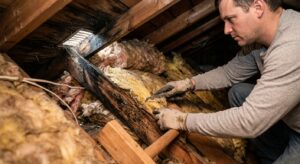
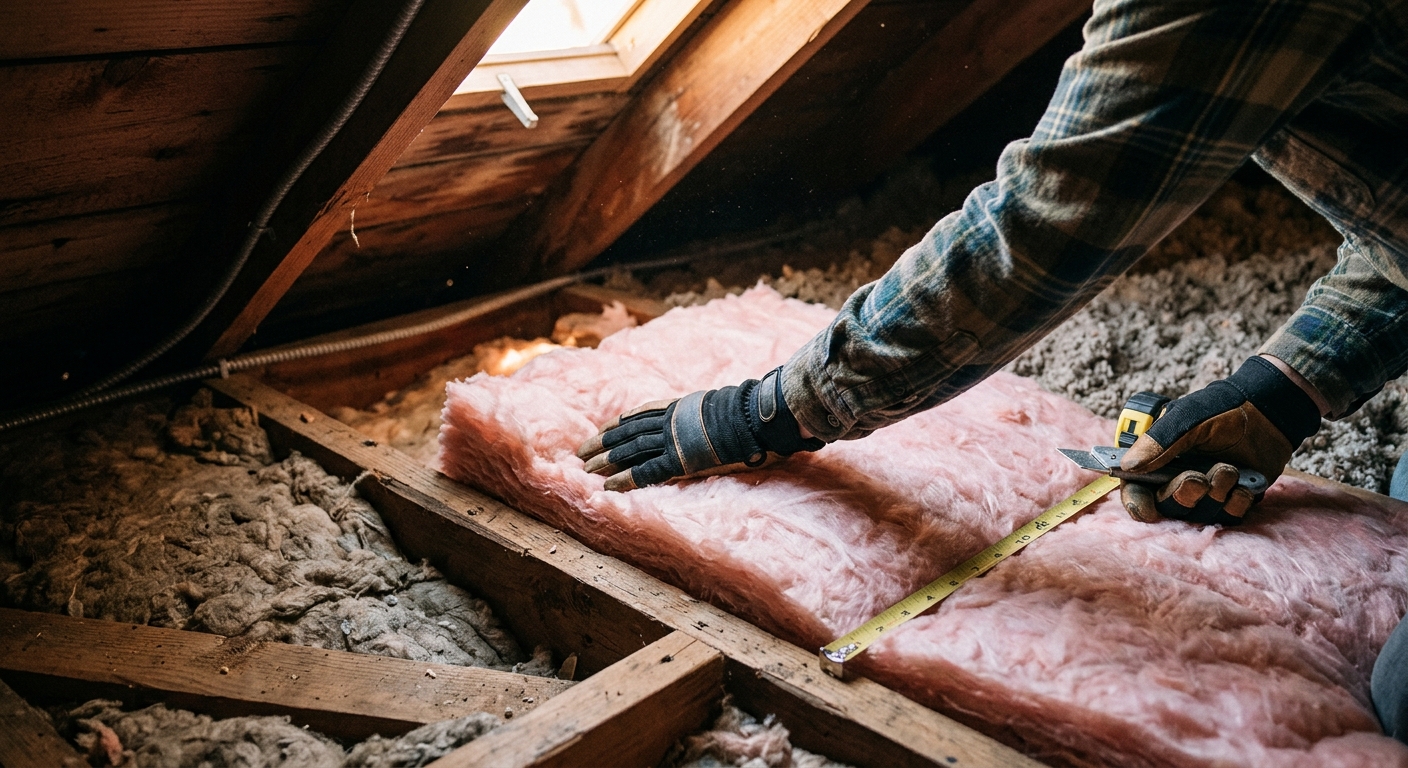
- Put on an N95 respirator, safety glasses, and gloves, then enter your attic during daylight or with a bright work light. Measure the existing insulation depth in at least 5 different spots using a ruler or tape measure.
- Look up your climate zone at the DOE’s Zone Map (available at energysaver.gov) to find your recommended R-value. Most of the continental U.S. falls in Zones 3 to 6, recommending R-38 to R-60. Multiply your measured depth by the R-value per inch for your insulation type (fiberglass batt: R-3.2 per inch, loose-fill fiberglass: R-2.5 per inch, cellulose: R-3.7 per inch).
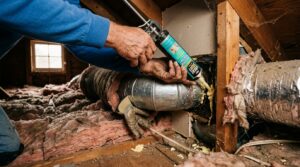
- With a can of low-expansion spray foam, seal around all ceiling light fixtures (use an airtight baffle if fixtures are recessed), plumbing and electrical penetrations, top plates of interior walls, and any gaps around the attic hatch.
- Use fire-rated acoustic sealant or backer rod plus caulk around larger gaps near chimneys or flue pipes. Do not apply standard spray foam directly against a flue pipe.
- Install an insulated cover over your attic hatch if it currently has none. A bare hatch with no insulation is roughly equivalent to leaving a window open year-round. Pre-made insulated hatch covers cost $30 to $60 and install in under 30 minutes.
- Photograph the finished sealing work for your records and for any utility rebate applications you plan to file.
- Complete all air sealing from the first approach before adding any insulation. Blown-in insulation does not stop air movement, it only slows heat conduction. Sealing first maximizes results.
- Calculate how many bags you need using the manufacturer’s coverage chart on the bag label. Input your attic square footage and target R-value. For a 1,200-square-foot attic going from R-11 to R-49 with blown-in fiberglass, expect to use 25 to 35 bags.
- Staple depth marker rulers (paint stirrers work well) every 100 to 150 square feet across the attic floor so you can gauge depth consistently as you work. Mark the target depth in inches clearly on each ruler.
- Set up the blowing machine at the attic hatch or a nearby access point. Feed bags of insulation into the hopper and run the flex hose to the far corner of the attic, working methodically back toward the hatch.
- Blow insulation to a uniform depth, using a raking motion to level it. Pay extra attention to the eave areas near the edges of the attic, but keep soffit vents clear by installing rafter baffles or vent chutes before you begin if they are not already in place. Blocking soffits kills attic ventilation and can cause moisture problems.
- Confirm depth at your marker stakes, fill any low spots, and re-insulate the attic hatch cover before exiting. Save your bag count and product information for utility rebate paperwork.
- Schedule a home energy audit before hiring a contractor. Many utilities offer free or subsidized audits. An auditor will use a blower door test to measure your actual air leakage rate and provide a prioritized improvement list, confirming whether attic insulation is truly your biggest opportunity.
- Get at least three quotes from insulation contractors. Ask each one to specify the insulation type, target R-value, and whether air sealing is included in the price. Air sealing should always be included or offered as an add-on.
- Ask contractors whether they use dense-pack cellulose or open-cell spray foam for critical bypass areas. These materials are more effective at stopping air movement than standard blown-in fiberglass and are worth the modest upcharge in leaky older homes.
- Before work begins, confirm the contractor will install rafter baffles to protect soffit ventilation if they are not already present. A reputable contractor will flag this proactively.
- After installation, request a completion report that documents the final R-value achieved, insulation type, and bag count or coverage area. You will need this for utility rebate applications and for disclosure when you sell the home.
- File for available utility rebates and federal tax credits. The Inflation Reduction Act 25C tax credit covers 30% of insulation and air sealing costs up to a $1,200 annual cap, which can significantly reduce your net out-of-pocket cost.
Why It Works: The Benefits
Upgrading from R-11 to R-49 in a 1,500-square-foot attic can save $300 to $600 per year in a moderate U.S. climate, based on DOE estimates and average energy rates. Homes in extreme climates (very hot summers or cold winters) often see savings at the higher end of that range.
Upper-floor rooms that feel stuffy in summer or cold in winter are a direct symptom of attic insulation deficiency. Adequate insulation can reduce upper-floor temperature swings by 5 to 10 degrees, making those rooms livable without cranking the thermostat.
When the thermal barrier between your attic and living space is strong, your air conditioner and furnace cycle less frequently. Shorter runtimes extend equipment life and reduce maintenance costs, potentially delaying a replacement by several years.
Air sealing done alongside insulation reduces infiltration of dust, pollen, and outdoor pollutants that enter through attic bypasses and ceiling penetrations. Homeowners with allergies often notice a meaningful improvement in air quality within weeks of the upgrade.
According to the National Association of Realtors, attic insulation upgrades recover an average of 100 to 116% of their cost at resale, making it one of the few home improvements that pays you back more than you spent when you sell.
💰 Savings Impact by Action
Sealing attic bypasses and penetrations before insulating reduces conditioned air loss by 8 to 12% on its own, independent of R-value improvements.
Bringing attic insulation from R-11 to R-49 reduces ceiling heat transfer by up to 75%, contributing 15 to 20% savings on whole-home heating and cooling bills.
Insulating and weatherstripping an uninsulated attic hatch eliminates a concentrated bypass point that can account for 3 to 5% of total attic heat loss.
Adding a reflective radiant barrier under roof decking in hot climates reduces summer attic radiant heat gain by up to 25%, cutting cooling bills by 5 to 8%.
Combining air sealing, blown-in insulation to R-49, and hatch sealing delivers the full 15 to 25% whole-home savings potential documented by DOE field studies.
🏠 Key Concepts Explained
The Science Behind It
Heat always moves from hot to cold through three mechanisms: conduction, convection, and radiation. In an attic context, conduction is the primary villain in winter, as heat from your warm ceiling slowly migrates through the ceiling drywall and whatever insulation exists into the cold attic above. Insulation works by trapping millions of tiny air pockets within its fibers or cells, slowing this conductive transfer. The R-value system quantifies this resistance: R-38 resists heat flow roughly 3.5 times better than R-11, which translates directly into less work for your furnace or heat pump.
In summer, radiant heat from the sun-baked roof deck is the dominant problem. Roof shingles can reach 160 degrees Fahrenheit on a hot day, heating the air and structural members of the attic. Without adequate insulation between that hot attic air and your living space, heat conducts through the ceiling and raises indoor temperatures significantly. A well-insulated attic floor acts as a thermal buffer, keeping the temperature difference between your living space and the attic from driving rapid heat transfer. This is also why attic insulation benefits are year-round, not just in winter.
Air movement complicates the picture considerably. Insulation materials are not air barriers. A gap the size of a pencil around a recessed light or plumbing pipe allows warm pressurized air to bypass the insulation entirely through convection, undermining the effective R-value of everything around it. This is the building science reason why air sealing before insulating is so critical. When you seal those bypasses and then add insulation on top, you eliminate both the conductive and convective heat transfer pathways simultaneously, which is what produces those 15 to 25% whole-home savings figures rather than the more modest gains from insulation alone.
Frequently Asked Questions
▼ How do I know how much insulation I already have in my attic?
The most reliable method is to physically enter the attic with a ruler and measure the depth of insulation in at least five different spots, including the center of the attic and near the eaves. Then identify the type of insulation (batts look like rolls or blankets; blown-in looks like loose gray or white fibers) and multiply the depth in inches by the R-value per inch for that material. Fiberglass batts are roughly R-3.2 per inch, loose-fill fiberglass is R-2.5 per inch, and cellulose is R-3.7 per inch. Many homes also have a sticker on the attic access hatch from the original installation that states the R-value, though settling may have reduced it since then.
▼ My upper floors are still hot in summer even after I added insulation. What did I miss?
The most common culprits are inadequate air sealing before insulation was added, blocked soffit vents reducing attic ventilation, or recessed lights that were not properly baffled and continue to allow hot attic air to leak into the living space. Check that soffit vents are clear and that ridge or gable vents are functioning so hot air can escape the attic. If attic air sealing was not done before insulating, you may be getting convective heat bypass around penetrations even with a high R-value in place. In some cases, a radiant barrier under the roof deck or reflective roof coating can help in very hot climates.
▼ How long before I see the savings show up on my energy bill?
You should see a measurable difference within the first full billing cycle after the upgrade, especially during peak heating or cooling season. However, year-over-year comparisons are more meaningful because billing amounts vary with weather patterns. Many homeowners see a 15 to 25% reduction in the heating or cooling portion of their bill in the first season. Track your kilowatt-hour or therm usage rather than just the dollar amount, since utility rates can change and obscure the efficiency gains.
▼ What if my attic has very limited headroom or unusual framing? Can I still DIY this?
Low-slope attics (less than 12 to 18 inches of clearance) are difficult and sometimes unsafe to work in yourself. In those cases, a professional with specialized hose equipment can often blow in insulation from outside through small access holes without needing to enter the attic fully. Cathedral ceilings and finished attic spaces require a different approach entirely, typically dense-pack blown-in between rafters or spray foam, which is almost always a professional job. If you cannot comfortably move around your attic floor, get professional quotes rather than risking injury or incomplete coverage.
▼ Are there rebates or incentives that can lower my cost?
Yes, and they can be substantial. The federal 25C tax credit covers 30% of insulation and air sealing material and labor costs up to a $1,200 annual maximum for existing homes. Many state programs and utility companies layer additional rebates on top of the federal credit, sometimes covering $0.10 to $0.25 per square foot of insulation installed. Visit dsireusa.org and your utility company’s website before any work begins to identify programs available in your area. Some utility programs require a pre-inspection or the use of a participating contractor to qualify.
Quick Tips
- Check your utility bills from the same months in the previous year to establish a savings baseline before the upgrade. You cannot know how much you saved without knowing where you started.
- If you are in a hot climate (Zones 1 to 3), consider adding a radiant barrier under your roof decking in addition to attic floor insulation. A radiant barrier reflects up to 97% of radiant heat and can reduce summer cooling loads by an additional 5 to 10%.
- Blown-in cellulose has a higher R-value per inch than fiberglass (R-3.7 vs R-2.5) and is made from recycled content, making it a good choice when attic depth is limited or sustainability is a priority.
- File for the 25C federal tax credit (30% of costs, up to $1,200 per year) when you add insulation and air sealing. Keep all receipts and product documentation to support your claim when filing taxes.
Variations for Your Situation
- Tight Budget (under $200): Focus on air sealing only in your first pass. Purchase two to three cans of low-expansion spray foam and one tube of fire-rated acoustic sealant and spend two to three hours sealing every ceiling penetration you can access from the attic. This single step can deliver 8 to 12% savings on its own with zero insulation cost. Add an insulated attic hatch cover for $40 to $60. Then save up for blown-in insulation as a second phase.
- Older Home (pre-1980): Homes built before 1980 often have knob-and-tube wiring, vermiculite insulation (which may contain asbestos), and much higher baseline air leakage rates. Have a licensed electrician inspect any visible wiring before disturbing the attic, and if you see gray-green granular material that looks like kitty litter, have it tested for asbestos before proceeding. Budget an extra $300 to $800 for a professional energy auditor and any remediation needed before insulating. The payback is still excellent but requires a safer, more careful approach.
- New Construction or Major Renovation: If walls and ceilings are open, this is the time to exceed minimum code R-values and to install continuous air barriers as part of the building envelope. Spray foam at the roofline (unvented attic assembly) is an option that can deliver R-6 per inch with integrated air sealing, ideal when attic depth is limited or when mechanical systems are located in the attic and you want to bring them inside conditioned space. Consult a building scientist or energy-efficient home consultant during the design phase to optimize the whole-envelope strategy.