Energy bills have a way of creeping up quietly. A clogged air filter here, a drafty door seal there, a water heater set 20 degrees too high – none of these feel urgent on their own, but together they can add 20 to 30 percent to your monthly costs without a single appliance breaking down. By the time most homeowners notice the spike, they have already paid for it two or three times over.
The good news is that consistent, proactive maintenance is the single most cost-effective thing you can do for home energy performance. You do not need expensive equipment or a contractor. You need a checklist, 10 minutes a month, and the habit of actually doing it. Homes that are maintained on a regular schedule consistently outperform neglected homes by 15 to 25 percent on energy costs, according to Department of Energy data on residential maintenance impacts.
This post gives you an exact monthly routine broken into quick and deeper versions, explains the building science behind why each step matters, and includes real savings numbers so you know which tasks are worth your time most.
What You’ll Need
Click on an item below to shop for the recommended items for this recipe on Amazon.
As an Amazon Associate, we earn from qualifying purchases.
How to Do It
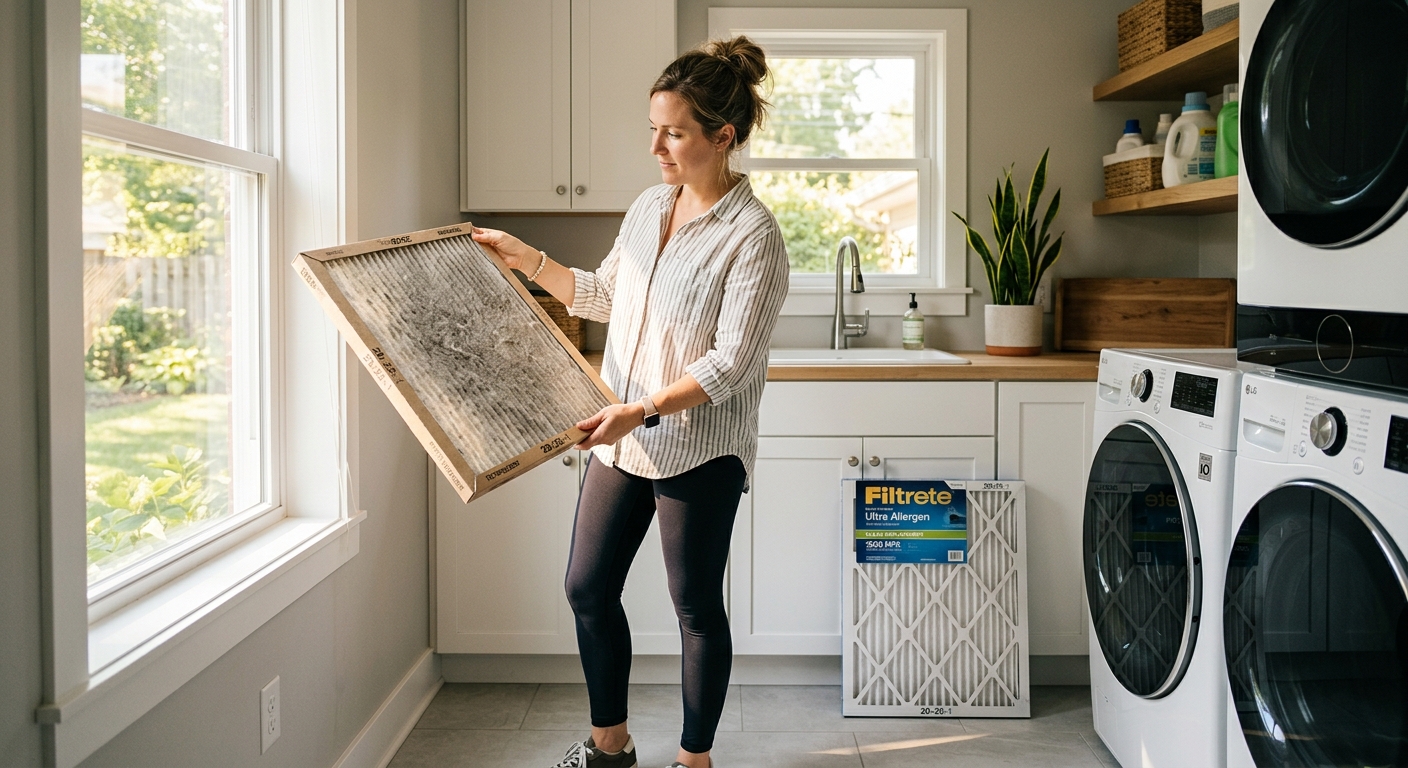
- Check the HVAC air filter by holding it up to a light source. If you cannot see light through it clearly, replace it. Standard 1-inch filters typically need replacement every 30 to 60 days depending on pets and dust levels.
- Walk to your thermostat and confirm the schedule settings are still correct. Verify setback temperatures are active for sleeping and away hours. A properly scheduled thermostat saves roughly 10 percent on annual heating and cooling costs.
- Open your utility account app or last bill and compare this month’s kWh or therm usage to the same month last year. A more than 10 percent increase without a lifestyle change signals a maintenance issue worth investigating.
- Do a 60-second exterior door check: close each exterior door and feel along the edges for airflow. Press a piece of paper in the door frame and close it. If it pulls out easily, the weatherstripping needs replacement.
- Check the area around your water heater for any moisture, corrosion on fittings, or a burning dust smell, which indicates sediment heating. Note the temperature setting and confirm it is at 120 degrees Fahrenheit, not higher.
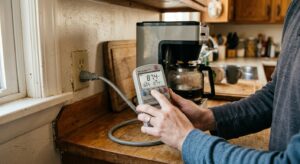
- Walk through each room and unplug any devices you have not used in the past month. Confirm that smart power strips are functioning for home theater or office clusters.
- Replace the HVAC filter regardless of appearance. At the quarterly mark, even filters that look acceptable are restricting airflow. Upgrade to a MERV 8 to 11 rated filter if you have not already, which balances filtration with airflow.
- Inspect all exterior-facing caulk lines around windows and doors. Press your finger along the bead. Cracked or separated caulk should be removed and replaced with a paintable silicone-acrylic blend rated for exterior use. Proper air sealing saves up to 20 percent on conditioning costs.
- Clean your outdoor AC or heat pump condenser coils using a garden hose on a gentle setting, spraying from the inside out through the fins. Do this with the unit powered off at the disconnect box. Clean coils restore full heat rejection capacity.
- Flush one to two gallons from the bottom drain valve of your water heater into a bucket. If the water runs cloudy or shows visible sediment, do a fuller flush per the manufacturer instructions. This restores thermal transfer efficiency.
- Test every GFCI outlet in bathrooms, kitchen, garage, and outdoor locations by pressing the test and reset buttons. Confirm smoke detectors and CO detectors respond to their test buttons, then log the date.
- Check attic access hatch insulation and confirm the hatch fits tightly. An uninsulated or poorly fitted attic hatch is equivalent to leaving a small window open year-round, causing heat gain in summer and heat loss in winter.
- Book a licensed HVAC technician for a seasonal tune-up. They will check refrigerant charge, measure airflow at the coil, test capacitors and contactors, and verify heat exchanger integrity. This single visit typically recovers 5 to 15 percent in system efficiency.
- Request a duct leakage inspection if your home is more than 20 years old or if rooms heat and cool unevenly. The EPA estimates that duct leakage wastes 20 to 30 percent of conditioned air in a typical home.
- Have the technician inspect the flue on your furnace or water heater for blockages, corrosion, or improper draft. A compromised flue is both an efficiency problem and a carbon monoxide safety hazard.
- After the professional visit, update your home energy log with the technician’s findings, any efficiency measurements taken, and the date. Compare refrigerant charge and airflow numbers year over year to track degradation trends.
- Review your homeowner’s insurance and warranty documents for any HVAC or appliance coverage that requires documented annual maintenance to remain valid.
Why It Works: The Benefits
Homes on a consistent maintenance schedule avoid the 20 to 40 dollar surprise spikes that come from a single neglected filter or failed door seal, making budgeting far more reliable.
Combining filter changes, air sealing upkeep, and thermostat auditing can reduce total annual energy spend by 15 to 30 percent compared to reactive-only maintenance, saving the average household 200 to 500 dollars per year.
HVAC systems that run with clean filters and unobstructed airflow last 3 to 5 years longer on average, deferring a 5,000 to 12,000 dollar replacement cost significantly.
Consistent airflow and sealed thermal envelopes eliminate hot spots, cold drafts, and humidity swings that make a home feel uncomfortable even when the thermostat reads correctly.
Monthly walkthroughs catch issues like a failing capacitor, a slow refrigerant leak, or a deteriorating door seal before they cause full system failures or mold problems, which average 1,500 to 4,000 dollars to remediate.
💰 Savings Impact by Action
Replacing a clogged HVAC filter restores airflow and reduces blower and compressor energy use by up to 15 percent immediately.
Maintaining door and window seals prevents conditioned air loss that accounts for up to 20 percent of total heating and cooling costs in a typical home.
Verifying and maintaining setback schedules monthly saves approximately 10 percent on annual heating and cooling bills per DOE estimates.
Unplugging unused devices and using smart power strips eliminates standby draw that accounts for 5 to 10 percent of household electricity use.
Flushing sediment and confirming a 120 degree Fahrenheit set point reduces water heating energy use by up to 12 percent annually.
🏠 Key Concepts Explained
The Science Behind It
Every home operates as a thermal system trying to maintain a stable interior temperature against constant external pressure. Your HVAC equipment adds or removes heat to compensate for what leaks in or out through walls, windows, gaps, and ductwork. The less work your system has to do to hold that stable temperature, the less energy it consumes. Maintenance routines work by minimizing the resistance at every point in that chain, from the filter restricting airflow at the air handler to the weatherstripping gap letting conditioned air escape continuously at the front door.
The reason small inefficiencies compound so quickly comes down to runtime. An HVAC system running 30 percent longer than necessary because of a dirty filter does not just waste 30 percent more energy on those extra minutes. It accelerates wear on the compressor and blower motor, increases the likelihood of refrigerant leaks from pressure stress, and raises your baseline energy demand in a way that interacts with every other inefficiency in the home simultaneously. Building scientists call this the interaction effect, and it is why a home with multiple small problems almost always performs worse than the sum of its individual issues suggests.
Water heating follows the same compounding logic. Sediment on the tank floor creates a thermal barrier with conductance lower than water, forcing the burner to run longer to heat the same volume. At 10 to 15 percent extra energy use per year, a neglected water heater in a household that spends 400 to 600 dollars annually on hot water is wasting 40 to 90 dollars before the homeowner ever suspects a problem. Monthly and quarterly attention to these systems does not just prevent failures. It keeps the entire home operating at the efficiency level you are actually paying for.
Frequently Asked Questions
▼ I do this every month but my bill is still higher than my neighbors. What am I missing?
Monthly maintenance prevents drift but cannot overcome a fundamental efficiency gap like missing attic insulation, single-pane windows, or an aging HVAC system running at 60 percent of its rated efficiency. Request a home energy audit from your utility, many offer them free or at low cost. The audit will identify whether your envelope, your equipment, or your behavior is the primary driver of the gap.
▼ How do I know if my HVAC filter really needs to be changed monthly versus every 3 months?
The monthly check rule is for inspection, not automatic replacement. Homes with multiple pets, occupants with allergies, or dusty climates typically need 1-inch filters changed every 30 days. Homes with no pets, 1 to 2 occupants, and a clean environment can often go 60 to 90 days. Hold the filter to a window – if it blocks more than half the light, replace it regardless of schedule.
▼ My energy bill comparison app shows a spike but I cannot find anything wrong. What should I check next?
A hidden spike with no visible cause is most often a failing HVAC capacitor causing the compressor to start slowly and run long cycles, a refrigerant undercharge reducing system efficiency by 20 to 30 percent, or a new device someone in the household plugged in and left on standby. Do a full outlet and device audit first, then call an HVAC tech to check capacitor and refrigerant charge if the audit finds nothing.
▼ I rent an apartment. Can I still use this routine?
Yes, and renters can cover most of the high-value steps without landlord permission. You can replace air filters if accessible, use smart power strips for electronics, adjust thermostat schedules, and check door and window seals. For gaps you find, use removable rope caulk on windows, which peels off cleanly at move-out. Notify your landlord in writing about any HVAC or weatherstripping issues – many leases require them to address maintenance that affects habitability.
▼ How long before the monthly routine actually shows up as lower bills?
Most homeowners see a measurable impact within one to two billing cycles after the first full walkthrough, especially if a clogged filter or failed weatherstripping is corrected. The full compounding benefit, where consistent maintenance holds the system at peak efficiency across all seasons, typically becomes clear when you compare the same months year over year after six to twelve months of the routine.
Quick Tips
- Set a recurring phone reminder labeled ‘Energy Check’ on the first of every month. The reminder itself costs nothing and the habit it builds is worth hundreds of dollars annually.
- Buy air filters in multi-packs and store them next to the air handler so the replacement is immediate rather than a separate errand that gets delayed.
- Photograph your thermostat schedule settings after programming them correctly. When settings reset after a power outage, you can restore them in 60 seconds instead of reprogramming from memory.
- Log your outdoor condenser unit cleaning date on a piece of tape stuck to the disconnect box cover. Technicians and future homeowners will immediately know the maintenance history without any paperwork.
Variations for Your Situation
- Apartment or Rental: Renters should focus on the steps that require no permanent modification. Replace or request replacement of the HVAC filter every 30 to 60 days, apply removable rope caulk around drafty windows (under 10 dollars at hardware stores), plug electronics into smart power strips with standby-cut features, and document any HVAC or weatherstripping issues in writing to the landlord. These steps alone can reduce a renter’s personal energy use by 10 to 15 percent.
- Tight Budget (under $20/month): Prioritize the zero-cost checks first: thermostat schedule audit, the paper door seal test, and the bill comparison review. Buy a 4-pack of basic MERV 8 filters in bulk for roughly 5 to 8 dollars each and rotate on schedule. Skip condenser cleaning tools and instead rinse gently with a hose during the natural outdoor cleaning that comes with rainfall. These free and near-free steps recover 70 percent of the value of the full routine.
- Older Home (pre-1980): Homes built before 1980 were constructed without modern air sealing standards and often have significantly higher baseline leakage. The monthly paper door test should be expanded to include checking around electrical outlets on exterior walls (use foam outlet gaskets, about 1 dollar each), around pipe penetrations in cabinets, and around the attic hatch. These homes also benefit most from the quarterly caulk inspection since original caulk is likely decades old. Budget an extra 20 to 40 dollars per quarter for caulk and foam sealant given the higher volume of gaps typical in older construction.