Most homeowners never think about insulation until something goes obviously wrong, like pipes freezing or a heating bill that jumps $80 in a single month. But insulation degrades quietly over years, compressing under its own weight, getting wet from slow leaks, or simply settling away from the surfaces it’s supposed to protect. The result is a home that works your HVAC system twice as hard for half the comfort.
According to the U.S. Department of Energy, heating and cooling account for about 43% of the average home’s energy bill. Of that, a significant portion is lost directly through under-insulated or degraded attics, walls, and crawl spaces. Homes with failing insulation can spend 20 to 40% more on energy than a properly sealed and insulated equivalent of the same size.
In this post, we’ll walk through the seven clearest warning signs that your insulation is no longer doing its job, explain what each sign is costing you in real dollars, and give you a practical roadmap from free diagnostics all the way to professional remediation.
What You’ll Need
Click on an item below to shop for the recommended items for this recipe on Amazon.
As an Amazon Associate, we earn from qualifying purchases.
How to Do It
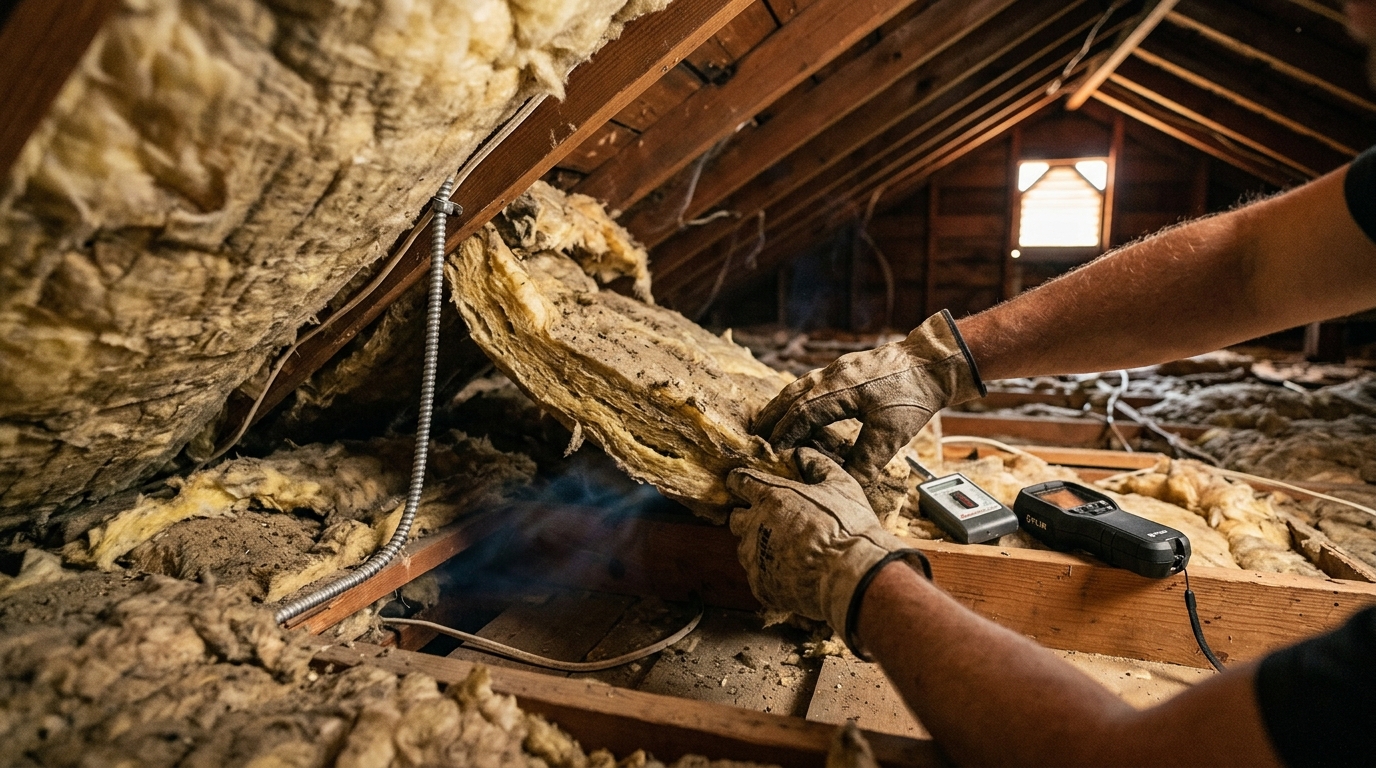
- Check your attic on a cold morning: pull back insulation in one corner and measure its depth with a tape measure. Compare to your climate zone target on the DOE insulation map (most of the U.S. needs R-38 to R-60, which is 10 to 16 inches of blown fiberglass or cellulose).
- Run your hand along the top of interior walls where they meet the ceiling on a cold day. A cold strip along that joint indicates missing or settled attic insulation above the top plate, one of the most common failure points.
- Walk your home barefoot on a cold day and note any floors that feel noticeably colder than others, especially above garages, crawl spaces, or cantilevers. A temperature difference of more than 5 degrees Fahrenheit compared to adjacent rooms signals missing floor insulation.
- Hold a lit incense stick or a thin piece of tissue near electrical outlets on exterior walls on a windy day. Movement of smoke or tissue indicates air infiltration through a wall cavity with missing or degraded insulation.
- Review your last 12 months of utility bills and compare your cost per square foot to national averages (roughly $0.08 to $0.12 per square foot per month for a well-insulated home). Significant deviation points to an efficiency problem.
- Look for ice dams in winter (ridges of ice forming at roof edges) or unusually rapid snow melt on your roof. Both indicate heat escaping through a poorly insulated attic, a textbook sign of insulation failure.
- Before adding insulation, air seal the attic floor using canned spray foam and fire-rated caulk. Focus on penetrations around plumbing pipes, electrical boxes, recessed lights, and the tops of interior partition walls. Air sealing alone can reduce heat loss by 15 to 25%.
- Install baffles (also called rafter vents) in each rafter bay along the eaves to maintain a clear airflow channel from soffit vents to ridge vents. Blocking this airflow causes moisture buildup and defeats attic ventilation.
- Check your existing insulation for moisture, discoloration, or matting. Any wet or moldy sections must be removed and the source of moisture fixed before adding new insulation on top.
- Calculate the number of bags needed using the coverage chart on the insulation packaging. Divide your attic square footage by the square feet per bag at your target R-value. Buy 10% extra to account for waste.
- Rent a blower machine and load bags of blown-in insulation (fiberglass or cellulose). Work from the eaves toward the center of the attic, keeping the blower hose low and moving steadily to build even depth. Use a depth ruler or stick markers installed before blowing to ensure consistent coverage.
- After completing the project, install a permanent depth marker (a painted stake visible from the attic hatch) so future inspectors or contractors can verify insulation depth without disturbing the material.
- Schedule a home energy audit with a BPI-certified or RESNET-certified auditor. Ask specifically for a blower door test combined with infrared thermography, which together reveal hidden air leaks and thermal gaps that no visual inspection can find.
- Review the audit report carefully. Prioritize improvements by simple payback period (savings per year divided by cost). Attic air sealing and insulation typically pays back in 2 to 4 years, while wall cavity insulation may take 5 to 8 years.
- Get three quotes from insulation contractors for the scope of work identified in the audit. Ask each contractor whether they will air seal before insulating, since many skip this step. Require it in writing.
- Ask your contractor about dense-pack cellulose for closed wall cavities. Drilling small holes and injecting dense-pack at 3 to 3.5 pounds per cubic foot is far less disruptive than removing drywall and delivers an effective R-3.7 per inch in walls.
- File for the federal 25C energy efficiency tax credit after completion, which covers 30% of insulation material costs up to $1,200. Keep all receipts and the Manufacturer’s Certification Statement provided by your contractor.
Why It Works: The Benefits
Restoring insulation to current DOE-recommended levels (R-38 to R-60 in attics depending on climate zone) can cut heating and cooling costs by 20 to 40%, translating to $30 to $120 saved per month for the average U.S. home.
Properly insulated homes eliminate the hot and cold spots that come from thermal bridging and air infiltration, keeping rooms within 2 to 3 degrees of each other rather than the 8 to 12-degree swings common in poorly insulated homes.
When insulation fails, HVAC equipment runs longer cycles to compensate. Restoring insulation can reduce system runtime by 20 to 30%, extending equipment lifespan by several years and reducing maintenance costs.
Sealing and re-insulating reduces the infiltration of outdoor allergens, humidity, and pollutants. Homes with intact insulation and air barriers show measurably lower indoor humidity levels, which discourages mold growth and dust mite populations.
Energy audits are increasingly common during home sales. Homes with documented insulation upgrades and lower energy bills sell for 2 to 5% more on average, and some buyers use high energy bills as negotiating leverage to reduce the sale price.
💰 Savings Impact by Action
Sealing penetrations and top plates in the attic before insulating reduces conditioned air bypass by up to 20%, independent of added insulation depth.
Bringing attic insulation from a degraded R-11 to R-38 reduces attic heat gain and loss by 15 to 25% depending on climate zone.
Sealing and insulating a vented crawl space reduces floor-level heat loss and infiltration by 15 to 18% annually in homes with exposed crawl spaces.
Filling empty wall cavities with dense-pack cellulose reduces wall conductive losses by up to 40%, contributing 10 to 12% to total building energy savings.
Spray foaming the rim joist perimeter in a basement or crawl space eliminates one of the largest single infiltration pathways, saving 5 to 8% on annual heating costs.
🏠 Key Concepts Explained
The Science Behind It
Heat moves in three ways: conduction (direct contact), convection (air movement), and radiation (infrared waves). Insulation primarily resists conduction by trapping millions of tiny air pockets within its fibers or foam cells. The R-value rating quantifies this resistance: an R-38 attic assembly resists heat flow roughly twice as effectively as an R-19 assembly. When insulation compresses, gets wet, or develops gaps, those air pockets collapse or fill with water, and conductive heat transfer accelerates rapidly because solid fibers and water conduct heat far faster than still air.
The more subtle and often overlooked mechanism is convective bypass. Warm air inside your home is less dense than cold air and naturally rises toward the ceiling and attic. If there are gaps around penetrations, top plates, or poorly fitted batts, this warm air physically moves into and through the insulation layer rather than just losing heat across it. This is why air sealing and insulation work as a system: insulation alone without an air barrier can perform at only 50 to 70% of its rated capacity in a leaky house. Building scientists describe this as the difference between a wool sweater (insulation) and a windbreaker (air barrier). You need both to stay warm in the wind.
Moisture further complicates the picture because water has a thermal conductivity about 25 times higher than still air. A fiberglass batt that reads R-19 when dry can drop to R-4 or lower when fully saturated. Wet insulation also compresses under its own weight and rarely recovers its original loft or performance after drying. This is why signs of moisture, including water stains, odors, or unusual cold spots on exterior walls, should be treated as urgent insulation failure, not just a cosmetic issue.
Frequently Asked Questions
▼ My heating bill went up $50 to $80 this winter but nothing changed. Could it be insulation?
A sudden bill increase without a change in usage usually points to either insulation failure from a recent moisture event (a slow roof leak or condensation problem), HVAC efficiency degradation, or a significant change in outdoor temperature patterns versus the prior year. Pull up your utility’s usage history in therms or kWh rather than dollars to isolate cost-per-unit changes from price changes. If your usage went up, not just your rate, check the attic for wet or compressed insulation near the roofline.
▼ How do I know if my walls are insulated without tearing out drywall?
Remove an outlet cover on an exterior wall and shine a flashlight into the gap around the electrical box. If you see insulation material behind the box, the wall cavity is likely insulated. For a more definitive answer, a contractor with an infrared camera can scan walls from inside on a cold day and clearly distinguish insulated from empty cavities in under an hour, typically for $150 to $300.
▼ I added insulation but my house still feels drafty. What am I missing?
Drafts are caused by air movement, not conductive heat loss, which means the problem is air infiltration rather than insulation depth. Check windows and door frames with an incense stick on a windy day, and inspect where the bottom wall plate meets the subfloor in the basement or crawl space. Spray foam along the sill plate perimeter is one of the highest-impact air sealing moves in most older homes, often costing under $50 in materials.
▼ Is spray foam insulation worth the extra cost over blown-in or batts?
Closed-cell spray foam delivers R-6 to R-7 per inch and doubles as an air and vapor barrier, making it the highest-performance option per inch of depth. However, it costs 3 to 5 times more per square foot than blown-in cellulose and is generally only worth the premium in tight spaces where depth is limited, like rim joists, crawl space walls, or roofline installations. For open attic floors where depth is not a constraint, blown-in cellulose at R-3.7 per inch is almost always the better value.
▼ Can renters or condo owners do anything about insulation?
Renters cannot modify structural insulation, but they can meaningfully reduce heat loss through interior insulating window film ($20 to $40 per window), draft stoppers at door bottoms, and outlet gaskets on exterior walls. These measures together can reduce infiltration losses by 10 to 15%. Document the issues and submit a written maintenance request to your landlord, noting the impact on habitability and utility costs, since landlords in most states are legally required to maintain adequate weatherization.
Quick Tips
- Use a simple infrared thermometer (under $25) to scan your walls and ceilings on a cold day. Surfaces more than 5 degrees colder than the room average have insulation or air sealing problems behind them.
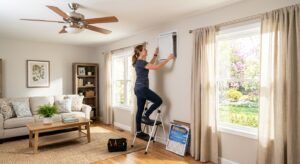
- Check your attic hatch: it is almost always uninsulated and unsealed. A weatherstripped and insulated attic hatch cover costs about $30 and takes 20 minutes to install, delivering an outsized return in a small area with zero R-value.
- If you have a crawl space, encapsulating it with a vapor barrier and adding insulation to the walls (rather than the floor above) can reduce floor-level cold drafts by 30 to 50% and protect your HVAC equipment from moisture damage.
- Ask your utility company for a free or subsidized energy audit before hiring anyone. Many utilities send an auditor at no cost, and their report gives you an independent baseline before contractors try to upsell you on scope.
Variations for Your Situation
- Apartment or Condo: Residents in multi-unit buildings cannot access shared attic or wall cavities, but interior upgrades still help. Install adhesive weatherstripping around drafty doors, add outlet gaskets behind cover plates on exterior walls, and use insulating cellular window shades for windows facing north or west. These measures cost $50 to $150 total and can reduce your unit’s heat loss by 10 to 15% without landlord permission.
- Tight Budget (Under $100): Focus entirely on attic hatch insulation (a rigid foam board cut to fit and glued costs under $15), outlet and switch plate gaskets on exterior walls ($8 for a pack of 20), and spray foam around the top of interior partition walls in the attic, which is the single highest-impact free-access air sealing move available. These three steps alone can reduce heating load by 8 to 12% in a typical home.
- Older Home (Pre-1980): Homes built before modern energy codes often have no wall insulation at all, single-pane windows, and attic insulation levels below R-11. Start with an infrared energy audit to prioritize the worst areas first since your budget will not cover everything at once. Attic insulation and rim joist sealing typically deliver the fastest payback (2 to 3 years). Wall insulation via dense-pack cellulose can wait for a planned siding or drywall renovation when the cavities are already exposed.