Walk into almost any home improvement store and you will find humidifiers and dehumidifiers lined up on shelves, but almost no guidance on what humidity level you should actually be targeting. Most homeowners pick a number, set it, and never touch it again. The problem is that the ideal indoor humidity level is not a single number. It changes with the seasons, and the gap between winter and summer targets is bigger than most people realize.
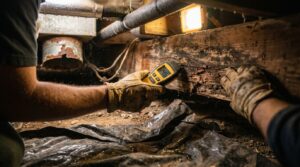
Indoor relative humidity that is too high in winter causes condensation on windows, promotes mold growth inside wall cavities, and can rot wood framing over time. Too low in summer and you are running your air conditioner harder than necessary while still feeling sticky and uncomfortable. The sweet spot shifts because outdoor temperatures change how moisture behaves inside your building envelope, and because your heating and cooling systems each affect moisture levels in opposite directions.
This post explains the building science behind seasonal humidity targets, gives you practical steps to dial in the right levels whether you have a whole-home humidifier or just a portable unit, and helps you avoid the costly mistakes that come from ignoring humidity management altogether. Real numbers, real steps, no guesswork.
What You’ll Need
Click on an item below to shop for the recommended items for this recipe on Amazon.
As an Amazon Associate, we earn from qualifying purchases.
How to Do It
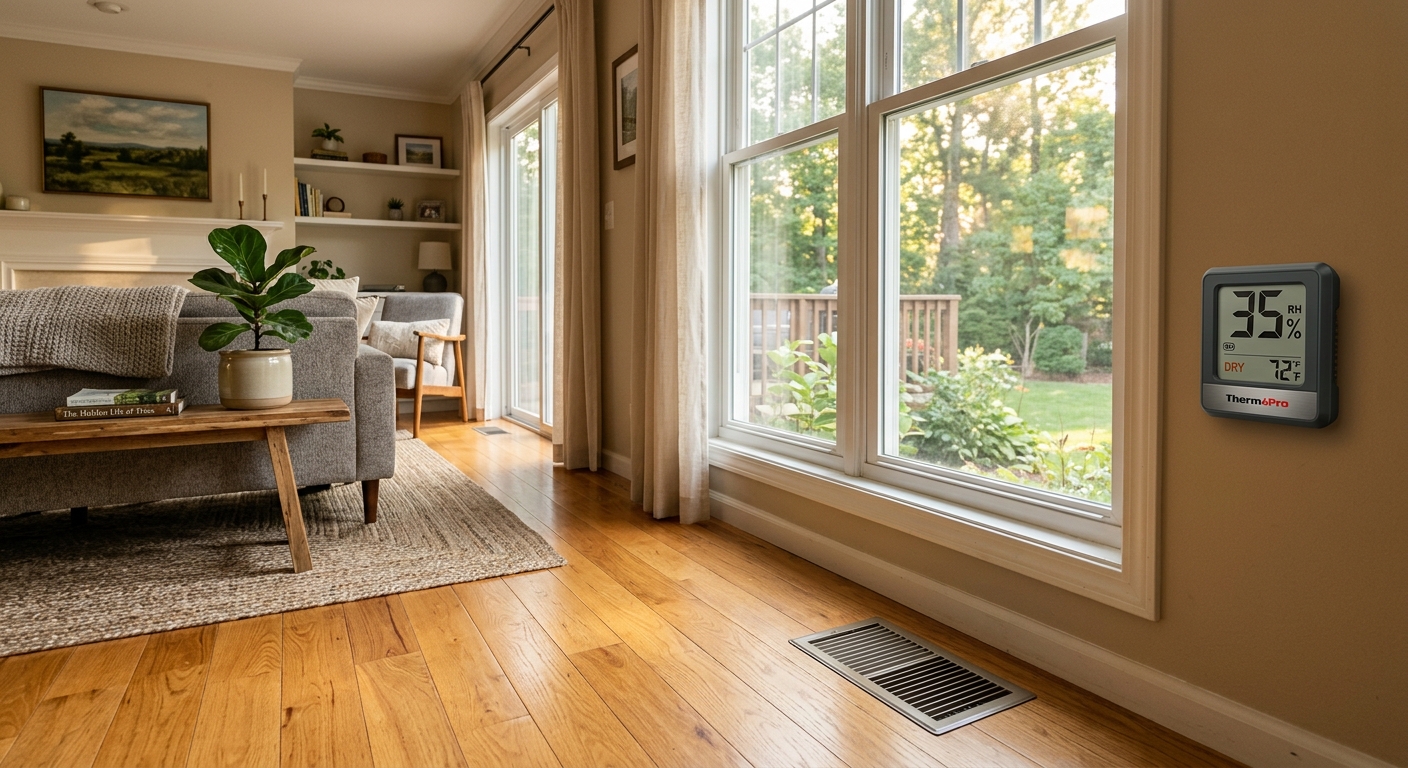
- Buy a digital hygrometer (a small humidity and temperature monitor) and place it in your main living area, away from exterior walls, windows, and vents for an accurate reading. Brands like Inkbird or ThermoPro cost $15 to $20.
- Check your current indoor RH reading. In winter (outdoor temps below 35F), your target is 30 to 35% RH. In the shoulder seasons (35F to 60F outdoors), target 35 to 40%. In summer (outdoor temps above 60F), target 45 to 50% RH.
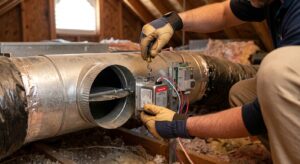
- If you have a whole-home humidifier attached to your furnace, locate the humidistat (usually mounted near the furnace or on a return air duct) and adjust the dial to match your seasonal target. Most whole-home humidistats are set too high from the factory.
- If you are using a portable humidifier in winter, set its built-in humidistat to 33%. Check your hygrometer reading daily for the first week and adjust the unit output up or down by 3 to 5 percentage points until the room reading stabilizes at your target.
- If you are using a portable dehumidifier in summer, set it to 50% RH. If your basement consistently reads above 60%, drop the target to 50% and empty or drain the unit as needed to keep up with output.
- Place a calendar reminder to adjust your targets at the start of each heating season (around October) and each cooling season (around May) so the change becomes a routine habit.
- Start by identifying your humidifier type. Bypass humidifiers rely on furnace airflow and work only when the furnace runs. Fan-powered units run independently. Knowing this determines how aggressively you can humidify without over-saturating the air.
- Replace or clean your humidifier water panel (evaporator pad) if it has not been done in the current season. A clogged or mineral-coated pad reduces output by 30 to 50% and forces the unit to run longer. Replacement panels cost $10 to $25 depending on model.
- Set your humidistat using an outdoor temperature reset schedule rather than a fixed number. Tape this reference to your furnace: Outdoor temp below 0F, set 25% RH. 0F to 10F, set 28%. 10F to 20F, set 30%. 20F to 35F, set 35%. This prevents condensation in wall cavities as outdoor temps drop.
- Install a second hygrometer in a bedroom on an exterior wall of your home. If this reading is consistently 3 to 5 points higher than your main-floor reading, your home has stratification and you may need to run bathroom exhaust fans or ceiling fans to redistribute moisture more evenly.
- In summer, confirm your central AC is removing adequate moisture by checking that RH drops below 55% within an hour of your AC starting a cycle on a humid day. If it does not, your AC may be oversized and short-cycling, or the coil may be dirty. A coil cleaning by an HVAC technician costs $75 to $200 and improves dehumidification capacity significantly.
- Consider upgrading your humidistat to a digital outdoor-sensing model like the Aprilaire 60 or Honeywell HE360 controller ($40 to $80) if your current humidistat is a simple manual dial. These automatically adjust output based on outdoor temperature, eliminating seasonal manual adjustments.
- Schedule a home assessment with an HVAC contractor or energy auditor who can measure your home’s current air leakage rate (blower door test, around $200 to $400) and calculate your actual latent load. This prevents buying oversized or undersized equipment.
- For humid climates or basements, ask about a whole-home dehumidifier like the Aprilaire 1850 or Santa Fe Advance2. These units integrate with your ductwork, run quietly, and maintain precise RH levels without the noise and limited capacity of portable units. Installed cost ranges from $1,200 to $2,200.
- For tight newer homes (built after 2000 or recently air-sealed), ask about an Energy Recovery Ventilator (ERV). An ERV brings in fresh outdoor air while recovering 70 to 80% of the energy from exhaust air and moderating incoming humidity. This solves both air quality and moisture control simultaneously. Installed cost ranges from $1,500 to $3,500.
- Request that the contractor set the equipment to your seasonal targets and label the settings clearly. Ask for a written maintenance schedule covering annual coil cleaning, filter changes, and water panel replacement so you can maintain the system yourself going forward.
Why It Works: The Benefits
Proper winter humidity (30 to 35%) lets you lower your thermostat set point by 2 degrees without sacrificing comfort, saving roughly 4 to 6% on heating costs. Controlling summer humidity to 45 to 50% reduces your AC latent load by up to 10 to 20% in humid climates, trimming cooling bills meaningfully over the season.
Keeping RH below 50% year-round and especially below 40% in winter prevents the sustained moisture conditions that mold needs to colonize. This protects drywall, insulation, and framing from hidden moisture damage that can cost $5,000 to $30,000 or more to remediate.
Air between 30 and 50% RH reduces survival rates of airborne viruses and respiratory irritants. Dry winter air below 25% RH dries out nasal passages and increases susceptibility to colds and flu. Humid summer air above 60% encourages dust mite and mold allergen growth, worsening asthma and allergy symptoms.
Maintaining humidity within the 35 to 50% band year-round prevents the seasonal expansion and contraction cycles that cause hardwood floors to gap in winter and buckle in summer. This can extend the time between costly refinishing or replacement by 5 to 10 years.
Humidity levels outside the 30 to 50% range disrupt sleep by causing dry throat, congestion, or a clammy feeling. Correcting seasonal humidity targets often resolves sleep complaints that homeowners previously attributed to their mattress or room temperature.
💰 Savings Impact by Action
Maintaining 33% RH in winter allows a 2-degree thermostat setback that feels equally comfortable, saving approximately 4 to 6% on heating costs.
Controlling summer indoor RH to 45 to 50% reduces your AC’s latent cooling burden by up to 15 to 20% in humid climates, cutting cooling runtime and energy use.
Keeping RH below 50% year-round prevents the moisture conditions mold requires, avoiding remediation costs that range from $5,000 to $30,000 for wall cavity mold.
A clean humidifier water panel and AC evaporator coil maintain full moisture-removal capacity, preventing the 10 to 30% efficiency loss caused by mineral buildup and debris.
Stable seasonal humidity within the 35 to 50% band reduces hardwood expansion and contraction cycles, extending the time between refinishing by an estimated 20 to 30%.
🏠 Key Concepts Explained
The Science Behind It
The reason your winter and summer humidity targets should differ comes down to a simple but powerful concept: cold air physically cannot hold as much water vapor as warm air. At 70 degrees Fahrenheit, air can hold about 11 grams of water vapor per kilogram of dry air. At 20 degrees Fahrenheit, that capacity drops to roughly 2 grams. When you heat cold winter air inside your home, you are drastically lowering its relative humidity without adding or removing any moisture. Outdoor air at 20F and 80% RH enters your home and, once heated to 70F, reads closer to 15% RH indoors. That is why winter air feels so dry and why humidifiers are necessary in cold climates.
The condensation risk in winter is governed by dew point physics. Every combination of temperature and relative humidity has a corresponding dew point, the temperature at which moisture condenses from the air onto surfaces. In a wall assembly, the temperature drops from your warm interior toward your cold exterior across layers of drywall, insulation, and sheathing. If your indoor humidity is high enough, the air traveling through gaps in your vapor barrier will reach its dew point somewhere inside that wall cavity, depositing liquid water where you cannot see it. This is the hidden danger of running 45 or 50% RH in winter: it may feel comfortable but it is slowly wetting your framing. Lowering winter targets to 30 to 35% keeps the dew point well below the temperature of cold surfaces in typical wall assemblies.
In summer, the physics reverses. Your air conditioner cools air over a cold evaporator coil, and moisture condenses on that coil and drains away. This is your AC’s dehumidification mechanism, but it only works effectively when the AC runs long enough to cool the coil adequately. Oversized AC systems that short-cycle (run for only 5 to 8 minutes at a time) remove far less moisture than properly sized systems running 15 to 20 minute cycles. Targeting 45 to 50% RH in summer and using a supplemental dehumidifier when needed keeps your home below the 60% threshold where dust mites and mold thrive, while also reducing the latent cooling load on your system and letting it operate more efficiently.
Frequently Asked Questions
▼ My whole-home humidifier is running but my hygrometer still reads below 25% all winter. What is wrong?
The most common causes are a clogged or heavily mineralized water panel that needs replacement, a bypass damper that is stuck closed or set to the summer position, or a home with high air leakage that is losing conditioned humid air faster than the humidifier can replace it. Replace the water panel first (it costs $10 to $25 and takes 15 minutes), then check that the bypass damper on a bypass-style humidifier is open. If neither helps, an HVAC technician can test airflow through the unit and check the solenoid valve for proper water flow.
▼ I keep my thermostat at 70F and run a humidifier set to 45% in winter but I still get condensation on my windows. Why?
45% RH is too high for most homes when outdoor temperatures are below 35F, regardless of how warm it feels indoors. The window glass surface temperature is much colder than 70F on a cold day, and any RH above roughly 35 to 38% will reach the dew point on typical double-pane glass in that condition. Lower your humidistat to 30 to 33% and check again over 48 hours. If condensation persists even at 30%, your windows may need replacement or your home may have serious air sealing issues around the window frames.
▼ My AC runs constantly in summer but my house still feels muggy. Is this a humidity problem or something else?
This is almost always a combination of both. An AC that runs constantly without dropping indoor RH below 55% is typically either oversized and short-cycling before removing enough latent load, has a dirty evaporator coil reducing dehumidification efficiency, or is undersized for an unusually humid home or climate. Have a technician clean the coil and check refrigerant charge first, as those are quick fixes. If the problem persists, a supplemental whole-home or portable dehumidifier sized for your square footage is often the most cost-effective next step.
▼ Can I use just one portable humidifier for a 2,000 square foot house?
A single portable humidifier typically manages 300 to 700 square feet effectively, so one unit is rarely sufficient for a full house unless your home is very open-plan and you run it in a central location. For a 2,000 square foot home without a whole-home humidifier, you generally need 2 to 3 portable units placed strategically, or you should consider a whole-home unit installed on your furnace, which handles the entire home for $300 to $700 installed on an existing forced-air system.
▼ How do I know what humidity level my house had before I started monitoring?
Look for physical clues. In winter, check for paint bubbling on exterior walls, soft or spongy drywall near exterior corners, or gapping in hardwood floors, all signs of previous over-humidification. In summer, musty smells in closets or basements, visible mold on window sills, or excessive dust mite allergy symptoms suggest chronically high humidity. A home energy auditor can also use a moisture meter to test wall assemblies and identify where historic moisture damage has occurred.
Quick Tips
- Place your primary hygrometer at roughly chest height in a central room, at least 3 feet from any exterior wall or window, for the most representative reading of your living space humidity.
- In winter, check your windows each morning. Light fog or frost at the very edges of the glass is acceptable, but sustained condensation across the pane means your indoor humidity is too high for your current outdoor temperature. Drop your humidistat by 5 percentage points.
- Run your kitchen and bathroom exhaust fans during and for 15 minutes after cooking or showering. A single hot shower adds roughly half a pint of moisture to indoor air, and cooking can add significantly more. Exhausting this moisture before it distributes through the house reduces the load on your dehumidifier or AC.
- In summer, keep interior doors open between rooms to allow your AC’s dehumidification to reach the whole house. Closed doors create pockets of stagnant humid air, especially in bedrooms with high occupancy overnight.
Variations for Your Situation
- Apartment or Rental: Renters cannot modify central HVAC or install whole-home humidifiers, but portable units do the job well at the room level. In winter, use a cool-mist ultrasonic humidifier with a built-in humidistat (Levoit LV600S or similar, $50 to $80) set to 33% RH in your bedroom and living area. In summer, a portable dehumidifier like the hOmeLabs 35-pint model ($180 to $220) handles a studio or one-bedroom apartment effectively. A $15 digital hygrometer lets you verify your actual levels and avoid running equipment unnecessarily.
- Tight Budget (under $50): Start with a $15 to $20 digital hygrometer to understand your baseline before buying anything else. Many homes are already within an acceptable range and do not need equipment. If your winter RH is below 25%, a simple $30 to $40 evaporative cool-mist humidifier in your bedroom makes a noticeable difference for health and sleep quality without a large investment. In summer, focus first on zero-cost steps: running exhaust fans during cooking and showers, keeping AC filters clean (dirty filters reduce dehumidification by 10 to 15%), and keeping basement doors closed to contain moisture from concrete and soil.
- Older Home (pre-1980): Homes built before 1980 typically have much higher air leakage rates, often 3 to 5 times leakier than modern construction. This means portable humidifiers work harder and run out of capacity faster in winter, and dehumidifiers in summer are fighting a constant influx of outdoor humid air. For these homes, air sealing (caulking around window frames, door frames, and penetrations) should come before humidity equipment upgrades because it reduces the load significantly. Also be cautious with humidification targets in very leaky older homes since the lack of a proper vapor barrier in the walls means moisture can travel more freely into wall cavities even at modest indoor RH levels. Keep winter targets at 30% or below until air sealing is addressed.