If your heating bill keeps climbing every winter despite a newer furnace and sealed windows, your basement may be the silent culprit. Basements account for up to 30% of a home’s total heat loss, yet most homeowners treat them as an afterthought. Cold concrete walls, uninsulated rim joists, and unsealed penetrations create a steady drain on your heating system that runs 24 hours a day, seven days a week.
The problem is deceptive because basements feel cool year-round, so it seems like heat loss there is no big deal. In reality, your living floors sit directly above this cold zone, and without a proper thermal barrier, your furnace works overtime just to keep your feet warm. The Department of Energy estimates that a typical uninsulated basement can add $200 to $500 per year to heating costs depending on climate and home size.
This post breaks down exactly why basements leak heat, which fixes deliver the best return on investment, and how to tackle the problem yourself or know when to call a pro. Whether you have 30 minutes or a full weekend, there are meaningful improvements you can make at every budget level.
What You’ll Need
Click on an item below to shop for the recommended items for this recipe on Amazon.
As an Amazon Associate, we earn from qualifying purchases.
How to Do It
- Walk the perimeter of your basement on a cold day with a lit incense stick or your hand. Feel for cold air drafts along the top of the foundation wall where the framing meets concrete. Mark any drafty spots with masking tape.
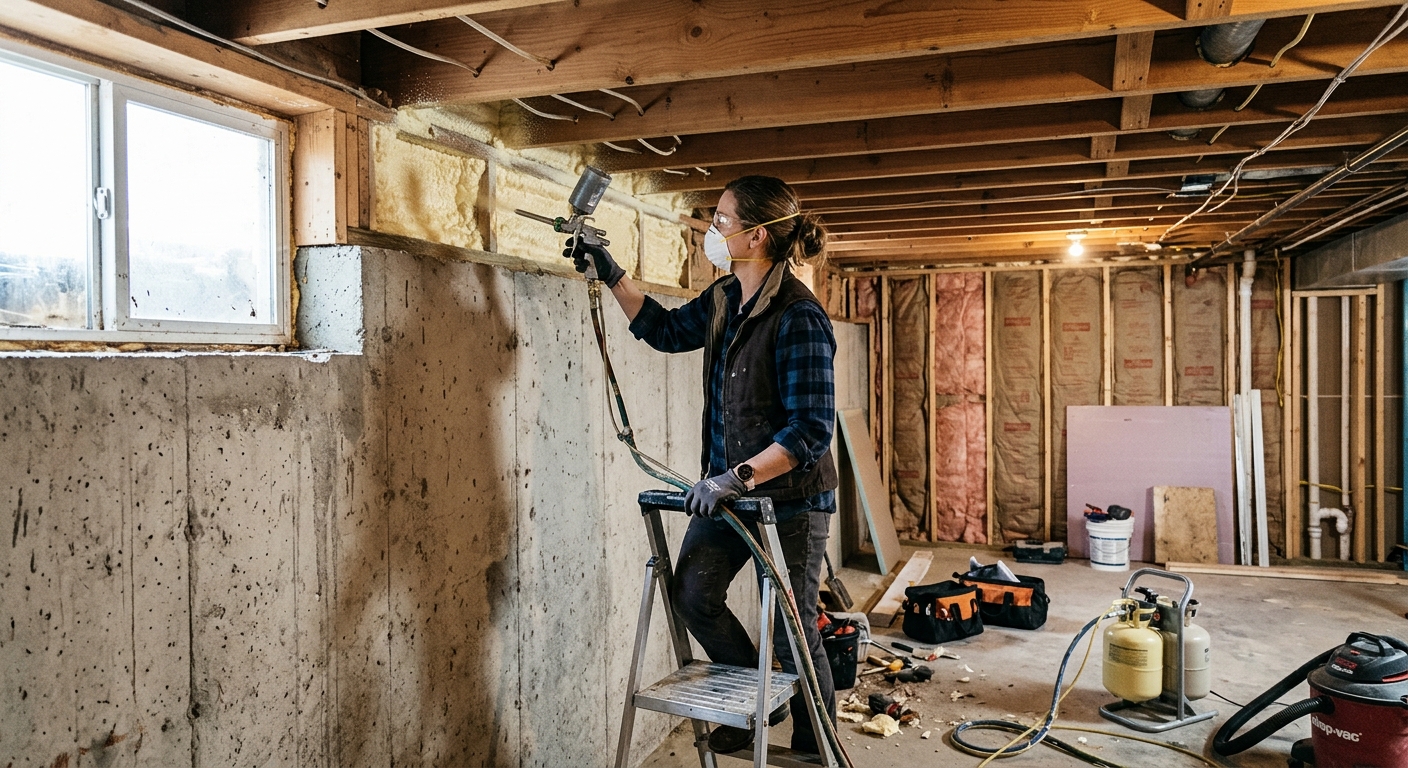
- Apply canned spray foam (low-expansion formula) to all visible gaps around pipe penetrations, wire entries, and where the sill plate meets the foundation wall. One 12-ounce can covers roughly 20 to 25 linear feet of crack.
- Inspect your basement windows. If they are original single-pane units, apply a self-adhesive window insulation film kit on the interior. Each kit costs about $5 and reduces window heat loss by up to 35%.
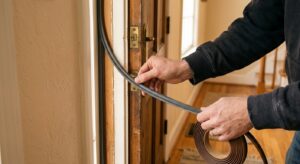
- Check the basement door leading to attached garage or crawl space. Install adhesive foam weather stripping around the door frame and add a door sweep to the bottom gap if daylight is visible.
- If your water heater or pipes are in the basement, wrap exposed hot water pipes within 3 feet of the water heater with pre-slit foam pipe insulation, which costs about $0.50 per linear foot and prevents standby heat loss.
- Measure the perimeter of your basement to calculate how many rim joist bays you have. A typical 1,200 square foot footprint has roughly 140 linear feet of rim joist, with bays every 16 inches.
- Cut rigid foam board (2-inch polyisocyanurate, R-13) to fit snugly inside each bay between the floor joists. Use a utility knife and straightedge. Each piece should fit tightly against the concrete wall and the subfloor above.
- Seal all four edges of each foam panel with canned low-expansion spray foam. This creates a continuous air and thermal barrier. Do not skip the foam seal even if the fit looks tight, because thermal bridging occurs at even small gaps.
- For any rim joist bays with pipes, wires, or other obstructions, cut the foam in two pieces around the obstruction and seal all gaps thoroughly with spray foam. Do not leave any bays open.
- After completing the rim joist, address obvious large gaps in the floor above by applying fire-rated acoustic caulk around any plumbing stacks or electrical conduit that passes through the subfloor into the basement.
- When finished, walk the basement again on the next cold day to confirm drafts are eliminated. A successful job should feel noticeably warmer near the foundation walls within 24 hours.
- Decide between interior rigid foam board (DIY-friendly) or closed-cell spray foam applied by a contractor. Spray foam at 2 inches delivers R-12 to R-14 and fully seals the wall in one step. Rigid foam board with taped seams achieves similar performance at lower material cost.
- If using rigid foam board, frame a 2×4 wall 1 inch in front of the foundation wall, install 2-inch rigid foam against the concrete, then fill the stud bays with batt insulation for a total assembly of R-20 to R-25.
- Before installing any wall insulation, verify there are no active water leaks or moisture intrusion. Trapping moisture behind insulation causes mold. Address any seepage with hydraulic cement or exterior waterproofing first.
- Install a continuous vapor retarder on the warm side of the insulation (facing the room) if using batt insulation in stud bays. In most US climates, 6-mil poly sheeting meets code requirements.
- Insulate the basement floor slab if headroom allows. Installing 1-inch rigid foam under a new plywood subfloor adds R-5 and dramatically improves comfort. This step alone can raise floor surface temperature by 5 to 8 degrees in winter.
- Have the completed work verified by a local building inspector or energy auditor, especially if you plan to claim the federal 30% tax credit on materials, which requires proper documentation of R-values installed.
Why It Works: The Benefits
Properly insulating and air sealing a basement can reduce total home heating costs by 15 to 25% annually. For a household spending $1,500 per winter on heat, that translates to $225 to $375 in savings every year.
Insulating the basement ceiling or walls directly raises the temperature of your first-floor subfloor, which most homeowners notice immediately as warmer feet and fewer cold spots near exterior walls.
When the thermal envelope is tighter, your furnace cycles less frequently. Shorter run cycles reduce mechanical wear and can extend furnace lifespan by several years, delaying a $3,000 to $8,000 replacement.
Sealing basement air leaks also reduces the infiltration of cold, dry winter air, which helps maintain comfortable indoor humidity levels between 35 and 50% without running a humidifier as aggressively.
Many utility companies and state energy programs offer rebates of $50 to $500 for basement insulation and air sealing work. The federal energy efficiency tax credit covers 30% of insulation material costs through 2032.
💰 Savings Impact by Action
Sealing and insulating the rim joist alone reduces basement heat loss by up to 25%, translating to roughly 5 to 10% savings on total home heating costs.
Adding R-15 or better to all basement foundation walls reduces conductive heat loss through the foundation envelope by 15 to 20% of total heating load.
Wrapping uninsulated basement ducts with R-6 duct insulation recovers 20 to 30% of heat that would otherwise dissipate into the unconditioned space before reaching living areas.
Sealing pipe, wire, and vent penetrations through the basement floor and walls reduces whole-home air leakage by 15 to 20%, cutting infiltration heating load by roughly 8%.
Installing 1-inch rigid foam under a plywood subfloor over a concrete slab reduces slab heat loss by up to 50% and raises floor surface temperature by 5 to 8 degrees in winter.
🏠 Key Concepts Explained
The Science Behind It
Heat moves in three ways: conduction, convection, and radiation. Your basement suffers from all three simultaneously. Conduction pulls heat directly through your concrete walls and slab into the cooler soil surrounding them. Convection carries warm basement air up through gaps in the floor assembly and into the living space above, where it then escapes through the roof, pulling cold replacement air in at the bottom. This is the stack effect, and it operates like a chimney running through your entire house every single day of the heating season.
The rim joist is the most critical point because it sits at the intersection of three different thermal problems at once. It is a wood framing member (which conducts heat better than insulation but worse than concrete), it is typically full of small air gaps where the sill plate meets the concrete, and it is directly exposed to outdoor air temperatures rather than being buffered by soil. Studies from the Building Science Corporation show that rim joists can account for 15 to 25% of total basement heat loss despite representing a small fraction of the total surface area.
Insulating basement walls with rigid foam works because foam creates a continuous thermal break that interrupts the conduction pathway from the warm interior to the cold concrete. Unlike fiberglass batts, rigid foam also resists air movement, so it serves as both an insulator and an air barrier in a single layer. Closed-cell spray foam goes further by acting as a vapor retarder as well, addressing all three modes of heat transfer and moisture control in one application. This is why energy auditors consistently rank basement rim joist and wall insulation among the top three highest-return investments a homeowner can make.
Frequently Asked Questions
▼ I insulated my rim joist but my heating bill barely changed. What went wrong?
Rim joist insulation alone typically saves 5 to 10% on heating costs, so if you saw nothing, check whether your foam panels have a complete perimeter seal with spray foam. Even a quarter-inch gap defeats most of the thermal benefit. Also confirm your ducts are insulated and that your attic has at least R-38, because air sealing one area just shifts where the stack effect pulls cold air from.
▼ My basement walls sweat in summer. Will insulating them make that worse?
Condensation on basement walls in summer happens because humid outdoor air contacts the cool concrete surface. Insulating the interior walls with closed-cell foam or rigid foam actually reduces this problem by keeping the cold concrete surface separated from the humid interior air. Never install fiberglass batts directly against a concrete wall without a continuous vapor barrier, as that traps moisture and promotes mold.
▼ Can I just insulate the basement ceiling instead of the walls to save money?
Insulating the basement ceiling (between the joists above) is a valid option when the basement will remain unconditioned, but it leaves your water pipes and ducts in a cold zone, increasing freeze risk and duct heat loss. It also does nothing to stop air infiltration through the rim joist. If you go this route, still seal the rim joist with foam and insulate any HVAC ducts running through the space.
▼ How do I know if my basement insulation project qualifies for the federal tax credit?
The federal Energy Efficient Home Improvement Credit covers 30% of insulation material costs (not labor) up to $1,200 per year through 2032. To qualify, the insulation must meet International Energy Conservation Code standards for your climate zone, which typically means R-15 or higher for basement walls. Keep your receipts and manufacturer spec sheets showing R-values, and file IRS Form 5695 with your tax return.
▼ My basement has stone or rubble foundation walls. Can I still insulate them?
Stone foundation walls require special care because they are often the primary drainage path for moisture moving through the foundation. Interior rigid foam or spray foam can trap water and damage the mortar. Consult a building professional experienced with historic foundations before insulating. In many cases, exterior insulation or a drainage mat system on the interior is the safer approach.
Quick Tips
- Target the rim joist first before spending money on wall insulation. It delivers the best savings-per-dollar ratio of any basement improvement.
- Use low-expansion spray foam around pipes and wires, not standard window and door foam, which can warp framing if it expands too aggressively in a confined bay.
- Check your utility company website before starting any project. Many offer free or discounted energy audits that include blower door testing to pinpoint exactly where your home is leaking.
- If you have forced-air ducts in your basement, wrap them with R-6 duct wrap insulation before insulating the walls. Losing heat from ducts into an uninsulated basement wastes up to 30% of your furnace output.
Variations for Your Situation
- Apartment or Condo with Basement Access: If you have access to a shared basement storage area below your unit, focus on the ceiling above your unit by requesting that management insulate between-floor assemblies. For your own unit, apply draft-stop foam tape around any basement access hatches or utility chase penetrations inside closets. These cost under $20 and can make a noticeable difference without requiring landlord approval for structural changes.
- Tight Budget Under $50: Prioritize canned spray foam for rim joist gaps and pipe penetrations, which costs $15 to $25 per can and targets the highest-impact leaks. Add adhesive foam tape to the basement door and window frames. At this budget, skip the rigid foam board but do the incense stick audit first so every dollar goes to the worst leak. Realistic savings from air sealing alone are 5 to 10% on heating costs.
- Older Home Pre-1980: Homes built before 1980 typically have far more air leakage, minimal original insulation, and potentially hazardous materials like asbestos pipe wrap or vermiculite insulation. Have an energy auditor perform a blower door test first to identify the worst leaks, and budget for asbestos testing before disturbing any existing materials. The payback period on improvements is often faster in older homes because the baseline inefficiency is higher, with savings of 20 to 30% not uncommon after a comprehensive basement air sealing and insulation project.