There is a reason HVAC technicians are booked solid in June and plumbers are swamped in January. Homeowners tend to call for service only when a system fails, and systems tend to fail when they are pushed hardest. An air conditioner that has not been serviced since last summer is most likely to quit on the hottest day of July, and a furnace that skipped its fall checkup is most likely to stop working during the first hard freeze. Reactive maintenance is always more expensive, more disruptive, and more energy-wasteful than preventive care scheduled at the right time.
Timing your maintenance around each system’s natural demand cycle accomplishes two things. First, you catch small problems before they become expensive failures. Second, you ensure the system is operating at peak efficiency right before it faces its heaviest workload. A well-tuned central air conditioner uses 5 to 15% less electricity than a neglected one, and a properly serviced gas furnace can improve combustion efficiency by 10% or more. Across all your major systems, strategic scheduling can realistically reduce annual energy and repair costs by hundreds of dollars.
This post lays out the ideal service window for every major home system, from HVAC and water heaters to gutters, electrical panels, and sump pumps, along with exactly what to do yourself versus when to call a pro. Whether you want a simple annual checklist or a thorough DIY maintenance routine, you will find a practical, calendar-based plan you can start using today.
What You’ll Need
Click on an item below to shop for the recommended items for this recipe on Amazon.
As an Amazon Associate, we earn from qualifying purchases.
How to Do It
- LATE FEBRUARY to MARCH (Pre-Cooling Season): Replace the HVAC air filter with a MERV 8 to 11 filter, vacuum return air vents, and test your thermostat by switching to cool mode and verifying it reaches the set temperature within 15 minutes.
- APRIL (Spring Exterior): Clear debris from the outdoor AC condenser coils using a garden hose on a gentle setting, check that the unit sits level on its pad, and ensure at least 2 feet of clearance around all sides.
- MAY (Water Heater): Flush 2 to 3 gallons from the drain valve to remove sediment, test the pressure relief valve by lifting the lever briefly, and check the temperature setting (120 degrees F is the DOE-recommended safe and efficient target).
- SEPTEMBER (Pre-Heating Season): Replace the HVAC filter again, test the furnace by running it for 15 minutes, and check all accessible supply and return vents for blockages or furniture obstruction.
- OCTOBER (Gutters and Drainage): Clean gutters and downspouts after leaves begin to fall, confirm downspouts discharge at least 4 feet from the foundation, and inspect the sump pump by pouring a bucket of water into the pit to confirm it activates.
- NOVEMBER (Plumbing and Safety Devices): Test all smoke and CO detectors, replace batteries, and insulate any exposed pipes in unheated crawl spaces or garages before the first freeze.
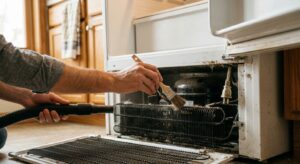
- MARCH (HVAC Deep Clean): Remove and wash the evaporator drain pan with a diluted bleach solution (1 cup bleach per gallon of water) to prevent mold and clogs, use AC coil cleaner spray on the indoor evaporator coil, and use a fin comb to straighten any bent condenser fins on the outdoor unit.
- MARCH to APRIL (Duct Inspection): Use a flashlight to inspect all accessible duct joints in the attic or basement. Seal any gaps with UL-listed foil tape (not standard duct tape, which fails within 2 years). Sealing leaky ducts can recover 20 to 30% of conditioned air that would otherwise be lost.
- MAY (Water Heater Full Service): Drain and fully flush the tank, not just a partial flush. On gas units, inspect the burner flame (should be steady blue with no yellow tips). On electric units, test and replace sacrificial anode rods if more than 50% corroded, extending tank life by 5 or more years.
- JUNE (Dryer Vent Cleaning): Disconnect the dryer, remove the flexible duct, and use a dryer vent brush kit (available for $20 to $30) to clean the full length of the vent run. A clogged vent adds 20 to 30 minutes to each drying cycle and is the leading cause of dryer fires.
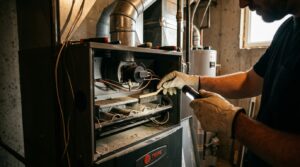
- SEPTEMBER (Furnace Full Service): Vacuum the burner compartment, inspect the heat exchanger visible surfaces for cracks (a cracked heat exchanger can leak carbon monoxide), replace the humidifier water panel if you have a whole-house humidifier, and lubricate the blower motor ports if they are not sealed bearings.
- OCTOBER to NOVEMBER (Weatherization Pass): Use a stick of incense or a smoke pencil to identify air leaks at window frames, electrical outlets on exterior walls, and the top plate of exterior walls in the attic. Seal with caulk or foam depending on gap size. DOE data shows air sealing can reduce heating and cooling costs by up to 20%.
- MARCH to APRIL (HVAC Cooling Tune-Up, $80 to $150): Schedule an AC tune-up that includes refrigerant level check, coil cleaning, electrical connection tightening, capacitor and contactor inspection, and a blower motor amp draw test. A refrigerant system that is even 10% low on charge loses up to 20% of its cooling capacity.
- SEPTEMBER to OCTOBER (Furnace or Heat Pump Tune-Up, $80 to $150): Book a heating season inspection covering heat exchanger inspection, gas pressure check, flue draft measurement, and igniter function test. Ask the tech to provide an efficiency reading (AFUE or COP) if your system supports it.
- EVERY 1 to 3 YEARS (Plumbing Inspection, $100 to $200): Have a licensed plumber inspect the main shutoff valve function, check water pressure (ideal is 60 to 80 psi), inspect the water heater anode rod, and assess any visible supply and drain pipes for corrosion.
- EVERY 3 to 5 YEARS (Electrical Panel Inspection, $150 to $300): An electrician should check for double-tapped breakers, undersized wiring, signs of overheating, and proper grounding. This is especially important in homes built before 1990 or after any major appliance additions.
- ANNUALLY (Chimney and Fireplace, $100 to $250): The NFPA recommends annual chimney inspections for any wood-burning or gas fireplace. A level-one inspection checks for blockages, creosote buildup, and structural integrity of the flue liner.
Why It Works: The Benefits
A properly maintained HVAC system uses 5 to 15% less energy, a clean water heater operates up to 22% more efficiently, and a tuned furnace can recover 10% or more in combustion efficiency, adding up to $200 to $500 in annual savings for a typical home.
Emergency HVAC calls carry after-hours premiums of 1.5 to 2 times the standard rate. Homeowners who follow a preventive schedule report 40 to 60% fewer unexpected repair bills over a five-year period.
A central AC unit serviced annually can last 15 to 20 years versus 10 to 12 years without maintenance. Extending equipment life by even five years on a $5,000 system saves thousands in replacement costs.
Clean filters, sealed ducts, and calibrated thermostats eliminate hot and cold spots, reduce humidity swings, and lower airborne dust and allergens by up to 50% compared to a neglected system.
Annual furnace and water heater inspections catch cracked heat exchangers and carbon monoxide risks. Dryer vent cleaning reduces the risk of the roughly 15,500 dryer fires reported in the US each year.
💰 Savings Impact by Action
Annual HVAC service restores 5 to 15% of efficiency lost to dirty coils, low refrigerant, and restricted airflow.
Sealing duct leaks and envelope gaps reduces conditioned air loss, cutting heating and cooling costs by up to 20% per DOE data.
Removing sediment buildup from the tank restores water heater efficiency by up to 22% in hard-water areas.
Keeping HVAC filters clean prevents airflow restriction that can reduce system efficiency by 10 to 15% and increases runtime.
A clear dryer vent reduces drying time per cycle by up to 30%, directly cutting electricity or gas use per load.
🏠 Key Concepts Explained
The Science Behind It
Every home system operates on a thermodynamic or mechanical principle that degrades predictably over time without intervention. In an air conditioner, heat transfer happens across the evaporator and condenser coils. When those coils accumulate even a thin layer of dirt, the thermal resistance increases and the system must run longer to move the same amount of heat. Research from Lawrence Berkeley National Laboratory found that dirty evaporator coils alone can reduce cooling capacity by 5 to 30%, depending on the level of fouling. This directly translates to longer runtime, higher electricity bills, and faster compressor wear.
Water heaters lose efficiency through sediment accumulation at the bottom of the tank. In areas with hard water, calcium and magnesium minerals precipitate out of solution as water is heated, forming an insulating layer between the burner or heating element and the water. The DOE estimates that just half an inch of sediment can reduce water heater efficiency by up to 22%, because the burner must work harder and longer to heat water through that mineral barrier. Annual flushing removes this sediment and restores efficiency to near-new levels.
Air leakage is the largest single source of energy waste in most homes, accounting for 25 to 40% of heating and cooling costs according to DOE data. The stack effect, which is the tendency of warm air to rise and escape through gaps at the top of the home while cold air infiltrates at the bottom, operates continuously and intensifies with greater temperature differences between indoors and outdoors. Sealing these gaps in the fall, before the heating season creates maximum stack pressure, is the most effective time to address infiltration. Duct leakage compounds this problem: the EPA estimates that the average home loses 20 to 30% of conditioned air through leaky ducts before it ever reaches living spaces.
Frequently Asked Questions
▼ I got my AC serviced in spring but it is still running constantly in July. What is wrong?
A system running constantly during extreme heat may simply be undersized for the load, or it may have developed a refrigerant leak since the spring service visit. First, check that all registers are open, the filter is clean, and no furniture is blocking return vents. If the system still cannot reach the set temperature when outdoor temps are below 95 degrees F, call your HVAC tech to check refrigerant charge and duct leakage before assuming you need a new system.
▼ How do I know if I actually need a furnace tune-up or if I am just wasting money?
If your furnace is less than 5 years old and has been serviced regularly, a DIY filter change and visual inspection may be sufficient for a given year. However, any furnace over 10 years old, any system that has gone more than two years without service, or any unit showing symptoms like short cycling, yellow burner flames, or unusual odors should be professionally inspected every year. The cost of one missed crack in a heat exchanger far exceeds the cost of several tune-ups.
▼ Can I do all of this maintenance in a single weekend instead of spreading it across the year?
You can batch the inspection tasks, but the seasonal timing still matters for HVAC specifically. Cleaning your AC coils in the fall does not help much because the system sits idle for months and can reaccumulate debris. For maximum benefit, service heating equipment in September to October and cooling equipment in March to April. All other tasks like water heater flushing, dryer vent cleaning, and gutter clearing can be done in any convenient batch.
▼ What if I just moved into an older home and have no service history?
Start with a full professional inspection of all major systems within your first 90 days, even if it costs $400 to $600 total. This baseline tells you the condition of each system, identifies any immediate safety issues like cracked heat exchangers or faulty electrical, and gives you a starting point for your own maintenance records. Consider it the cost of knowing exactly what you own.
▼ My energy bills are still high even though I follow a maintenance schedule. What am I missing?
Maintenance restores a system to its rated efficiency but cannot compensate for fundamental issues like poor insulation, major air leaks at the attic floor, or an undersized system. If your bills remain elevated after consistent maintenance, schedule a professional energy audit ($200 to $500, often subsidized by utilities) to identify the root cause. Attic insulation and air sealing are the two improvements that deliver the fastest payback in most homes.
Quick Tips
- Create a shared digital calendar with annual recurring reminders for each system service date. The biggest obstacle to preventive maintenance is simply forgetting, and a recurring calendar event costs nothing.
- When you change your clocks in spring and fall, use that as a trigger to replace HVAC filters, test smoke and CO detectors, and do a quick visual walkthrough of your mechanical systems.
- Keep a simple home maintenance log, even a notes app on your phone, recording each service date, what was done, and any parts replaced. This documentation increases resale value and helps contractors quickly identify service history.
- When hiring HVAC contractors for seasonal tune-ups, ask about annual maintenance agreements. These typically cost $150 to $250 per year and include two visits plus priority scheduling and discounted parts, often paying for themselves with a single avoided service call.
Variations for Your Situation
- Apartment or Rental: Renters typically cannot service central HVAC, but you can and should replace or clean the in-unit air filter every 1 to 3 months (check your lease since some landlords provide these). Notify your landlord in writing each fall and spring requesting HVAC service; this creates a paper trail if the system later fails. You can independently test smoke and CO detectors, clean your dryer vent lint trap after every load, and flush your water heater if your unit has its own tank-style heater with accessible controls.
- Tight Budget (Under $100 Per Year): Focus on the three highest-ROI tasks: replace HVAC filters every 60 to 90 days ($5 to $15 per filter), clean the dryer vent yourself with a $20 to $25 brush kit, and flush the water heater once a year. These three actions address the most common causes of efficiency loss and fire risk and cost under $75 per year in total materials. Skip the professional tune-up if necessary but do not skip the filter changes, which deliver the fastest return of any maintenance task.
- Older Home (Pre-1980): Homes built before 1980 typically have significantly more air leakage, less insulation, and original equipment that may be past its service life. Prioritize a professional energy audit first to identify whether your maintenance dollars are best spent on weatherization rather than servicing aging equipment. Also verify that your electrical panel can safely handle modern loads since many pre-1980 panels were rated for 60 to 100 amps and may not safely support today’s appliance mix. Budget for an electrician’s inspection as part of your first-year maintenance plan.