If you’ve been paying high energy bills and wondering where to start, the answer is almost always above your head. Your attic sits directly between your living space and the most extreme temperatures your home faces, whether that’s a 130°F roof deck in July or bitter cold in January. Without adequate insulation and air sealing, that barrier fails constantly, forcing your HVAC system to work overtime just to maintain a comfortable temperature.
The U.S. Department of Energy estimates that heating and cooling account for roughly 43% of the average home’s energy bill, and attic heat transfer is one of the top contributors to that cost. Many homes built before 1990 have attic insulation levels well below current recommendations, often sitting at R-11 to R-19 when the DOE recommends R-38 to R-60 depending on your climate zone. That gap translates directly into dollars leaving your wallet every month.
This post walks you through why the attic matters more than any other upgrade, how to assess what you have, and two practical approaches, from a free quick inspection you can do yourself to a full DIY insulation upgrade, that can cut your energy bills by 15 to 25% and pay back the investment in under three years.
What You’ll Need
Click on an item below to shop for the recommended items for this recipe on Amazon.
As an Amazon Associate, we earn from qualifying purchases.
How to Do It
- Put on a dust mask and safety glasses, then access your attic during daylight. Bring a bright flashlight and measure your existing insulation depth with a ruler. Fiberglass batts: 3.5 inches is roughly R-11, 6 inches is roughly R-19. Blown cellulose or fiberglass: check the DOE’s insulation depth chart for your specific material.
- Look for daylight coming through eaves, gaps around plumbing pipes, recessed lights poking through the attic floor, and open stud bays at the top of exterior walls. Mark each gap with a piece of painter’s tape so you can find them again.
- Seal all penetrations in the attic floor using fire-rated caulk for gaps under 1/4 inch and canned spray foam for gaps up to 3 inches. Around recessed light cans, use an approved airtight cover (IC-rated cover box) or seal with fire-rated caulk if the fixture is already IC-rated.
- Seal the attic hatch by adding weatherstripping around the frame and gluing a rigid foam board (at least R-10) to the back of the hatch door. An unsealed attic hatch can have the same heat loss as a small window left open year-round.
- If you see existing insulation that is wet, compressed, or discolored, do not add more insulation on top. Note those areas and address the moisture source first before any upgrade.
- Complete all air sealing from the Quick Fix approach first. Adding insulation without sealing air leaks first is one of the most common attic upgrade mistakes and significantly reduces your energy savings.
- Calculate how many bags you need. Multiply your attic floor square footage by the depth of insulation required to reach your target R-value. Blown fiberglass needs about 7.5 inches for R-30 and 10 inches for R-38. Blown cellulose needs about 8 inches for R-30 and 10.5 inches for R-38. Each bag covers a specific square footage listed on the label.
- Install cardboard or foam baffles at each rafter bay along the eaves before blowing insulation. These maintain a 1 to 2 inch air channel from the soffit vent to the ridge vent, which is critical for attic ventilation. Blocking this airway can cause moisture damage and void roofing warranties.
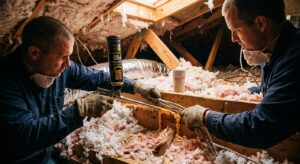
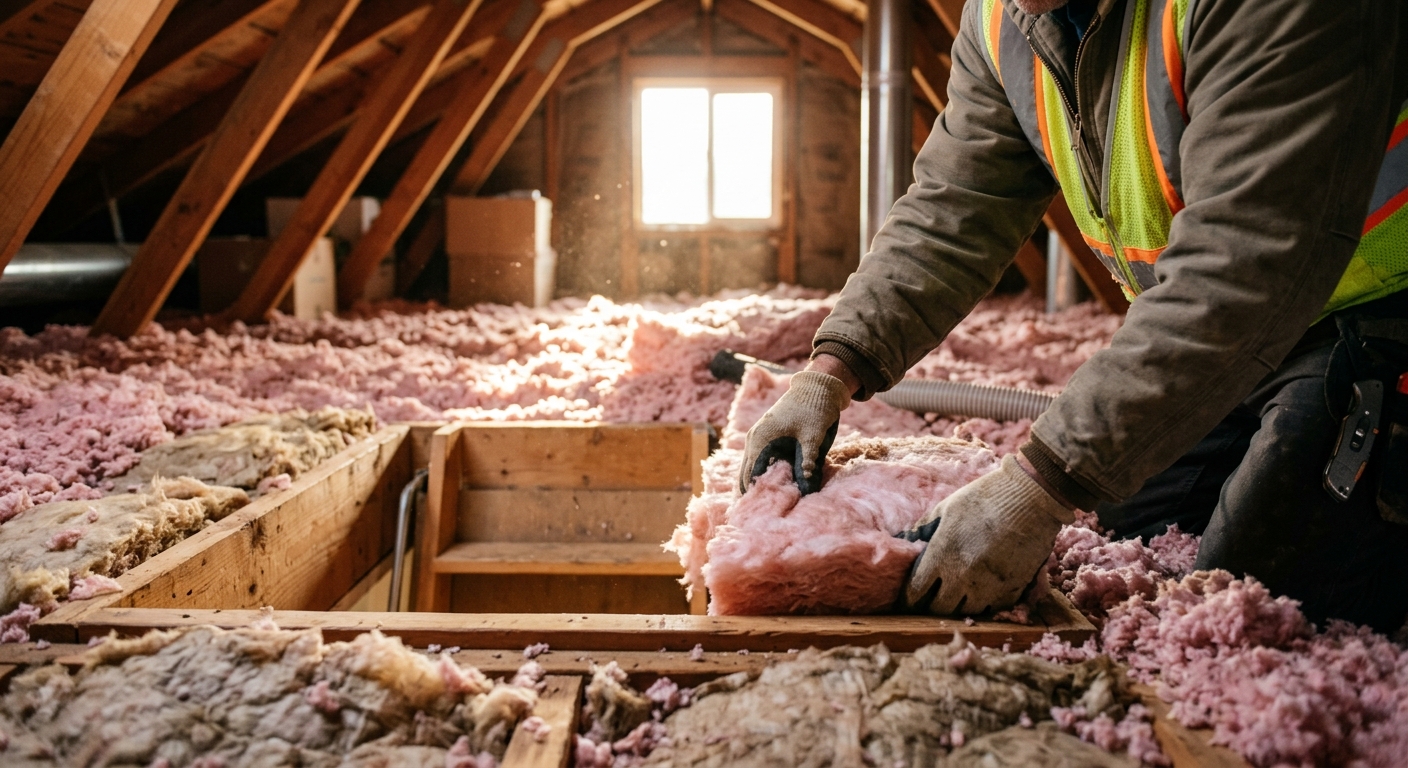
- Set up the blower machine at the attic hatch. Feed the flexible hose into the attic and start blowing from the farthest point, working back toward the hatch. Hold the hose close to the floor to avoid dust clouds and ensure even coverage.
- Use a depth ruler or paint a measurement guide on the attic joists to confirm you are hitting your target depth consistently. Check corners and eave areas, which are the spots most commonly missed during DIY installs.
- After the job, check that all soffit and ridge vents are still unobstructed, then calculate your final R-value using the depth achieved and the R-value per inch for your chosen material. Document your upgrade for tax credit purposes with photos and receipts.
Why It Works: The Benefits
Upgrading attic insulation from R-11 to R-38 typically reduces heating and cooling costs by 15 to 25% annually, saving the average U.S. homeowner $200 to $600 per year depending on climate zone and fuel type.
Attic insulation upgrades typically pay back in 1 to 3 years. By comparison, window replacements often take 10 to 20 years to recoup their cost, making the attic the single highest-ROI improvement most homeowners can make.
A properly insulated and air-sealed attic eliminates the hot ceilings and cold drafts that make upper floors uncomfortable, reducing the temperature difference between floors from as much as 8 to 10°F down to 2 to 3°F.
When the attic is properly insulated, your furnace and AC run shorter, less frequent cycles, extending equipment lifespan and reducing maintenance costs by lowering total annual run hours.
Under the Inflation Reduction Act, homeowners can claim a 30% federal tax credit (up to $1,200 per year) for insulation upgrades. Many utilities also offer rebates of $100 to $500, reducing out-of-pocket costs significantly.
💰 Savings Impact by Action
Sealing attic floor penetrations reduces whole-home air leakage by up to 20%, directly cutting heating and cooling costs with zero material cost in most homes.
Upgrading attic insulation from R-11 to R-38 reduces ceiling heat transfer by up to 71%, translating to 15 to 25% savings on total annual heating and cooling bills.
Adding weatherstripping and a rigid foam cover to an uninsulated attic hatch eliminates a convective bypass that can account for 5% of annual heating loss on its own.
Sealing leaky attic ductwork with mastic can recover 10 to 20% of conditioned air that currently escapes before reaching living spaces, with especially high impact in homes with central HVAC.
Installing a reflective radiant barrier under attic rafters in hot climates reduces summer attic temperatures by 20 to 30°F, cutting cooling loads by up to 10% in sun-belt states.
🏠 Key Concepts Explained
The Science Behind It
The physics behind attic heat loss comes down to two separate mechanisms that most homeowners confuse as one. The first is conduction, the movement of heat energy through solid materials. Every material has an R-value that measures resistance to this flow. Doubling your attic’s R-value literally cuts conductive heat transfer in half. A ceiling going from R-11 to R-38 reduces conductive heat flow by roughly 71%, which is why the biggest savings come from the first significant upgrade rather than from incremental additions at higher R-values.
The second mechanism is convection driven by the stack effect. Warm air inside your home is less dense than cold air, so it rises toward the ceiling and escapes through any gap it can find, pulling cold replacement air in at lower levels. In a typical unsealed attic floor, there can be hundreds of small penetrations adding up to the equivalent of a window left open permanently. This is why air sealing always comes before insulation in the building science community’s priority list. Insulation slows conduction but does almost nothing to stop air movement, which carries both heat and moisture.
Radiant heat is the third factor that makes attics uniquely important compared to walls. A dark roof in full sun can reach 160°F on a 90°F day. That heat radiates downward from the hot roof sheathing and warms the attic air, which then conducts through your ceiling insulation. Some homeowners add radiant barriers, reflective foil products stapled to the underside of rafters, which can reduce radiant heat gain by 25 to 40% in hot climates and lower attic air temperatures by 20 to 30°F. These work best in cooling-dominated climates in the southern U.S. and are less effective in colder regions where you want to absorb some solar gain in winter.
Frequently Asked Questions
▼ I added insulation but my upstairs is still hot in summer. What went wrong?
The most likely culprits are air sealing gaps that were not addressed before insulating, or HVAC ducts running through the attic that are leaking conditioned air. Check whether your attic has ductwork and look for visible disconnects or tears in the duct insulation jacket. Duct leakage in the attic is one of the most common reasons insulation upgrades underperform. Sealing ducts with mastic (a brushable sealant) or foil-backed tape can recover another 10 to 20% in cooling efficiency.
▼ How do I know what R-value I currently have?
Bring a ruler or tape measure into the attic and measure the depth of existing insulation. For fiberglass batts, R-value is roughly R-3 per inch. For blown fiberglass, it is R-2.5 per inch. For blown cellulose, it is R-3.5 per inch. If you are unsure what material you have, look up photos online to compare. Fiberglass is pink, yellow, or white and fluffy. Cellulose is gray and looks like shredded newsprint. Vermiculite looks like small gray-brown pebbles and may contain asbestos, so do not disturb it without testing first.
▼ Can I just add new insulation on top of my old insulation?
Yes, in most cases you can add blown insulation directly over existing batts or blown material as long as the existing insulation is dry, not compressed significantly, and there are no signs of moisture or mold. The exception is if the existing insulation is wet or has been wet recently, in which case it must be removed and the moisture source fixed first. Adding new insulation over damp insulation traps moisture and significantly accelerates structural rot.
▼ My home was built in the 1960s. Is there anything special I need to check?
Homes built before 1978 may have vermiculite insulation, which can contain asbestos and should be tested before you disturb it. Contact a certified asbestos inspector if you see pebble-like gray material. Additionally, older homes almost certainly have no air sealing at all, making air sealing even more impactful than the insulation itself. Budget extra time for the air sealing step, and consider hiring a contractor to do a blower door test to find all the major leakage points before you start.
▼ Will adding attic insulation cause moisture problems or make my roof wear out faster?
Only if ventilation is blocked. Proper attic insulation keeps ventilation channels open from soffit to ridge, allowing moisture to escape and the roof deck to dry. The key rule is to never block soffit vents with insulation. Install rafter baffles before blowing insulation near the eaves to maintain at least a 1-inch airway. Done correctly, good insulation can actually extend roof life by keeping the deck temperature more stable and reducing ice dam formation in cold climates.
Quick Tips
- Check your current R-value before buying anything. Use the DOE’s ZIP code tool at energy.gov to see the recommended R-value for your climate zone, then measure what you have. This prevents over-buying or under-buying insulation.
- Cellulose blown insulation is made from recycled paper and is treated with borate for fire and pest resistance. It costs slightly less than blown fiberglass and is denser, which makes it marginally better at stopping air movement. It is an excellent choice for retrofitting existing attics.
- If you have a whole-house fan or attic fan, make sure it has a tight-fitting insulated cover during heating season. An uncovered whole-house fan is one of the single largest sources of winter heat loss in homes that have them.
- Take photos of your completed work, including close-up shots of sealed penetrations, baffle installation, and a ruler showing your final insulation depth. These photos support your federal tax credit claim and document the work for future home buyers.
Variations for Your Situation
- Apartment/Rental: If you live in a top-floor apartment, you likely experience more heat gain through the ceiling than lower floors, but you cannot modify the building’s attic. Focus on interior strategies: use a reflective window film on south and west-facing windows (reduces solar gain by up to 70%), add a ceiling fan to improve perceived cooling by 4°F, and use a draft stopper on the front door. Ask your property manager about attic insulation, as improvements benefit the building owner through reduced HVAC costs and are a reasonable maintenance request.
- Tight Budget (under $50): Skip the full insulation upgrade for now and focus entirely on air sealing, which delivers the best dollar-for-dollar impact. A $12 can of spray foam, a $10 tube of fire-rated caulk, and $15 worth of weatherstripping for the attic hatch can seal the highest-leakage points in a morning and reduce air leakage by 10 to 15%. Also cut a piece of rigid foam (leftover or cheap off-cuts from a hardware store) to glue to your attic hatch door. This single step stops one of the largest convective heat losses in the average home.
- Older Home (pre-1980): Homes from this era typically have attic floors with no air sealing whatsoever, open top plates connecting wall cavities directly to the attic, and insulation levels of R-7 to R-11. Prioritize a thorough air sealing job above all else, as the leakage in these homes is often 2 to 3 times higher than in newer construction. Seal all open wall top plates (the horizontal framing at the top of every interior wall) with spray foam, as these are enormous air bypasses that are invisible once insulation covers them. Budget $600 to $1,500 for a professional air sealing and insulation upgrade in an older home and expect annual savings of $400 to $900.