If your home feels drafty in winter, stuffy in summer, or your energy bills keep climbing despite a well-insulated attic, you are likely dealing with an air leakage problem. Insulation slows the transfer of heat through solid surfaces, but it does almost nothing to stop air from flowing freely through gaps around pipes, wires, light fixtures, and framing joints. That moving air carries heat, humidity, and allergens directly into your living space, bypassing your insulation entirely.
Building scientists estimate that the average American home has enough cracks and gaps to equal a two-square-foot hole in the wall. Even a well-insulated home with a leaky envelope can lose 25 to 40% of its conditioned air before it ever reaches the rooms you are trying to heat or cool. Air sealing addresses this root cause directly, and it is almost always the higher-impact first step before adding more insulation.
This post explains the building science behind why air movement dominates home comfort, walks you through two practical approaches for sealing your home from a quick weekend fix to a more thorough DIY project, and gives you real numbers so you can prioritize where your money and effort will go furthest.
What You’ll Need
Click on an item below to shop for the recommended items for this recipe on Amazon.
As an Amazon Associate, we earn from qualifying purchases.
How to Do It
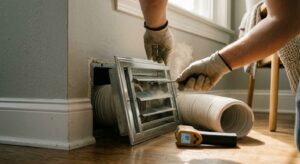
- Walk your home on a cold windy day and hold a lit incense stick near common leak points: around all electrical outlets and switch plates on exterior walls, around window and door frames where trim meets the wall, and along the baseboard on exterior walls. Smoke moving sideways confirms a draft.
- Remove outlet and switch plate covers on exterior walls and install pre-cut foam gaskets behind each cover. A $5 pack covers 10 to 12 outlets. This single step can reduce exterior wall air leakage by 5 to 10% in older homes.
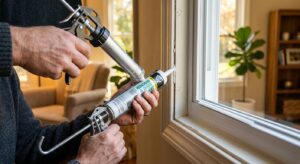
- Apply rope caulk (a pliable, removable product) along the interior edges of window frames where the frame meets the wall trim. This is renter-friendly because it peels off cleanly in spring without damaging surfaces.
- Replace door sweeps on any exterior door where you can see light under the gap or feel air movement with your hand. A $12 to $20 sweep installs in under 15 minutes with a screwdriver and can seal a gap that loses as much air as a four-inch hole.
- Check your fireplace damper and make sure it closes fully when not in use. An open damper is equivalent to a 48-square-inch hole in your ceiling. If the damper is warped or broken, a $25 to $50 inflatable chimney balloon seals it completely until your next fire.
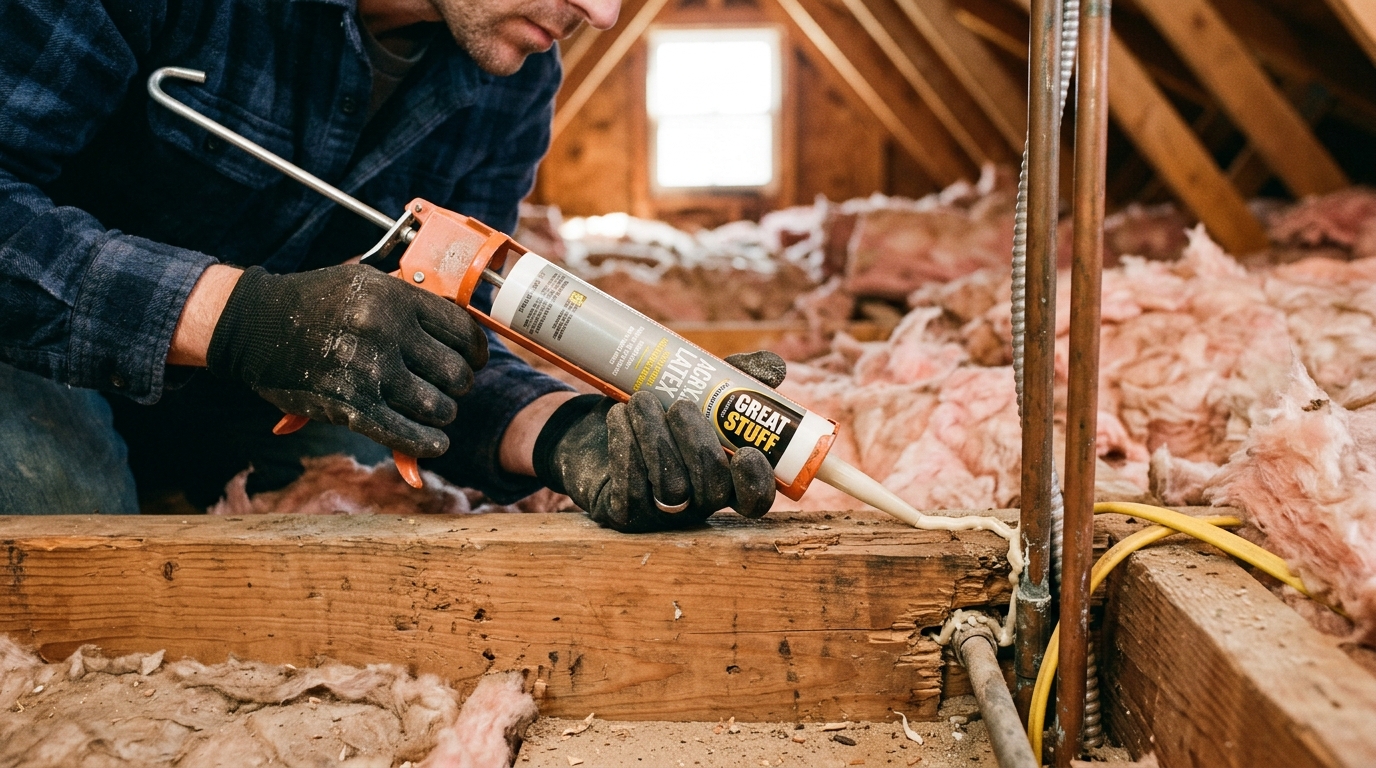
- Gather your materials before entering the attic: two cans of low-expanding spray foam (for gaps up to 3 inches), one tube of paintable acoustical caulk or fire-rated caulk, safety glasses, a dust mask rated N95 or better, and knee pads. Attic insulation contains irritants and the space will be warm.
- In the attic, pull back any existing insulation near the eaves and at the attic hatch to expose the top plates of interior walls. These are the single largest source of air leakage in most homes. You will typically see gaps and holes where wires, pipes, and ductwork penetrate the framing.
- Seal every penetration through the top plate using spray foam for gaps larger than half an inch and acoustical caulk for hairline cracks and small gaps. Pay particular attention to plumbing vent stacks, electrical wire bundles, and HVAC supply and return boots where they exit through the floor.
- Apply a continuous bead of caulk along the entire joint where the top plate meets the drywall below on both sides of every interior wall. This single detail can reduce infiltration by 10 to 15% on its own in homes built before 2000.
- Move to the basement or crawlspace and locate the rim joist, which is the framing member that sits on top of your foundation wall and closes off the floor framing. Cut rigid foam board (R-10 polyisocyanurate) into fitted rectangles for each joist bay, press them snugly against the rim joist, and seal all four edges with spray foam. This is one of the most cost-effective upgrades in any home.
- After completing both areas, replace attic insulation you moved and verify your attic hatch has weatherstripping around its perimeter. An unsealed attic hatch can undo a significant portion of your air sealing work since it opens directly into the largest pressure-driven leak zone in the house.
- Contact your utility company or state energy office first. Many offer subsidized energy audits for $50 to $100 that include a blower door test, which would otherwise cost $200 to $400 on its own. Some utilities offer the service free for income-qualifying households.
- During the audit, the technician installs a calibrated fan in an exterior doorframe that depressurizes the house to 50 pascals. This amplifies all air leaks by roughly 20 times, making them detectable with a thermal camera or smoke pencil. Ask to walk through the house with the technician so you can see exactly where your leaks are.
- Review the written report and prioritize the top five to ten leak locations by airflow volume, not by ease of access. The largest leaks are often hidden in attic kneewalls, behind knee walls in Cape Cod style homes, or in chases built around chimneys and HVAC ducts.
- Use the blower door findings to guide a targeted DIY effort using the materials and methods from the DIY approach above. With the exact leak locations identified, your materials cost drops and your time efficiency increases significantly.
- Schedule a follow-up blower door test after completing repairs to verify your ACH50 number improved. Many utilities count a verified improvement toward rebate programs that can offset the cost of the original audit.
Why It Works: The Benefits
The DOE estimates that thorough air sealing combined with proper insulation can reduce heating and cooling costs by 10 to 20% annually. For a home spending $2,000 per year on energy, that is $200 to $400 back in your pocket every year.
Eliminating air leaks stops the cold drafts along floors and the stuffy hot spots near ceilings that make certain rooms feel uncomfortable regardless of thermostat setting. Rooms that have always been too cold in winter or too hot in summer often improve noticeably within days of sealing.
Uncontrolled air infiltration carries outdoor pollutants, pollen, radon, and moisture into your home. Sealing the envelope gives you control over where fresh air enters, allowing you to filter it properly rather than accepting whatever the cracks deliver.
When conditioned air stays inside and unconditioned air stays out, your heating and cooling equipment runs fewer cycles to maintain setpoint. This reduces wear on the compressor and heat exchanger, potentially extending equipment life by several years.
A basic DIY air sealing project using caulk and expanding foam typically costs $30 to $100 in materials. With energy savings of $150 to $400 per year in a moderately leaky home, payback often occurs within the first heating or cooling season.
💰 Savings Impact by Action
Sealing top plates and penetrations at the attic floor reduces the primary stack-effect pathway and cuts heating and cooling loss by up to 15% in homes built before 2000.
Insulating and air sealing basement rim joists addresses up to 15% of total home envelope leakage and typically saves 8 to 10% on heating costs in cold climates.
Sealing exterior wall outlets, window frames, and door thresholds reduces surface-level infiltration and contributes 3 to 5% in energy savings for minimal cost.
A comprehensive air sealing project covering attic, basement, and wall penetrations can reduce total heating and cooling energy use by 10 to 20% according to DOE Building America data.
Air sealing before adding insulation improves the effective R-value performance of attic insulation by 30 to 40% by eliminating thermal bypass through air movement.
🏠 Key Concepts Explained
The Science Behind It
Heat moves through your building envelope in three ways: conduction through solid materials, radiation across air gaps, and convection via moving air. Insulation is specifically designed to resist conductive heat flow and slow radiant transfer, but it is almost powerless against convection. When air moves through or around insulation, it carries thermal energy at a rate 100 to 1,000 times faster than conduction alone, which is why a wall stuffed with R-15 batts but full of air channels can perform like an uninsulated wall in practice.
The stack effect is the dominant natural force driving infiltration in most homes. Because warm air is less dense, it rises continuously and creates a zone of positive pressure near the top of your home and negative pressure near the bottom. In winter, this means warm indoor air is always trying to escape through your attic, while cold outdoor air is always being drawn in through your basement and lower walls. The greater the temperature difference between inside and outside, the stronger this pressure-driven flow becomes. A typical two-story home with moderate leakage can exchange its entire air volume two to three times per hour through this mechanism alone.
This is precisely why air sealing must be addressed before adding more insulation. Adding insulation to an attic that leaks freely at the top plates is like insulating around a chimney while leaving the flue wide open. The DOE’s Building America program has repeatedly found that air sealing the attic floor before adding insulation improves the effective performance of the insulation by 30 to 50% compared to adding insulation alone. Seal the holes, then insulate over them, and both strategies work together as intended.
Frequently Asked Questions
▼ I sealed all the obvious gaps but my house still feels drafty. What am I missing?
The most impactful leaks are almost always hidden: inside the attic at wall top plates, in the basement rim joist, and around recessed light cans in ceilings (each one can leak as much air as leaving a window cracked). Pull back attic insulation near exterior walls and look for daylight or gaps around any penetration. Recessed lights require special airtight covers called IC-rated boxes or fire-rated foam covers on the attic side.
▼ Can I do this in a rental apartment without landlord permission?
Yes, with some limitations. Rope caulk on window frames, foam gaskets behind outlet covers, and door sweeps are all removable or renter-approved in most leases. Avoid permanent foam or caulk on shared walls or around plumbing, and always check your lease before making any modifications. These temporary fixes alone can cut drafts noticeably and typically cost under $30.
▼ How long before I see actual savings on my energy bill after air sealing?
You will typically see lower bills within the first full billing cycle after sealing, especially if you complete the attic and rim joist work. Savings accumulate faster in homes with extreme temperatures, longer heating or cooling seasons, or very leaky baselines. Track your bill for three months before and after to isolate the impact from seasonal variation.
▼ My house is from the 1960s. Is it too leaky to bother with DIY sealing?
Older homes are exactly the ones where air sealing delivers the most benefit because they were built before energy codes required any attention to air barriers. The leakier the baseline, the larger the percentage improvement from sealing. Focus first on the attic top plates and rim joists, which will deliver the majority of savings. A full DIY weekend in a 1960s home could move it from 8 to 10 ACH50 down to 4 to 5 ACH50, which is a very meaningful improvement in comfort and bills.
▼ Is it possible to seal my home too tight and cause problems?
In practice, DIY air sealing rarely gets a home tight enough to cause ventilation problems, especially in older homes. However, if you complete a thorough sealing project, it is smart to verify that your bathroom and kitchen exhaust fans are working and run them regularly to manage moisture. If you have a gas furnace or water heater, have an HVAC tech check for backdrafting after significant air sealing work.
Quick Tips
- Do your air sealing work in winter or on a cold day so temperature-driven drafts are strongest and easiest to detect without equipment.
- Foam backer rod (a cheap foam rope sold in hardware stores) is ideal for filling gaps between half an inch and two inches before applying caulk, saving you foam and improving the seal.
- Seal interior partition walls in the attic as well as exterior walls. Interior walls often have just as many penetrations and connect directly to the stack effect pathway.
- After sealing, test your work with the incense stick method again on the next cold day. If smoke still moves near a previously treated spot, apply a second layer of foam or caulk once the first has cured.
Variations for Your Situation
- Apartment or Rental: Renters cannot modify central HVAC or attic spaces, but they can still seal window gaps with removable rope caulk ($5 to $8 per roll), install foam gaskets behind outlet covers ($5 per pack), and add door draft stoppers to exterior doors. These three steps combined can reduce a drafty apartment’s infiltration noticeably and cost under $25 total with zero permanent modifications.
- Tight Budget (under $50): Start exclusively with spray foam for attic top plate penetrations and rim joist foam board, which deliver the highest return per dollar of any air sealing measure. A single $12 can of low-expanding foam and a $15 sheet of rigid foam board for the rim joist can address the two biggest leak zones in your home for under $30 in materials.
- Older Home (pre-1980): Homes from this era were built without house wrap, vapor barriers, or airtight framing practices, so leakage rates are often three to five times higher than modern construction. Prioritize a professional energy audit first to identify your home’s specific weak points before buying materials, since leak locations in older homes vary widely by construction type. Also check for knob-and-tube wiring before applying any foam or insulation in wall cavities or near the attic floor.