It feels like common sense: if no one is using the guest room, why cool it? Close the vent, save some money. Unfortunately, this widely believed home efficiency trick is one of the most persistent myths in the HVAC world, and it is quietly costing homeowners money every summer. Closing supply vents does not reduce how hard your air conditioner works. It changes where the pressure goes, and rarely in a good way.
Your central HVAC system was designed and sized to move a specific volume of air through a balanced network of ducts. When you block one or more supply vents, that air has nowhere to go. Static pressure builds up inside the duct system, your blower motor strains against the resistance, airflow drops across the whole house, and your evaporator coil can actually freeze up. In leaky duct systems, which describes roughly 70% of U.S. homes according to the EPA, that extra pressurized air just escapes into your attic or crawlspace instead of cooling your living space.
In this post, you will learn exactly why closed vents backfire, what the real science says about pressure and airflow, and three practical approaches you can use right now to improve comfort and cut cooling costs without harming your system. Whether you want a free five-minute fix or a more permanent upgrade, there is an option here for you.
What You’ll Need
Click on an item below to shop for the recommended items for this recipe on Amazon.
As an Amazon Associate, we earn from qualifying purchases.
How to Do It
- Walk through your home and open every supply vent fully, including rooms you rarely use. Leave return air vents fully unobstructed at all times as blocking returns causes the most severe pressure problems.
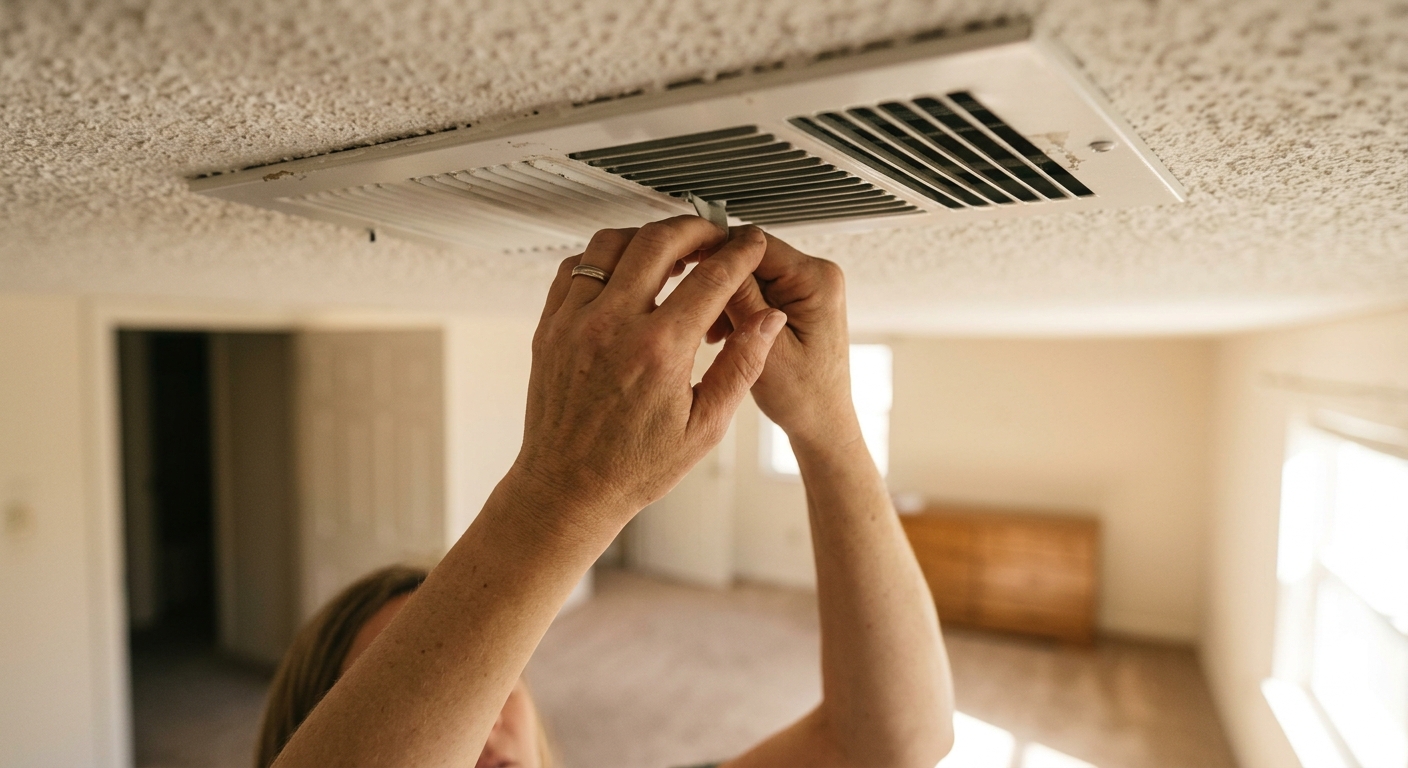
- In rooms you want to cool less, angle the vent louvers toward the ceiling rather than closing the vent. This reduces direct airflow to occupants while keeping the duct system pressure balanced.
- Move furniture, curtains, and rugs away from both supply and return vents. Even partial blockage from a couch or drapes placed over a vent raises static pressure measurably.
- Set your thermostat fan to Auto rather than On. Running the fan continuously without a cooling cycle moves unconditioned air through leaky ducts and wastes energy without cooling benefit.
- Check that your air filter is clean. A clogged filter restricts airflow just as much as closed vents and is the single fastest free fix for high static pressure. Replace filters every 60 to 90 days in summer.
- Buy an inexpensive digital thermometer or infrared thermometer and measure the temperature in each room one hour after your AC has been running. Note which rooms are more than 3 degrees warmer than your thermostat setpoint.
- Partially restrict, rather than fully close, vents in the coolest rooms by adjusting the lever to roughly 50 to 70% open. This redirects some airflow toward problem rooms without blocking ducts entirely.
- Install adjustable vent covers with built-in dampers on the 1 to 2 rooms that consistently overcool. Products like the Keen Home Smart Vent or basic adjustable floor registers from a hardware store cost $8 to $30 each and give you precise control.
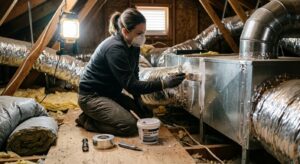
- Seal accessible duct connections in your attic, basement, or crawlspace with UL-listed metal foil tape (not standard duct tape, which fails within a year). Focus on joints near the air handler first since pressure is highest there. This alone can recover 15 to 20% of lost conditioned air.
- Add door undercut clearance of at least 1 inch in any room without a return air vent. Without a path for air to escape back to the return, pressure builds in that room and reduces airflow from the supply vent. A door undercut saw costs $25 to $40 at any hardware store.
- Recheck temperatures after one full week of operation and fine-tune vent positions until room-to-room variation is within 2 to 3 degrees Fahrenheit.
- Hire an HVAC technician or energy auditor to perform a duct leakage test (blower door with duct pressurization). This measures exactly how much conditioned air you are losing and where, giving you a baseline before any work.
- Have the technician measure static pressure at the air handler with a manometer. Design static pressure for most residential systems is 0.5 inches of water column or less. Reading above 0.8 means your system is severely stressed.
- Request Aeroseal duct sealing if your duct leakage rate is above 15%. This pressurized sealant process seals leaks from the inside without tearing open walls or ceilings and can reduce duct leakage by 90%, with typical energy savings of $200 to $400 per year.
- Ask your HVAC contractor to balance airflow using a balometer or flow hood to measure actual cubic feet per minute at each vent. They can adjust dampers inside the ductwork, not just at the registers, for precise system-wide balance.
- If your system is oversized for your home’s actual cooling load, discuss a variable-speed air handler upgrade. Variable-speed blowers automatically adjust to maintain correct static pressure even if duct restrictions exist, and they use 50 to 75% less electricity than single-speed motors.
Why It Works: The Benefits
Reopening closed vents and balancing airflow reduces blower strain and duct leakage losses, cutting cooling energy use by 10 to 20% in homes with previously blocked vents and leaky ducts.
Running your system at design static pressure reduces wear on the blower motor and compressor. Chronically high static pressure is one of the leading causes of early HVAC failure, and replacing a system averages $5,000 to $12,000.
Proper airflow balancing eliminates hot spots caused by pressure imbalances and thermal bypass through shared walls, keeping temperature variation across rooms to within 2 to 3 degrees Fahrenheit instead of 8 to 12.
Maintaining adequate airflow across the evaporator coil prevents freeze-ups, which can damage the coil and compressor and require expensive refrigerant recovery and repair, often $300 to $800 per incident.
Your AC removes humidity most efficiently when airflow is at its designed rate. Low airflow from closed vents reduces moisture removal by up to 25%, leaving your home feeling clammy even when the thermostat reads 72 degrees.
💰 Savings Impact by Action
Reopening closed vents in a home where three or more vents were blocked reduces blower energy draw and duct leakage losses by an estimated 10 to 15%.
Sealing leaky ducts with foil tape or Aeroseal recovers 15 to 25% of conditioned air that was previously escaping to unconditioned spaces.
Replacing a clogged HVAC filter restores design airflow and can reduce cooling energy use by 5 to 15% almost immediately.
Professional duct balancing reduces temperature variation and prevents the system from over-running in pursuit of setpoint, saving roughly 8 to 12% on cooling costs.
Upgrading from a single-speed PSC motor to a variable-speed ECM blower reduces fan electricity use by 50 to 75% over a cooling season.
🏠 Key Concepts Explained
The Science Behind It
Your central air conditioning system is a pressure-driven system. The blower motor creates a pressure differential that pushes conditioned air through supply ducts and pulls room air back through return ducts. Every duct run, every elbow, every register grille adds resistance to that airflow, and your system is designed by engineers to operate within a specific total external static pressure (TESP), typically 0.5 inches of water column for residential systems. When you close a supply vent, you are adding resistance to that engineered system without reducing the volume of air the blower is trying to move.
The result is measurably worse performance in two ways. First, on the supply side, pressure builds in the duct trunk, and that extra pressure finds the path of least resistance through duct leaks into your attic or crawlspace. Lawrence Berkeley National Laboratory research found that homes with closed vents and leaky ducts can lose an additional 10 to 25% of their conditioned air compared to when all vents are open. Second, on the return side, rooms without adequate return air pathways develop positive pressure, which physically pushes conditioned air out of the room through wall gaps and electrical outlets faster than the supply vent can replace it.
The thermal bypass effect compounds the problem further. An unused bedroom with a closed vent on a 95-degree summer day will reach interior temperatures of 85 to 95 degrees within a few hours. That superheated room shares walls, floors, or ceilings with the rooms you are cooling. Heat conducts through those surfaces continuously, adding to your AC’s load rather than reducing it. The net effect of closing vents in three unused rooms can actually increase your whole-house cooling load by 5 to 10%, exactly the opposite of what most homeowners intend.
Frequently Asked Questions
▼ Why is my AC still running all day even after I reopened the vents?
Continuous operation after reopening vents usually points to one of three causes: an undersized or aging system, excessive duct leakage losing conditioned air before it reaches living spaces, or an air infiltration problem where hot outdoor air is entering faster than your AC can remove it. Start by checking and replacing your air filter, then schedule a duct leakage test with an HVAC technician to determine if duct sealing is needed.
▼ Can I close vents in my basement since it stays cool anyway?
Partially restricting basement vents is generally lower risk than closing vents in upper-floor rooms because basements have naturally lower cooling loads, but you should still keep them at least 50% open to maintain duct pressure balance. If your basement is finished and insulated, treat it like any other room in the balancing process. Fully closed basement vents still raise system static pressure and can worsen duct leakage into the rim joist area.
▼ How long before I actually notice savings on my bill after reopening vents?
Most homeowners see a change in their next monthly utility bill, which reflects 30 days of improved operation. If you also cleaned a clogged filter and unsealed return vents at the same time, the combined effect can reduce your cooling bill by 10 to 20% in that first cycle. Savings from professional duct sealing take one to three cooling seasons to fully evaluate because outdoor temperature variation makes year-over-year comparison necessary.
▼ What if I have a smart vent system, is closing vents with those okay?
Smart vent systems like Keen Home or Flair are designed with pressure relief mechanisms and communicate with your thermostat to manage system-wide pressure more carefully than manually closing a vent. They are safer than manual vent closing, but they are not a substitute for a properly balanced duct system. Use them only in systems with variable-speed blowers or in conjunction with a bypass damper that your HVAC contractor installs at the air handler.
▼ My house has one room that is always hotter than the rest. Is closing other vents a way to fix that?
Closing vents in cool rooms to force more air to a hot room is a common instinct but rarely works because the increased duct pressure reduces total system airflow rather than redirecting it effectively. The better fix is to have an HVAC technician measure airflow at each register with a flow hood and adjust the balancing dampers inside the ductwork to increase flow specifically to the problem room, which solves the issue without stressing the system.
Quick Tips
- Keep all return air vents completely clear at all times. Return blockage causes faster and more severe pressure problems than supply vent restrictions.
- If you have a two-story home, use the upstairs thermostat or a zoning system rather than closing vents to manage the natural temperature difference between floors caused by heat rising.
- Replace standard 1-inch air filters with a properly sized MERV 8 filter rather than a MERV 13 or higher. Thicker high-MERV filters significantly restrict airflow in systems not designed for them, mimicking the effect of closed vents.
- Schedule an HVAC tune-up each spring before cooling season. A technician will check static pressure, refrigerant charge, and coil condition, catching high-pressure damage before it causes a breakdown during a summer heat wave.
Variations for Your Situation
- Apartment or Condo: Renters in apartments typically have fan coil units or packaged terminal AC units serving individual rooms rather than a central ducted system, so vent-closing pressure problems are less severe. However, blocking the return air grille on a fan coil unit, which many renters do with furniture or curtains, causes the same freeze-up risk. Keep all grilles clear, use a freestanding fan to improve air circulation to warm rooms, and ask your building manager if balancing dampers can be adjusted in your unit’s ductwork.
- Tight Budget (Under $50): Focus on the completely free steps first: open all vents fully, unblock all returns, and replace your air filter ($10 to $20). Then add metal foil tape ($8 to $12) to seal any visible duct joints in your basement or crawlspace. This combination addresses the two biggest causes of pressure problems (blockage and leakage) for under $30 and can recover noticeable cooling performance within a few days.
- Older Home (Pre-1980): Homes built before 1980 often have undersized return ducts and duct systems constructed from building cavities like wall stud bays and floor joist bays rather than sheet metal. These construction-cavity ducts leak far more than metal ducts and are almost impossible to seal effectively with tape. In these homes, reopening closed vents helps but professional duct remediation or adding supplemental ductwork is often the only way to achieve meaningful efficiency gains. An energy audit ($150 to $400) will tell you whether patching the existing system or replacing it makes more financial sense.