Every fall, millions of homeowners fire up their furnaces without a second thought, only to spend the next four months battling cold floors, drafty rooms, and heating bills that seem to climb higher every year. The problem is not usually the furnace itself. It is the slow accumulation of small failures throughout the house: a weatherstripped door that has worn down, an attic hatch with no insulation, a furnace filter so clogged it is strangling airflow. Each one alone costs you a little. Together, they can add 25 to 40% to your winter heating bill.
The good news is that fall is the single best time to fix all of this. Contractors are not yet swamped with emergency calls, hardware stores are stocked with weatherization supplies, and you still have time to make changes before you actually need your heating system to perform. A well-executed fall prep routine addresses four key systems: your heating equipment, your building envelope (where conditioned air escapes), your insulation, and your thermostat strategy. Done right, these changes pay for themselves within one heating season in most climates.
This guide gives you a complete fall prep checklist organized by effort level, from zero-cost fixes you can do in an afternoon to DIY upgrades worth tackling on a weekend. We include real payback numbers, step-by-step instructions, and the building science behind why each fix actually works so you can prioritize the ones that matter most for your home.
What You’ll Need
Click on an item below to shop for the recommended items for this recipe on Amazon.
As an Amazon Associate, we earn from qualifying purchases.
How to Do It
- Replace the furnace filter with a MERV 8 to 11 filter. Hold the old one up to a window: if you cannot see light through it, it has been overdue. A clean filter restores full airflow and can improve furnace efficiency by 5 to 15%.
- Walk every exterior door in the house and slide a piece of paper under the closed door. If it slides freely with no resistance, the door sweep or threshold seal needs replacement. Mark each failing door with a sticky note.
- Feel along the inside of window frames, electrical outlets on exterior walls, and where baseboards meet the floor on cold days or when wind is blowing. Any perceptible airflow indicates a leaking gap you should seal.
- Check your attic access hatch. Open it and look for insulation on top of the hatch panel itself. Most attic hatches are either bare wood or have minimal insulation, making them a concentrated heat loss point. If bare, set it aside to address under the DIY approach.
- Set your programmable or smart thermostat to a winter schedule: 68 degrees when home and awake, 60 degrees when asleep or away. This single change saves approximately 10% on heating bills with zero equipment cost.
- Reverse your ceiling fans to run clockwise at low speed. This pushes warm air that has collected near the ceiling back down along the walls, improving perceived warmth at head height without raising the thermostat.
- Apply self-adhesive foam or V-strip weatherstripping to all exterior door frames where you identified gaps in the Afternoon Sweep. For door bottoms, install a door sweep with a flexible vinyl fin. Total material cost is $8 to $20 per door and typical installation takes 20 minutes per door.
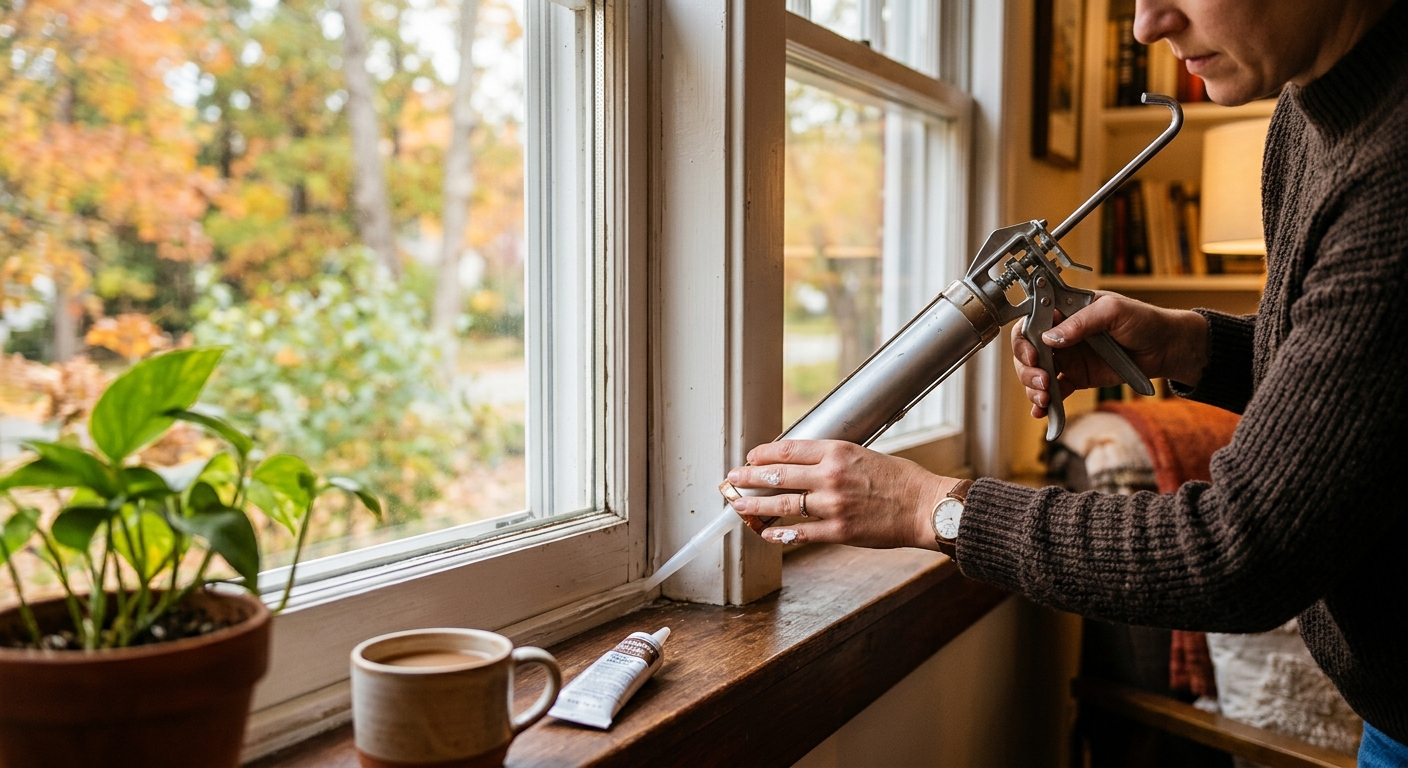
- Seal window frames, where pipes enter through exterior walls, and around electrical boxes on exterior walls using paintable acrylic latex caulk. A single $5 tube covers approximately 20 linear feet. Focus on the basement rim joist area, which is one of the highest-leakage zones in most homes.
- Insulate your attic access hatch by cutting rigid foam board (R-10 or better) to fit the top of the hatch panel and adhering it with construction adhesive. Add foam weatherstripping around the hatch frame to create an air seal when closed. Material cost is under $20 and heat loss through an uninsulated hatch can equal leaving a window open all winter.
- Wrap the first 3 to 6 feet of hot water pipes leaving your water heater with foam pipe insulation. This reduces standby heat loss and delivers hotter water to faucets faster, saving 2 to 4% on water heating energy. Cost is about $10 to $20 in materials.
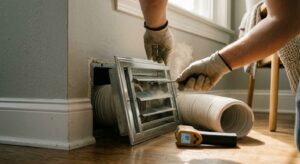
- Inspect and seal accessible duct joints in the basement or crawlspace using foil-backed mastic tape (not standard duct tape, which fails within a year or two). Leaky ducts in unconditioned spaces waste 20 to 30% of heating output before it reaches living areas. Seal any visible gaps or disconnected sections.
- Check attic insulation depth. Current DOE recommendations for most U.S. climates call for R-38 to R-60 in the attic. If your insulation measures less than 11 inches of fiberglass batts or 8 inches of cellulose, adding more is the single highest-return insulation upgrade you can make, with typical payback of 3 to 5 years.
- Schedule an HVAC tune-up with a licensed HVAC technician before the first cold spell in October. The tech will clean the heat exchanger, check flue draft and combustion efficiency, test the heat anticipator on the thermostat, and verify refrigerant levels if you have a heat pump. A well-tuned furnace operates 10 to 15% more efficiently than a neglected one.
- Request a blower door test from an energy auditor or weatherization contractor. This test pressurizes your home and pinpoints every significant air leak, including ones you cannot find by hand-checking. The report tells you exactly where your biggest losses are and quantifies total air leakage in ACH50 (air changes per hour at 50 Pascals). Homes built before 1990 commonly test at 10 to 20 ACH50 when 5 or below is the current standard.
- Have the auditor perform duct leakage testing (duct blaster test) to quantify how much conditioned air your duct system is losing to unconditioned spaces. If duct leakage exceeds 15% of system airflow, professional duct sealing with Aeroseal or manual mastic sealing will pay back within 2 to 4 heating seasons.
- Review the auditor’s prioritized report and request a cost-benefit breakdown. Auditors rank improvements by return on investment, which allows you to tackle the highest-payback fixes first and defer lower-priority upgrades.
Why It Works: The Benefits
Combining air sealing, a furnace tune-up, and thermostat scheduling can reduce winter heating costs by 20 to 30%, saving a typical household $200 to $400 over a full heating season depending on fuel type and climate zone.
Sealing leaks and adding insulation eliminates the cold spots and drafts that force you to overheat one part of the house to keep another comfortable, improving whole-home temperature consistency by several degrees.
A clean filter and properly sealed duct system reduces the runtime and strain on your furnace. Reducing average cycle time by 15% can meaningfully extend the service life of a furnace that typically lasts 15 to 20 years.
Sealing air leaks reduces infiltration of outdoor pollutants, allergens, and uncontrolled moisture. This is especially important in fall when mold spores, leaf debris, and exhaust from neighboring chimneys are common outdoor air quality concerns.
A 25% reduction in heating energy use in a gas-heated home saves roughly 350 to 500 pounds of CO2 per heating season, the equivalent of not driving a car for three to four weeks.
💰 Savings Impact by Action
Sealing infiltration pathways in the building envelope reduces conditioned air loss by 25 to 40% in typical pre-1990 homes.
Lowering the thermostat 7 to 10 degrees for 8 hours per day saves approximately 10% on annual heating costs per DOE estimates.
Upgrading attic insulation from R-19 to R-38 reduces ceiling heat loss by up to 50%, cutting total home heating load by 15 to 20%.
Sealing leaky ducts in unconditioned spaces recovers 20 to 30% of heating output that would otherwise be lost before reaching living areas.
A professional furnace cleaning and efficiency check restores combustion efficiency by 10 to 15% compared to a neglected unit.
🏠 Key Concepts Explained
The Science Behind It
Your home loses heat through three mechanisms: conduction (heat moving through solid materials like walls, windows, and roofs), convection (warm air physically moving out through gaps and being replaced by cold air), and radiation (warm surfaces emitting infrared energy toward colder surfaces). In a typical unweatherized home, air infiltration accounts for 25 to 40% of heating energy loss, making it the single largest controllable variable. Every gap between the conditioned interior and the unconditioned exterior creates a pressure-driven pathway for air exchange, and the stack effect dramatically amplifies this in cold weather.
The stack effect works like a chimney. Warm air is less dense than cold air, so it rises toward the upper portion of the house and exerts outward pressure on any gap it can find: attic hatch seams, recessed lights, top-plate penetrations for wiring, and ceiling fixtures. As warm air escapes at the top, it creates a slight negative pressure at the bottom of the house that pulls cold outdoor air in through foundation sills, gap under exterior doors, and basement rim joists. The greater the temperature difference between inside and outside, the stronger the stack effect and the faster this exchange happens. Sealing both the top and bottom of the building envelope is essential because fixing only one end simply changes where the air moves, not how much.
Insulation works by trapping millions of tiny air pockets that resist conductive heat flow. The R-value system measures this resistance: each additional R-value point reduces heat flow through that assembly by a measurable percentage. In most U.S. climates, upgrading attic insulation from R-19 to R-38 reduces ceiling heat loss by roughly 50%, because ceiling and roof assemblies account for 25 to 35% of total building heat loss. The return on attic insulation is consistently higher than wall insulation because the attic is more accessible, the temperature difference across the ceiling is typically larger, and there is usually more room to add material without structural modifications.
Frequently Asked Questions
▼ I did all the weatherstripping and caulking but my heating bill barely changed. What did I miss?
The most common culprit is duct leakage in unconditioned spaces, which can waste 20 to 30% of your heating output before it ever reaches your living areas. Go to your basement or crawlspace when the furnace is running and hold your hand near duct joints and seams. Feeling warm air means conditioned air is escaping. Seal those joints with foil mastic tape, not standard gray duct tape. If that does not explain the gap, the next step is a professional blower door test to find leaks that are not visible or accessible without pressurization.
▼ My furnace is only 5 years old. Do I still need a fall tune-up?
Yes, though the interval can stretch to every two years if you change filters regularly and the system is performing well. Even newer furnaces accumulate dust on the heat exchanger and blower components, and the combustion efficiency of a gas furnace can drift by 5 to 8% within two to three seasons without cleaning. A tune-up also catches igniter wear, cracked heat exchangers, and failing capacitors before they become emergency repairs in January when HVAC technicians are busiest and charge premium rates.
▼ How do I know if my attic insulation is actually thick enough?
Go up to the attic with a ruler and measure the depth of your insulation. For most U.S. climates (Zones 4 through 6), the DOE recommends R-38 to R-60, which equals roughly 12 to 20 inches of blown fiberglass or 10 to 16 inches of blown cellulose. If your floor joists (typically 2×6 or 2×8 lumber) are clearly visible and not buried, you almost certainly need more. Adding insulation yourself with rented blown-in equipment is a feasible DIY project for most homeowners and typically costs $0.50 to $1.50 per square foot in materials.
▼ Can I do this fall prep checklist if I rent my apartment?
Most of it, yes. Renters can safely install draft stoppers, rope caulk (a removable putty-style caulk that peels off cleanly), window insulator film kits, and door sweeps that attach with screws or adhesive to the door surface. Report any drafts through electrical outlets or gaps around pipes to your landlord in writing, since those repairs are legally the landlord’s responsibility in most states. Avoid permanent caulking or modifications to the building envelope without written permission, but interior-side weatherstripping and thermostat scheduling are universally renter-safe.
▼ I have a heat pump, not a furnace. Does this checklist still apply?
Every item on the building envelope checklist applies equally, since your heat pump still has to overcome heat loss through the same leaks and gaps. The mechanical items differ: heat pumps need clean coils and clear outdoor units rather than combustion cleaning, and they should be inspected for refrigerant charge and defrost cycle operation. Critically, heat pump efficiency drops significantly below 35 degrees Fahrenheit for older systems, so good envelope performance is even more important for heat pump homes to avoid expensive backup strip heat from running frequently.
Quick Tips
- Test every exterior door sweep by sliding a dollar bill under the closed door. You should feel resistance when pulling it out. If it slides freely, the door sweep is failing and costing you money every hour the heat is running.
- The basement rim joist, where the first-floor framing sits on top of the foundation wall, is typically the single leakiest zone in older homes. Cutting rigid foam to fit each joist bay and foaming the edges with spray foam takes about two hours and often delivers more air sealing benefit than caulking every window in the house.
- If you have a wood-burning fireplace you do not plan to use this winter, buy an inflatable chimney balloon for $40 to $60. An open damper is equivalent to a 6-inch hole in your ceiling and a common chimney can lose as much heat as leaving a window wide open all day.
- Check the manufacture date on your water heater. If it is more than 8 years old and the tank is warm to the touch, the factory insulation has degraded. A water heater blanket costs $20 to $30 and reduces standby heat loss by 25 to 40%, paying back in less than a year.
Variations for Your Situation
- Apartment/Rental: Renters cannot access ductwork or add attic insulation, but can still capture meaningful savings. Focus on rope caulk around window frames ($5 a roll, fully removable), window insulator film kits ($15 to $25 per window, reduces heat loss through glass by 30 to 50%), adhesive door sweeps, and draft stoppers at exterior doors. Set thermostats to 65 degrees when away and 68 when home. These steps combined can save 10 to 15% on heating bills with zero permanent modifications.
- Tight Budget (under $50): Start with the zero-cost steps: thermostat setback scheduling, ceiling fan reversal, and checking that radiator reflectors or furniture is not blocking vents or registers. With $50, prioritize one tube of caulk ($5), a new furnace filter ($10 to $15), and weatherstripping for your two leakiest exterior doors ($15 to $20 total). These three items address the highest-impact failure points in most homes and will deliver noticeable savings within the first cold month.
- Older Home (pre-1980): Homes built before modern building codes have baseline air leakage rates two to four times higher than current standards, making air sealing dramatically more valuable. Focus first on the basement rim joist (often completely uninsulated and wide open to the exterior), attic top plates where interior walls meet the attic floor, and any original windows with single-pane glass or broken rope-and-pulley hardware. Budget $200 to $500 for materials and expect 20 to 35% heating savings after a thorough air sealing pass. A subsidized energy audit through your utility or state weatherization program may be available at low or no cost.