Humidity is one of the most overlooked factors in home comfort. When indoor relative humidity climbs above 60%, your home feels muggy and sticky even at a reasonable temperature, mold spores begin to thrive, and your air conditioner works overtime trying to remove moisture it was not sized to handle alone. Drop below 30% in winter and you get cracked wood floors, dry skin, static electricity, and a home that feels colder than the thermostat reads.
The sweet spot is 40% to 50% relative humidity year-round. Most homes swing well outside that range at least seasonally, and many fight poor humidity control all year. The good news is that you do not need a $2,000 to $4,000 whole-house humidifier or dehumidifier to fix this. Portable units, smart thermostats, and a handful of behavioral changes can bring your home into that ideal range for a fraction of the cost.
This guide covers why humidity behaves the way it does inside your home, the most effective portable and low-cost solutions, and a step-by-step approach to getting your air to the right moisture level whether you are dealing with a swampy basement, a dry winter bedroom, or anything in between.
What You’ll Need
Click on an item below to shop for the recommended items for this recipe on Amazon.
As an Amazon Associate, we earn from qualifying purchases.
How to Do It
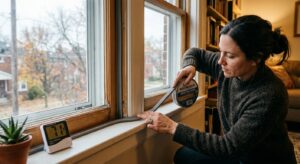
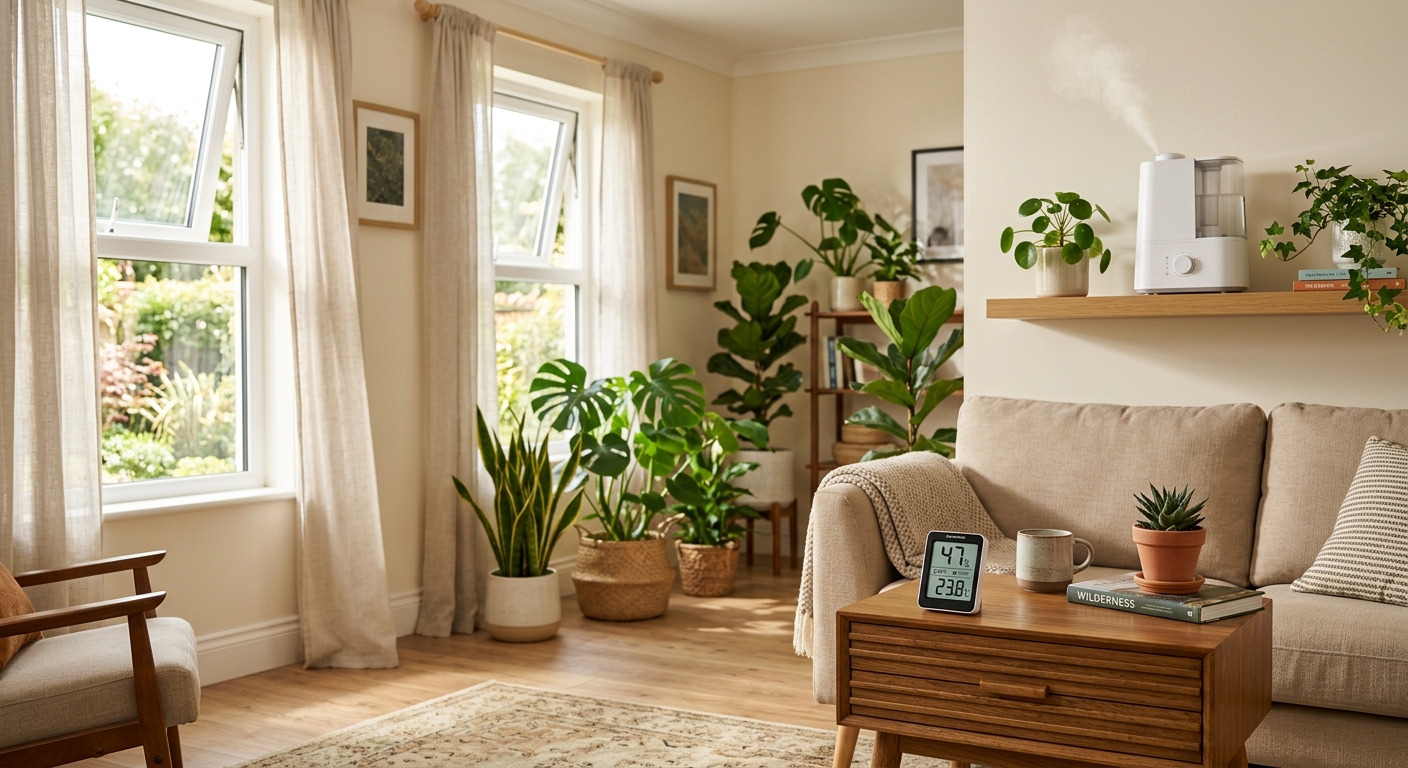
- Buy an inexpensive digital hygrometer ($10 to $20 at any hardware store) and place it in the main living area. Note the reading morning, afternoon, and evening for two or three days to get a baseline.
- If humidity is above 55% in summer, run your bathroom and kitchen exhaust fans during and for 15 minutes after any activity that generates steam. Most fans are rated to exchange the air in a bathroom in 6 to 8 minutes.
- Move houseplants outdoors or consolidate them to one room during high-humidity months. A large plant can transpire a cup or more of water per day into your air.
- Open windows briefly in the early morning (6 AM to 8 AM) during summer when outdoor humidity is lower, then close them before temperatures climb. Avoid opening windows when outdoor dew point exceeds 60°F.
- In winter, if humidity reads below 30%, reduce bathroom fan use to 10 minutes maximum after showers, cover pasta pots while cooking, and avoid running the exhaust fan longer than needed.
- Identify your primary problem zone using the hygrometer from Step 1. If readings vary more than 10 percentage points between floors, that floor is where you start.
- For high humidity in a basement or main floor in summer, purchase a portable dehumidifier sized for your space. For basements up to 1,500 square feet, a 30-pint unit ($150 to $220) is sufficient. For 1,500 to 2,500 square feet, choose a 50-pint unit ($200 to $300). Set the target to 50% RH.
- Position the dehumidifier at least 6 inches from walls and away from corners to allow unrestricted airflow. If draining manually, place it near a floor drain or use the continuous drain hose fitting (included on most units) routed to a utility sink.
- For dry winter air, place a cool-mist ultrasonic humidifier ($40 to $80) in the bedroom. Set it to 45% RH using the built-in humidistat. Fill daily with cool tap water and rinse the tank every two to three days to prevent mineral buildup and bacterial growth.
- Add a second hygrometer in the problem zone to verify the device is hitting its target. If the dehumidifier or humidifier runs continuously without reaching the set humidity level, the unit is undersized for the space or there is a significant moisture source that must be addressed first.
- Check and clean filters monthly. Dehumidifiers collect dust on their coil-facing filter, which reduces efficiency by 10 to 20% when clogged. Most portable humidifiers also have a demineralization cartridge or filter that should be replaced every 30 to 60 days.
- Install a smart thermostat with humidity sensing and control (such as an Ecobee or Nest Learning Thermostat). These models display current RH on the screen and the Ecobee allows you to set a humidity threshold that triggers the fan or adjusts cooling cycles.
- Enable the humidistat mode in the thermostat settings. Set the maximum summer humidity to 50% RH. The thermostat will run the AC fan to pull more air across the evaporator coil, which removes additional latent moisture without cooling the space further.
- If your home has a whole-house ventilation port or an ERV (energy recovery ventilator), connect it to the smart thermostat’s accessory terminal. The thermostat can then trigger ventilation only when outdoor conditions are favorable, avoiding pulling in humid outdoor air on bad days.
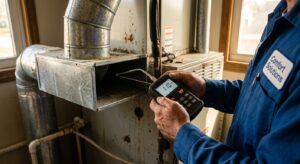
- Use the thermostat app to review humidity trends over one to two weeks. If humidity climbs above 60% regularly despite the AC running, your HVAC system may be oversized for your home (a common problem that causes short cycling and poor dehumidification). Note this for a future conversation with an HVAC technician.
- In winter, if your furnace has a built-in humidifier bypass port, you can add a whole-home bypass humidifier ($80 to $150 for the unit, plus installation labor) to work alongside the smart thermostat without replacing your full system.
Why It Works: The Benefits
Maintaining 40% to 50% RH reduces your AC’s latent load, which can cut cooling energy use by 5 to 10%. In winter, properly humidified air at 68°F feels as warm as dry air at 72°F, so you can set the thermostat lower and save up to 5% on heating.
Dust mites thrive above 50% RH and mold colonies begin forming on surfaces above 60% RH. Keeping humidity in the 40% to 50% range measurably reduces both, which matters especially for households with asthma or allergy sufferers.
Hardwood floors and wood furniture can cost thousands of dollars to repair or replace when subjected to humidity swings greater than 20 percentage points. Stable humidity in the 40% to 50% range extends the life of flooring, cabinetry, and trim significantly.
Mucous membranes, skin, and respiratory passages function best in the 40% to 50% RH range. Low humidity causes dry skin, nosebleeds, and increased susceptibility to colds and flu. High humidity causes that sticky, uncomfortable feeling that makes even a cool room feel hot.
A quality portable dehumidifier for a 1,500-square-foot basement costs $200 to $300. A bedroom humidifier runs $40 to $100. Compared to $2,000 to $4,000 for a whole-house system plus installation, portable solutions deliver 80% of the benefit at 10% of the cost for most homes.
💰 Savings Impact by Action
Reducing indoor humidity to 50% RH lowers the latent heat load on your AC, cutting cooling energy use by up to 10% in humid climates.
Properly humidified air at 68°F feels equivalent to dry air at 72°F, allowing a 4-degree thermostat setback that saves roughly 5% on heating bills.
Optimizing exhaust fan run time with timer switches reduces unnecessary conditioned air loss by up to 8% of annual ventilation-related energy waste.
Encapsulating an unconditioned crawl space eliminates up to 40% of ground-source moisture, reducing dehumidifier run time and HVAC latent load by roughly 15 to 18%.
🏠 Key Concepts Explained
The Science Behind It
Warm air holds more water vapor than cold air, a relationship described by the psychrometric chart. When outdoor air at 85°F and 75% RH enters your cooler basement through cracks and floor penetrations, it cools rapidly. As it cools, its relative humidity rises even though no new moisture has been added. Air that was 75% RH at 85°F becomes nearly saturated at 65°F, explaining why basements feel so damp in summer even without any water intrusion.
Your central air conditioner removes moisture as a byproduct of cooling. The evaporator coil sits below the dew point of the incoming air, causing water vapor to condense on its surface and drain away. The problem is that modern HVAC systems are often oversized, which means they cool the air quickly and shut off before completing a full dehumidification cycle. Short run cycles can leave indoor humidity 10 to 20 percentage points higher than it would be with a properly sized system running longer cycles. This is called short cycling, and it is one of the most common but least-diagnosed causes of chronic high humidity in well-sealed, modern homes.
In winter, the same gas laws work in reverse. Cold outdoor air holds almost no moisture. When that air infiltrates your home and warms to 70°F, its relative humidity plummets. Outside air at 20°F and 70% RH contains so little actual water vapor that when it warms indoors, its RH drops to around 10 to 15%. Every time your home exchanges air with the outside in cold weather, it loses moisture. The more airtight your home, the less this happens, which is why newer, well-sealed homes rarely suffer from winter dryness while older leaky homes often have humidity readings below 20% on cold days.
Frequently Asked Questions
▼ My dehumidifier runs constantly but the humidity never drops below 65%. What is wrong?
Either the unit is undersized for the space or there is an active moisture source it cannot keep up with. First, check for standing water, wet insulation, or an obvious leak. Then verify the unit’s pint rating against the square footage and wetness level listed on the product chart. If the unit is correctly sized and still struggling, look at basement windows, window wells, and the base of the foundation for water infiltration after rain. Fixing the entry point solves the problem far better than running a larger unit.
▼ Can I use a portable dehumidifier in a finished basement with carpet?
Yes, but place it on a hard surface if possible and route the drain hose to a floor drain or utility sink so you do not have to empty a bucket daily. Carpet itself absorbs and retains moisture, so if the carpet has been repeatedly wet or smells musty, the dehumidifier alone will not fix the problem. Moisture trapped beneath carpet padding can harbor mold even when your hygrometer reads a normal RH. In that case, the carpet may need to be removed.
▼ My home is dry in winter even with a humidifier running. Why is it not working?
The most likely causes are a humidifier that is too small for the space, a home that leaks a lot of air in cold weather, or both. A 1-gallon bedroom humidifier can maintain a bedroom but will not meaningfully raise the RH of a 2,000-square-foot open floor plan. Check the unit’s rated coverage area against your actual room size. If the unit is correctly sized, air sealing the home is the next step. Every gap around outlets, pipes, and attic hatches is a place where dry outside air can enter in winter.
▼ Should I humidify in summer if my skin is dry from the AC?
Check your hygrometer before adding moisture in summer. Most air-conditioned homes are in the acceptable range of 40% to 55% RH. If you are dry and the reading is above 45%, the problem is the AC itself drying surfaces through direct airflow, not the overall humidity level. Try redirecting vents away from sleeping or sitting areas rather than adding a humidifier, which could push summer humidity to mold-promoting levels.
▼ How do I know if my house needs a dehumidifier or just better ventilation?
If your hygrometer reads above 55% RH and the outdoor dew point is above 60°F (check a weather app), the problem is outdoor humidity entering the home. Better air sealing and a dehumidifier are the fix. If your humidity is high but the outdoor dew point is below 55°F, the moisture is being generated inside, from cooking, showers, plants, or occupants. In that case, targeted exhaust ventilation solves the problem without running a dehumidifier at all.
Quick Tips
- Set your dehumidifier to 50% RH, not lower. Running it to 40% wastes electricity and over-dries the air unnecessarily. Every 10% drop in target RH increases dehumidifier run time and energy use by roughly 15 to 25%.
- Run bathroom exhaust fans on a timer switch set to 20 minutes rather than relying on occupants to remember. A $15 to $30 timer switch is one of the cheapest humidity control upgrades you can make.
- If you have a crawl space, encapsulate it with a ground vapor barrier before buying any dehumidification equipment. Up to 40% of the moisture in a home with an unconditioned crawl space rises from bare ground. A $150 to $400 DIY encapsulation job can eliminate the moisture source entirely.
- In summer, keep interior doors open to allow your AC to circulate conditioned air more evenly. Closed doors create isolated zones where humidity can rise independently, especially in bathrooms and laundry rooms.
Variations for Your Situation
- Apartment/Rental: You cannot modify ductwork or install a whole-house system, but portable units are fully renter-safe. A $40 to $80 cool-mist humidifier handles a dry bedroom in winter, and a 30-pint dehumidifier ($150 to $220) manages a stuffy apartment in summer. A $15 digital hygrometer tells you exactly where you stand. Avoid warm-mist (steam) humidifiers in rentals due to burn risk and potential liability.
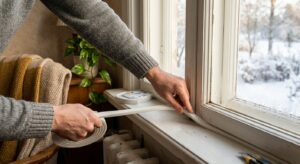
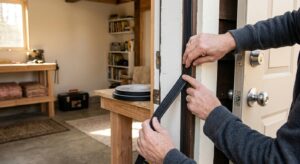
- Tight Budget (under $50): Start with a $10 to $20 hygrometer to confirm you actually have a problem. Then focus on zero-cost actions: run exhaust fans longer, consolidate plants, cook with lids on pots, and crack windows during low-humidity morning hours. A $25 programmable timer for your bathroom exhaust fan and $10 in weatherstripping for the biggest air gaps can shift humidity 5 to 10 percentage points without buying any humidity device at all.
- Older Home (pre-1980): Older homes with plaster walls, single-pane windows, and minimal insulation tend to have very high air exchange rates, making winter dryness severe and summer humidity uneven. Air sealing is the highest-return first step before any equipment purchase. Focus on the attic hatch, top plates in the attic, and basement rim joists, which together can account for 30 to 40% of total air infiltration. After sealing, a single well-placed dehumidifier or humidifier will perform far better because it is no longer fighting a constantly changing moisture load from outside.