You’ve set the thermostat to 70 degrees, the furnace is running, and you’re still bundled up on the couch wondering why your house feels freezing. You’re not imagining it. Air temperature is only one piece of the comfort puzzle, and in many homes it’s not even the most important one. Cold walls, drafty windows, low humidity, and poor air circulation can make a 70-degree room feel closer to 62 degrees in terms of how your body actually experiences it.
This is one of the most common comfort complaints homeowners have during winter, and it’s also one of the most misunderstood. Most people’s instinct is to crank the thermostat up to 74 or 75 and pay more on their heating bill. That fixes the symptom temporarily but not the cause, and it costs real money. The average household spends about $900 per year on heating, and a significant portion of that goes toward compensating for comfort problems that could be solved more efficiently.
In this post, we’ll break down exactly why your home can feel cold despite a warm thermostat reading, rank the most likely culprits from most to least common, and give you a clear action plan from free fixes you can do right now to longer-term upgrades that pay for themselves in a single heating season.
What You’ll Need
Click on an item below to shop for the recommended items for this recipe on Amazon.
As an Amazon Associate, we earn from qualifying purchases.
How to Do It
- Do a draft test on the most common entry points: hold a lit incense stick or a thin piece of tissue near window edges, door frames, electrical outlets on exterior walls, and where the floor meets exterior walls. Watch for movement that reveals air infiltration.
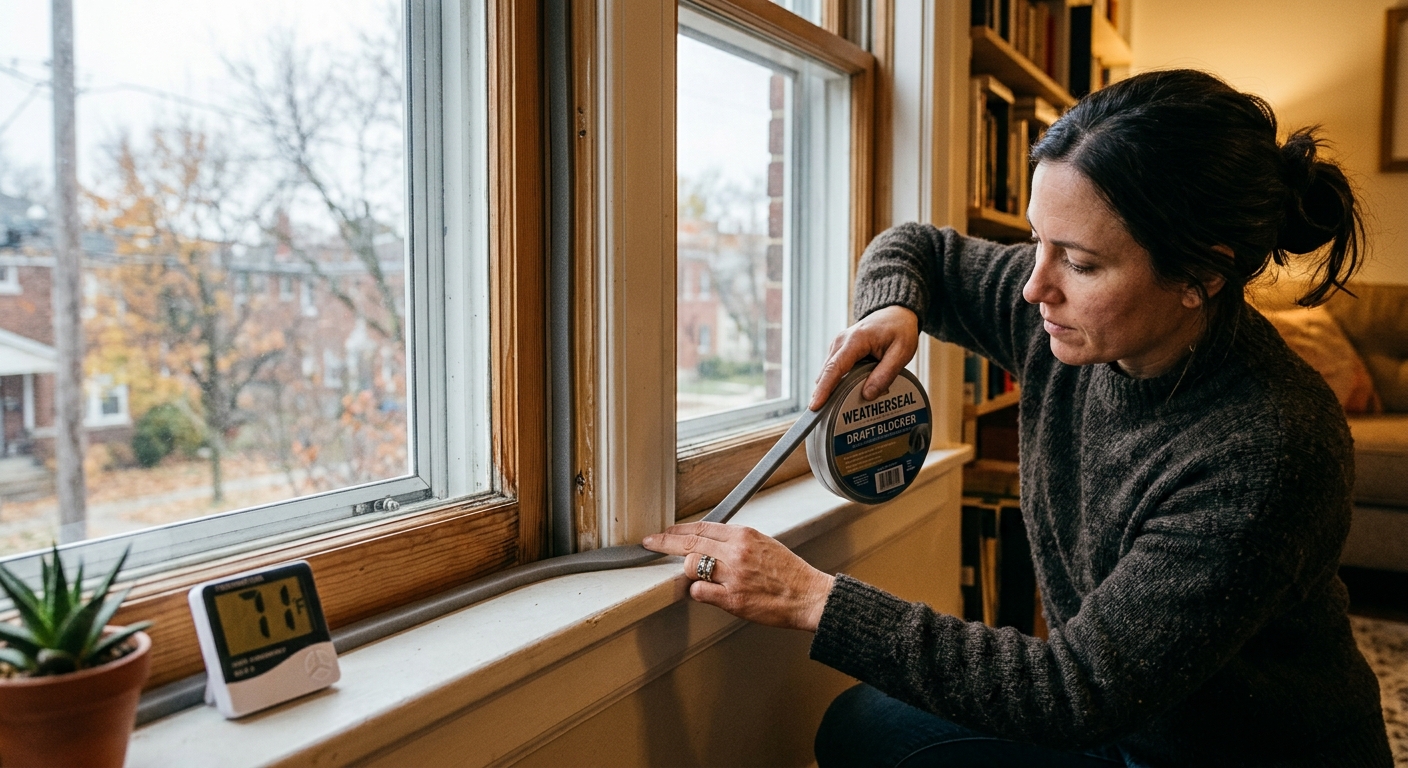
- Apply adhesive foam weather stripping to the stops on drafty doors and windows. A standard roll costs $5 to $10 and can seal an entire exterior door in under 15 minutes.
- Install foam gaskets behind outlet covers and switch plates on exterior walls. These plug a surprisingly large source of infiltration and take about 2 minutes per outlet with just a screwdriver.
- Roll up a door draft stopper or use a folded towel against the base of exterior doors where cold air flows in along the floor, especially in bedrooms and living rooms where you spend the most time.
- Check your furnace filter and replace it if it’s gray or visibly clogged. A dirty filter restricts airflow and causes your system to deliver less warm air to living spaces, directly reducing room temperatures.
- Use low-expansion spray foam or paintable acrylic caulk to seal all penetrations where pipes, wires, and ducts pass through exterior walls, floors, and ceilings. Pay particular attention to the rim joist in the basement, which is one of the single leakiest areas in most homes.
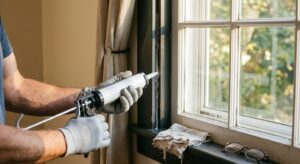
- Caulk around all window frames where the frame meets the wall, both inside and outside. Use a silicone or siliconized latex caulk rated for exterior use on outside surfaces, and paintable latex on interior surfaces.
- Add a door sweep to the bottom of exterior doors that show daylight or feel drafty at floor level. A good quality automatic door sweep costs $15 to $30 and drops into place only when the door closes, sealing out cold air without dragging on carpet.
- Add a whole-house or room-level humidifier to bring indoor humidity up to 35 to 45%. A console humidifier for a main living area costs $40 to $150 and can make the space feel 2 to 3 degrees warmer without touching the thermostat.
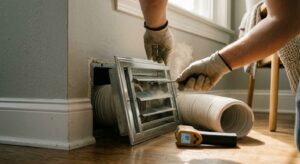
- Inspect accessible duct connections in the basement or crawlspace and wrap any visible gaps with foil-faced duct tape (not standard cloth duct tape). Sealing just a few large duct leaks can recover 10 to 20% of heated air that was being lost before it reached your living space.
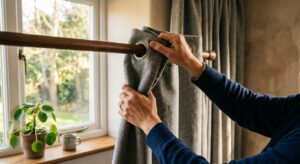
- Add heavy thermal curtains to large windows and glass doors. Thermal curtains reduce window heat loss by 25 to 30% and create a warmer surface facing into the room, directly improving Mean Radiant Temperature where you sit and sleep.
- Schedule a professional energy audit with a certified BPI or RESNET auditor. They will run a blower door test that depressurizes the house and measures total air leakage in CFM (cubic feet per minute), identifying exactly where your home is losing the most heat.
- Review the auditor’s report and prioritize repairs by cost-to-benefit ratio. Rim joist sealing, attic bypasses, and duct sealing typically deliver the highest return and are often completed during the same visit.
- Have a contractor perform professional duct sealing using Aeroseal or mastic sealant, which can reduce duct leakage by 70 to 90% compared to tape-only approaches. Payback is typically 1 to 3 heating seasons.
- If walls have little or no insulation, consider blown-in insulation through small holes drilled from the exterior or interior. This raises the temperature of wall surfaces and directly improves the Mean Radiant Temperature in the room.
- Ask about utility rebates before work begins. Many programs rebate 25 to 50% of insulation and air sealing costs, shortening payback periods significantly.
Why It Works: The Benefits
Fixing radiant heat loss and drafts lets you feel comfortable at 68 to 69 degrees instead of 72 to 73 degrees. Each degree you lower the thermostat saves roughly 3% on heating costs, meaning a 3-degree drop saves about $27 per year on a $900 heating bill.
Sealing ducts and air gaps reduces the 4 to 6 degree temperature swings between rooms that are common in leaky homes, making the whole house feel consistently comfortable rather than hot near the furnace and cold at the far end of the house.
Addressing air sealing, insulation, and duct leakage together can reduce heating costs by 10 to 30% annually, representing $90 to $270 in savings per year for a typical household.
Controlling infiltration also helps maintain healthier indoor humidity levels of 35 to 50%, which reduces static electricity, dry skin, and the cracking of wood floors and furniture that are common complaints in winter.
When your home retains heat better, your furnace runs shorter cycles, which reduces wear on the system and can extend equipment life by several years compared to a furnace that runs almost continuously to chase a comfort problem rather than an actual heating need.
💰 Savings Impact by Action
Sealing gaps and cracks throughout the building envelope reduces conditioned air loss by up to 20% of total heating energy, according to DOE estimates.
Sealing leaky ducts recovers 20 to 30% of heated air that would otherwise be lost before reaching living spaces, directly improving room temperatures.
Raising indoor humidity from 20% to 40% allows a thermostat setback of 2 to 3 degrees while maintaining the same perceived comfort, saving roughly 6 to 9% on heating costs.
Adding attic insulation to R-38 or above reduces heat loss through the ceiling by 15 to 25%, keeping room surfaces warmer and improving Mean Radiant Temperature.
Once comfort problems are fixed, setting the thermostat back 7 to 10 degrees for 8 hours per day saves approximately 10% annually on heating costs.
🏠 Key Concepts Explained
The Science Behind It
Human thermal comfort is not determined by air temperature alone. Your body is constantly exchanging heat with its surroundings through four mechanisms: conduction (touching cold surfaces), convection (air moving across your skin), evaporation (moisture leaving your skin), and radiation (heat moving toward colder surfaces without any physical contact). In a typical winter comfort problem, radiation and convection are the main culprits. If the walls, windows, and floors surrounding you average 55 to 60 degrees, your body radiates heat toward them continuously, even while sitting in 70-degree air. ASHRAE, the organization that sets comfort standards for buildings, defines thermal comfort as a function of both air temperature and Mean Radiant Temperature, and their research shows that dropping MRT by 5 degrees requires raising air temperature by roughly 5 degrees to maintain the same perceived comfort level.
The stack effect explains why drafts are worse near the floor and why your feet often feel the coldest. As warm air rises and escapes through attic gaps, ceiling fixtures, and upper-floor penetrations, it creates negative pressure at lower levels. Cold outside air is pulled in to replace it through gaps at the foundation, rim joist, and lower exterior walls. This air enters at or near floor level, which is exactly where bare feet and seated bodies are most exposed. In a home with significant air leakage, this exchange can cycle the entire volume of interior air every few hours, constantly refreshing the cold supply and making your furnace run almost continuously.
Humidity amplifies all of these effects. Heated winter air holds much less moisture than summer air, and indoor relative humidity commonly drops to 15 to 25% on cold days. Dry air increases convective and evaporative heat loss from skin, making the same temperature feel cooler. It also dries out mucous membranes, making people more sensitive to temperature changes. Raising humidity from 20% to 40% can improve perceived comfort by the equivalent of 2 to 4 degrees, which is enough to let most people comfortably lower their thermostat setpoint and reduce heating costs without feeling any less comfortable.
Frequently Asked Questions
▼ Why does my house feel cold even though the furnace is running constantly?
A furnace that runs continuously but can’t reach the thermostat setpoint usually indicates that heat is leaving the building faster than the furnace can replace it. The most likely causes are significant air leakage, insufficient insulation, or a furnace that is undersized or not functioning at full capacity. Start by checking the filter and scheduling an HVAC tune-up, then do a draft inspection as described above. If the problem persists after those steps, a blower door test will quantify exactly how leaky your home is.
▼ Why is one room always colder than the rest of the house?
Cold rooms are almost always caused by either duct issues or above-average air leakage in that specific room. Check that the supply vent in the cold room is fully open and unobstructed. Hold your hand near the vent when the furnace runs to confirm you’re getting strong airflow. If airflow is weak, the duct serving that room may be leaking, kinked, or undersized. Also check windows and exterior walls in that room carefully for drafts, as corner rooms and rooms above garages are especially prone to cold spots.
▼ Can low humidity really make my house feel that much colder?
Yes, and it’s one of the most underestimated comfort factors in winter. At 20% relative humidity, the same 70-degree room feels noticeably cooler than it does at 40% humidity because dry air pulls more moisture and heat from your skin. Pick up an inexpensive hygrometer for $10 to $15 to measure your actual indoor humidity. If it reads below 30%, adding a humidifier is one of the fastest comfort improvements you can make for under $50.
▼ My windows are new but I still feel a cold draft near them. What’s wrong?
New windows often solve glass heat loss but the gap between the window frame and the rough opening in the wall is frequently left unsealed or poorly sealed during installation. This gap is a significant source of cold air infiltration that has nothing to do with the window’s performance rating. Run your hand slowly around the interior perimeter of the frame on a cold day and feel for air movement, then seal any gaps with low-expansion foam or caulk. Also check that the exterior flashing and trim were properly caulked during installation.
▼ Is it worth hiring someone for an energy audit or can I figure this out myself?
A DIY inspection using a tissue or incense stick will find obvious major leaks and is a good starting point. A professional blower door test, however, finds leaks you genuinely cannot locate without pressurizing the house, including attic bypasses, hidden wall gaps, and fireplace damper leaks that account for a large share of total heat loss. Given that many utilities offer free or heavily subsidized audits, it’s worth calling your energy provider before paying out of pocket. If you pay, expect $200 to $400 for a certified audit that will identify far more savings than the test costs.
Quick Tips
- Rearrange furniture so seating is away from exterior walls and large windows, which are the coldest radiating surfaces in the room. Even moving a couch 18 inches away from an exterior wall can noticeably reduce the radiant chill you feel while sitting.
- Use a $15 to $20 infrared thermometer to scan your walls, floors, and window surfaces. Any surface reading more than 5 degrees below room air temperature is contributing to your comfort problem and is a direct target for improvement.
- Keep interior doors open between rooms you use regularly to allow heat to circulate evenly. Closing off unused rooms can cause pressure imbalances in the duct system that reduce airflow to the rooms you actually occupy.
- Run ceiling fans in reverse (clockwise at low speed) during winter to push the warm air pooled at the ceiling back down along the walls and into the living zone where people actually are.
Variations for Your Situation
- Apartment or Rental: Renters cannot modify ducts or add insulation, but they can do quite a bit within those limits. Use removable rope caulk on drafty windows (it peels off without damage at the end of a lease), add door draft stoppers, and place a console humidifier in the main living area. Heavy thermal curtains hung from an existing rod can reduce window heat loss by 25 to 30% and are fully portable when you move. Report persistent cold spots and drafts to your landlord in writing, as those are building maintenance issues the owner is responsible for.
- Tight Budget (under $50): Focus on outlet gaskets ($6 for a pack of 10), foam door weather stripping ($8 per roll), and a door sweep ($15 to $20) for the leakiest exterior door. These three items address the most common infiltration points and together cost under $35. Rearranging furniture away from exterior walls and reversing ceiling fans are completely free and can improve perceived comfort immediately. A basic hygrometer ($12) will tell you if humidity is a major factor before you spend anything else.
- Older Home (pre-1980): Homes built before 1980 were constructed with little concern for air sealing and often have no wall insulation, single-pane or early double-pane windows, and open attic bypasses around chimneys and interior walls. The stack effect in these homes can be severe. Prioritize rim joist sealing and attic air sealing above windows, as those two areas typically deliver the fastest payback in older construction. Budget $500 to $1,500 for professional attic sealing and blown-in wall insulation, but check for utility rebates first since many programs specifically target pre-1980 homes with subsidized rates of 30 to 50% off project costs.