Every time someone walks through your front door, your HVAC system loses the battle. A poorly sealed entryway is essentially a direct pipeline between your conditioned indoor air and whatever extreme temperature sits outside. In winter, cold air rushes in low while warm air escapes high. In summer, the process reverses, flooding your entry with heat and humidity. Most homeowners never connect these daily exchanges to the mysterious cold spots, humidity swings, and high energy bills they complain about all year.
The entryway is the most frequently opened air barrier in your home, yet it rarely gets the attention that windows and attic hatches do. A standard exterior door with worn weatherstripping, a missing door sweep, and no thermal buffer zone can account for a surprising share of your home’s total air infiltration. That infiltration forces your furnace or air conditioner to work harder, creates uneven temperatures in adjacent rooms, and in humid climates can even contribute to moisture problems near the threshold.
This post breaks down exactly why your entryway causes so much comfort trouble, explains the building science behind it, and gives you two clear paths to fix it, one you can do in under an hour for almost nothing, and a more complete DIY upgrade that addresses every layer of the problem. Real numbers, real steps, and real results.
What You’ll Need
Click on an item below to shop for the recommended items for this recipe on Amazon.
As an Amazon Associate, we earn from qualifying purchases.
How to Do It
- Close your front door and run your hand slowly around all four edges on the interior side. Feel for cold air or drafts on the hinge side, latch side, and top jamb. On a sunny day, turn off interior lights and look for visible light around the door edges, even a thin line of daylight means a significant gap.
- Check the door sweep at the bottom. Slide a piece of paper under the closed door. If it slides freely with no resistance, the sweep is worn out or missing. This bottom gap is responsible for the largest share of cold air infiltration and is the highest-priority fix.
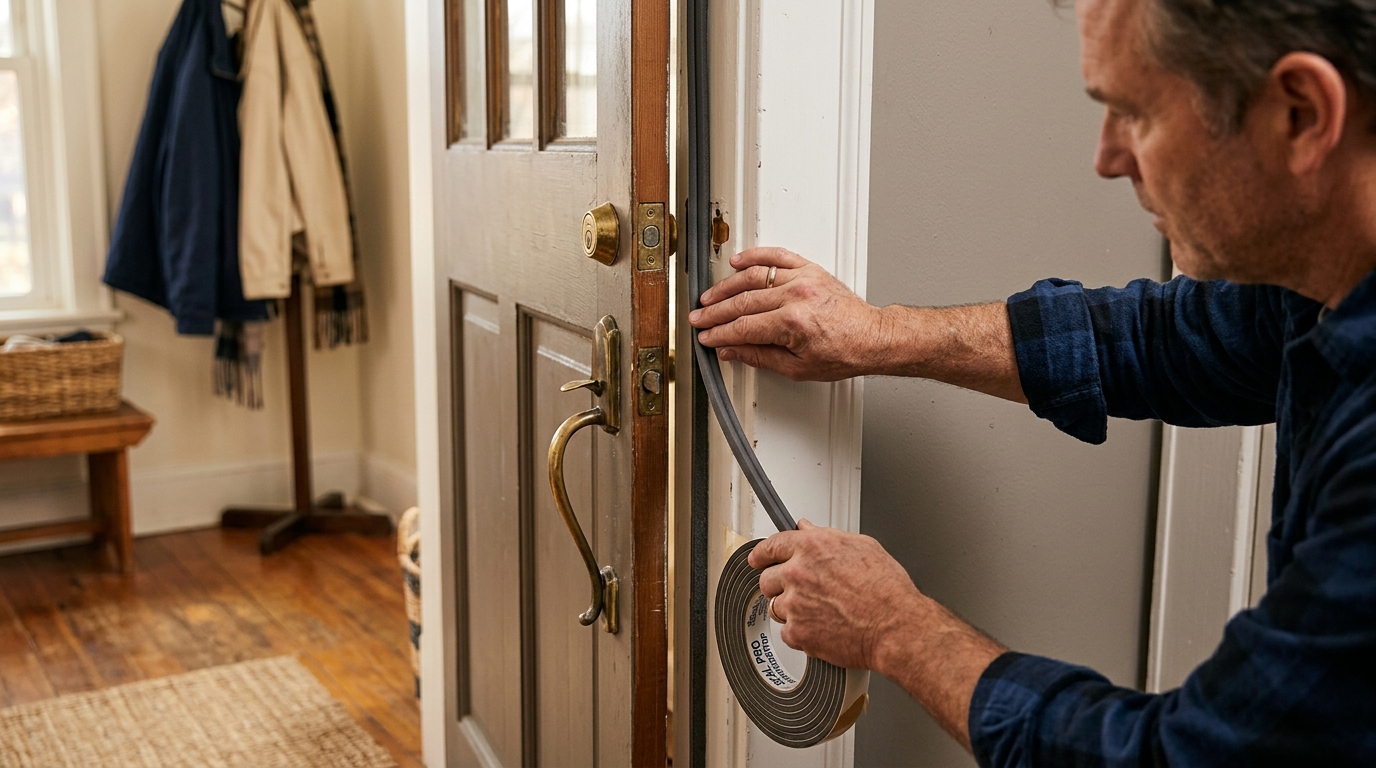
- Purchase a self-adhesive foam or rubber door sweep for the bottom (under $10 at any hardware store) and peel-and-stick V-strip weatherstripping for the sides and top. These require no tools and take about 20 minutes to apply.
- Apply the V-strip weatherstripping to the door stop on the latch side and hinge side, pressing it firmly into the channel so the open end of the V faces outward to compress when the door closes. Trim to fit with scissors.
- Install the door sweep by peeling the adhesive backing and pressing it flush against the bottom of the door on the interior face. Close the door to verify it contacts the threshold without dragging so hard it resists opening.
- Retest by running your hand around all edges again and repeating the paper test at the bottom. Most homeowners feel an immediate difference in draft reduction after this 30-minute fix.
- Start with a full door assessment. Check that the door is plumb and square by measuring the gap at top and bottom on the latch side. A gap that is wider at the top or bottom indicates the frame has shifted, which prevents weatherstripping from sealing evenly. If the door is more than 1/4 inch out of square, adjust the hinges or plane the door edge before adding weatherstripping.
- Remove all existing weatherstripping from the door stop on all three sides (top and both jambs). Old compressed foam seals almost nothing and creates an uneven surface for new material. A putty knife or flathead screwdriver makes this easy. Clean the door stop surface with a damp cloth.
- Install compression bulb weatherstripping (EPDM rubber, not foam) on all three sides of the door stop. This type compresses firmly when the door closes and lasts 10 to 15 years. Cut each piece to length with a utility knife and attach with the included nails or screws. Test the door closes without excessive resistance.
- Replace or upgrade the door sweep with a reinforced automatic drop-down sweep if your current door has visible light or heavy drafts at the bottom. Automatic sweeps lift when the door opens and drop to seal when it closes, lasting longer and sealing better than adhesive strips. These cost $20 to $45 and require drilling 4 to 6 pilot holes in the door face.
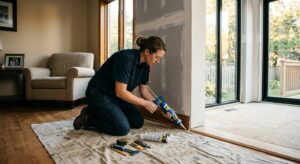
- Inspect and re-caulk the exterior door frame where the brick molding or trim meets the siding or brick. This perimeter caulk joint often fails within 5 to 7 years and is a major outdoor air entry point before air even reaches the door itself. Use paintable exterior caulk and apply a smooth continuous bead, then tool it flush.
- Add a door insulator kit to the interior face of the door if it is a hollow-core or uninsulated steel door. These foam-backed fabric panels attach with hook-and-loop fasteners and add an effective R-2 to R-4 to a door that may only be rated R-1 to R-2 from the factory. For a permanent upgrade, consider replacing a hollow-core interior entry door with a solid-core unit, which reduces sound and heat transfer significantly.
- Finally, add a rubber-backed area rug or entry mat inside the door and consider a simple coat rack or storage bench to minimize how long the door stays open during arrivals and departures. Behavioral habits around the entryway can account for a surprising share of total air exchange.
Why It Works: The Benefits
Sealing a typical exterior door with new weatherstripping and a door sweep can reduce air infiltration at that opening by 70 to 80%, contributing to overall home energy savings of 10 to 15% annually according to DOE estimates for air sealing improvements.
Stopping the cold air intrusion at the entryway eliminates the convective loop that chills adjacent rooms, typically raising the temperature of the foyer and nearby hallways by 3 to 5 degrees without changing your thermostat setting.
When conditioned air stops escaping through the entryway, your furnace or AC cycles off sooner and stays off longer. Homeowners who seal their entryway often report 10 to 20 fewer HVAC cycles per day during extreme weather, which also extends equipment life.
An unsealed entryway draws in outdoor pollutants, allergens, and humidity every time the door opens or air pressure shifts. Proper sealing reduces this unfiltered air intrusion, keeping indoor air cleaner and more stable, especially important for households with allergy sufferers.
In humid climates, unconditioned moist air entering through the threshold area can cause condensation on flooring and walls near the entry. Sealing the door sweep and threshold plate eliminates this moisture pathway, protecting floors and reducing mold risk near the entry zone.
💰 Savings Impact by Action
Replacing worn weatherstripping on an exterior door reduces air infiltration at that opening by up to 70%, contributing roughly 10 to 15% to total home energy savings from air sealing.
Installing a properly fitted door sweep at the threshold closes the single largest gap in a typical exterior door, cutting bottom-gap infiltration by up to 80%.
Re-caulking the exterior door frame perimeter seals the air pathway that exists before air even reaches the door itself, eliminating a gap equivalent to several square inches in typical older frames.
A heavy thermal curtain hung just inside the entry door acts as a buffer zone, reducing radiant and convective heat loss through the door surface by 5 to 10% in cold climates.
🏠 Key Concepts Explained
The Science Behind It
The entryway problem is rooted in basic thermodynamics and pressure dynamics. Your home operates under slight negative or positive pressure depending on how your HVAC system is balanced and whether exhaust fans are running. When interior pressure is slightly negative, which is common in homes with kitchen or bath exhaust fans running, outside air is actively pulled inward through every available gap. The entryway door, with its large perimeter and frequently disturbed seals, is the lowest-resistance path for that infiltration. Even a 1/8-inch gap running the full height of a door creates an opening of roughly 3 to 4 square inches, equivalent to leaving a small window cracked open all winter.
The stack effect amplifies this problem dramatically in cold climates. Because warm air is less dense than cold air, it naturally rises through a building and escapes through upper-level gaps such as attic hatches, electrical outlets on top floors, and door frame gaps at the top of the door. This rising warm air creates a vacuum at the lower levels of the home, and the entryway threshold becomes the primary intake for the cold replacement air drawn in. Research from Lawrence Berkeley National Laboratory shows that air infiltration accounts for 25 to 40% of heating and cooling energy loss in typical homes, and entry doors are a disproportionately large contributor given their surface area and frequency of use.
Thermal bridging through the door frame compounds the invisible air leakage with a more direct heat transfer pathway. Aluminum and steel components in the door frame conduct heat at a rate roughly 1,000 times faster than wood or foam insulation. Even if every air gap were perfectly sealed, an uninsulated metal door frame would continue to radiate cold into the foyer in winter, creating a persistent chill near the entry that no thermostat adjustment can fully correct. This is why high-performance entry doors use thermally broken frames, with a layer of insulating material separating the interior and exterior metal components, and why even inexpensive improvements to the air seal provide immediate comfort benefits beyond what the energy bill savings alone would suggest.
Frequently Asked Questions
▼ I replaced the weatherstripping but my entryway still feels drafty. What am I missing?
Check the exterior perimeter where the door frame meets the siding or brick. This caulk joint is responsible for a large share of outdoor air entry and is separate from the door weatherstripping itself. Also inspect the threshold plate: lift it if it is adjustable and raise it until it makes firm contact with the door bottom. Many thresholds have screws that allow height adjustment, and a gap of even 1/16 inch lets significant air through.
▼ Can renters fix their drafty entryway without landlord permission?
Yes, in most cases. Self-adhesive foam weatherstripping and under-door draft stoppers require no tools, leave no permanent marks, and cost under $15. A removable draft snake or door sweep held by hook-and-loop tape is fully reversible. For anything requiring screws or drilling, ask your landlord first since entryway improvements benefit the property and most landlords will either approve them or do the work themselves.
▼ How long before I notice savings on my energy bill after sealing my door?
Changes typically show up in the first full billing cycle after the fix, usually within 30 days. The savings are most visible during months of extreme heat or cold when your HVAC is running frequently. If you track your utility usage online, you may see a measurable drop in daily kilowatt-hour or gas usage within the first week of sustained cold or hot weather following the repair.
▼ What if my home is older than 30 years? Will these fixes still work?
Absolutely, and they may matter even more. Homes built before 1990 often have original weatherstripping that has fully compressed or crumbled, door frames that have shifted with decades of settling, and exterior caulk that has failed entirely. The same techniques apply, but budget extra time for prep work such as scraping old caulk, re-squaring a sagging door, or shimming a threshold that has dropped. The payback is proportionally larger in older homes because the baseline leakage is higher.
▼ My door is hard to latch after I added new weatherstripping. Did I do something wrong?
You likely installed compression weatherstripping that is too thick for the existing gap between the door and the stop. Try a thinner profile such as a 3/16-inch bulb instead of 1/4 inch, or reposition the weatherstripping slightly closer to the exterior edge of the door stop so the door does not have to compress it as far to close. If the latch bolt does not reach the strike plate, the strike plate may need to be filed out slightly or the door stop adjusted, which is a 15-minute fix with a chisel and hammer.
Quick Tips
- Replace weatherstripping every 5 to 7 years even if it looks intact. Foam and rubber compress permanently over time and stop sealing even without visible damage.
- If your entryway floor feels cold in winter, check whether the threshold plate has a foam or rubber gasket underneath. Many thresholds ship with this gasket but it falls out over time and is rarely replaced.
- Paint your front door a lighter color if it faces south or west to reduce solar heat gain in summer. A white or light gray door absorbs significantly less heat than black or dark navy, which can reach 150 degrees Fahrenheit in direct summer sun.
- Add a simple hook-and-hang draft stopper to the interior door handle as a zero-cost temporary fix during extreme cold snaps. A rolled bath towel pressed against the base of the door blocks the coldest drafts until you can install a proper sweep.
Variations for Your Situation
- Apartment/Rental: Renters cannot modify the door frame or install permanent sweeps, but a lot is still possible. Buy a door draft stopper with a double-sided design (one side for each face of the door) for $12 to $18, apply peel-and-stick foam weatherstripping to the door stop which leaves no damage on removal, and hang a heavy thermal curtain just inside the entry door. These three steps combined can meaningfully reduce drafts at zero risk to your security deposit.
- Tight Budget (under $50): Prioritize the door sweep and V-strip weatherstripping as your first purchases since these address the two largest air gaps for under $20 combined. Use the remaining budget for a tube of exterior caulk and spend 20 minutes sealing the exterior door frame perimeter. Skip the door insulator kit and upgraded threshold for now. These three steps alone will capture roughly 70% of the total benefit available from a full entryway overhaul.
- Older Home (pre-1980): Homes of this era often have wooden threshold strips that have warped or rotted, door frames that have racked out of plumb, and original single-pane sidelights flanking the door that contribute as much air leakage as the door itself. Address the door weatherstripping first, then inspect the sidelights for failed glazing compound around the glass, and re-glaze any dried-out or missing sections with DAP 33 or equivalent window glazing compound. Budget $100 to $250 for a complete older-home entryway air seal since more materials and prep time are typically required.