Insulation is one of the few home improvements that quietly pays you back every single month. But here is the catch: some insulation materials degrade, sag, absorb moisture, or lose their R-value over time, turning a smart investment into an expensive problem. A poorly chosen product installed in the wrong location can underperform within a decade, costing you both in energy bills and eventual replacement labor.
The good news is that the best insulation materials are genuinely set-it-and-forget-it. Closed-cell spray foam, rigid foam board, and mineral wool can all outlast the homes they are installed in with virtually no maintenance. Understanding what separates these long-term performers from the problem materials, like older fiberglass batts installed without vapor control or cellulose in perpetually damp crawl spaces, is the key to making a decision you will never regret.
In this post, we cover the lifespan and realistic R-value retention of every major insulation type, flag the materials and applications most likely to disappoint, and walk you through a practical process for auditing what you already have and upgrading strategically. Whether you are insulating a new addition, reinsulating an attic, or just trying to understand what is already in your walls, this guide gives you the numbers and context to choose wisely.
What You’ll Need
Click on an item below to shop for the recommended items for this recipe on Amazon.
As an Amazon Associate, we earn from qualifying purchases.
How to Do It
- Start in the attic. Using a flashlight and a ruler or tape measure, check the depth of existing insulation across at least five different spots including corners, center, and near the eave vents. For fiberglass batts, compare the current depth to the R-value stamped on the facing. Current energy code recommends R-38 to R-60 in most U.S. climates.
- Look for visible problems: compressed or matted batts, dark staining on fiberglass (a sign of air bypassing through the material), wet or clumped cellulose, or open-cell foam that looks discolored or crumbling. Any of these indicate performance loss.
- Check your crawl space or basement if accessible. Insulation hanging loose from floor joists, falling batts, or any material that looks damp or has visible mold growth should be flagged for replacement. Fiberglass batts are not rated for ground-level moisture exposure.
- Note what material you have using this quick guide: pink or yellow fluffy batts are fiberglass, gray or white loose fill is likely cellulose or blown fiberglass, and rigid boards in the rim joist area are foam. This affects your upgrade path.
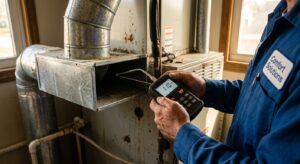
- Use a plug-in outlet tester on exterior wall outlets in winter to feel for cold drafts, which indicate missing or thin wall insulation. This is a low-cost diagnostic step before committing to an invasive wall insulation project.
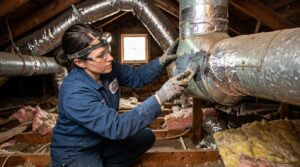
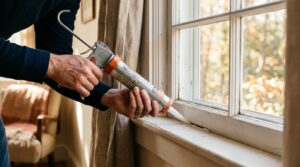
- Before adding any insulation, air seal all penetrations. Use canned spray foam to seal around recessed lights (only if IC-rated), plumbing stacks, wiring penetrations, and the tops of interior walls. This step is often skipped but accounts for 20 to 40% of heat loss in a typical attic. Do not skip it.
- If existing fiberglass batts are compressed below their rated depth or show signs of moisture damage, remove and bag them before adding new material. Adding new insulation over compromised batts locks the problem in.
- Install cardboard or foam baffles at each rafter bay near the eaves before blowing insulation. These maintain a clear airway from the soffit vents to the attic and prevent insulation from blocking ventilation, which causes moisture buildup and structural damage.
- For loose-fill blown cellulose or fiberglass, calculate the number of bags needed using the coverage chart on the bag label. For R-49 (a common upgrade target), you will typically need 10 to 14 inches of blown fiberglass or 8 to 11 inches of cellulose depending on the product.
- Blow insulation in a consistent depth, working from the far corners toward the attic hatch. Use depth markers (simple rulers stuck in the insulation) every 10 feet to verify you are hitting your target R-value across the entire floor, not just the center.
- Seal and insulate the attic hatch last. A standard plywood hatch with no insulation is effectively a hole in your thermal boundary. Add a rigid foam lid box or an insulated hatch cover rated at least R-38 to match the surrounding insulation.
- Get at least three written quotes from insulation contractors. Ask each to specify the exact product they are using (brand and formulation), the installed R-value, and whether the application qualifies for any utility rebates or federal tax credits. The 25C tax credit covers 30% of insulation costs up to $1,200 per year.
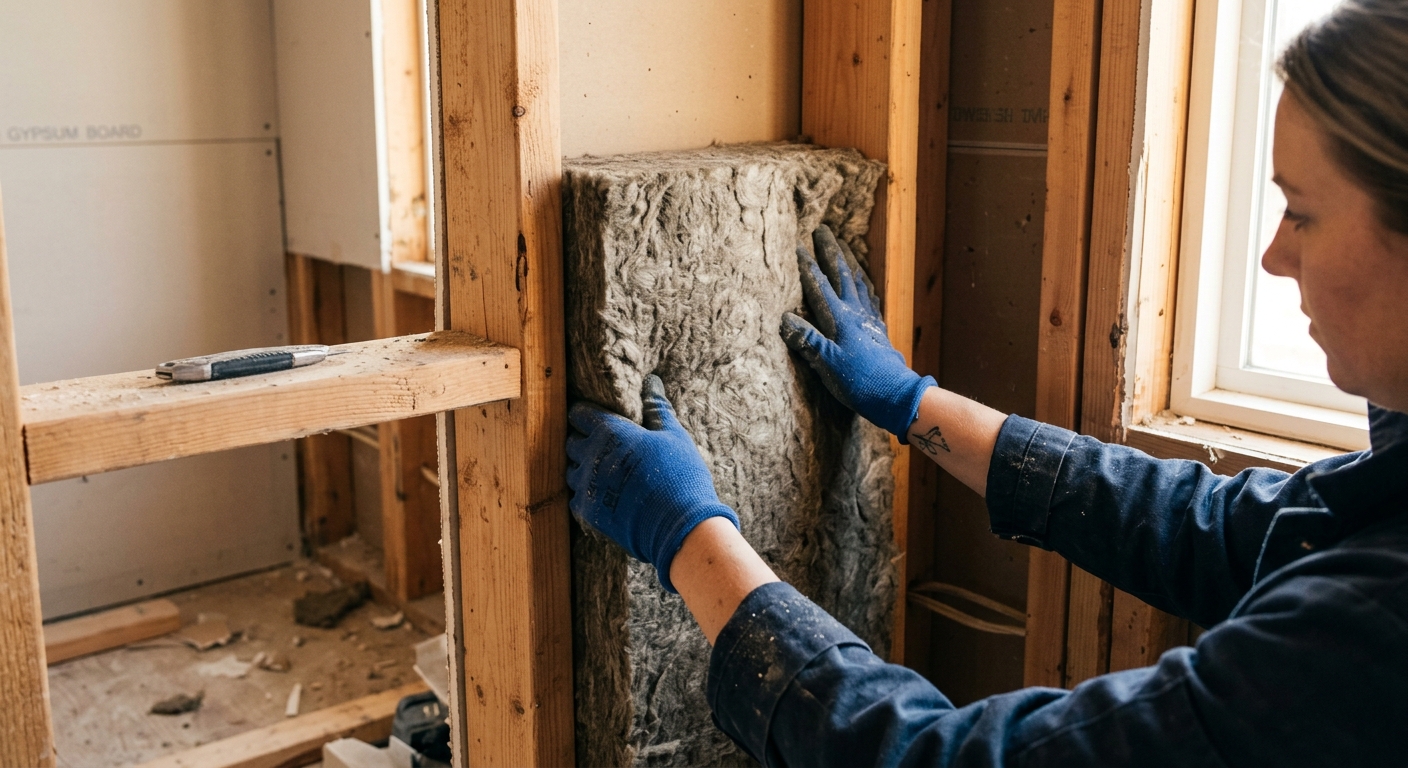
- For dense-pack cellulose or fiberglass in existing walls, the contractor drills small holes between studs (typically through the exterior sheathing or interior drywall), injects material at high density to prevent settling, then patches the holes. Ask to see before-and-after thermal imaging to confirm full coverage.
- For unvented (conditioned) attic assemblies or rim joists, specify closed-cell spray foam applied at a minimum of 2 inches (R-12) as the first layer. This provides both thermal resistance and a Class II vapor retarder, which is critical in cold and mixed climates.
- For crawl spaces, specify closed-cell foam or rigid foam board on the foundation walls rather than batts between the floor joists. This conditioned crawl space approach keeps pipes from freezing, eliminates batt-falling problems, and reduces floor-level cold by 4 to 8 degrees in winter.
- After work is complete, request the contractor’s product data sheets and installation certificates for your records. These are needed for tax credit documentation and are valuable at resale to prove R-value compliance.
Why It Works: The Benefits
Upgrading from degraded or missing insulation to modern materials can reduce HVAC energy use by 15 to 30% annually, saving a typical household $200 to $600 per year depending on climate and home size.
Top-tier materials like closed-cell spray foam and mineral wool boards carry manufacturer warranties of 20 to 25 years and in practice last 50 to 80 years with no performance degradation, eliminating replacement costs entirely.
Proper insulation eliminates cold walls, drafty rooms, and temperature swings between floors. Homeowners consistently report more even temperatures and reduced HVAC cycling after a quality reinsulation project.
Choosing moisture-resistant materials like closed-cell foam or mineral wool in crawl spaces and basements eliminates one of the primary causes of insulation failure and structural wood damage, protecting both the insulation investment and the building itself.
Homes with documented insulation upgrades to current code standards sell for 2 to 5% more on average and spend fewer days on the market, according to National Association of Realtors data, because buyers factor in lower utility costs.
💰 Savings Impact by Action
Upgrading attic insulation to R-49 or higher reduces heating and cooling energy use by up to 20% in most U.S. climates, the single highest-ROI insulation location.
Sealing attic penetrations and bypasses before adding insulation captures an additional 15% in energy savings that insulation alone cannot achieve.
Dense-packing previously uninsulated wall cavities reduces whole-home heat loss by 15 to 25%, with the largest gains in homes with no existing wall insulation.
Converting a vented crawl space to conditioned with closed-cell foam on foundation walls reduces floor-level heat loss by up to 10% of total heating load.
Insulating and air sealing rim joists with rigid foam captures 5 to 8% in heating energy savings while eliminating one of the most common cold-floor complaints in older homes.
🏠 Key Concepts Explained
The Science Behind It
Insulation works by trapping still air or inert gas within a material matrix, and since air is a poor conductor of heat, the material slows the movement of thermal energy from warm spaces to cold ones. The R-value rating quantifies this resistance: each additional R-unit means proportionally less heat flows through per hour per square foot per degree of temperature difference. What matters for longevity is how well a material maintains that trapped-air structure over time under real-world conditions of humidity, compression, and temperature cycling.
Fiberglass and mineral wool both work by trapping air within a web of glass or rock fibers. The key difference is that mineral wool fibers are denser and more dimensionally stable, resisting compression even under load, and they do not absorb water, which means their R-value holds up in damp environments. Fiberglass batts, by contrast, lose roughly 20 to 40% of their rated R-value when compressed by even a half inch, which is why batts installed in tight spaces or under storage consistently underperform their labels. Cellulose is made from recycled paper treated with borate fire retardant, and it performs well when dry and properly dense-packed, but its settling behavior and moisture sensitivity make installation technique critical to long-term performance.
Spray polyurethane foam achieves its remarkable R-values (R-3.7 per inch for open-cell, R-6.5 per inch for closed-cell) through a different mechanism: millions of tiny closed cells filled with a low-conductivity blowing agent. Over 5 to 10 years, some of that blowing agent slowly diffuses out of the cells and is replaced by air, causing a modest R-value reduction of about 5 to 10% from the initial published value. This is why manufacturers publish both initial and aged R-values, and reputable contractors should quote the aged number. Rigid foam boards (EPS, XPS, and polyiso) behave similarly, with polyiso showing the most significant R-value drop in very cold temperatures, a phenomenon called thermal drift, which matters most when specifying exterior continuous insulation in northern climates.
Frequently Asked Questions
▼ My energy bills are still high even though I added attic insulation. What did I miss?
The most common culprit is air sealing. If you added insulation without sealing penetrations around recessed lights, plumbing stacks, and wall top plates first, conditioned air is still escaping around the insulation rather than through it. Schedule a professional blower door test, which costs $150 to $300, to identify and quantify the leakage locations before adding more material.
▼ How do I know if my existing wall insulation has degraded or is missing entirely?
Remove an outlet cover on an exterior wall, pull back any foam gasket, and shine a flashlight into the gap between the box and rough framing. You may be able to see or feel insulation in the wall cavity. A more accurate method is a thermal imaging camera (available to rent for $50 to $100 per day) used on a cold day when the temperature difference between inside and outside is at least 15 degrees, which reveals cold patches indicating missing or failed insulation.
▼ Is it worth insulating walls in an older home, or should I focus only on the attic?
Attic insulation delivers a higher ROI in most climates and should come first. However, if your walls have little to no insulation, dense-pack retrofits can reduce whole-home heat loss by an additional 15 to 25% and dramatically improve comfort near exterior walls. The DOE estimates that insulating previously uninsulated walls saves $100 to $250 annually in a typical 2,000 square foot home, with a payback period of 5 to 8 years depending on fuel costs.
▼ Can I install new insulation over old fiberglass batts in my attic?
Yes, with one important condition: the existing batts must be dry, unfaced (or with the facing down toward the living space), and not compressed or contaminated with mold. If they pass that check, you can blow new insulation directly over them. If the existing batts have a foil or kraft-paper facing on top, remove them first, as that facing can act as a vapor retarder in the wrong location and trap moisture in your new insulation layer.
▼ What insulation materials should I absolutely avoid in a crawl space?
Avoid standard fiberglass batts between floor joists in a vented or semi-conditioned crawl space. They absorb moisture from the ground and air, sag out of the joist bays within 5 to 10 years, and can host mold growth. The better solution is to convert to a conditioned crawl space by sealing the vents and applying closed-cell spray foam or rigid foam board to the foundation walls instead, which keeps the insulation out of the moisture zone entirely.
Quick Tips
- Match your insulation choice to the application: closed-cell foam for crawl spaces and rim joists, blown cellulose or fiberglass for open attic floors, and rigid foam board for exterior continuous insulation over sheathing.
- When buying loose-fill insulation, always check the settled R-value per inch on the bag label, not just the initial value. Some products settle 15 to 20%, so you need to install more depth upfront to hit your target R-value.
- Mineral wool batts cost 20 to 30% more than fiberglass but are worth it in areas with any moisture risk, sound transmission concerns, or locations where fire resistance is a code requirement.
- Avoid foil-faced batts in wall cavities unless you can maintain the required air gap on the foil side. Without that gap, the radiant barrier provides no benefit and you have simply paid more for standard fiberglass.
- Check for utility company rebates before buying materials. Many utilities offer $0.10 to $0.25 per square foot in rebates for attic insulation upgrades, which can offset 15 to 30% of material costs on a typical project.
Variations for Your Situation
- Apartment or Renter: Renters cannot modify wall cavities or attic insulation, but they can make meaningful improvements at the unit level. Use adhesive-backed foam weatherstripping on drafty doors and windows (under $15 per door), add door sweep draft stoppers, and hang insulating cellular shades on windows, which can reduce heat loss through glass by 40 to 50%. These steps cost $100 to $250 total and require no landlord approval in most lease agreements.
- Tight Budget (under $200): Prioritize the attic hatch and rim joists first. A bare attic hatch loses more heat per square foot than any other surface in the home. An insulated hatch cover costs $30 to $60 and takes 30 minutes to install. Rim joists around the foundation perimeter can be insulated with cut-to-fit rigid foam board and canned spray foam for $80 to $150 in materials, and this project alone can reduce drafts and cold floors noticeably in the first winter.
- Older Home (pre-1980): Homes built before 1980 often have knob-and-tube wiring in wall cavities, which cannot legally be insulated in most jurisdictions without an electrician’s sign-off. Have an electrician evaluate before any wall insulation work. Attic insulation is usually safe to add but check for vermiculite, a gray granular material that may contain asbestos. If found, hire a licensed asbestos abatement contractor before proceeding. These homes also tend to have lower air sealing baseline performance, so the returns from air sealing plus insulation are often 25 to 35%, higher than newer construction.