Your home is a system, and like any system, it performs best when maintained on a schedule. Skipping seasonal maintenance is one of the most expensive habits a homeowner can have. A dirty air filter alone can reduce HVAC efficiency by 5 to 15%, and a drafty attic hatch can let as much conditioned air escape as leaving a window open all winter. These are not minor inconveniences; they are ongoing costs that compound every month.
The good news is that most seasonal home maintenance tasks take under an hour, cost little to nothing, and pay for themselves within a single billing cycle. The challenge is knowing what to do and when to do it. That is exactly what this checklist solves. We have organized the most impactful comfort and efficiency tasks by season, so you are never caught off guard by a sweltering July or a freezing January.
Whether you are a first-time homeowner or someone who has been meaning to get organized for years, this guide walks you through both quick checks you can do in 15 minutes and deeper DIY tune-ups that deliver real, measurable savings. We cover spring, summer, fall, and winter tasks, the building science behind why each one matters, and how to troubleshoot the most common comfort complaints along the way.
What You’ll Need
Click on an item below to shop for the recommended items for this recipe on Amazon.
As an Amazon Associate, we earn from qualifying purchases.
How to Do It
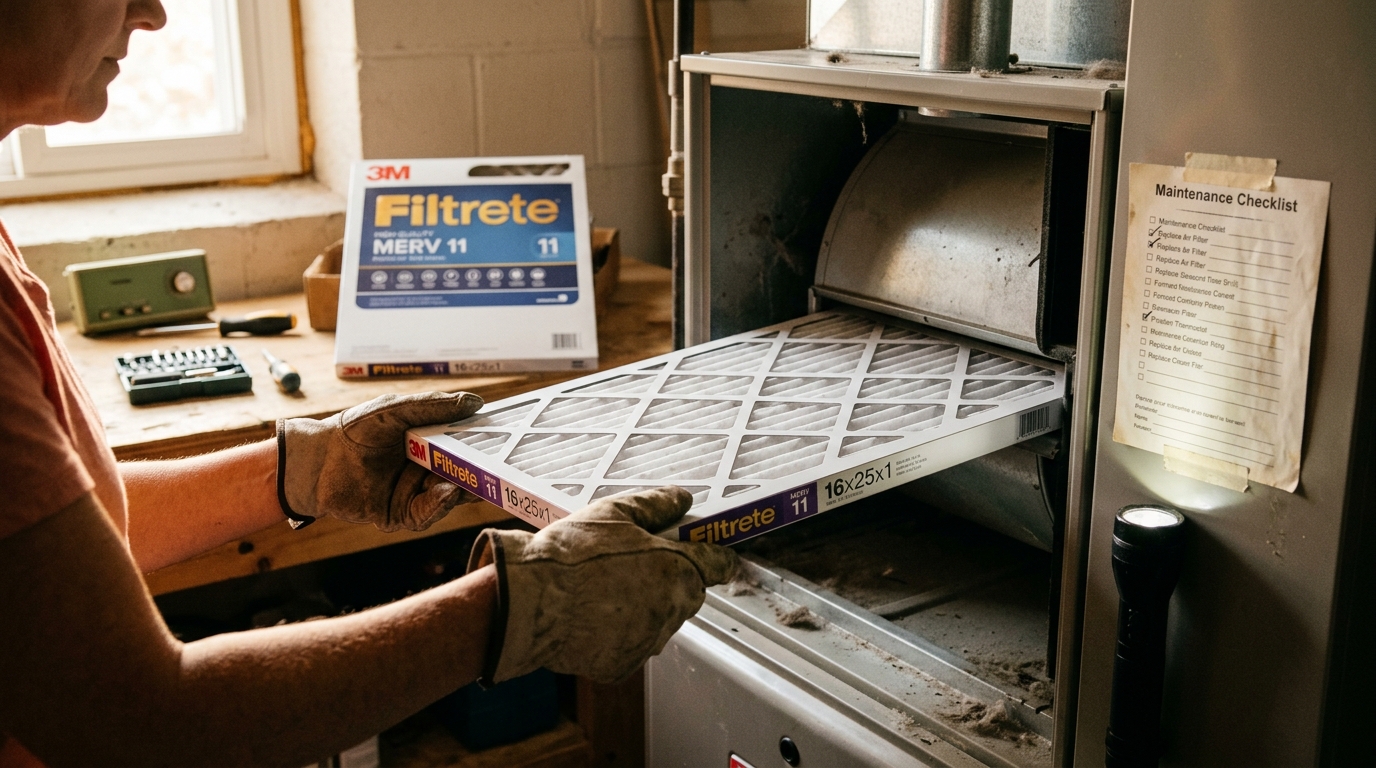
- Spring: Replace your HVAC filter with a MERV 8 to 11 filter, check your thermostat batteries, and switch ceiling fans to counterclockwise rotation for cooling.
- Spring: Walk your home’s exterior and visually inspect caulking around windows, doors, and where pipes enter the house. Flag cracked or missing caulk for a future DIY session.
- Summer: Close blinds and shades on south- and west-facing windows between 10am and 4pm to block direct solar gain, which can reduce cooling load by up to 25% on hot afternoons.
- Fall: Reverse ceiling fans to clockwise rotation on low speed to push warm air down from the ceiling. Check your thermostat’s heating schedule and update it for shorter days.
- Fall: Test smoke and carbon monoxide detectors, replace batteries, and confirm your furnace filter is fresh before the first heating cycle of the season.
- Winter: Open south-facing blinds on sunny days to admit free solar heat, then close them at night to add an insulating layer against the cold glass.
- Spring: Inspect and clean your AC condenser unit outdoors. Turn off power at the disconnect, remove the top grille, and gently rinse coil fins from the inside out with a garden hose. Bent fins can be straightened with a fin comb.
- Spring: Check attic insulation depth. Most attics should have R-38 to R-60 depending on your climate zone. If you can see the floor joists, insulation is inadequate and adding batts or blown-in insulation will reduce cooling and heating costs by 15 to 25%.
- Summer: Apply weatherstripping to any exterior door where you can see daylight around the frame or feel air movement. Foam tape weatherstripping costs $5 to $15 per door and installs in under 20 minutes.
- Fall: Seal attic bypasses before heating season. Use expanding foam or sheet metal and fire-rated caulk to close gaps around plumbing penetrations, recessed lights, and the tops of interior walls. This is the single highest-impact air sealing task in most homes.
- Fall: Hire an HVAC technician for a furnace tune-up if you have not had one in two years. A $100 to $150 tune-up cleans the heat exchanger, tests combustion efficiency, and checks for cracked heat exchangers that pose a carbon monoxide risk.
- Winter: Inspect basement rim joists, the framing where your house sits on the foundation. These areas are often uninsulated and are major sources of cold-air infiltration. Cut rigid foam board to fit each bay, seal edges with spray foam, and reduce heating costs by up to 10%.
- Install a smart thermostat such as an Ecobee or Google Nest. These devices learn your schedule, use occupancy sensors to avoid heating or cooling empty rooms, and deliver average savings of 10 to 23% on HVAC costs according to manufacturer and independent studies.
- Set seasonal schedules in the thermostat app at the start of each season. A 7 to 10 degree setback during sleeping hours and when the home is empty saves approximately 1% per degree per 8-hour period.
- Add smart plugs to any portable fans or space heaters so you can schedule and monitor their run time remotely, preventing them from running when no one is home.
- Use the thermostat’s energy reports at the end of each season to identify which months had the highest runtime and investigate root causes like a dirty coil, poor insulation, or a gap in your air sealing work.
Why It Works: The Benefits
Homeowners who follow a consistent seasonal maintenance routine report 15 to 30% lower heating and cooling costs compared to those who skip regular upkeep, according to DOE and ENERGY STAR data. For a household spending $2,000 per year on energy, that is $300 to $600 in annual savings.
Most HVAC breakdowns happen at peak demand, during heat waves and cold snaps, when repair costs are highest. Seasonal tune-ups catch worn belts, dirty coils, and low refrigerant before they cause a $500 to $2,000 emergency service call.
Drafty rooms, hot upstairs areas, and cold floors are symptoms of a home system that is out of balance. Seasonal air sealing, filter changes, and duct checks address the root causes, delivering more even temperatures throughout the house without upgrading your HVAC.
A well-maintained HVAC system lasts 15 to 20 years. A neglected one may fail in 10 to 12. Replacing a central air conditioner costs $4,000 to $8,000, meaning consistent maintenance can delay that expense by 5 or more years, saving thousands.
Seasonal filter changes, ventilation checks, and humidity control reduce dust, allergens, and mold spores in your living spaces. This matters especially in spring when pollen counts are high and in winter when homes are sealed tight and indoor pollutants concentrate.
💰 Savings Impact by Action
Replacing a clogged HVAC filter restores full airflow and can recover 5 to 15% of lost system efficiency immediately.
Sealing attic bypasses, rim joists, and door gaps reduces conditioned air loss by up to 20% annually across all seasons.
Upgrading attic insulation to R-38 or higher reduces heating and cooling loads by 15 to 25% depending on climate zone.
Setting back the thermostat 7 to 10 degrees for 8 hours daily saves approximately 10% on annual heating and cooling costs.
Closing south- and west-facing blinds during peak summer sun hours reduces afternoon cooling load by 10 to 25% on hot days.
🏠 Key Concepts Explained
The Science Behind It
Your home constantly exchanges heat with the outdoors through three mechanisms: conduction (heat moving through solid materials like walls and windows), convection (air carrying heat through gaps and cracks), and radiation (infrared energy traveling through space and glass). Seasonal maintenance addresses all three. Insulation slows conduction, air sealing stops convective losses, and window treatments manage radiant solar gain. Each task targets a specific heat transfer pathway, which is why a comprehensive checklist outperforms any single upgrade.
The stack effect explains why fall air sealing in the attic is more effective than sealing at the basement level, even though both matter. Because warm air rises, your home experiences positive pressure at the top and negative pressure at the bottom. Air is constantly being pushed out through attic gaps and pulled in through basement cracks. Sealing the attic exit points breaks this cycle most effectively. Research from the Lawrence Berkeley National Laboratory found that attic air sealing combined with insulation is one of the highest-return efficiency investments available to homeowners, with paybacks of one to three years in most climates.
HVAC efficiency is not constant. It degrades with dirty coils, clogged filters, and refrigerant imbalances. A central air conditioner operating with a 10% refrigerant undercharge loses roughly 20% of its rated efficiency. A furnace with a dirty flame sensor may short-cycle, running inefficiently in brief bursts instead of long steady cycles. These degradations are invisible without inspection, which is why seasonal checks that measure performance, not just appearance, are the difference between a home that works and one that costs too much to operate.
Frequently Asked Questions
▼ Why does my upstairs feel so much hotter than downstairs in summer even after I change the filter?
This is almost always a combination of inadequate attic insulation, solar heat gain through roof-facing surfaces, and supply duct imbalances. Check your attic insulation first; if it is below R-38, adding insulation is the fastest fix. You can also partially close registers on the lower floor to redirect more airflow upstairs, and install a programmable thermostat that runs the fan continuously to equalize temperatures.
▼ My heating bill spiked this winter but I did not change anything. What happened?
Seasonal bill spikes usually come from three sources: colder-than-average outdoor temperatures, HVAC efficiency degradation from a dirty filter or malfunctioning component, or an undetected air sealing failure like a disconnected duct or a gap that opened as the house settled. Replace the filter first, then check for any obvious gaps in weatherstripping or caulk. If the system is more than a few years old, a professional tune-up will reveal whether efficiency has dropped.
▼ Can renters follow this checklist without getting landlord approval?
Most of the quick-fix steps require no permission: filter changes (if you pay utilities), fan reversals, blind management, and weatherstripping are all renter-friendly. Avoid permanent caulk on landlord-owned surfaces without asking, but you can use removable rope caulk on window frames in winter and remove it in spring. Focus on portable solutions like draft door snakes, thermal curtains, and smart plugs that you can take with you when you move.
▼ How do I know if my home has enough attic insulation without hiring someone?
Climb into the attic with a ruler. If you can see the tops of the floor joists, you likely have less than R-19, which is well below current Energy Star recommendations of R-38 to R-60 for most U.S. climate zones. If insulation sits several inches above the joists and feels deep and full, you are probably in good shape. Many utility companies offer free or low-cost energy audits that include an official insulation assessment.
▼ What is the most common mistake homeowners make with seasonal maintenance?
The most common mistake is doing tasks out of season. Sealing windows in midsummer or checking the furnace in January after it has already been running for months means you are reacting to problems rather than preventing them. The entire value of this checklist is in the timing: complete each season’s tasks before that season’s peak demand, so your home is ready when it matters most.
Quick Tips
- Buy air filters in bulk at the start of the year. Having filters on hand removes the friction that causes most homeowners to skip changes.
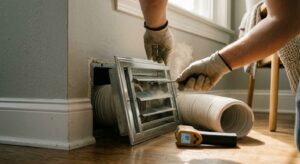
- Use a stick of incense or a smoke pencil near electrical outlets on exterior walls in winter to detect hidden air infiltration. Smoke that moves sideways confirms a leak worth sealing.
- Set a calendar reminder on the first day of each season as your maintenance trigger. Tying tasks to a date rather than a feeling makes them far more likely to happen.
- Photograph your attic insulation depth and any air sealing work you complete. This documentation adds value when selling your home and helps you track improvements over time.
Variations for Your Situation
- Apartment/Rental: Renters cannot modify ductwork, insulation, or central HVAC, but they can still follow 70% of this checklist. Focus on filter changes if you control the thermostat, thermal curtains ($25 to $80 per window) for solar gain management, removable rope caulk for window draft sealing in winter, ceiling fan direction changes, and smart plugs for window AC units. Report any missing weatherstripping or broken window seals to your landlord in writing, since these are the landlord’s legal responsibility in most states.
- Tight Budget (under $50): Zero in on the free and near-free steps that deliver the biggest return. Reversing ceiling fans costs nothing and saves 3 to 8% on heating and cooling. Closing blinds on hot afternoons is free. A single roll of foam weatherstripping ($8) can seal two to three drafty doors. A MERV 8 filter ($5 to $12) is the single most cost-effective monthly purchase a homeowner can make. Prioritize these before any paid upgrades.
- Older Home (pre-1980): Homes built before modern building codes have higher baseline air leakage, thinner insulation, single-pane or early double-pane windows, and HVAC systems that may be oversized by modern standards. Start with attic air sealing and insulation since these offer the fastest payback in leaky older homes. Budget $500 to $1,500 for a professional air sealing and insulation project and expect 20 to 35% heating and cooling savings. A blower door test from a certified energy auditor will identify your biggest leaks precisely and is often subsidized by utility programs.