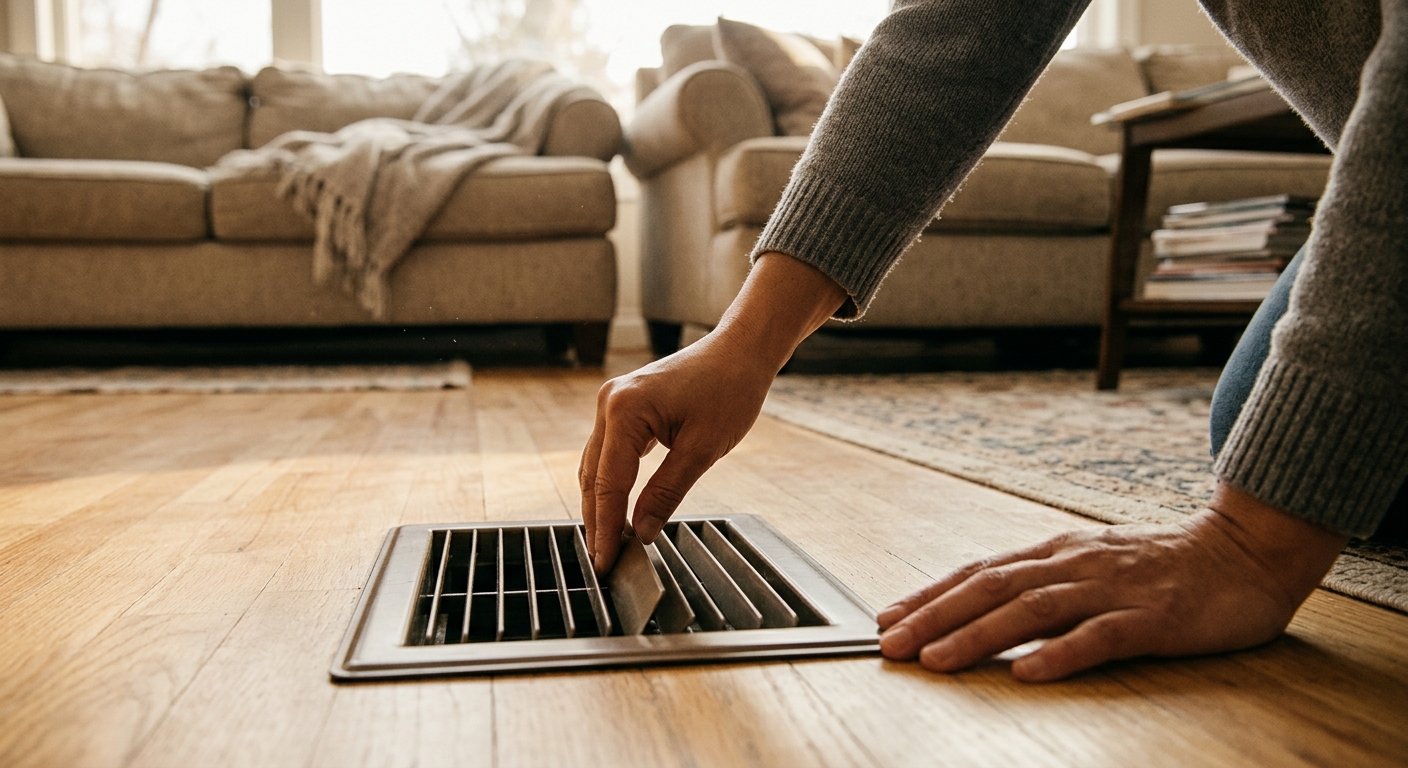
It sounds perfectly logical: if nobody is using the guest room, why heat or cool it? Just close the vent and redirect that conditioned air where you actually need it. Millions of homeowners do exactly this, convinced they are trimming their energy bills. The problem is that your HVAC system was not designed to work that way, and closing vents creates a chain of problems that quietly raises your bills and shortens the life of your equipment.
Forced-air systems are engineered to move a specific volume of air through a balanced network of ducts. When you close a register, that air does not magically reroute to your living room. Instead, pressure builds up in the duct system, your blower motor strains against the resistance, conditioned air leaks out through duct seams at a higher rate, and your equipment runs longer cycles to compensate. Studies from Lawrence Berkeley National Laboratory found that duct systems in most homes already leak 20 to 30 percent of conditioned air into unconditioned spaces. Closing vents makes that leakage significantly worse.
This post breaks down exactly why closed vents backfire, what actually happens inside your ducts, and the specific steps you can take to improve comfort and trim 10 to 20 percent off your heating and cooling bills without harming your system.
What You’ll Need
Click on an item below to shop for the recommended items for this recipe on Amazon.
As an Amazon Associate, we earn from qualifying purchases.
How to Do It
- Walk through every room in your home and fully open all supply vents and registers. Even rooms you rarely use should have vents open at least 80 percent of the way.
- Check that all return air grilles are unobstructed. Move furniture, rugs, or curtains that are blocking return vents, as blocked returns cause the same pressure problems as closed supply vents.
- In rooms that feel too warm or too cool, adjust the vent louvers to about 75 to 80 percent open rather than fully closed. This modest restriction is within the tolerance range most duct systems can handle without a pressure problem.
- Set your thermostat fan to ‘On’ instead of ‘Auto’ for 24 hours. Continuous circulation helps redistribute temperatures and gives you a clearer read on where true comfort problems exist in your home.
- Note which rooms still feel uncomfortable after reopening vents. These are candidates for targeted fixes like adding insulation to shared walls or addressing duct leaks, rather than closing the vent.
- Purchase UL 181-rated foil mastic tape or water-based mastic sealant from a hardware store. Do not use standard cloth duct tape, which dries out and fails within a few years.
- Access your duct system in the basement, crawlspace, or attic. Look for visible gaps at joints where duct sections connect, especially where ducts attach to the main trunk line and where flex duct connects to hard-pipe boots.
- Apply foil mastic tape firmly over every joint and seam you can reach, pressing out air bubbles for a solid seal. For larger gaps, brush on mastic sealant with a cheap paintbrush and let it cure for 2 to 4 hours before running the system.
- Check the connections where ducts attach to the supply and return plenums on the air handler itself, as these are among the highest-leakage points in most systems and are usually easy to reach.
- For a room that genuinely needs less airflow, install an in-duct damper or a smart vent such as a Keen Home or Flair smart vent, which modulates airflow electronically without shutting it off completely. These run $80 to $140 per vent.
- After sealing, run your system for a full heating or cooling cycle and walk through all rooms with your hand near each supply vent to confirm airflow feels consistent and strong throughout the house.
- Hire a BPI-certified energy auditor or HVAC contractor to perform a duct blaster test. This pressurizes your duct system and measures leakage precisely, often revealing that 25 to 40 percent of conditioned air is escaping in older homes.
- Request a Manual D duct analysis if your contractor has not performed one for your system. This calculation verifies that duct sizes and register placements are correctly matched to your HVAC equipment’s output.
- Ask for professional aeroseal duct sealing if your ducts have significant leakage or run through walls where DIY access is impossible. Aeroseal injects adhesive particles that seal leaks from the inside, typically reducing leakage by 90 percent with payback periods of 3 to 5 years.
- If you genuinely need different temperatures in different parts of your home, discuss a bypass damper zoning system with your contractor. A two-zone system costs $1,500 to $3,000 installed but allows true independent temperature control without damaging duct pressure.
- Ask your utility company about rebates before scheduling professional work. Many utilities offer $100 to $400 rebates for duct sealing and air sealing work performed by certified contractors, cutting your out-of-pocket cost significantly.
Why It Works: The Benefits
Keeping vents open and addressing actual duct leakage instead can cut heating and cooling costs by 10 to 20 percent annually, because conditioned air reaches its intended destination rather than leaking into unconditioned spaces.
A properly balanced duct system typically keeps room-to-room temperature variation within 2 to 3 degrees Fahrenheit. Closing vents commonly creates swings of 8 to 15 degrees, making some rooms unbearably hot or cold.
Compressors and blower motors running under elevated static pressure wear out 20 to 40 percent faster according to HVAC industry data. Keeping vents open and your system balanced can add years to a unit that costs $5,000 to $12,000 to replace.
Stagnant air in closed-off rooms encourages mold growth, dust accumulation, and humidity imbalance. Maintaining airflow through all rooms keeps relative humidity below the 60 percent threshold where mold thrives.
Avoiding restricted airflow eliminates the risk of evaporator coil icing and compressor damage. A single compressor replacement runs $1,200 to $2,800, making this a genuinely high-stakes issue hiding behind a simple vent lever.
💰 Savings Impact by Action
Sealing accessible duct leaks with mastic tape or sealant can reduce conditioned air loss by up to 20 percent, directly lowering heating and cooling costs.
Reopening closed vents and restoring proper airflow balance reduces blower motor strain and cuts energy consumption by roughly 10 percent compared to a restricted system.
Replacing a clogged filter restores design airflow and can reduce system energy use by 5 to 15 percent while also preventing coil icing and compressor wear.
Aeroseal duct sealing reduces total duct leakage by up to 90 percent from the inside, cutting heating and cooling losses by 20 to 30 percent in heavily leaking systems.
🏠 Key Concepts Explained
The Science Behind It
Forced-air HVAC systems operate on a fundamental principle: a fixed volume of air must circulate through the system at a specific rate to transfer heat effectively. Your blower is sized to move a certain number of cubic feet per minute (CFM) against a specific static pressure, typically between 0.1 and 0.5 inches of water column. When you close a vent, you reduce the total outlet area, which raises static pressure in the duct system. A standard single-speed blower motor responds to this increased resistance by drawing more electrical current while actually moving less air, a lose-lose outcome for both comfort and energy bills.
The thermodynamic problem with closed-off rooms goes deeper than just airflow. Heat always moves from warmer areas to cooler areas, never the other way around. A room left unheated in winter will sit at 45 to 55 degrees Fahrenheit on a cold day. Every wall, floor, and ceiling surface that separates that cold room from your heated living space becomes a heat sink, steadily drawing warmth away from the rooms you are trying to keep comfortable. You end up paying more to heat your main living areas because a significant portion of that heat is constantly being conducted into the abandoned room next door.
Refrigeration science adds another layer of risk in cooling season. Your air conditioner’s evaporator coil is designed to absorb heat from a specific volume of warm air flowing across its surface. Reduce that airflow with closed vents and the coil gets colder than designed, eventually dropping below 32 degrees Fahrenheit. At that point, moisture on the coil freezes into a block of ice that insulates the coil from the airflow entirely. Your system blows air that feels barely cool, the compressor runs continuously trying to reach setpoint, and if the ice melts during the off cycle, water overflows the drain pan. This sequence of events has caused thousands of dollars in avoidable damage in homes where the owner simply closed a few vents to “save energy.”
Frequently Asked Questions
▼ I reopened all my vents but one room is still way too hot in summer. What is actually going on?
A room that is consistently 5 to 10 degrees hotter than the rest of the house usually has one of three causes: insufficient attic insulation directly above it, a duct that is disconnected or heavily leaking before it reaches that room, or a large west or south-facing window with no shading. Check the attic above the hot room first. If insulation is below R-30, adding more is a cost-effective fix with payback under 3 years. Then have an HVAC tech pull the register cover and use a CFM airflow meter to confirm the duct is actually delivering air to that room.
▼ My energy bill went up after I stopped closing vents. Is that normal?
It is unlikely that reopening vents caused your bill to increase, but timing matters. If you made the change at the start of a heat wave or cold snap, seasonal weather explains the higher bill rather than the vent change. Give it one full billing cycle under similar weather conditions to compare accurately. In most cases, reopening vents reduces bills within 30 to 60 days once your system stops fighting elevated duct pressure.
▼ Can I close vents in my basement since I never go down there?
Closing basement vents is one of the more common and costly mistakes homeowners make. Basements share their ceiling with your main living floor, and an unheated basement in winter means cold floors and more heat loss from the rooms above. More critically, most homes have the air handler and main duct trunk in the basement, meaning that space needs conditioned air to prevent the equipment from operating in extreme temperatures. Leave basement vents at least 50 percent open year-round.
▼ What if I have a room I truly never use? Is there any legitimate way to reduce airflow to it?
Yes, the right solution is a properly installed bypass damper or a smart vent product rated for HVAC use, such as a Keen Home Smart Vent. These devices modulate airflow to a controlled minimum rather than cutting it off entirely, keeping system pressure in a safe range. A licensed HVAC contractor can also install a true zoning damper in the duct serving that room for around $200 to $400, which gives you controlled reduction without the risks of a closed register.
▼ How do I know if my ducts are already leaking badly?
The most reliable method is a professional duct blaster test, which costs $150 to $300 and gives you a precise leakage percentage. Short of that, look for these signs: rooms that never reach the set temperature despite the system running constantly, visible dust streaks or discoloration around duct joints in the attic or basement, and utility bills that are significantly higher than neighbors with similar-sized homes. Finding and sealing those leaks typically cuts heating and cooling costs by 10 to 20 percent.
Quick Tips
- Replace your air filter every 60 to 90 days during peak heating and cooling seasons. A clean filter is the cheapest performance upgrade your system has.
- Use a simple indoor thermometer in each room for a week before concluding a room needs less airflow. You may find the temperature problem is caused by a drafty window or poor insulation rather than the HVAC system.
- If a room consistently runs 5 or more degrees warmer than your thermostat setting, the duct serving that room may be undersized or disconnected. Have an HVAC technician inspect it rather than closing the vent in an adjacent room as a workaround.
- Keep interior doors open or install door undercuts of at least half an inch to allow return air to circulate freely throughout the home, especially in bedrooms with closed doors at night.
Variations for Your Situation
- Apartment/Rental: Renters with forced-air systems should focus on keeping all vents fully open and unobstructed by furniture. You cannot modify ducts, but you can request that your landlord investigate hot and cold spots. In the meantime, a portable smart plug-in fan ($20 to $40) positioned to improve air circulation in a problem room can reduce temperature variation by 3 to 5 degrees without any modifications to the HVAC system.
- Tight Budget (under $50): Start with a new air filter ($8 to $20) and a roll of foil mastic tape ($12 to $18) to seal any visible duct joints you can reach in the basement or crawlspace. Reopening closed vents costs nothing and is your highest-impact first move. These two steps together can recover 10 to 15 percent of lost system efficiency without spending more than $40 total.
- Older Home (pre-1980): Homes built before 1980 almost universally have undersized return air systems and significant duct leakage, often 30 to 40 percent by today’s testing standards. Closing vents in these homes is especially damaging because the duct system has even less tolerance for pressure changes. Prioritize sealing accessible duct joints with mastic, and consider requesting a full energy audit, which many utilities offer free or subsidized, to identify whether a duct replacement or aeroseal service would deliver the best return on investment.