Every June, millions of homeowners open their electric bill and feel the same gut punch: $80, $100, sometimes $150 more than last month. The knee-jerk reaction is to blame the air conditioner, and while AC does account for 40 to 50% of summer energy use, the unit itself is rarely the core problem. The real causes are sneakier, and most of them have been quietly working against you all year long.
The biggest summer bill drivers are thermal bypasses in your attic, duct leakage sending conditioned air into unconditioned spaces, phantom heat sources inside the home, and thermostat habits that force your system to work twice as hard during peak rate hours. These factors compound each other, and together they can easily account for that $80 monthly spike, sometimes more. The good news is that most of them are fixable without hiring anyone or spending a lot of money.
This post breaks down exactly what is causing your summer bills to spike, how much each factor contributes in real dollar terms, and two clear paths to fix it, whether you have 30 minutes or a full weekend. By the end, you will know where your money is actually going and have a concrete plan to get it back.
What You’ll Need
Click on an item below to shop for the recommended items for this recipe on Amazon.
As an Amazon Associate, we earn from qualifying purchases.
How to Do It
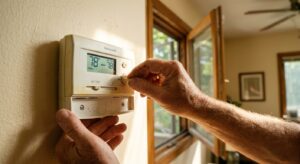
- Set your thermostat to 78 degrees F when home and 85 degrees F when away or sleeping. Each degree above your current setting saves roughly 3% on cooling costs. If you currently run at 72, raising to 78 saves about 18%.
- Check your utility account online or call to ask if you are on a time-of-use rate plan. If so, pre-cool your home to 74 to 75 degrees between 10 AM and 2 PM, then let it drift to 78 to 80 during peak hours (typically 3 to 8 PM).
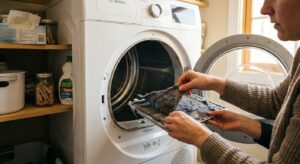
- Switch off or unplug heat-generating appliances during the hottest part of the day. Avoid running the oven, dishwasher, and clothes dryer between noon and 8 PM. Use a slow cooker or microwave instead, which emit a fraction of the heat.
- Close blinds and curtains on south and west-facing windows before 11 AM. Interior window coverings can reduce solar heat gain through those windows by 30 to 45%, meaningfully reducing how hard your AC has to work in the afternoon.
- Check your air filter. A clogged filter forces your AC to work harder and can reduce airflow by 15 to 25%, meaning rooms never cool properly even though the system runs constantly. Replace if it looks gray or matted.
- Inspect and seal your attic hatch. An unsealed attic hatch is one of the worst thermal bypasses in a home. Cut rigid foam board insulation to fit the hatch panel, attach it with construction adhesive, and install foam weatherstripping around the frame. Cost is about $15 to $25 and it takes under an hour.
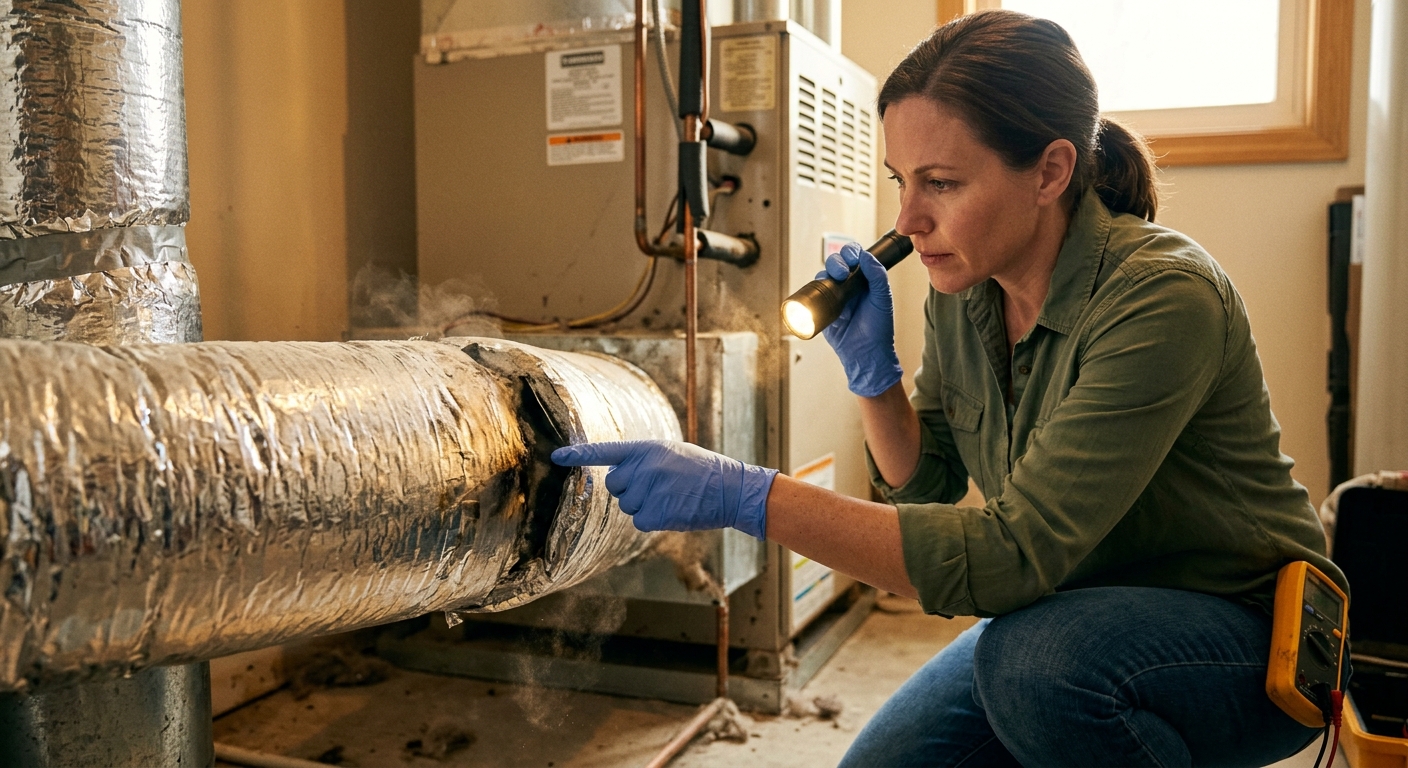
- Use a flashlight to inspect visible ductwork in your attic or basement. Look for disconnected joints, holes, or sections wrapped only in torn duct tape. Seal all joints and gaps with UL-listed foil tape or mastic sealant, not standard duct tape. Each sealed section reduces the cooled air you are losing to unconditioned space.
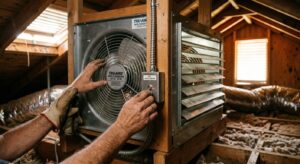
- Seal top-plate penetrations in your attic. Pull back insulation along the perimeter walls to expose the top plates, and look for gaps around wiring, plumbing, and any recessed lights below. Use fire-rated caulk or expanding foam to seal every gap larger than a quarter inch. This directly stops hot attic air from entering your living space.
- Install a programmable or smart thermostat if you do not already have one. A basic programmable model costs $25 to $50 and allows you to set precise schedules so the system is not cooling an empty home at full power. Smart models like the Google Nest or Ecobee cost $130 to $180 but can optimize automatically and typically save 10 to 12% on annual cooling costs per ENERGY STAR data.
- Add or improve window coverings on south and west exposures. Cellular shades with a honeycomb structure provide an insulating layer and can reduce solar heat gain by up to 60% compared to uncovered windows. Budget $20 to $40 per window for basic cellular shades.
- Check attic insulation depth. If your attic insulation is less than 10 to 12 inches of fiberglass batts or blown cellulose, you are losing significant heat control. Adding insulation to reach R-38 (about 12 inches of blown fiberglass) is a DIY-feasible project with blown insulation rental kits available at home improvement stores for $150 to $300 in materials for an average attic.
Why It Works: The Benefits
Addressing attic bypasses, duct leakage, and thermostat habits together can reduce summer cooling costs by 25 to 40%, translating to $50 to $120 per month for a typical 2,000 square foot home depending on climate and current utility rates.
Fixing duct leakage and attic heat gain eliminates the hot spots that make certain rooms uncomfortable regardless of thermostat setting, often making rooms 3 to 7 degrees more consistent across the home.
When your home holds temperature more effectively, the AC cycles less frequently. Fewer cycles mean less compressor wear, potentially adding 2 to 5 years to equipment life and reducing the chance of mid-summer breakdowns.
A well-sealed, well-insulated home recovers from heat exposure (like opening the door on a hot day) in minutes rather than 30 to 45 minutes, reducing the energy spike that follows each thermal intrusion.
Most of the fixes here, particularly air sealing and thermostat scheduling, improve comfort and savings in winter too. Homeowners typically see an additional 10 to 15% reduction in heating bills as a side effect.
💰 Savings Impact by Action
Raising your cooling setpoint from 72 to 78 degrees F saves approximately 3% per degree, totaling up to 18% on cooling costs with no equipment changes.
Sealing leaky ducts that run through unconditioned spaces recovers up to 25% of conditioned air that would otherwise be lost, per DOE estimates.
Sealing attic bypasses around penetrations and the hatch reduces hot air infiltration and cuts cooling load by up to 20% in older homes.
Shifting major appliance use and AC pre-cooling away from peak rate hours (3 to 8 PM) reduces effective billing costs by 15% on time-of-use rate plans.
Adding cellular shades or exterior screens to south and west windows cuts solar heat gain by up to 60% through those windows, reducing overall cooling load by roughly 10 to 12%.
🏠 Key Concepts Explained
The Science Behind It
Your home’s summer energy load is driven by heat flowing in from three directions simultaneously: through your roof and attic (radiation and conduction), through windows (solar radiation), and through gaps and cracks (infiltration). Your AC’s only job is to remove that heat faster than it enters. When the system can barely keep up, it runs nearly continuously, and that is when bills spike. The underlying physics is straightforward: the greater the temperature difference between inside and outside, the faster heat moves in, which is why a 95-degree day costs roughly twice as much to cool as a 78-degree day even though the difference seems modest.
Duct leakage compounds this problem in a specific and costly way. When ducts leak inside an unconditioned attic running at 130 to 150 degrees F, the cold air escaping the ducts is not just lost, it creates a pressure imbalance that actively pulls hot attic air into your home through every small gap. This is called depressurization, and it means one leaky duct section can effectively undermine your entire air sealing effort by creating negative pressure in living spaces. Sealing ducts and sealing the home envelope work best when done together for this reason.
Thermal mass explains why some fixes feel slow to pay off. Dense materials like concrete, drywall, and furniture absorb heat during the day and release it at night. A home that gets hot by 2 PM continues releasing that stored heat until well after midnight, keeping the AC running even after outdoor temperatures drop. This is why shading windows before heat enters, rather than cooling after the fact, delivers disproportionately large savings. Blocking one unit of solar heat gain costs nothing in energy. Removing that same heat unit after it has entered and been absorbed costs roughly 3 to 4 times as much in electricity.
Frequently Asked Questions
▼ Why is my AC still running all day even after I tried these fixes?
Continuous AC runtime usually signals that your system is undersized for current heat load, the refrigerant is low (reducing efficiency by 20 to 40%), or there is still significant duct leakage or attic bypass you have not located yet. Start by checking if the air coming from vents is cold (below 55 degrees F with a cheap thermometer) and whether supply and return registers are all open and unobstructed. If airflow feels weak or the air is not cold enough, call an HVAC technician to check refrigerant charge and airflow measurements.
▼ Can renters do any of this without landlord permission?
Yes, several of the highest-impact steps require no landlord approval. Adjusting thermostat schedules, closing blinds, running appliances off-peak, replacing air filters (check your lease since many tenants are responsible for this), and using portable fans are all fully within a renter’s control. For larger steps like duct sealing or attic work, document any issues in writing to your landlord, since improvements that reduce energy costs benefit the property and many landlords will approve them or hire someone to do the work themselves.
▼ How long before I actually notice savings on my bill?
Behavioral changes like thermostat adjustments and off-peak appliance use show up on your very next monthly bill since utility meters track usage in real time. Physical fixes like duct sealing and attic bypasses take effect immediately but may not be clearly visible on a bill until you have a full billing cycle to compare. For the clearest picture, compare the same calendar month year over year rather than month to month, since weather variation between May and June can mask real savings.
▼ What if my home is older than 30 years?
Older homes (built before 1990) typically have 3 to 5 times more air leakage than modern construction, less attic insulation, and ductwork that has been leaking for decades. The fixes in this post still work, but you will likely see larger gains from air sealing and duct work than a newer home would. Prioritize the attic hatch seal, top-plate gaps, and duct inspection first since those tend to have the worst condition in older homes. A professional energy audit is especially worthwhile for pre-1980 homes since an auditor can pinpoint problems you cannot find by eye.
▼ My bill jumped $120 this summer but my usage only went up a little. What is going on?
This is a rate issue, not a usage issue. Many utilities implement summer rate increases in June that raise the cost per kilowatt-hour by 15 to 35%, and time-of-use customers may have shifted to peak-hour heavy usage without realizing it. Log into your utility account and look at your rate schedule and any notifications about summer rate changes. Shifting heavy loads like laundry and dishwashing to before 3 PM or after 8 PM can reduce your effective bill significantly even without reducing total kilowatt-hours used.
Quick Tips
- Use ceiling fans to feel 4 degrees cooler at the same thermostat setting, but turn them off when you leave the room since fans cool people, not spaces.
- Plant deciduous trees or install exterior shade screens on west-facing windows. Exterior shading blocks solar heat before it hits the glass, reducing gain by up to 70% compared to interior blinds.
- Run your bathroom exhaust fan for 15 minutes after a shower to purge humid air. High indoor humidity forces your AC to work harder since it must remove moisture before it can cool the air effectively.
- Check whether your utility offers a free home energy audit. Many do, and auditors use blower door tests and thermal cameras to find the exact leaks costing you money, often identifying $200 to $400 in annual savings opportunities in a single visit.
Variations for Your Situation
- Apartment or Rental: Renters cannot seal ducts or access attics, but controlling internal heat gains and thermostat behavior still delivers real savings. Focus on unplugging phantom loads, using cellular shades on west-facing windows (available for under $30 each at home improvement stores), setting the thermostat to 78 degrees when home, and using a box fan in a window to exhaust hot air in the evening when outdoor temps drop below indoor temps. These steps alone can cut $25 to $45 off a summer bill.
- Tight Budget (Under $50): Prioritize in this order: adjust thermostat setpoints (free), replace a clogged air filter ($8 to $15), add foam weatherstripping to your attic hatch if accessible ($8), close blinds on west and south windows from 10 AM to 6 PM (free), and shift appliance use to before noon and after 8 PM (free). Together, these zero-to-low-cost steps can deliver 15 to 25% cooling savings with under $25 invested.
- Older Home (Pre-1980): Treat air sealing as the top priority before any other upgrade. Older homes often have unsealed top plates, open chases around chimneys and plumbing stacks, and attic insulation levels at R-11 or less. Sealing the attic floor air boundary before adding insulation is critical since insulation without air sealing delivers only a fraction of its rated value. Budget $150 to $300 for foam, caulk, and materials. Then add blown insulation to reach R-38. The combination typically delivers 20 to 35% reductions in both heating and cooling costs with a payback period of 2 to 4 years.