Your fireplace looks like it belongs in a home magazine, but if the damper is stuck open, warped, or just plain leaky, it is behaving more like a hole in your wall than a charming focal point. The U.S. Department of Energy estimates that an open or poorly sealed fireplace damper is equivalent to leaving a 48-square-inch window open year-round. That is not a metaphor; it is a measurable volume of conditioned air flowing directly out of your home every hour of every day.
The frustrating part is that most homeowners never make the connection. They notice higher energy bills and blame the weather, aging equipment, or rising utility rates. Meanwhile, warm air in winter and cool air in summer escapes through the firebox, and outside air floods back in through every gap around the damper plate. The annual cost of this one overlooked feature can range from $150 to over $500 depending on your climate, fuel type, and how leaky the damper actually is.
This post breaks down exactly what a drafty fireplace is costing you, how to calculate your specific loss, and what you can do about it at three different effort and budget levels. Whether you want a five-minute fix or a permanent upgrade, there is a real, money-saving solution here for you.
What You’ll Need
Click on an item below to shop for the recommended items for this recipe on Amazon.
As an Amazon Associate, we earn from qualifying purchases.
How to Do It
- Measure the inside dimensions of your fireplace flue opening just above the damper plate, typically 9×9, 9×12, or 12×12 inches. Most chimney balloon kits come in standard sizes with a size guide.
- Purchase a chimney balloon or fireplace plug sized to your flue opening. Brands like Battic Door and Lowe’s house brands are widely available online for $30 to $60.
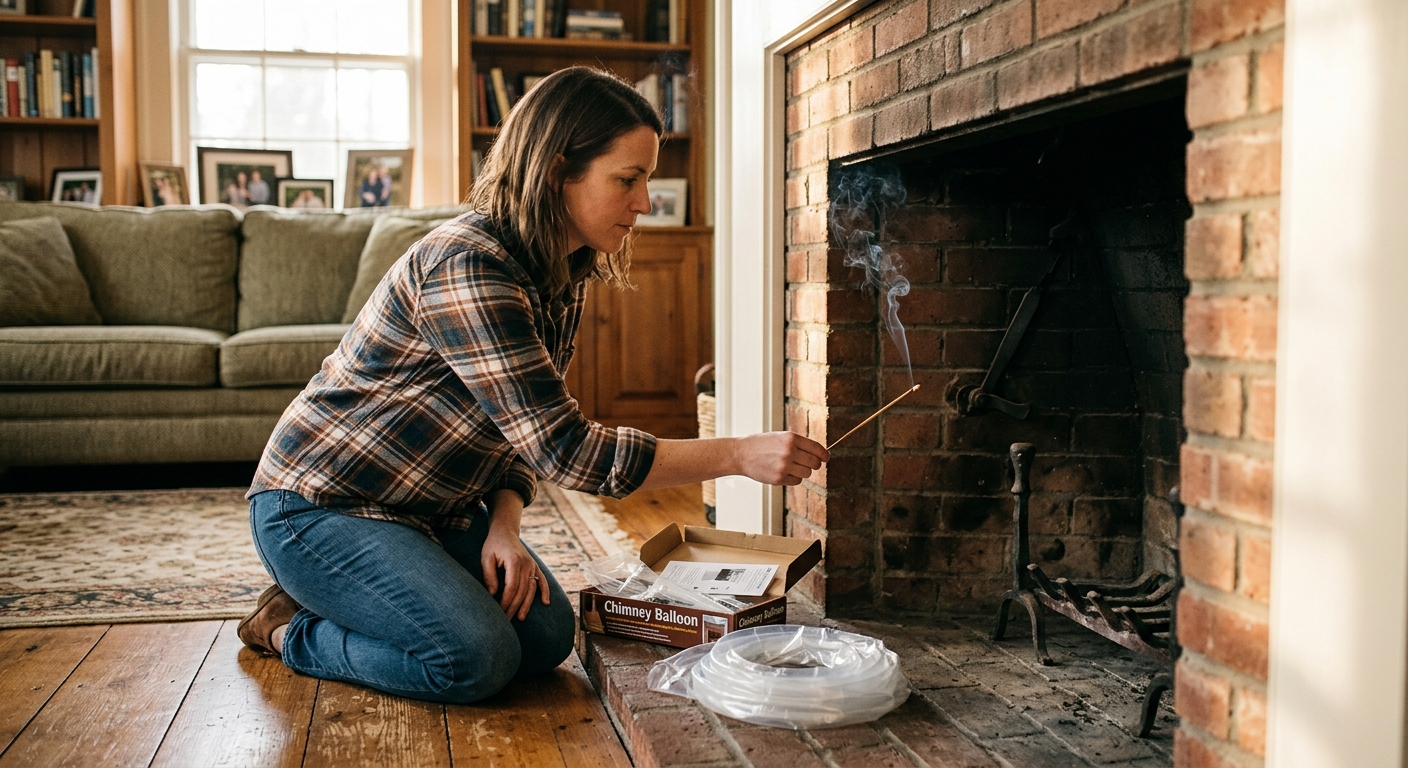
- Insert the uninflated balloon above the damper opening and into the lower section of the flue. A small inflation tube extends down into the firebox for easy access.
- Inflate the balloon using the hand pump or by blowing into the tube until it is snug against all four flue walls with no gaps. You should feel resistance when it is properly seated.
- Attach the included reminder tag to the fireplace screen or mantle so no one lights a fire without first removing the balloon. This is a critical safety step.
- Check the seal quarterly and reinflate if needed, as small balloons can lose pressure slowly over time.
- Inspect the existing throat damper by shining a flashlight up the flue with the damper closed. If you see daylight or feel cold air with your hand, the damper is leaking and warped or corroded damper plates are the likely cause.
- Purchase a high-temperature silicone sealant rated for fireplaces (above 500 degrees Fahrenheit) and a tube of fireplace mortar or intumescent sealant for any cracks in the firebox surround.
- Apply high-temperature silicone around the perimeter of the closed damper plate where it meets the damper frame, filling visible gaps. This is a supplemental seal for a functioning but leaky damper, not a substitute for a broken one.
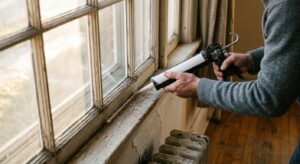
- Inspect the firebox surround where the masonry meets the wall finish or mantle trim. Use a non-combustion-zone caulk rated for exterior gaps to seal any visible cracks or gaps between the mantle and the wall surface.
- Consider a top-mounted damper as a permanent upgrade if the throat damper is severely damaged. Top-mounted dampers like the Lyemance or Lock-Top models cost $75 to $150 and create an airtight seal at the top of the chimney with a cable lever operated from the firebox. Installation requires basic ladder work and takes 1 to 2 hours.
- After completing all sealing work, hold a lit incense stick near the firebox opening and around the surround to verify no remaining air movement. Adjust or add sealant anywhere the smoke stream deflects toward the firebox.
- Schedule a Level 1 chimney inspection with a CSIA-certified chimney sweep. A standard inspection and cleaning runs $150 to $300 and will identify not only damper condition but also flue liner integrity and creosote levels.
- Ask the inspector specifically about damper condition, bypass area measurements, and whether a top-mounted damper is appropriate for your flue size and chimney height. Get a written quote for any recommended work.
- If the throat damper is warped, missing, or severely corroded, have the sweep install a replacement throat damper or a top-mounted damper. Top-mounted units professionally installed typically cost $250 to $450 total including parts and labor.
- Request that the sweep seal any gaps between the firebox liner and the smoke chamber using UL-listed smoke chamber parging compound. This step is often skipped but significantly reduces air bypass in older masonry fireplaces.
- After the appointment, install a chimney balloon as an additional off-season backup seal for the months when the fireplace is not in use, layering two levels of protection.
Why It Works: The Benefits
Properly sealing or plugging a drafty fireplace damper can reduce heating costs by 10 to 30 percent in rooms adjacent to the fireplace, translating to $150 to $500 in annual savings for a typical single-family home depending on climate zone and fuel type.
Eliminating the cold draft from the firebox removes a major radiant and convective cold source from the room, allowing temperatures to stabilize without the thermostat cycling as frequently, which improves overall comfort significantly.
Fewer heating and cooling cycles mean less mechanical wear on your furnace or heat pump. Reducing system runtime by even 8 to 10 percent each season can meaningfully extend equipment life and reduce maintenance costs over time.
An open chimney flue is an unfiltered air intake pulling in outdoor pollutants, pollen, insects, and in some cases combustion gases from neighboring appliances. Sealing the flue when not in use eliminates this infiltration pathway entirely.
Burning less natural gas or consuming less electricity to heat and cool the same space directly reduces your home’s carbon emissions. Sealing a single leaky fireplace damper can prevent the equivalent of 500 to 1,500 pounds of CO2 per year depending on your fuel mix and climate.
💰 Savings Impact by Action
Installing a chimney balloon in an open or leaky flue reduces whole-home heating energy loss by 10 to 14 percent according to DOE infiltration modeling for single-family homes.
Replacing a corroded throat damper with a top-mounted weatherstripped damper reduces chimney-related air leakage by up to 90 percent, contributing 15 to 20 percent savings on heating bills in affected rooms.
Caulking gaps between the firebox surround and the adjacent wall surface eliminates secondary bypass pathways and adds an additional 5 percent reduction in infiltration from the fireplace zone.
Combining a chimney balloon, surround caulking, and mantle trim sealing can reduce total fireplace-related energy loss by 20 to 25 percent of seasonal heating costs in homes with previously unsealed fireplaces.
🏠 Key Concepts Explained
The Science Behind It
The physics behind a leaky fireplace damper comes down to two forces working simultaneously against you: stack effect and pressure-driven infiltration. Stack effect describes the tendency of warm air to rise and escape through high openings in a building envelope. Your chimney is essentially a vertical tube designed to accelerate this process, and even a closed but leaky damper offers far less resistance to airflow than an insulated wall assembly. In winter, the temperature differential between indoors and outdoors can drive a surprisingly powerful upward draft through gaps as small as a quarter inch.
Pressure-driven infiltration compounds the problem. Every time an exhaust fan, range hood, or dryer runs, it removes air from the home and creates a slight negative pressure relative to outdoors. That pressure imbalance must be equalized by pulling replacement air in from somewhere. The fireplace flue, with its large cross-section and direct connection to the outside, is one of the lowest-resistance pathways available. This means the chimney is not just leaking passively; it is actively being used as an air intake by your own mechanical systems throughout the day.
The radiant cold effect is less obvious but equally real. A cold firebox connected to a 40-degree flue acts as a large radiating surface of low-temperature mass sitting in your living room. Heat naturally flows from warm to cold, so your heated room is constantly losing energy to the cold firebox walls through radiation and convection, even without any visible airflow. Sealing the flue and insulating the firebox opening with a plug addresses both the air movement and the radiant loss, which is why homeowners who install chimney balloons often report that the room simply feels warmer at the same thermostat setting, not just that their bills dropped.
Frequently Asked Questions
▼ How do I know if my fireplace damper is actually leaking?
The simplest test is the hand test: close the damper completely, wait for a cold day, and hold your palm flat just above the damper plate inside the firebox. Any sensation of cold air movement confirms leakage. You can also hold a lit incense stick in the same location and watch whether the smoke drifts upward into the flue or downward into the room, which confirms airflow direction. If you see daylight around the edges of a closed damper when you shine a flashlight up, you have confirmed bypass gaps.
▼ Can a chimney balloon cause carbon monoxide problems if I forget to remove it?
Yes, this is the most important safety concern with chimney balloons. Lighting any fire, including gas logs, with the balloon in place will immediately push combustion gases back into the living space. All reputable chimney balloon kits include a brightly colored reminder tag designed to hang in your field of view. Treat removal of the balloon as the first step in any fire-starting routine, the same way you would turn off a gas valve before working on a fitting.
▼ My fireplace has a gas log insert. Can I still seal the flue when not in use?
Only if the gas is fully shut off at the supply valve and the insert has no standing pilot light. Many older gas log sets maintain a continuously burning pilot, and sealing that flue even partially can create a dangerous buildup of combustion byproducts. If you have a newer millivolt or electronic ignition gas insert with no standing pilot, you can use a chimney balloon safely when the appliance is off. When in doubt, consult a licensed gas technician before sealing any flue connected to a gas appliance.
▼ I sealed my fireplace but my heating bill did not drop. What went wrong?
A few possibilities: the fireplace may not have been your primary air leakage source, meaning other gaps around attic hatches, recessed lights, or rim joists are the bigger culprits. You should also verify that the chimney balloon is fully inflated and snug with no visible gaps around the perimeter. Finally, check that any other drafts around the mantle surround have been sealed with appropriate caulk, since the firebox itself can bypass a tight damper through the masonry joints and surround gaps.
▼ What if my damper is completely stuck open and will not close?
A stuck-open damper is common in older masonry fireplaces where the cast iron or steel plate has corroded or warped over time. A chimney balloon is your best immediate fix since it bypasses the broken damper entirely. For a permanent solution, a top-mounted damper installed at the chimney crown is the standard professional fix and costs $250 to $450 installed. Do not attempt to force a stuck damper closed with tools, as this can crack the smoke shelf or damage the flue liner.
Quick Tips
- Test your damper seal on a cold day by holding your hand inside the firebox just above the closed damper. Any cold air movement you feel is costing you money and can be stopped with a chimney balloon or sealant.
- Install a top-mounted damper if your existing throat damper is corroded or warped beyond repair. Top-mounted models create a weatherstripped rubber seal at the chimney crown and outperform throat dampers in both airtightness and longevity.
- Use the off-season (spring and summer) to seal the fireplace with a chimney balloon, because cool air from an open flue can flow downward into the home during cooling season, forcing your AC to work harder than necessary.
- If you have a gas fireplace insert, have a technician verify that the flue liner and damper are properly sized and sealed for your specific insert model, as improperly vented gas appliances pose carbon monoxide risks that go well beyond energy efficiency.
Variations for Your Situation
- Apartment or Rental with Decorative Fireplace: Many older apartments have non-functional fireplaces with open flues that are never used. A chimney balloon is the ideal renter-safe solution because it requires no tools, no permanent modifications, and costs $30 to $60. Confirm with your landlord before installation, but most will encourage it since it reduces drafts for all tenants. Look for sizes in the 9×9 or 9×12 range for typical urban decorative fireplace flues.
- Tight Budget Under $50: Skip the professional inspection for now and start with the incense stick airflow test described in the troubleshooting section to confirm the leak. Then purchase a chimney balloon in the correct size for around $35 to $45. This single step addresses the majority of the air loss with no tools and no permanent changes. Prioritize removing all loose debris from the firebox and checking that the damper handle is fully in the closed position before inserting the balloon.
- Older Home Pre-1980: Masonry fireplaces in homes built before 1980 are far more likely to have corroded or missing throat dampers, deteriorating mortar joints in the firebox, and unpargedsmoke chambers that allow significant air bypass even when the damper appears closed. In these homes, a chimney balloon alone may not be sufficient. Budget for a professional Level 1 inspection ($150 to $300) and smoke chamber parging ($200 to $400) in addition to a damper seal. The combined investment typically pays back within one to two heating seasons in a cold climate.