You open your water bill and do a double take. It is 30% higher than last month, and nothing about your routine changed. No extra laundry, no long showers, no house guests. So where did the water go? The answer is almost always hiding somewhere in your home, quietly running up the bill while you sleep.
Leaks are the most common cause of unexplained water bill spikes, and they are more prevalent than most homeowners realize. The EPA estimates that the average household leaks nearly 10,000 gallons of water per year, and 10% of homes leak 90 gallons or more per day. A single running toilet can waste 200 gallons daily, which translates to $70 or more per month on your bill depending on your local water rate. The frustrating part is that most of these leaks are invisible and silent.
This post gives you a step-by-step system to diagnose exactly why your bill jumped, starting with zero-cost checks you can do in the next 15 minutes and progressing to a methodical DIY audit of every water-using system in your home. By the end, you will know where the water went, how to stop it, and what to do if the problem is bigger than a DIY fix.
What You’ll Need
Click on an item below to shop for the recommended items for this recipe on Amazon.
As an Amazon Associate, we earn from qualifying purchases.
How to Do It
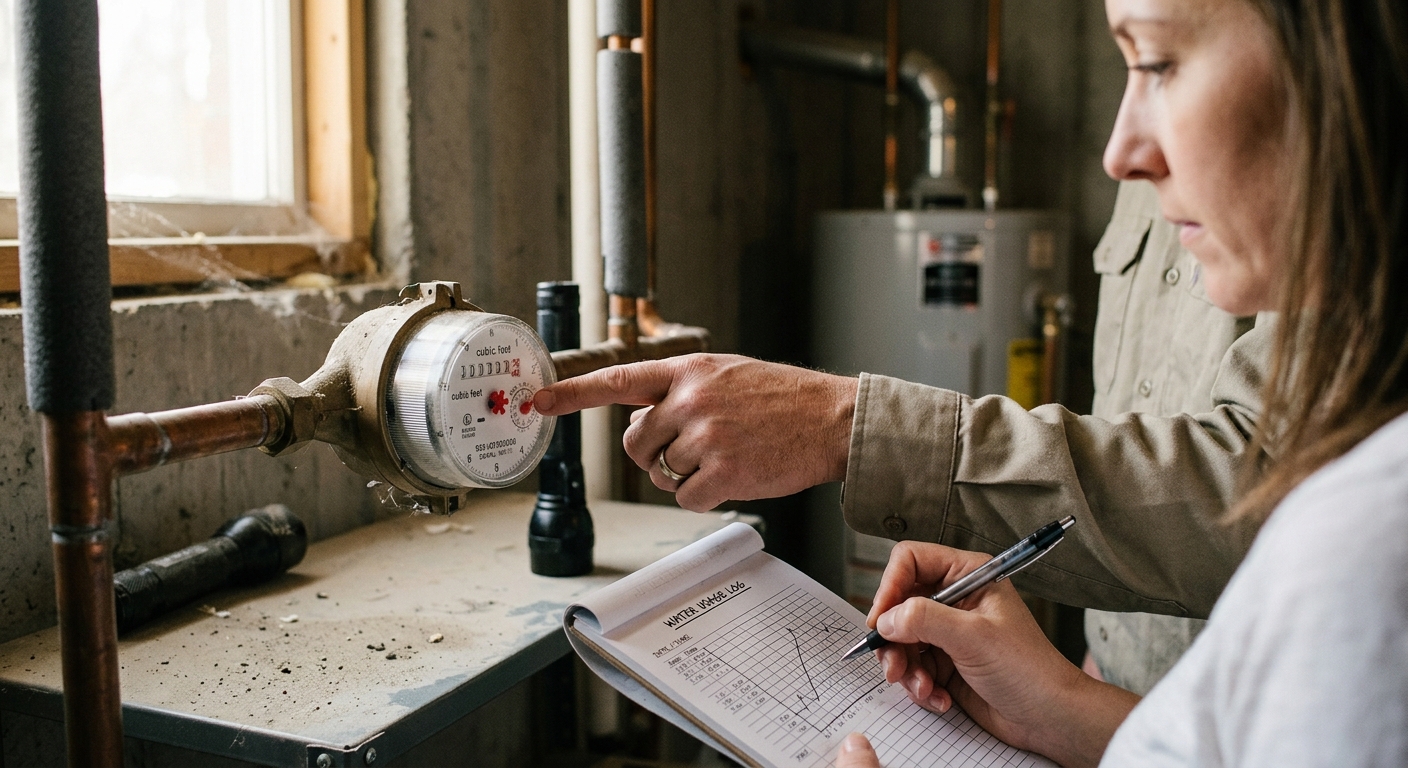
- Go to your water meter (usually near the curb in a covered box) and locate the leak indicator dial, which is a small triangle or star-shaped dial on the meter face. Turn off all water in the house and watch this dial for 60 seconds. If it moves at all, you have an active leak somewhere in your home.
- Record your meter reading, avoid using any water for exactly 2 hours, then read the meter again. Multiply the difference by 30 to estimate monthly waste. If your meter reads in cubic feet, multiply by 7.48 to convert to gallons.
- Check every toilet using the dye test: add 5 to 10 drops of food coloring to the toilet tank and wait 15 minutes without flushing. If color appears in the bowl, the flapper is leaking. A $10 replacement flapper fixes this in under 10 minutes.
- Listen and look at all visible supply lines under sinks, behind the washing machine, and at the water heater. Feel the lines and the floor below them for moisture. Check the water heater pressure relief valve discharge pipe for dripping.
- Walk your yard and look for unusually green patches, sunken ground, or wet soil near irrigation heads, all of which suggest an underground line break. Note the location and check your irrigation controller for recent run times.
- Purchase a water pressure gauge at any hardware store for $10 to $15 and attach it to an outdoor hose bib. Normal home pressure is 40 to 80 psi. Readings above 80 psi indicate you need a pressure reducing valve (PRV) adjustment or replacement, which costs $200 to $400 installed but immediately reduces stress on all fixtures and appliances.
- Audit every toilet in the home. Lift the tank lid and check that the water level sits at least half an inch below the top of the overflow tube. If water is flowing into the overflow tube, adjust the fill valve float downward. Replace the flapper with a universal model if the dye test shows leakage. Total parts cost is $10 to $25 per toilet.
- Remove and clean aerators on all faucets by unscrewing the tip counterclockwise and soaking in white vinegar for 30 minutes to clear mineral buildup. Reinstall with plumber’s tape on the threads. A clogged aerator forces faucets to run longer, increasing consumption by 5 to 15% per fixture.
- Inspect the washing machine supply hoses for bulging, cracking, or corrosion at the fittings. Replace rubber hoses older than 5 years with braided stainless steel hoses ($15 to $25 per pair). A burst washing machine hose releases up to 650 gallons per hour.
- Run your irrigation system zone by zone and watch every head for lateral spray hitting pavement, broken risers, or heads that fail to retract fully. Repair or replace damaged heads at $3 to $8 each. Install a rain sensor if your system lacks one ($25 to $50) to prevent unnecessary cycles after precipitation.
- Check the water softener settings. If your softener is regenerating more than once every 3 days, the timer or meter may be miscalibrated. Consult the manual to reset the regeneration schedule based on your actual hardness level and household size. Each unnecessary regeneration cycle uses 50 to 75 gallons.
- Call a licensed plumber who offers electronic leak detection services. Ask specifically about acoustic correlation and thermal imaging capabilities. These tools can locate a slab leak within 12 inches without breaking concrete.
- Before the visit, document your meter readings for the past 3 billing cycles and note any warm spots on floors, reduced hot water pressure, or sounds of running water in walls. This information helps the technician narrow the search area significantly.
- Request an itemized written estimate before any repair work begins. A pinhole slab leak repair runs $500 to $2,000 depending on depth and location. Pipe re-routing through walls costs more but avoids breaking the slab entirely.
- Ask your utility company about a leak adjustment credit. Most municipalities offer a one-time bill credit of 50% of the overage if you provide documentation that a verified leak was found and repaired within a reasonable time frame.
Why It Works: The Benefits
Fixing a running toilet alone can cut monthly water costs by $50 to $100 depending on your local rate, with the repair costing under $15 in parts.
Slow slab leaks or foundation leaks caught early cost $500 to $2,000 to repair. Left undetected, the same leaks can cause $10,000 or more in foundation and floor damage.
Most utilities bill sewer fees as a percentage of water consumption, typically 80 to 120% of the water charge. Cutting a leak that wastes 6,000 gallons per month can reduce your combined water and sewer bill by 25 to 40%.
Fixing household leaks saves an average of 10,000 gallons per year per home, according to EPA WaterSense data, which is equivalent to 270 loads of laundry.
Diagnosing and correcting high water pressure, which is a common root cause of leaks, extends the life of appliances like water heaters, dishwashers, and washing machines by 2 to 5 years.
💰 Savings Impact by Action
Fixing a running toilet flapper or fill valve eliminates up to 200 gallons per day of waste, cutting indoor water use by 15 to 20% in a typical home.
Repairing broken heads and installing a rain sensor reduces outdoor irrigation consumption by 20 to 25%, which is the largest single reduction available in homes with lawns.
Reducing supply pressure from 90 psi to 60 psi cuts baseline flow rates through all fixtures by 8 to 12% and dramatically reduces the frequency of new leaks developing.
Cleaning mineral-blocked aerators on kitchen and bathroom faucets restores proper flow restriction and can reduce per-use faucet consumption by up to 8%.
Correcting an over-cycling water softener to regenerate only when needed eliminates 50 to 75 gallons of waste per unnecessary cycle, saving 3 to 5% of total monthly usage in affected homes.
🏠 Key Concepts Explained
The Science Behind It
Water moves through your home’s plumbing under constant pressure, typically between 40 and 80 psi. This pressure is what pushes water out of your faucet when you turn the handle, but it is also what forces water through any gap or failed seal 24 hours a day, 7 days a week, even when you are not using water intentionally. A flapper valve with even a 1-millimeter gap allows water to pass continuously because the pressure differential between the tank and the bowl never equalizes.
The physics of flow rate amplify small leaks into large volumes. A leak dripping at just one drip per second wastes approximately 3,000 gallons per year. A toilet running at a slow trickle, which is often inaudible, can exceed 100 gallons per day because the cross-sectional area of even a slightly open flapper is many times larger than a single drip. Underground irrigation leaks are even more dramatic because soil pressure around a cracked pipe can cause the crack to expand over time, and the surrounding soil absorbs water invisibly for weeks before any surface sign appears.
High water pressure is the silent root cause behind many repeat leak problems. Pressure above 80 psi creates mechanical stress on every rubber washer, o-ring, and solenoid valve in your home with every surge and pressure cycle. Over time this leads to faster wear on toilet flappers, faucet cartridges, and appliance inlet valves. Installing or adjusting a pressure reducing valve to maintain 55 to 65 psi is one of the highest-leverage plumbing improvements a homeowner can make, because it extends the life of every water-using device simultaneously while also reducing baseline flow rates through all fixtures.
Frequently Asked Questions
▼ My meter shows no movement but my bill is still high. What is going on?
If your meter is not moving with all water off, the spike was likely a one-time usage event or an estimation error by your utility. Pull your last three billing statements and compare the actual meter reads listed, not the estimated or projected reads. If two consecutive bills show an asterisk or the word ‘estimated’ next to the reading, call your utility and request an actual meter read to correct the baseline.
▼ I replaced the flapper but my toilet is still running. What did I miss?
A running toilet after a new flapper almost always means the fill valve is the culprit, not the flapper. Check whether the water level in the tank is rising above the overflow tube, which means the fill valve is not shutting off at the correct level. Replace the fill valve completely, a job that takes about 20 minutes and costs $10 to $20, and adjust the float so the water level sits 1 inch below the top of the overflow tube.
▼ Can I get a credit from my utility for the high bill caused by a leak?
Yes, most water utilities offer a leak adjustment or leak credit program that forgives a portion of the overage, typically 50% of the amount above your normal average, for a one-time occurrence. You generally need to submit a repair receipt or plumber invoice as proof the leak was fixed within 30 to 60 days of the spike. Contact your utility’s customer service line and ask specifically for the leak adjustment application.
▼ My home is on a well. How do I check for a leak without a utility meter?
Listen for your pressure tank pump cycling on and off while all fixtures are off. If the pump runs more than once every 15 to 20 minutes with zero water use, you have a leak or a waterlogged pressure tank. You can also use an inline flow meter installed at the pressure tank outlet for about $40 to measure real-time usage and identify periods of unexpected flow overnight or during work hours.
▼ How long until I see the savings on my bill after fixing the leak?
You will see the full effect on your next complete billing cycle after the repair, which is typically 30 days. Some utilities read meters mid-month, so the first bill may show partial improvement and the second will show the full reduction. If your next bill is still elevated after a confirmed repair, check with your utility that the meter was read after the repair date rather than estimated from a pre-repair reading.
Quick Tips
- Photograph your meter reading on the first day of each month to create your own usage baseline that is independent of your billing cycle.
- Replace toilet flappers proactively every 3 to 5 years regardless of visible leaks, since rubber degrades with chlorine exposure and causes intermittent leaks before full failure.
- If your bill spikes only in summer, look at irrigation first. A single stuck irrigation zone running 30 extra minutes per day can add 4,000 to 6,000 gallons per month.
- Call your water utility to request a meter test if the meter shows a leak but you cannot locate any source after a thorough audit. Meters occasionally malfunction and utilities are required to test them at no cost in most states.
Variations for Your Situation
- Apartment/Rental: Renters cannot access the building water meter, but you can place a smart water sensor (such as a Govee or Insteon leak detector, $15 to $30) under the sink, behind the toilet, and near the washing machine hookup. Report any detected moisture or a running toilet to your landlord in writing immediately, as documented reports protect you from being held liable for water damage. In many states, landlords are legally required to repair leaks within 24 to 48 hours of written notice.
- Tight Budget (under $50): Start with the free meter test and food coloring dye test on all toilets. A replacement flapper costs $5 to $10 and fixes the most common leak with no tools required. If the meter shows a leak you cannot find, borrow a moisture meter from a tool lending library or home improvement store instead of hiring a professional. Total cost for toilets, aerator cleaning, and irrigation head inspection is under $25.
- Older Home (pre-1980): Homes built before 1980 often have galvanized steel pipes that corrode from the inside, narrowing the pipe diameter and creating pinhole leaks inside walls. If your audit finds no obvious source but usage is consistently high, budget for a plumber to use a borescope camera inside the pipes. Re-piping an older home with PEX costs $4,000 to $15,000 depending on size but eliminates recurring leak problems, improves pressure, and can reduce insurance premiums on older properties.