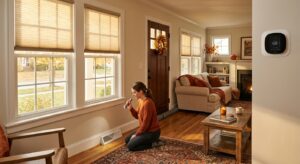
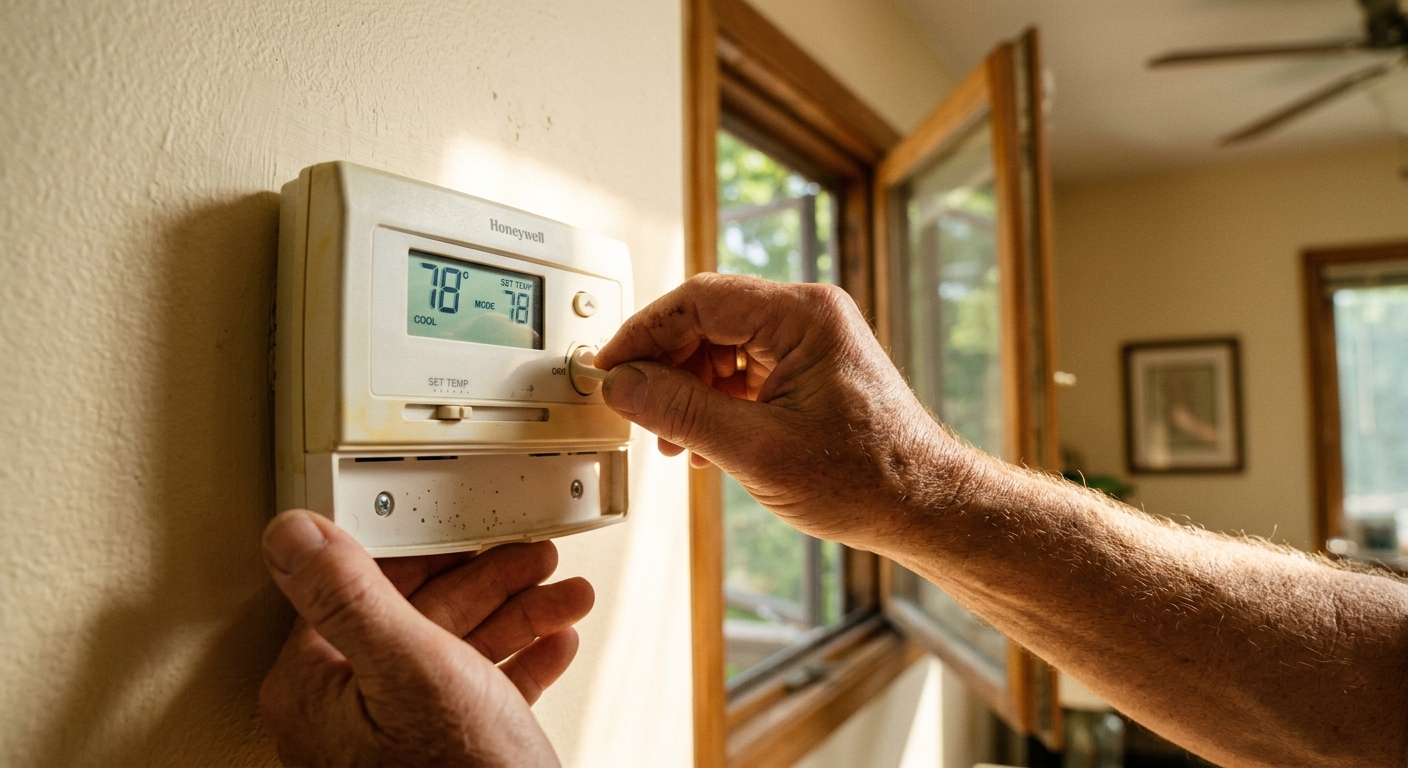
The Department of Energy recommends setting your thermostat to 78 degrees when you are home during summer, but most people find that temperature uncomfortably warm. The problem is not the number on the thermostat. It is the radiant heat pouring through windows, the humidity making every degree feel worse, and the stagnant air that turns a room into an oven. Your air conditioner can only do so much if the conditions working against it are never addressed.
Here is the real issue: every degree you lower your thermostat below 78 degrees adds roughly 3 percent to your cooling bill. If you are running at 72 degrees all summer, you are spending 18 percent more than necessary before accounting for any heat gain problems in your home. For a household with a $200 monthly summer cooling bill, that is $36 every single month just from the thermostat setting alone.
This post walks you through exactly how to make 78 degrees genuinely comfortable, covering window management, airflow optimization, humidity control, and a few strategic upgrades that pay for themselves within one cooling season. Whether you rent or own, spend zero dollars or a few hundred, there is a practical path here for your situation.
What You’ll Need
Click on an item below to shop for the recommended items for this recipe on Amazon.
As an Amazon Associate, we earn from qualifying purchases.
How to Do It
- Check every ceiling fan direction and switch counterclockwise blades to summer mode (blades should push air straight down). This alone allows a 4-degree thermostat setback with no comfort loss.
- Close all blinds and curtains on south and west-facing windows before 11 a.m. every day. This single habit reduces solar heat gain through those windows by 45 to 65 percent depending on cover type.
- Set your thermostat to 78 degrees when home, 82 to 85 degrees when away for more than 2 hours, and 80 degrees at night with a fan running. This schedule alone saves 10 to 15 percent on cooling costs.
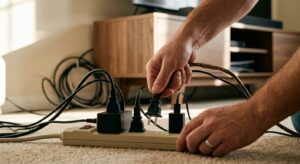
- Move any heat-generating appliances like lamps, TVs, and phone chargers away from your thermostat. A thermostat sensing nearby heat runs the AC longer than necessary.
- Shift heat-producing tasks like running the dishwasher, dryer, and oven to after 8 p.m. or before 9 a.m. This reduces internal heat load during the hottest part of the day when the AC is already working hardest.
- Install cellular or honeycomb window shades on south and west-facing windows ($20 to $50 per window). These have an R-value of 3 to 4.8 and block significantly more heat than standard blinds while still allowing light when open.
- Add window film to any single-pane or older double-pane windows you cannot shade easily. A good solar control film ($20 to $40 per window) rejects 55 to 70 percent of solar heat and pays back within one summer in hot climates.
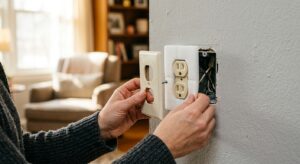
- Seal air leaks around electrical outlets on exterior walls, gaps around window and door frames, and plumbing penetrations under sinks using foam gaskets and paintable caulk. Focus on upper floors first since these leak cooled air fastest via the stack effect.
- Install a programmable or smart thermostat if you do not have one ($25 to $120). Program a setback schedule for when you are at work and asleep. A properly programmed smart thermostat saves an average of $50 per year on cooling according to ENERGY STAR.
- Add attic stair insulation cover if your attic access is inside conditioned space ($30 to $60 for a pre-made cover). An unsealed attic hatch leaks as much heat as leaving a window open during summer.
- Check and replace your AC air filter if it is gray and clogged. A dirty filter restricts airflow and can reduce system efficiency by 5 to 15 percent. Replace with a MERV 8 to 11 filter every 60 to 90 days during peak cooling season.
- Add attic insulation to bring it up to R-38 to R-60 depending on your climate zone. Attic insulation is the single highest-return upgrade for cooling efficiency, reducing heat gain through the ceiling by 15 to 25 percent. Average cost is $1,500 to $3,000 professionally installed but payback is typically 3 to 5 years.
- Install a whole-house attic ventilation fan or powered attic ventilator ($200 to $500 installed) to exhaust superheated attic air. Attic temperatures can exceed 150 degrees on hot days and radiate that heat into living spaces even through insulation.
- Replace any single-pane windows or add interior storm window inserts on the most problematic south and west exposures. Interior storm inserts ($70 to $150 per window) nearly double the insulating value of a single-pane window without full replacement.
- Install a dehumidifier sized for your square footage in the basement or central area of the home. Maintaining indoor humidity at 45 to 50 percent makes 78 degrees feel like 74 to 75 degrees without touching the thermostat.
- Have an HVAC professional perform a refrigerant check and duct leakage test. Duct systems in unconditioned attics or crawlspaces lose an average of 20 to 30 percent of cooled air before it reaches the living space. Sealing ducts or adding duct insulation often delivers the biggest efficiency gain of any single upgrade.
Why It Works: The Benefits
Running your thermostat at 78 instead of 72 degrees saves roughly 18 percent on cooling costs. Pair that with the additional measures in this post and total summer savings of 20 to 30 percent are realistic, translating to $40 to $80 per month on a typical $200 summer electricity bill.
Blocking solar gain through windows and improving ceiling fan circulation eliminates hot spots that force people in one room to suffer while another stays cool, a common sign that the AC is fighting solar heat gain rather than cooling the whole house evenly.
An air conditioner running fewer hours per day experiences less wear on the compressor. Reducing runtime by even 15 percent can meaningfully extend the life of a system that typically lasts 15 to 20 years, delaying a $5,000 to $12,000 replacement.
Lowering humidity to the 45 to 50 percent range reduces mold risk, dust mite activity, and that sticky uncomfortable feeling that makes a warm room feel oppressive. Most people find properly dehumidified air at 78 degrees more comfortable than humid air at 74 degrees.
Many of the most effective steps, including ceiling fan direction, window coverings, and thermostat scheduling, cost nothing or under $30 and take effect the same day they are implemented.
💰 Savings Impact by Action
Raising the thermostat from 72 to 78 degrees saves approximately 3 percent per degree, totaling 18 percent on cooling costs.
Blocking solar gain on south and west windows with cellular shades or film reduces cooling load by 10 to 20 percent depending on window area.
Sealing envelope leaks around windows, outlets, and attic bypasses reduces conditioned air loss and infiltration by up to 20 percent.
Using ceiling fans in counterclockwise summer mode allows a 4-degree thermostat increase, saving roughly 8 to 12 percent on cooling with no comfort loss.
Upgrading attic insulation to R-38 or higher reduces heat gain through the ceiling by 15 to 25 percent in homes with insufficient existing insulation.
🏠 Key Concepts Explained
The Science Behind It
Your air conditioner does not actually add cold air to your home. It removes heat by passing warm indoor air over refrigerant coils, transferring that heat to the refrigerant, and then expelling it outside through the condenser unit. Every source of heat inside your home, whether from sunlight through a window, a running appliance, or hot air leaking in from outside, is heat your AC must capture and move outdoors. The more heat entering the home, the longer and harder the compressor runs.
Solar radiation is the most intense heat source most homes face in summer. Glass transmits shortwave solar radiation easily, which then converts to longwave heat radiation when it strikes interior surfaces. That heat cannot escape back through the glass, a phenomenon identical to how a greenhouse works. A single unshaded west-facing window can add 200 to 500 watts of heat gain per hour during afternoon sun exposure. Cellular shades and window film work by reflecting or absorbing that radiation before it enters the living space, intercepting the problem at the source rather than letting the AC deal with the aftermath.
Humidity compounds the discomfort of heat because human cooling depends on evaporation. When relative humidity is high, sweat does not evaporate efficiently and your body cannot shed heat as fast as it builds up. The heat index, the temperature your body actually perceives, can be 5 to 10 degrees higher than the actual air temperature at 60 to 70 percent relative humidity. By controlling both temperature and humidity simultaneously, you change the effective comfort zone. A well-dehumidified home at 78 degrees is genuinely more comfortable than a humid home at 74 degrees, and costs significantly less to maintain.
Frequently Asked Questions
▼ Why is my AC still running all day even after I tried these fixes?
Continuous runtime usually means one of three things: the system is undersized for your home, there is a refrigerant leak reducing capacity, or duct leakage is dumping conditioned air into unconditioned space. Start by checking if your outdoor condenser is freezing up (ice on the lines), which signals low refrigerant. If the unit runs constantly but the house never reaches setpoint temperature, call an HVAC tech for a load calculation and refrigerant check.
▼ Can renters do this without landlord permission?
Yes, most of the highest-impact steps require zero modifications to the property. Adjusting ceiling fan direction, closing blinds before noon, shifting appliance use to cooler hours, and using a box fan for night flushing all cost nothing and leave no trace. Renters can also add removable window film, plug-in dehumidifiers, and smart thermostats (if they replace and store the original). Always keep the original thermostat to reinstall at move-out.
▼ How long before I actually notice savings on my bill?
The no-cost steps like fan direction and window management show up in your very next billing cycle. Most utilities bill monthly, so if you implement changes in early June you should see measurable savings by your July statement. The DIY upgrades like window shades and caulking typically reduce bills by an additional 10 to 15 percent, which is visible within one to two billing cycles.
▼ What if my home is older than 30 years?
Older homes typically have more air leakage, minimal attic insulation, and single-pane or early double-pane windows, meaning the baseline efficiency is much lower and the gains from upgrades are proportionally larger. Prioritize air sealing and attic insulation first since these deliver the biggest return in older construction. Consider scheduling a professional energy audit ($100 to $400, often subsidized by utilities) to identify the worst leakage points before spending money on other upgrades.
▼ Will these tips work in a humid climate like the Southeast or Gulf Coast?
Humidity control becomes even more critical in high-humidity climates. In addition to the standard steps, add a standalone dehumidifier sized to your square footage and make sure your AC is not short-cycling, which prevents it from running long enough to dehumidify the air. In very humid climates, keeping indoor relative humidity at 50 percent or below is as important as temperature for comfort and for preventing mold growth.
Quick Tips
- Use a $15 indoor thermometer with a humidity display to monitor your actual indoor conditions. If humidity stays above 55 percent your AC is undersized or short-cycling and cannot remove moisture properly.
- Paint or replace your roof with a lighter color or cool-roof coating if you are already replacing shingles. A cool roof can reduce attic temperatures by 20 to 30 degrees and cut cooling loads by up to 15 percent in sunny climates.
- Keep the area around your outdoor condenser unit clear of vegetation and debris by at least 2 feet on all sides. A blocked condenser can reduce efficiency by 10 to 25 percent and overheat the compressor.
- Cook outdoors on a grill or use a countertop induction burner instead of your oven during heat waves. A conventional oven at 350 degrees can raise kitchen temperature by 10 degrees and add meaningful load to your AC for hours after use.
Variations for Your Situation
- Apartment or Rental: Focus on zero-modification solutions since you cannot alter HVAC or windows. Buy removable window film ($20 to $40 per window) and peel-and-stick cellular shades. Use a portable evaporative cooler if humidity is low (under 50%) or a plug-in dehumidifier in humid climates. A USB-powered desk fan pointed at your body uses 90 percent less energy than lowering the thermostat one degree and costs under $25.
- Tight Budget (under $50): Start with ceiling fan direction (free), daytime blinds (free), and shifting appliance use (free). Spend your $50 on a two-pack of cellular window shades for your worst west-facing window ($20 to $30) and a tube of paintable caulk for door and window frames ($5). These four steps alone can cut cooling bills by 15 to 20 percent with no further investment.
- Older Home (pre-1980): Pre-1980 homes often have little or no attic insulation and significant air leakage through plaster wall cracks and original single-pane windows. Your biggest returns will come from adding attic insulation to R-38 and sealing the top-plate penetrations in the attic floor before adding insulation. Check with your utility company for rebate programs since many offer $0.10 to $0.25 per square foot for added attic insulation, substantially reducing out-of-pocket cost.