Your clothes dryer doesn’t get nearly enough attention when homeowners start hunting for energy savings. It hides in the laundry room, runs a few times a week, and never shows up on any energy monitoring dashboard. But the average electric dryer consumes 5,000 watts per cycle, and at today’s electricity rates, a typical household running 5 to 7 loads per week spends $100 to $150 per year just on drying clothes. Gas dryers are cheaper to run but still rack up $40 to $70 annually in fuel costs, plus the electricity for the motor and controls.
What makes the dryer such a silent budget drain is how inefficient the drying process is by design. A conventional vented dryer pulls in room-temperature air, heats it, tumbles it through your wet laundry, and then exhausts that heated, moisture-laden air outside your home. Every BTU used to heat that air is gone the moment it leaves the duct. Lint buildup, a kinked vent hose, or an oversized duct run makes that process even worse, forcing the dryer to run longer to achieve the same result.
This post breaks down exactly why your dryer costs so much, what the biggest performance killers are, and how to immediately reduce your drying costs with zero-cost habit changes and affordable DIY maintenance. Whether you have a basic electric dryer or a newer gas model, you’ll find actionable steps here to stop wasting money one load at a time.
What You’ll Need
Click on an item below to shop for the recommended items for this recipe on Amazon.
As an Amazon Associate, we earn from qualifying purchases.
How to Do It
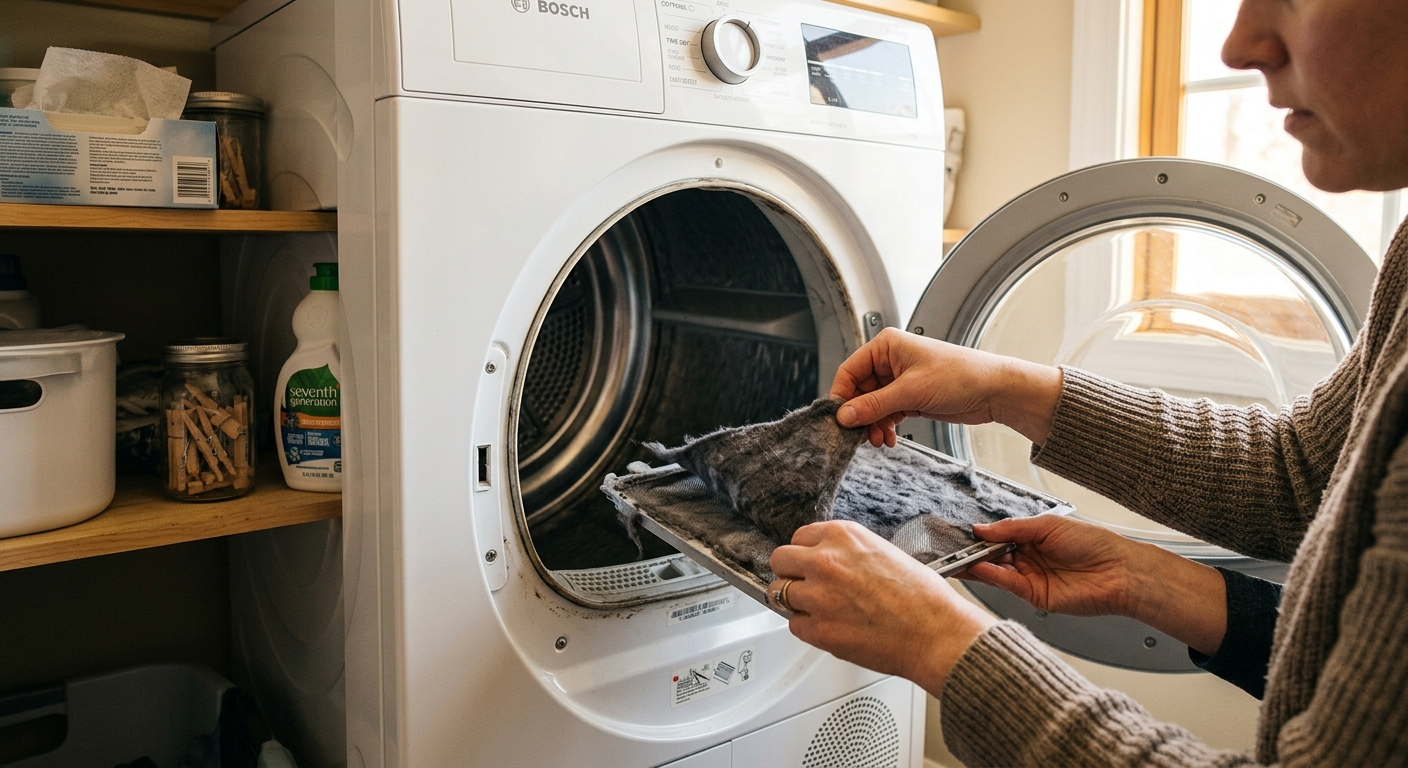
- Clean the lint trap before every single load, not just when it looks full. Even a partially clogged trap reduces airflow significantly and extends run time.
- Switch your washing machine to the highest spin speed available for every load. A faster spin removes more water mechanically, reducing the moisture load the dryer must evaporate. This alone can cut drying time by 10 to 20 minutes.
- Run loads back to back while the dryer is already warm. The drum, duct, and internal components retain heat between cycles, so consecutive loads start drying immediately rather than wasting the first 5 to 10 minutes warming up.
- Use the moisture-sensing or auto-dry cycle instead of a timed dry setting. Timed cycles almost always run longer than necessary. Auto-dry stops when clothes are actually dry.
- Separate heavy items like jeans and towels from lightweight items like shirts and underwear. Mixing them causes the dryer to run until the heaviest item is dry, over-drying everything else and wasting energy.
- Air dry items that don’t need a dryer, such as dress shirts, synthetic activewear, and delicates. Removing even 1 to 2 items per load from the dryer reduces total drying time for the remaining clothes.
- Pull the dryer away from the wall and disconnect the exhaust duct from the back of the machine. Inspect the duct material. If it is a white plastic accordion hose or a foil accordion hose, replace it with a rigid metal duct or at minimum a semi-rigid aluminum duct. Plastic duct is a fire hazard and collapses easily, creating airflow restriction.
- Use a dryer vent cleaning brush kit (available for $20 to $30 at hardware stores) to run the brush through the full length of the exhaust duct from inside the dryer connection point to the exterior vent cap. Collect and remove all lint accumulation.
- Go outside and locate the exterior vent cap. Remove the cover and clear any lint, bird nests, or debris from the flap and opening. Make sure the flap opens and closes freely. A stuck-open flap lets cold outside air flow into the duct in winter.
- Clean the moisture sensor bars inside the drum using a cotton ball or soft cloth dampened with rubbing alcohol. The sensors are typically two narrow metallic strips on the inside front of the drum near the door opening. Removing fabric softener residue restores accurate moisture detection.
- Vacuum out the lint trap housing, the slot where the filter sits, using a vacuum with a narrow attachment. Lint accumulates in this cavity and is invisible from above but restricts airflow just as much as a clogged trap.
- Reconnect all ductwork with metal foil tape (not standard duct tape, which fails under heat), push the dryer back into position, and run a short test cycle. Time the cycle and compare to previous runs. Most homeowners see a 15 to 25-minute reduction in cycle time after a full cleaning.
- Confirm whether a heat pump dryer fits your laundry setup. These units are ventless and require only a standard 120V or 240V outlet depending on the model, plus a nearby drain or a condensate reservoir you empty periodically.
- Compare ENERGY STAR-certified heat pump dryer models. Look for an Energy Factor (EF) rating above 3.5. Top-tier models from brands like LG, Samsung, and Miele use 40 to 50% less electricity than a conventional electric dryer.
- Check for utility rebates and federal tax incentives. The Inflation Reduction Act provides a 30% tax credit (up to $150) for certain efficient dryers, and many utilities offer rebates of $50 to $200 on ENERGY STAR-certified heat pump dryers.
- Arrange delivery and installation. Because heat pump dryers are ventless, installation is straightforward in most cases. If replacing an existing dryer in the same location, the job typically takes under an hour.
- Calculate your payback period using your actual electricity rate. At $0.16 per kWh and 6 loads per week, a conventional dryer costs about $120 to $140 per year. A heat pump dryer cuts that to $60 to $70, saving $60 to $70 annually. At a net cost of $600 to $900 after rebates, payback runs 8 to 12 years, but the longer appliance lifespan and reduced vent maintenance costs improve the economics.
Why It Works: The Benefits
Optimizing usage habits, cleaning the vent system, and running full loads can reduce annual dryer electricity costs by $40 to $75 for a typical household running 6 loads per week.
A clean lint trap and clear vent duct can reduce average cycle time by 15 to 25 minutes per load, meaning less idle run time and fewer dollars spent per cycle.
Restricted airflow forces the heating element and motor to work harder, accelerating wear. Regular vent cleaning can add years to a dryer’s lifespan and prevent premature replacement, a $400 to $1,000 expense.
The U.S. Fire Administration reports that clothes dryers cause approximately 2,900 home fires per year, with failure to clean the dryer as the leading cause. A clean vent system is one of the most impactful home safety measures you can take.
Over-drying clothes due to a faulty moisture sensor or excessive heat settings degrades fabric fibers faster. That lint in your trap is literally your clothes disintegrating. Proper drying extends the life of garments and linens.
💰 Savings Impact by Action
Removing lint buildup from the full duct run restores airflow and can reduce cycle time by 15 to 25 minutes, cutting energy use per load by up to 25%.
Running the washer at maximum spin speed removes an additional 0.5 to 1 pound of water before drying, reducing dryer run time and energy use by 10 to 20%.
Running loads back to back captures residual drum heat and reduces warm-up energy waste by 10 to 15% per subsequent cycle.
Cleaning fabric softener residue from moisture sensor bars restores accurate cycle shutoff, eliminating 10 to 15 minutes of unnecessary over-drying per load.
Replacing a conventional electric dryer with a heat pump model reduces electricity consumption by 40 to 50% through closed-loop heat recirculation.
🏠 Key Concepts Explained
The Science Behind It
A conventional electric dryer is essentially a large resistive heating element combined with a fan and a tumbling drum. The heating element, typically rated between 4,000 and 5,600 watts, heats incoming air to 125 to 135 degrees Fahrenheit. That heated air passes through the tumbling wet laundry, picks up water vapor, and gets exhausted outside. The dryer’s thermostat cycles the element on and off to maintain temperature, but the fan and motor run continuously throughout the cycle. The critical inefficiency here is that 100% of the heat energy used is exhausted along with the moisture, it cannot be recovered. Every BTU sent out the duct is a BTU you paid for and threw away.
Heat pump dryers solve this fundamental inefficiency using refrigerant-based technology. Instead of exhausting hot, humid air, a heat pump dryer runs the exhaust air through a condenser where the moisture is extracted as liquid water. The now-dry air is then reheated and recirculated back through the drum. This closed-loop system uses 40 to 50% less electricity because it is moving heat rather than generating it, the same principle that makes heat pump water heaters and HVAC systems so efficient. The tradeoff is longer cycle times, typically 15 to 30 minutes more per load, and a higher upfront cost.
The physics of water evaporation also explain why spin speed matters so much. Water has a latent heat of vaporization of approximately 970 BTUs per pound. Evaporating that water thermally inside the dryer drum requires all of that energy. But removing water mechanically through centrifugal force during the washer’s spin cycle costs almost nothing in comparison. A high-efficiency washing machine spinning at 1,200 RPM instead of 800 RPM can remove an additional 0.5 to 1 pound of water per load before the clothes ever enter the dryer. That directly translates to fewer BTUs needed and a shorter cycle time, often 10 to 20 minutes less per load with no change to the dryer itself.
Frequently Asked Questions
▼ Why is my dryer taking so long to dry clothes even though the lint trap is clean?
A clean lint trap only addresses the most obvious blockage point. The most common hidden culprit is lint buildup inside the duct itself, especially 10 to 15 feet from the dryer where most homeowners never look. Go outside while the dryer is running and hold your hand near the exterior vent cap. If airflow feels weak, you need a full duct cleaning with a brush kit. Also check that the duct material is rigid or semi-rigid metal, not a crushed or kinked accordion hose.
▼ My dryer is running but the clothes aren’t getting hot. What’s wrong?
On electric dryers, this usually indicates a blown thermal fuse, which is a safety device that trips when the dryer overheats, often due to a blocked vent. Before replacing the fuse, clean the entire vent system. If you replace the fuse without clearing the blockage, it will blow again. Thermal fuses cost $5 to $15 and are a DIY repair, but if the element itself has failed, that costs $20 to $50 in parts. For gas dryers, a no-heat situation often points to a faulty igniter or gas valve solenoid, which typically requires a technician.
▼ Can renters reduce dryer costs without modifying anything?
Absolutely. The zero-cost habit changes, cleaning the lint trap before every load, running consecutive loads, using auto-dry instead of timed cycles, and separating heavy from lightweight items, require no modifications and deliver 20 to 30% savings on their own. You can also clean the moisture sensor bars with rubbing alcohol, which is maintenance rather than modification. Ask your landlord or property manager to have the vent duct professionally cleaned annually, especially in older buildings where this is often neglected.
▼ How do I know if upgrading to a heat pump dryer is worth it for my household?
Run this quick calculation: multiply your weekly load count by 52, then by your dryer’s kilowatt-hour consumption per cycle (typically 4 to 5 kWh for a conventional electric dryer), then by your electricity rate. If that annual cost exceeds $100 and you plan to stay in your home for 8 or more years, a heat pump dryer is likely worth considering, especially after applying utility rebates and the federal tax credit. Households doing 8 or more loads per week see the strongest payback, often under 7 years.
▼ Should I leave the dryer door open between cycles?
Yes, it is a good habit. Leaving the door ajar allows residual moisture and heat to dissipate from the drum, which prevents musty odors and reduces the chance of mold or mildew developing inside the drum seal over time. It also lets the interior cool down between loads, which slightly extends the life of the door gasket and drum seals.
Quick Tips
- Throw a dry, clean towel into a load of heavy wet items like jeans or towels. The dry towel absorbs moisture quickly and helps reduce overall drying time by 10 to 15 minutes.
- Check your dryer’s exterior vent cap in winter. Cold weather causes lint-clogged flaps to freeze shut, which can force exhaust back into the duct and trigger the dryer’s thermal fuse to blow.
- If your dryer has a Wrinkle Shield or Extended Tumble option, disable it for most loads. This feature keeps the drum tumbling for up to 90 minutes after drying ends using motor power, which adds unnecessary runtime to your electricity bill.
- Wool dryer balls reduce static and slightly improve airflow between garments in the drum, cutting drying time by 10 to 25% depending on load type. They last for hundreds of cycles and eliminate the cost of dryer sheets entirely.
Variations for Your Situation
- Apartment or Condo: If you use a shared laundry room, focus on the washer side of the equation. Always select the highest available spin speed before transferring clothes to the dryer. This is often the single biggest efficiency gain available to you with no control over the dryer settings. If you have an in-unit stacked dryer, clean the moisture sensor bars monthly since smaller units with shorter duct runs clog faster. Consider a portable drying rack for lighter items to reduce your coin-op or metered dryer costs.
- Tight Budget (under $25): Start with the zero-cost habit changes immediately: lint trap every load, consecutive loads, auto-dry cycle, and separating laundry by weight. Then buy a $20 to $30 dryer vent brush kit and clean the full duct yourself. These two steps combined can cut operating costs by 25 to 35% with minimal investment and deliver payback within 2 to 3 months on a typical electricity bill.
- Older Home (pre-1990): Homes built before 1990 often have plastic or foil accordion duct running through the wall to a worn exterior vent cap. This combination is both a fire hazard and a major airflow restriction. Prioritize replacing the duct material with rigid metal duct sections and installing a new louvered vent cap with pest screening. Budget $40 to $80 in materials for this upgrade. Also check whether the duct exits through the roof rather than the wall, a configuration common in older homes that dramatically increases duct length and lint accumulation risk, and consider having a professional reroute it to a side wall exit if possible.