Insulation is one of the most cost-effective home improvements you can make, but there is a point where adding more stops saving money and starts creating problems. Most energy efficiency advice focuses on under-insulated homes, and for good reason: the average American home loses 25 to 40% of its conditioned air through gaps, cracks, and thin insulation. But the conversation rarely covers what happens when homeowners go too far in the other direction.
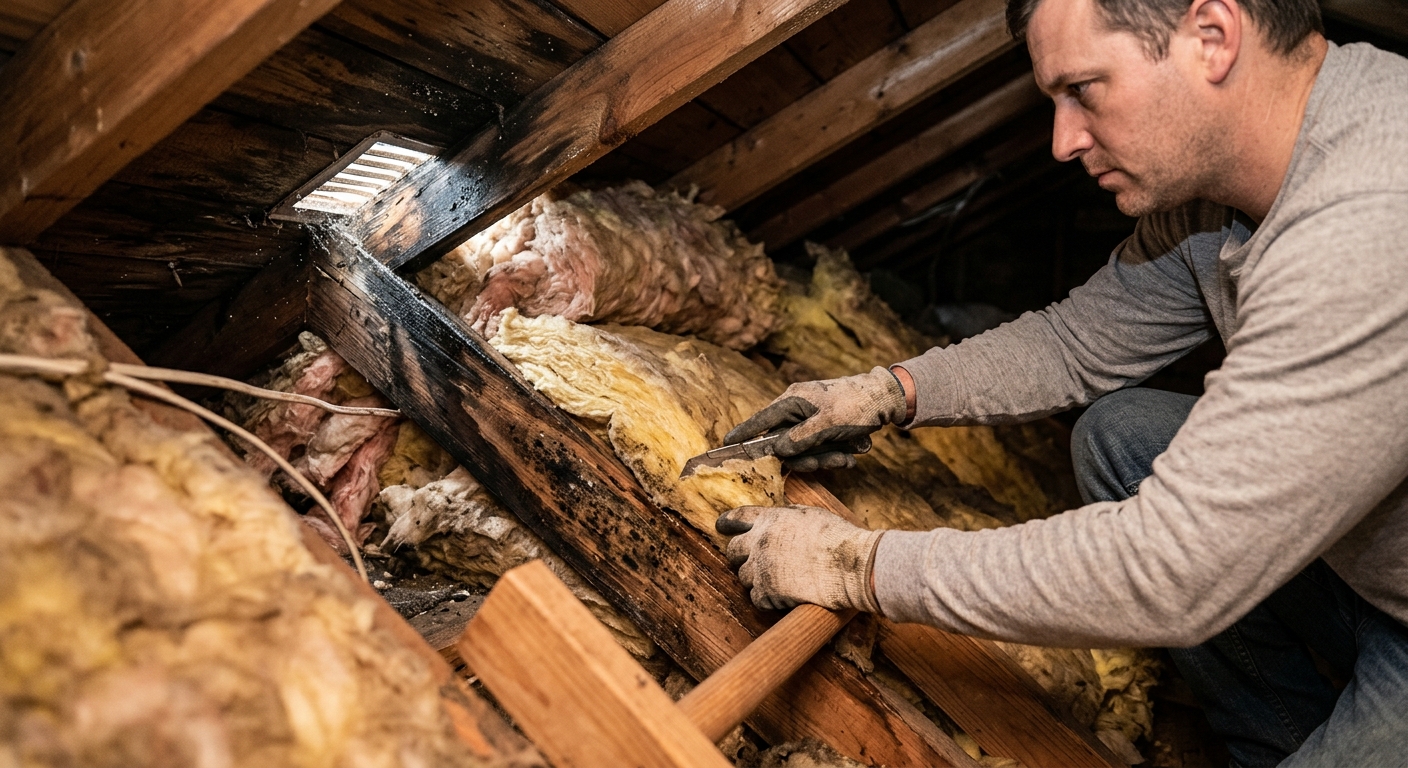
Over-insulating, or more precisely, insulating without a coordinated approach to air sealing and ventilation, can trap moisture inside walls and attics, starve combustion appliances of the air they need to operate safely, and create stuffy, stale indoor environments that worsen air quality. In some cases, it can even void manufacturer warranties on HVAC equipment or trigger mold growth inside structural cavities. These are not theoretical risks. They are documented outcomes that home inspectors and building scientists encounter regularly in well-meaning retrofit projects.
This post explains where the real diminishing returns kick in for each part of your home, what warning signs to watch for, and how to audit your current insulation levels so you can make a genuinely informed decision before adding another inch of spray foam or another bag of blown-in cellulose.
What You’ll Need
Click on an item below to shop for the recommended items for this recipe on Amazon.
As an Amazon Associate, we earn from qualifying purchases.
How to Do It
- Look up the DOE-recommended R-values for your climate zone at energystar.gov. Zone 4 attics need R-38 to R-60, Zone 5 and above need R-49 to R-60. Note your current attic insulation depth: 1 inch of fiberglass batt equals roughly R-3.2, 1 inch of blown cellulose equals roughly R-3.7.
- Check whether your attic has proper ventilation by confirming soffit vents are not blocked by insulation and that a ridge vent or gable vents exist. If insulation has crept within 1 inch of soffit vents, gently rake it back to maintain airflow channels before adding more.
- Identify your heating and cooling appliances. If your furnace, boiler, or water heater uses a traditional flue pipe rather than a PVC condensate exhaust, it is an atmospheric-combustion appliance that requires combustion air. Flag this before tightening your home further.
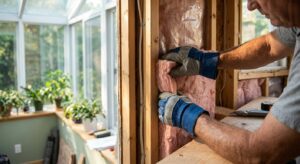
- Check your walls by removing an outlet cover on an exterior wall and looking into the gap beside the electrical box with a flashlight. Insulation should fill the cavity. If it does, wall insulation is likely adequate and adding more requires interior or exterior work that involves significant cost and disruption.
- Look for existing exhaust fans in bathrooms and the kitchen. Confirm they actually exhaust to the outside and not just into an attic space. If your home has no mechanical ventilation at all, adding significant insulation without also adding a ventilation solution like an HRV or ERV creates an indoor air quality risk.
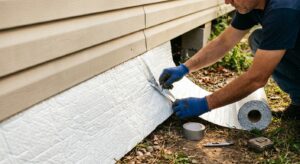
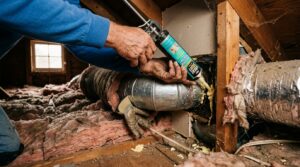
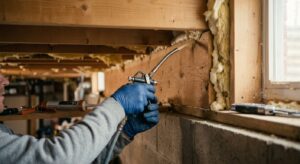
- Before adding any insulation, go into your attic and seal all air bypasses with fire-rated caulk or canned spray foam: around recessed light cans, where interior partition walls meet the ceiling plane, plumbing and wiring penetrations, and the perimeter where the top plate meets the attic floor. These bypasses account for 30 to 40% of heat loss that insulation alone cannot fix.
- Install insulation baffles in every rafter bay at the eaves before adding blown-in or batt insulation. These cardboard or foam channels maintain a 1 to 2 inch clear airway from the soffit to the open attic regardless of insulation depth, preventing moisture buildup and protecting your roof deck.
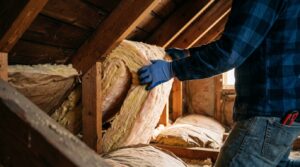
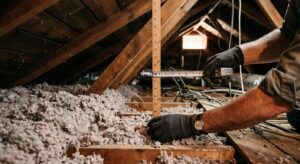
- Add blown-in cellulose or fiberglass to reach your climate zone target but stop there. Measure depth with a ruler and use the bag coverage charts on the insulation packaging to confirm you have reached the right R-value. Do not add extra bags on the assumption that more is always better.
- If your home is very tight after air sealing (a blower door test reading below 3 ACH50 for most homes, or 5 ACH50 for homes with atmospheric combustion appliances), install at minimum a bath exhaust fan that meets ASHRAE 62.2 whole-house ventilation rates, typically 1 CFM per 100 square feet of floor area plus 7.5 CFM per bedroom.
- Test combustion appliances after any significant tightening work. Purchase a combination CO and natural gas detector for $25 to $40 and place it near your furnace or water heater. If the CO alarm triggers during appliance operation, stop using the appliance and call a licensed HVAC technician to assess combustion air needs before proceeding.
- Hire a BPI-certified or RESNET-certified energy auditor. Verify credentials at bpi.org or resnet.us. Avoid audits offered free by insulation contractors, as they have a financial incentive to recommend maximum insulation regardless of actual need.
- The auditor will perform a blower door test that pressurizes your home to 50 Pascals and measures total air leakage in CFM50. Homes above 2,000 CFM50 have significant air sealing opportunities. Homes already below 1,000 CFM50 are quite tight and need mechanical ventilation before any further insulation upgrades.
- Request a combustion safety test as part of the audit. The auditor will check for backdrafting on all atmospheric appliances under worst-case depressurization conditions. If appliances fail this test, upgrading them to sealed-combustion or power-vented units is a prerequisite for further tightening work, not an optional upgrade.
- Review the audit report and prioritize measures by savings-to-investment ratio. Air sealing typically has a payback of 1 to 3 years. Insulation to code levels pays back in 3 to 7 years. Insulation beyond code rarely appears on a professionally generated priority list because the numbers do not support it.
- Use the report findings to negotiate accurately scoped insulation contractor bids. Contractors who recommend R-values significantly above your audit target or climate zone code maximum should be questioned about the specific payback justification for the additional material cost.
Why It Works: The Benefits
Professional mold remediation in a wall or attic cavity costs between $1,500 and $9,000 depending on scope. Proper insulation system design prevents the moisture accumulation that feeds mold in the first place.
Homes with mechanical ventilation and correctly balanced insulation maintain CO2 below 1,000 ppm and VOC levels within EPA guidelines. Over-sealed homes without ventilation routinely exceed these thresholds within hours of normal occupancy.
Ensuring adequate combustion air prevents backdrafting in gas appliances. Carbon monoxide poisoning sends approximately 50,000 Americans to emergency rooms annually, and tight homes with atmospheric-vent appliances are a documented risk factor.
Stopping insulation at the code-recommended R-value for your climate zone typically delivers a payback period of 3 to 7 years. Adding insulation beyond that level pushes payback periods past 20 to 30 years, often exceeding the useful life of the material itself.
Properly balanced assemblies keep sheathing and framing members dry. Repeated wetting and drying cycles from trapped moisture degrade OSB sheathing in as few as 5 to 10 years, turning a renovation into a structural repair.
💰 Savings Impact by Action
Sealing attic bypasses and rim joists before adding insulation captures up to 20% heating and cooling savings that insulation alone cannot deliver.
Insulating to the DOE climate zone target (rather than above it) delivers roughly 10 to 15% reduction in heating and cooling load at a payback period of 3 to 7 years.
Correct assembly design prevents moisture damage that costs $1,500 to $9,000 to remediate, effectively delivering 100% savings on those avoided expenses.
A properly sized HRV or ERV recovers 70 to 80% of heat from exhaust air, reducing the ventilation energy penalty by 5% annually compared to uncontrolled infiltration-based air exchange.
🏠 Key Concepts Explained
The Science Behind It
Heat flow through an insulated assembly follows the physics of thermal resistance, where R-value is a measure of resistance to heat flow per inch of material. The relationship between R-value and heat loss is not linear but hyperbolic. This means the first increment of insulation in an uninsulated assembly delivers enormous reductions in heat transfer, but each subsequent increment delivers a smaller fraction of the remaining loss. Mathematically, heat flow equals the temperature difference divided by the total R-value of the assembly. Doubling R-value halves heat flow only when starting from zero. When you are already at R-38, adding enough material to reach R-60 reduces heat flow by about 37%, not 50%, and that 37% is applied only to the heat loss that was still occurring through the insulated plane, which is already a fraction of total building heat loss once air sealing is addressed.
The moisture risk in over-insulated assemblies follows from the dew point model of vapor diffusion. Every material in a wall or ceiling assembly has some permeability to water vapor. Warm indoor air carries moisture that slowly diffuses outward in winter. In a correctly designed assembly, the insulation on the warm side of any vapor-sensitive sheathing keeps that sheathing warm enough to stay above the dew point of the air reaching it. IRC climate zone tables define the minimum ratio of interior to exterior insulation for this reason. When too much insulation is placed on the cold side of a sheathing layer, the sheathing stays cold enough for vapor to condense. Over time this repeated wetting initiates mold colonization and wood decay even when there is no visible water entry from outside.
Combustion air dynamics in tight homes involve the same pressure physics that governs all airflow in buildings. Atmospheric combustion appliances rely on a naturally occurring draft: hot flue gases are less dense than cool air, so they rise up the flue while cooler replacement air enters the combustion chamber from the room. When a home is tightened significantly, the building acts like a partially sealed container. Exhaust fans, clothes dryers, and range hoods can depressurize the interior below the outdoor pressure level. If the pressure difference exceeds the natural draft force in the flue, combustion gases flow backward into the living space, a condition called backdrafting. This is why ASHRAE 62.2 and most residential energy codes require either mechanical ventilation or combustion safety testing whenever a home’s air leakage rate drops below a defined threshold.
Frequently Asked Questions
▼ How do I know if my home is already over-insulated or too tight?
Common symptoms include persistent condensation on windows in winter, musty odors that worsen after weatherizing, CO detector alarms near gas appliances, or a stuffy feeling even with windows closed and the HVAC running. A professional blower door test gives you a definitive number: residential homes generally should not fall below 3 ACH50 without a dedicated mechanical ventilation system sized to ASHRAE 62.2. If you are already below that threshold, stop adding insulation and add ventilation first.
▼ I added a lot of attic insulation and now I see moisture stains on my roof deck. What happened?
This is a classic sign that soffit vents were blocked during the insulation job or that air bypasses were not sealed before insulating, allowing warm humid air to enter the attic and condense on the cold roof deck. First, check that all soffit bays have clear airflow channels by looking for insulation baffles or raking insulation back from the eaves. Next, hire an energy auditor to assess attic air sealing needs. If the roof deck shows significant staining or soft spots, have a roofer evaluate whether the sheathing has been damaged.
▼ My contractor wants to spray foam my entire attic to R-60. Is that too much?
For most climate zones, R-60 in an attic is at or slightly above the DOE recommended maximum, so the R-value itself is not the primary concern. The real question is whether your home has adequate mechanical ventilation and whether combustion appliances will remain safe in a very tight envelope. Ask the contractor to confirm that the project includes a post-installation combustion safety test and that ventilation will meet ASHRAE 62.2. If they cannot answer those questions, bring in a certified energy auditor before signing the contract.
▼ Can I over-insulate walls in an existing home without causing problems?
Wall cavities in existing homes are typically already full once blown-in or batt insulation has been installed, so the more common wall issue is incomplete coverage rather than excess. The risk zone is exterior continuous insulation added on top of existing wall assemblies, particularly in cold climates. If you add more than 1 to 2 inches of exterior rigid foam to a wall that already has interior vapor retarder, you need to verify the ratio meets IRC Table R702.7 for your climate zone or you risk trapping moisture in the framing. A building science consultant can run the hygrothermal numbers for your specific assembly in about an hour.
▼ Does over-insulating affect my HVAC system sizing?
Yes, and this is an underappreciated consequence. If your HVAC system was sized for your home’s original heat load and you dramatically reduce that load through aggressive insulation and air sealing, the system becomes oversized. An oversized air conditioner short-cycles, meaning it cools quickly without running long enough to dehumidify properly, leading to clammy conditions even at correct temperatures. If you are planning a major insulation upgrade, ask your HVAC contractor to run a Manual J load calculation on the tightened envelope before the next equipment replacement cycle.
Quick Tips
- Target air sealing before insulation in every project. Reducing air leakage by 30% through sealing is almost always cheaper and faster than achieving an equivalent thermal improvement through added insulation.
- Check your climate zone at energystar.gov and compare current attic depth to the recommended maximum R-value. If you are already at or above R-49 in zone 5 or above, skip additional attic insulation and invest in mechanical ventilation or window upgrades instead.
- If you have a gas appliance with a traditional metal flue, never skip a combustion safety test after any significant tightening work. A $50 CO detector is not a substitute for a proper backdraft test performed by a certified energy auditor.
- In mixed-humid and cold climates (zones 4 through 7), never add spray foam to the exterior face of wall sheathing without first consulting a building scientist about vapor control ratios. Getting this wrong can trap moisture inside the wall framing with no path to dry out.
Variations for Your Situation
- Apartment/Rental: Renters cannot modify attic insulation, wall assemblies, or combustion appliances, but they can identify symptoms of a too-tight building by looking for condensation on windows, musty odors, or CO detector alerts and report these to their landlord in writing. Purchasing a combination CO and natural gas detector ($25 to $40) and a small indoor air quality monitor that tracks CO2 and VOCs ($60 to $150) gives renters documentation of air quality problems and leverage for requesting ventilation improvements from property management.
- Tight Budget (under $50): Focus entirely on the free audit steps in approach one before spending anything on materials. Look up your climate zone R-value targets, inspect your attic depth with a tape measure, check that soffit vents are clear, and test existing exhaust fans by holding a piece of tissue near the grille while running. A $25 to $40 CO detector near each combustion appliance is the single most important low-cost safety investment if you have already done significant weatherizing. These steps cost almost nothing and prevent the expensive remediation mistakes that come from insulating without a plan.
- Older Home (pre-1980): Homes built before 1980 almost certainly have atmospheric-combustion appliances, minimal air sealing, and no mechanical ventilation, which means they currently breathe through their leaks. Tightening such a home aggressively without addressing combustion appliances first is genuinely dangerous. The recommended sequence is: get a professional energy audit with combustion safety testing, upgrade the furnace and water heater to sealed-combustion or power-vented units if budget allows ($800 to $3,000 depending on appliance), air seal the attic bypasses, then add insulation to climate zone targets. Skipping the appliance upgrade step and simply adding insulation is the scenario most likely to result in a CO incident.