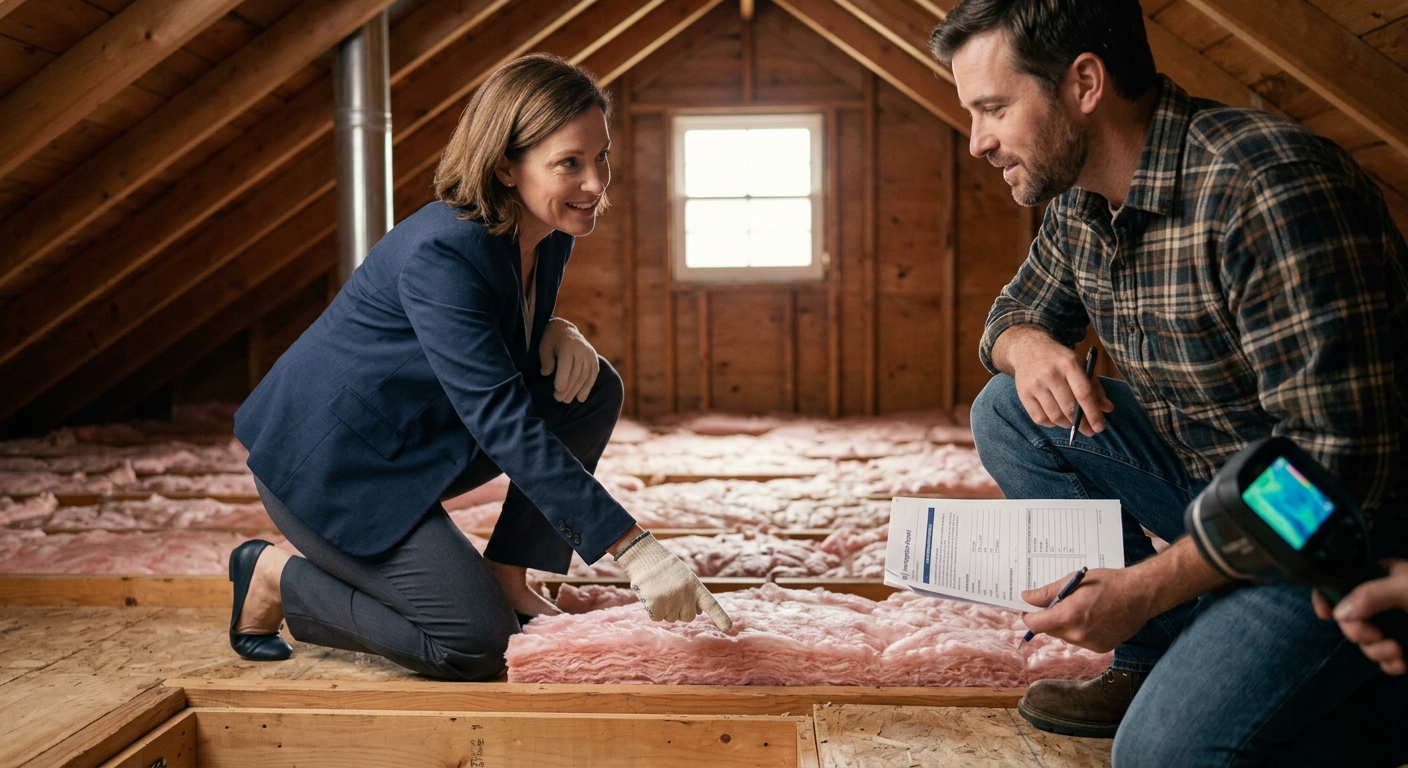
When homeowners think about boosting resale value, they usually picture a kitchen remodel or fresh paint. But savvy buyers in today’s market are increasingly scrutinizing something less visible: insulation. A home with inadequate insulation signals higher utility bills, potential moisture problems, and uncomfortable living conditions, all of which give buyers leverage to negotiate the price down or walk away entirely.
The numbers back this up. According to the National Association of Realtors, insulation upgrades consistently rank among the top remodeling projects for cost recovery at resale, with attic insulation upgrades recouping up to 116 percent of their cost in some markets. Beyond raw value, homes with documented energy efficiency upgrades sell faster, often spending 10 to 20 fewer days on the market compared to comparable homes without those improvements.
This post breaks down exactly how insulation affects what buyers see, what home inspectors flag, and what you can do before listing to maximize your return. Whether you have a weekend and a modest budget or you want a full professional upgrade, there is a clear path forward with real numbers to guide your decisions.
What You’ll Need
Click on an item below to shop for the recommended items for this recipe on Amazon.
As an Amazon Associate, we earn from qualifying purchases.
How to Do It
- Access your attic and use a ruler or tape measure to measure the depth of existing insulation. Multiply the depth by the R-value per inch for your insulation type: fiberglass batts are approximately R-3.1 per inch, blown cellulose is approximately R-3.7 per inch, and spray foam is R-6 to R-7 per inch.
- Compare your measured R-value to the DOE recommendation for your climate zone. Zones 1 to 2 require R-38 minimum, zones 3 to 4 require R-49, and zones 5 to 8 require R-60. Note whether you meet, exceed, or fall short of the standard.
- Check your attic hatch or pull-down stairs for insulation. These are the single most commonly missed spots and are frequently flagged by inspectors. A well-insulated attic hatch should have at least R-10 of rigid foam or a prefabricated insulated cover, available for $30 to $80 online.
- Look for visible air leaks around recessed light fixtures, plumbing stacks, and the top plates of interior walls in the attic. Take photos of any gaps larger than a quarter inch.
- Document everything with photos, your measured R-value, and any product labels or receipts from prior insulation work. This documentation package has real value during buyer negotiations and can be included in your listing disclosures.
- Consider scheduling a free or low-cost energy audit through your utility company before listing. Many utilities offer these at no charge, and the resulting report gives you a third-party credibility boost you can share with buyers.
- Before adding insulation, air seal the attic floor thoroughly. Use canned spray foam or acoustic sealant to fill all gaps around electrical boxes, plumbing penetrations, and the tops of interior walls. This step often delivers more energy impact than the insulation itself and takes 2 to 4 hours.
- Install rigid foam or a prefabricated insulated cover over your attic hatch or pull-down stairs, targeting at least R-10. This is a frequently failed inspection point and costs $30 to $80 to fix.
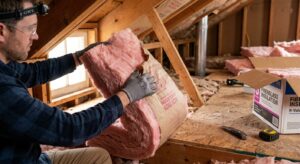
- Calculate how many bags of blown insulation you need. One bag of blown fiberglass covers approximately 40 square feet at R-38. For a 1,000 square foot attic going from R-13 to R-49, you will need roughly 25 to 30 bags at $15 to $18 per bag.
- Rent a blower machine from the home improvement store (usually free with purchase of 10 or more bags) and load the bags following the machine instructions. Work from the far corners of the attic toward the hatch, keeping the blower hose low and moving steadily.
- Install attic insulation baffles (also called rafter vents) at each eave before blowing to maintain a clear airflow channel from the soffit vents to the ridge vent. Blocking this channel causes moisture problems that will be caught in inspection.
- After completing the work, photograph the finished attic showing the depth and coverage. Keep your receipt showing the insulation type and R-value. This documentation directly supports your listing claims and counters any inspector flags.
- Hire a certified energy auditor (look for BPI or RESNET certifications) to perform a blower door test and thermal imaging scan before any work begins. This costs $200 to $500 and identifies every deficiency with documented evidence, giving you a prioritized upgrade list.
- Get at least three written bids from insulation contractors. Specify that you want the final R-value documented in writing and that the contractor will provide a certificate of installation, which you can then include in your listing disclosures.
- Prioritize upgrades in this order for maximum ROI at resale: attic insulation first, then crawl space or basement rim joists, then any accessible wall cavities if the home has none. Wall insulation via dense-pack blown-in adds the most value in cold climate zones.
- If your home was built before 1980, ask the contractor to test for vermiculite or older fiberglass with potential asbestos contamination before any attic disturbance. This is a required step in many states and protects you from liability.
- Once work is complete, request a post-installation energy audit or blower door retest. The before-and-after comparison is a powerful marketing document that can be included in the MLS listing and shared during buyer walkthroughs.
- Check eligibility for federal tax credits under the Inflation Reduction Act. As of 2024, homeowners can claim a 30 percent tax credit on insulation materials up to $1,200 per year, which meaningfully reduces your net upgrade cost and shortens your effective payback period.
Why It Works: The Benefits
The NAR’s Remodeling Impact Report shows attic insulation upgrades recouping an average of 100 to 116 percent of project cost at resale in many U.S. markets. On a $300,000 home, that can translate to a $3,000 to $9,000 increase in sale price relative to a comparable home with outdated insulation.
Inadequate insulation is one of the top five items flagged in home inspection reports. Each flagged item gives buyers leverage to negotiate down, often by $1,500 to $5,000 per issue. Addressing insulation before listing removes that leverage and keeps your asking price intact.
Energy-efficient homes with documented upgrades sell 10 to 20 days faster on average according to Lawrence Berkeley National Laboratory research. In a competitive market, fewer days on market means less carrying cost and less pressure to accept lowball offers.
Properly insulated homes typically see 10 to 20 percent lower heating and cooling costs. Sellers who can show 12 months of utility bills demonstrating below-average energy use have a concrete, dollar-specific talking point that appeals directly to cost-conscious buyers.
Buyers touring a home in summer or winter notice temperature consistency between rooms. Cold walls, drafty corners, or uneven room temperatures are immediate red flags. Proper insulation creates the even, comfortable environment that generates stronger emotional purchase decisions.
💰 Savings Impact by Action
Upgrading attic insulation to DOE-recommended R-value levels reduces annual heating and cooling costs by 10 to 15 percent according to ENERGY STAR data.
Sealing attic floor penetrations before adding insulation reduces uncontrolled air leakage, cutting heating and cooling loss by up to 20 percent.
Documented insulation upgrades contribute an estimated 2 to 6 percent increase in sale price in energy-conscious markets according to NAR impact reports.
Homes with flagged insulation deficiencies face buyer credit requests averaging $1,500 to $5,000, representing up to 30 percent of the typical upgrade cost if left unaddressed.
Insulating crawl space rim joists and adding a vapor barrier reduces floor heat loss by up to 10 percent in cold climate zones.
🏠 Key Concepts Explained
The Science Behind It
Heat moves in three ways: conduction (through solid materials), convection (through air movement), and radiation (through electromagnetic waves). Insulation primarily combats conduction by trapping millions of tiny air pockets within its fibers or foam cells. The R-value scale quantifies exactly how much resistance those pockets provide per inch of material thickness. Doubling your attic insulation from R-19 to R-38 does not double your savings, however, because heat loss follows a curve of diminishing returns. Going from R-0 to R-19 saves the most, while going from R-38 to R-60 saves proportionally less, though it still matters in extreme climates.
Air infiltration is the factor most homeowners and many contractors underestimate. A single one-inch gap around a recessed light fixture in an attic floor is functionally equivalent to leaving a small window open year-round. When warm interior air escapes through these gaps in winter (driven upward by the stack effect, where warm air rises and exits high in the building), cold outside air is drawn in at lower levels to replace it. This convective loop works against insulation constantly. Research from Oak Ridge National Laboratory shows that reducing air infiltration in conjunction with insulation delivers 25 to 40 percent more energy savings than insulation alone.
From a resale perspective, the science matters because it is now measurable. Blower door tests quantify exactly how leaky a home is, expressed as air changes per hour at 50 pascals of pressure (ACH50). A newer code-built home targets 3 ACH50 or less, while older homes routinely test at 10 to 20 ACH50. Energy auditors and some buyers’ agents are increasingly requesting these test results, and a home that scores well on a blower door test combined with documented insulation R-values has a defensible, third-party verified energy story that commands a premium and reduces inspection risk.
Frequently Asked Questions
▼ Will buyers actually care about insulation, or is this just something inspectors mention?
Buyers care a lot more than they used to, especially as utility costs have risen sharply since 2021. In a 2023 NAR survey, 80 percent of buyers said heating and cooling costs were an important factor in their purchase decision. If an inspector flags inadequate insulation, expect the buyer to request either a price reduction or a credit, typically in the $1,500 to $3,000 range for attic deficiencies. Proactively fixing it costs less than reacting to that request under pressure.
▼ My home already has insulation but I don’t know what type or R-value it is. How do I find out?
Start in the attic with a flashlight and a ruler. Measure the depth and look for visual clues: fluffy pink or yellow material is fiberglass (roughly R-3 per inch), gray or white loose material is cellulose (roughly R-3.7 per inch), and yellow-green or tan rigid panels are various foams (R-4 to R-7 per inch). If the insulation looks dirty, matted, or is less than 4 inches deep anywhere, it almost certainly falls below current code minimum recommendations. A utility-sponsored energy audit, often free, will confirm your R-values and give you a written report to share with buyers.
▼ I am selling an older home from the 1950s or 1960s. Is insulation even worth upgrading before selling?
Yes, and it is especially important for older homes because buyers and inspectors expect deficiencies and price accordingly. A pre-1970 home with documented, recent insulation upgrades stands out sharply from comparable homes that still have original conditions. The most impactful, cost-effective upgrade for a mid-century home is attic insulation, since walls are harder to access without major disruption. Budget $800 to $2,000 for a professional attic upgrade and pair it with air sealing for a measurable before-and-after utility bill comparison you can market directly.
▼ How do I communicate insulation upgrades to buyers and their agents in a way that actually influences the offer?
Documentation beats claims every time. Include the R-value, insulation type, installation date, and contractor name in your listing disclosures and in a one-page home features sheet you leave on the counter during showings. If you have a utility bill showing below-average energy costs, include that with the average cost per month highlighted. Buyers’ agents know what to look for, and a clear paper trail showing a recent, professional-grade insulation upgrade is a genuine differentiator in most markets.
▼ Can I do this upgrade myself and still have it count during negotiations, or do buyers prefer professional installation?
DIY attic insulation is widely accepted and the results are identical to professional work if done correctly. The key is documentation. Keep every receipt, photograph the finished attic showing uniform coverage and depth, and measure the final R-value yourself with a ruler. If you want additional credibility, schedule a post-project energy audit through your utility company for $0 to $150. A written audit report confirming your R-value from a third party carries more weight in negotiations than a verbal claim, regardless of who did the work.
Quick Tips
- Time your insulation upgrade at least 60 days before listing so you can gather one to two utility bills showing the improved performance and include those numbers in your marketing materials.
- Ask your insulation contractor for a Certificate of Insulation Installation showing the product name, installed R-value, and square footage covered. This single document removes the most common buyer objection about insulation quality.
- In colder climate zones (DOE zones 5 through 8), adding insulation to crawl space walls or basement rim joists often delivers a faster payback than any other upgrade and is frequently overlooked by competing sellers.
- Stage your home with the thermostat set to a comfortable 70 to 72 degrees for showings and leave it there for at least 24 hours beforehand. A consistently comfortable home temperature during a walkthrough communicates good insulation without a single word being spoken.
Variations for Your Situation
- Apartment or Condo Seller: Owners of condos or attached units cannot access shared attic or wall cavities but can still document the building’s insulation performance by requesting records from the HOA or building manager. Focus on what you can control: insulating your unit’s walls with interior rigid foam panels on exterior walls if accessible, ensuring HVAC closet insulation is intact, and pulling utility bills to show below-average energy use per square foot. Highlight building-level efficiency certifications (LEED, ENERGY STAR for Multifamily) in your listing if the building has them.
- Tight Budget (under $500): Skip the professional audit and focus exclusively on the two highest-ROI moves: air sealing the attic floor with canned spray foam ($30 to $60) and adding an insulated cover to the attic hatch ($30 to $80). These two fixes address the most commonly flagged inspection items and cost under $150 combined. If budget remains, add one or two bags of blown insulation to spot-fill any visibly thin areas. Document with photos and keep receipts. This approach eliminates the most likely buyer negotiation points without a major project.
- Older Home (pre-1980): Homes from this era often have vermiculite, compressed fiberglass, or no insulation at all in walls and crawl spaces. Before any DIY work, have a certified inspector test for asbestos-containing vermiculite, which requires professional remediation and disclosure. Once cleared, prioritize attic insulation to current R-value standards and add crawl space vapor barriers and rim joist insulation, both of which are high-impact and relatively accessible. Budget $1,500 to $4,000 for professional work with documentation, and disclose all prior conditions and remediation clearly in your seller’s disclosure. Transparency here protects you legally and actually builds buyer trust.