You flip on the exhaust fan, take a shower, and assume the moisture is being handled. But 20 minutes later, the mirror is still fogged, the walls feel damp, and that musty smell lingers. If this sounds familiar, your bathroom exhaust fan is likely failing at its one job – and the consequences go well beyond discomfort. Persistent bathroom humidity is one of the leading causes of mold growth, paint failure, rotting drywall, and even structural wood damage in ceilings and attics.
The frustrating truth is that most bathroom fans are either undersized for the space, clogged with years of dust, ducted incorrectly, or simply worn out. The fan may spin and make noise without actually moving enough air to matter. According to the Home Ventilation Institute, a bathroom fan should exchange the air in the room at least 8 times per hour, and most aging or improperly installed fans fall far short of that target.
This guide walks you through exactly how to diagnose why your fan is underperforming and gives you two clear paths to fix it – a quick no-cost tune-up you can do in 15 minutes, and a more thorough DIY upgrade that gets the job done right. You’ll also find the building science behind why ventilation matters, real numbers on what poor bathroom humidity control costs you over time, and answers to the questions homeowners most commonly ask.
What You’ll Need
Click on an item below to shop for the recommended items for this recipe on Amazon.
As an Amazon Associate, we earn from qualifying purchases.
How to Do It
- Turn off the bathroom exhaust fan at the wall switch, then flip the circuit breaker for the bathroom off as a safety precaution before touching the fan.
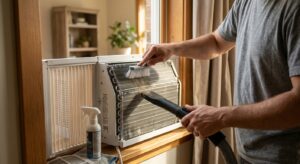
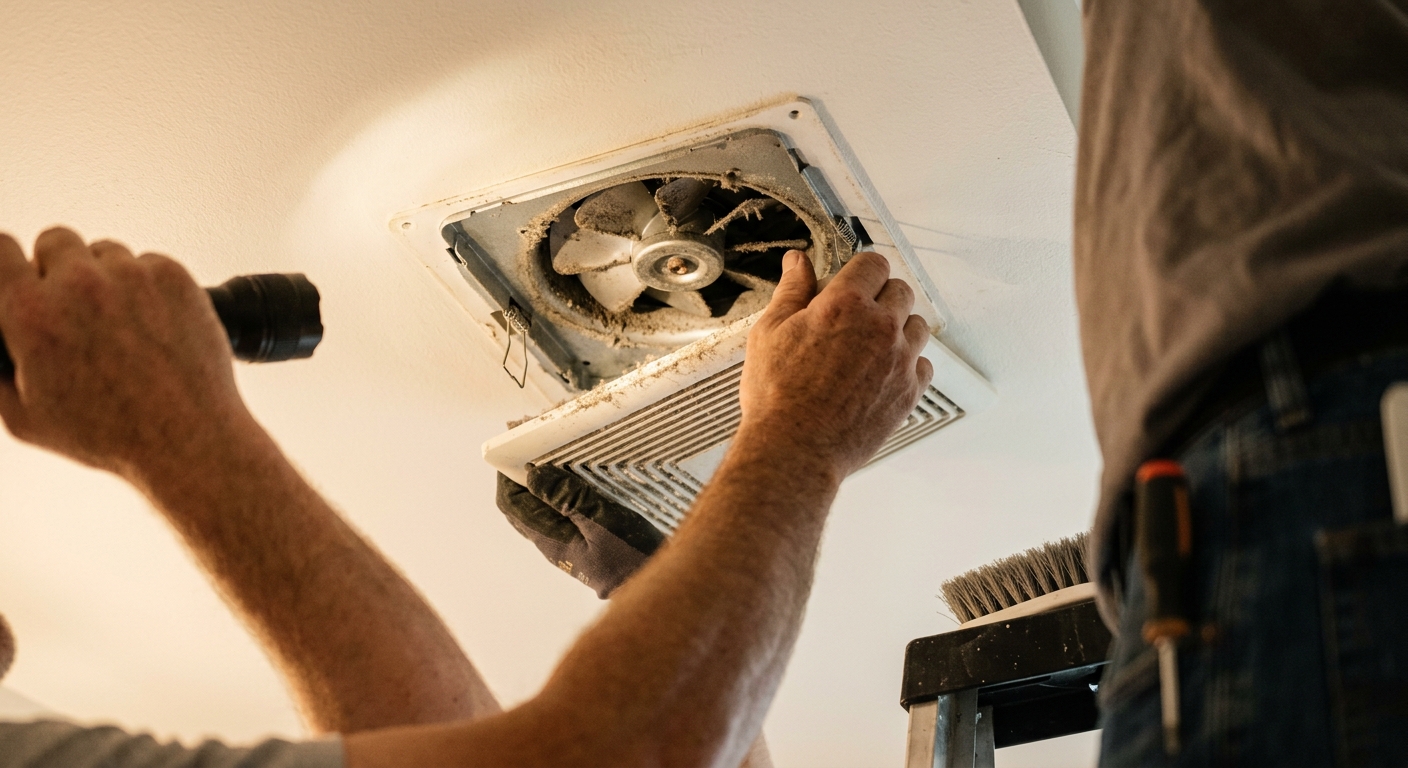
- Pull the plastic grille cover straight down off the fan housing. Most snap off or have two wire clips you squeeze to release. Wash the grille in warm soapy water and let it dry completely.
- Vacuum the interior of the fan housing with a brush attachment, removing all accumulated dust from the fan blades, motor housing, and interior walls of the unit.
- Restore power and test the fan’s actual suction using the tissue paper test: hold a single sheet of toilet paper up to the grille while the fan runs. A properly functioning fan should hold the tissue against the grille without you supporting it.
- Check that the fan runs for at least 20 minutes after your shower ends. Set a timer as a habit – most people turn the fan off too soon. The bathroom needs 15 to 20 minutes of post-shower ventilation to clear residual humidity.
- Inspect the bottom of any interior duct access you can see. If you spot visible condensation, dripping water stains, or crushed flexible duct, note it for the next approach.
- Calculate the correct CFM for your bathroom: multiply length by width in feet to get square footage, then match or exceed that number in CFM. For an 8×10 bathroom, you need at least 80 CFM. Bathrooms with high ceilings (over 8 feet) need 1.1 CFM per cubic foot instead.
- Purchase a replacement fan rated for your CFM need. Look for ENERGY STAR certified models with a sone rating of 1.5 or lower for quiet operation. Brands like Panasonic WhisperCeiling and Broan-NuTone AE series are well-regarded in this range and cost $40 to $130.
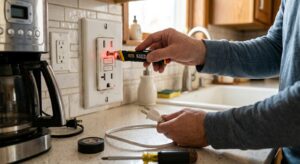
- Turn off the circuit breaker for the bathroom and confirm power is off with a non-contact voltage tester before removing the old unit. Disconnect the wiring using the existing wire connectors.
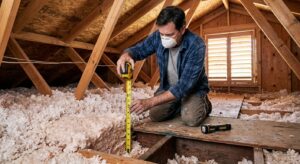
- While the housing is out, access the duct run from the attic or ceiling cavity. Replace any flexible duct that is kinked, crushed, or longer than 6 feet with rigid 4-inch metal duct or smooth-wall flexible duct, keeping the run as straight and short as possible.
- Confirm the duct terminates at a roof cap or exterior wall cap – never in the attic. If the duct currently dumps into the attic, extend it to a proper exterior termination point with a dampered roof or soffit cap, sealing all joints with foil HVAC tape.
- Install the new fan following the manufacturer’s wiring diagram, restore power, and rerun the tissue paper test. The tissue should be held firmly against the grille with no hand support.
- Contact a licensed electrician or HVAC contractor and ask specifically about humidity-sensing exhaust fan installation. These fans automatically activate when relative humidity exceeds a set threshold (typically 60 to 70%) and shut off when humidity returns to normal, removing the human error of forgetting to run the fan.
- Request that the contractor inspect the existing duct run for proper sizing, routing, and exterior termination before any new fan is installed. This inspection often reveals problems that explain years of moisture damage.
- Ask about combo units with integrated LED lighting and a heat lamp if your bathroom gets cold in winter – replacing both fixtures at once saves labor cost and improves the bathroom’s comfort and functionality.
- After installation, ask the contractor to measure actual CFM at the grille with an anemometer or flow hood to confirm the installed fan meets the calculated CFM requirement for your bathroom size.
Why It Works: The Benefits
Relative humidity above 60% sustained for 24 to 48 hours is sufficient for mold colonization. Proper ventilation keeps bathroom humidity below that threshold after a typical shower, eliminating the primary condition mold needs to grow.
Persistent bathroom moisture causes paint to peel, grout to fail, drywall to soften, and subfloor to rot. Homeowners who address ventilation early avoid repair bills that commonly run $500 to $3,000 for mold remediation or drywall replacement.
A properly functioning exhaust fan removes not just moisture but also volatile organic compounds from cleaning products, odors, and airborne particulates. This directly reduces respiratory irritants circulating through the home.
A bathroom generating unvented moisture can raise whole-home relative humidity by 3 to 5 percentage points, forcing your air conditioner to work harder. Correcting ventilation can reduce AC runtime and trim cooling bills by 5 to 10% in humid climates.
Fans vented into the attic instead of outdoors deposit gallons of moisture per week into the attic cavity during winter and humid seasons, risking insulation degradation and sheathing rot that costs $2,000 to $8,000 to repair.
💰 Savings Impact by Action
Removing dust buildup from a clogged fan grille can restore up to 35% of lost airflow with zero cost in under 15 minutes.
Replacing kinked or crushed flex duct with straight rigid metal duct can recover 25 to 40% of rated fan CFM that was being lost to resistance.
A countdown timer switch ensures the fan runs the full post-shower cycle, reducing residual bathroom humidity by approximately 20% compared to manual operation.
Replacing an undersized or aging fan with a correctly rated ENERGY STAR model can reduce post-shower recovery time by up to 60%, preventing moisture from reaching condensation thresholds on surfaces.
Redirecting a duct from attic termination to an exterior cap prevents 100% of attic moisture dumping and reduces whole-room humidity clearance time by roughly 25%.
🏠 Key Concepts Explained
The Science Behind It
Bathroom air after a hot shower is often saturated at 80 to 100% relative humidity and can be 15 to 25 degrees Fahrenheit warmer than the rest of the house. When that humid air contacts a cooler surface – mirror, tile, or drywall – it releases its moisture through condensation. The rate of condensation depends on the temperature difference and the absolute amount of water vapor present, which is why a 10-minute shower in a small bathroom with no ventilation can deposit as much as 2 to 4 pints of liquid water on surfaces over the following hour.
An exhaust fan works by creating a slight negative pressure inside the bathroom that draws humid air out through the duct and replaces it with drier house air entering under the door or through small gaps. The key variable is how quickly the fan can exchange the air volume. At the HVI standard of 8 air changes per hour, a 50-square-foot bathroom with 8-foot ceilings (400 cubic feet) needs to move about 53 CFM continuously. Any restriction in the duct, any gap in the housing, or any reduction in fan efficiency directly reduces the number of air changes per hour and extends the time moisture remains in the bathroom.
In cold climates, the duct length and insulation matter as much as fan capacity. Warm, moist air traveling through an uninsulated duct in a 20-degree attic will reach the dew point within a few feet and begin condensing inside the duct. This water pools at low points, freezes in extreme cold, and can eventually block airflow entirely while also rotting the duct itself. Insulating flex duct with at least R-6 wrap and keeping duct runs under 25 feet (total equivalent length including bends) prevents this and ensures rated fan performance reaches the termination cap.
Frequently Asked Questions
▼ My bathroom fan is running but the mirror stays fogged for 30 minutes. What’s wrong?
This is the classic sign of insufficient airflow, most often caused by a clogged grille, a kinked flex duct in the attic, or a fan that is simply undersized for the room. Start by cleaning the grille and running the tissue paper test. If the tissue doesn’t hold, your next step is to check the duct run in the attic for any crushing, sagging, or disconnection, then measure your bathroom square footage and compare it to your fan’s CFM rating printed on the housing label.
▼ Can renters fix a bad bathroom fan without landlord permission?
Renters can legally and safely clean the fan grille, which often solves the problem at no cost and requires no landlord approval. For anything involving duct work or fan replacement, notify your landlord in writing that the bathroom ventilation is inadequate and causing condensation, as this is typically a habitability issue the landlord is legally required to address. Document the problem with photos of moisture damage or mold to strengthen your request.
▼ How do I know if my duct is venting into the attic instead of outside?
Go into the attic during daylight with the bathroom fan running. If you see a flexible duct that simply ends in the attic space with no wall or roof cap connection, it is dumping humid air directly into your attic. You may also see moisture stains, frost in winter, or mold on the attic sheathing near the duct end as evidence. This is a code violation in most jurisdictions and should be corrected immediately by routing the duct to a proper roof or soffit termination cap.
▼ My new fan is rated at 110 CFM but the bathroom still feels humid. What did I miss?
A high CFM rating on the box reflects open-air lab performance. Real-world performance depends on duct length, number of bends, and the termination cap’s resistance. A 90-degree elbow costs roughly 5 feet of equivalent duct length, and most roof caps add 15 to 25 feet of equivalent resistance. If your duct run is long or has multiple bends, a 110 CFM fan may only deliver 70 to 80 CFM at the grille. Shorten and straighten the duct, upgrade to a larger termination cap, or step up to a 130 to 150 CFM fan to compensate.
▼ There is visible mold on the bathroom ceiling around the fan. Is it safe to just clean it and move on?
Surface mold on painted drywall can sometimes be cleaned with a 1:10 bleach-to-water solution if the affected area is small (under 10 square feet) and the drywall itself is still firm. However, if the drywall feels soft or crumbles, if the mold has been present for months, or if you see staining that extends beyond a small patch, the material likely needs to be cut out and replaced. Fix the ventilation problem first, then address the mold, or the mold will return regardless of cleaning.
Quick Tips
- Run the exhaust fan for 20 minutes after every shower, not just during. Humidity peaks after you leave the room as residual moisture evaporates from wet surfaces.
- Leave the bathroom door slightly ajar when the fan is running if your door fits tightly. This provides makeup air and can improve airflow by 30 to 50%.
- Test your duct termination cap from outside once a year. The damper flap should open easily when the fan runs and close completely when it stops. A stuck-open damper lets cold air back-draft in winter; a stuck-closed one chokes the fan.
- If you share a bathroom exhaust duct between two bathrooms (a common builder shortcut), test both fans simultaneously. Shared ducts are frequently undersized and may need to be separated to perform correctly.
- Clean the fan grille every 6 months. Set a reminder for the same week you change your smoke detector batteries so it becomes a consistent habit.
Variations for Your Situation
- Apartment or Rental: If you rent, focus on the no-cost fix first: clean the grille thoroughly and run the fan for a full 20 minutes post-shower. If that doesn’t resolve moisture buildup, document the problem with photos and formally notify your landlord in writing. In many states, inadequate bathroom ventilation is a code violation the landlord must correct. In the meantime, a $25 portable dehumidifier placed in the bathroom and run after showers will absorb 20 to 30 ounces of moisture per day and meaningfully reduce surface condensation.
- Tight Budget Under $50: The highest-impact free steps are cleaning the grille, confirming the duct isn’t dumping into the attic, and committing to running the fan 20 minutes post-shower. For under $25, add a countdown timer switch, which eliminates the most common cause of under-ventilation (turning the fan off too early) and requires only basic screwdriver work. If you can stretch to $45, a pack of foam weather seal and door sweep for the bathroom door gap will improve makeup air dynamics noticeably.
- Older Home Pre-1980: Homes built before 1980 frequently have no bathroom exhaust fan at all, or a fan vented through a decorative louvered wall vent that actually goes nowhere. Verify your duct leads to the outdoors before assuming it works. These homes also tend to have original wiring that may not safely support a modern fan without evaluation by an electrician. Start with the tissue test and a visual attic inspection, and budget $150 to $250 for a professional installation if the wiring or duct routing needs updating to current code.