If you bought a home in the last few years, there is a good chance your inspection report mentioned something about insulation. Maybe it was buried on page 14 under ‘Attic Observations’ or flagged with a vague note like ‘insulation appears inadequate in some areas.’ Most buyers skim past these items, focused on the roof or foundation, and then spend years wondering why their energy bills are stubbornly high or why one room never seems to stay comfortable.
Insulation problems are among the most financially impactful issues a home inspector can flag, yet they are routinely dismissed because they feel abstract. Unlike a leaky faucet or a cracked driveway, inadequate insulation is invisible. You cannot see heat escaping through your attic floor or cold air seeping in around a rim joist. But the Department of Energy estimates that homes with poor insulation and air sealing spend 15 to 30 percent more on heating and cooling than they should, and in an older home, that gap can exceed 40 percent.
This post walks you through the most common insulation flags found in home inspection reports, how to verify those findings yourself without special equipment, and what steps to take to actually fix the problem. Whether you have already moved in or are still in the negotiation phase, understanding what your inspector was telling you is one of the highest-return things you can do for your home’s efficiency and comfort.
What You’ll Need
Click on an item below to shop for the recommended items for this recipe on Amazon.
As an Amazon Associate, we earn from qualifying purchases.
How to Do It
- Pull out your inspection report and search for these exact words: attic, insulation, vapor barrier, R-value, rim joist, crawlspace, and thermal. Every page with one of these terms is a page worth reading carefully.
- Look for the inspector’s condition ratings next to any insulation item. Ratings like ‘Marginal,’ ‘Deficient,’ ‘Recommend Evaluation,’ or ‘At Time of Inspection’ all signal a real finding, not just a routine observation.
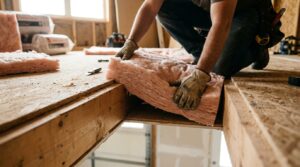
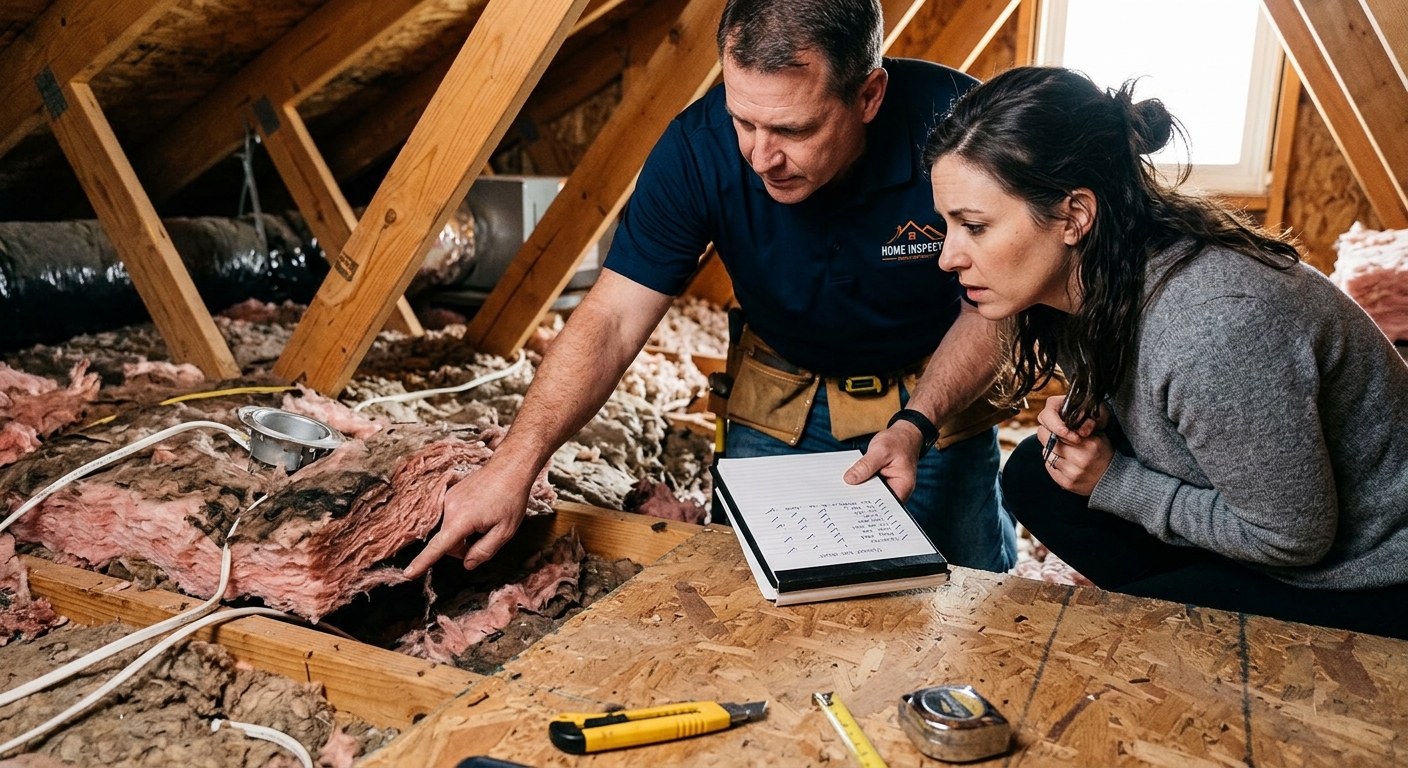
- Check the photos section of the report. Most digital inspection reports include photos tagged to specific findings. A photo of an attic showing pink batts with gaps, compressed insulation, or bare joists is a direct visual of your problem.
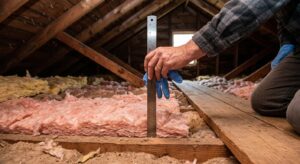
- Use a tape measure and a ruler to estimate existing insulation depth in your own attic. Access the attic hatch and measure the depth of insulation at the center of a joist bay, away from the eaves. Multiply by 3.2 for fiberglass batts or 3.7 for cellulose to get an approximate R-value.
- Compare your measured R-value to the DOE recommendation for your climate zone at energystar.gov. If you are in Zone 4 or higher and your attic has less than R-38, you have a confirmed insulation deficit worth addressing.
- Before adding any insulation, seal air bypasses first. Wear an N95 respirator and safety glasses, then use canned spray foam to seal around all pipe and wire penetrations through the attic floor. This step alone can cut air infiltration by 30 to 50 percent.
- Seal recessed light cans from above using fire-rated caulk or pre-made IC-rated covers, unless the fixtures are already rated for insulation contact. Unrated recessed lights are one of the biggest attic air leaks in homes built before 2000.
- Seal the perimeter of the attic hatch with adhesive foam weather stripping and consider adding a rigid foam lid on top of the hatch for an additional R-10 to R-20.
- Install a temporary walkway using scrap plywood sheets so you can move across the attic without stepping through the ceiling. Never step between joists on drywall.
- Roll out unfaced fiberglass batts or rent a blower from a home improvement store to add blown-in cellulose on top of existing insulation. Run the new layer perpendicular to the joists to cover thermal bridges. Target a total depth that gets you to the DOE recommended R-value for your zone.
- After finishing, check that soffit vents are not blocked by new insulation. Install cardboard or foam baffle rafter vents at each eave bay before blowing in material near the perimeter.
- Schedule a certified home energy auditor through your utility company or RESNET. Many utilities offer subsidized audits for $100 to $200 that include a blower door test, which quantifies exactly how much air is leaking and locates the primary gaps using a pressure differential.
- Review the audit report before hiring any contractor. The report will prioritize improvements by cost-effectiveness ratio, which is the only way to know whether attic insulation, wall insulation, or crawlspace encapsulation gives you the best return first.
- Get at least three quotes from insulation contractors who are licensed in your state and familiar with your specific insulation type. Ask each contractor to reference the audit findings explicitly in their proposal so you know they have actually read the report.
- If wet or moldy insulation was flagged, require the contractor to identify and remediate the moisture source before installing new insulation. New insulation installed over an active moisture problem will repeat the same failure within 3 to 5 years.
- After work is complete, ask the contractor for a certificate of completion showing the installed R-values and materials. This document is required to claim federal tax credits under the Inflation Reduction Act, which covers 30 percent of insulation material costs up to $1,200 per year.
Why It Works: The Benefits
Bringing an attic from R-11 to R-38 and sealing air leaks can reduce annual heating and cooling costs by 15 to 30 percent, which translates to $200 to $600 per year for a typical 2,000-square-foot home depending on climate and fuel type.
Rooms that were previously 5 to 10 degrees colder or warmer than the thermostat setting often normalize after insulation gaps are addressed, because the HVAC system can actually maintain the setpoint without competing against constant heat loss or gain.
When insulation is adequate, your heating and cooling system runs shorter cycles. Fewer cycles mean less wear on the compressor and heat exchanger, potentially extending system life by several years and reducing repair frequency.
Many of the air gaps that cause energy loss also pull in dust, pollen, and moisture from unconditioned spaces. Sealing these pathways reduces particulate infiltration, which is particularly important for households with allergy sufferers or asthma.
A home with documented insulation upgrades and a lower utility bill history is measurably more attractive to buyers. Energy-efficient homes sell for 2 to 6 percent more on average according to a 2023 National Association of Realtors analysis, and the improvement shows up in utility disclosure documents.
💰 Savings Impact by Action
Sealing attic floor bypasses around pipes, wires, and chases reduces conditioned air loss by up to 20 percent annually according to EPA estimates.
Upgrading attic insulation from R-11 to R-38 reduces heating and cooling load by 15 to 25 percent depending on climate zone and existing conditions.
Adding a ground vapor barrier and floor insulation in an unconditioned crawlspace reduces floor heat loss by up to 10 percent of total home energy use.
Dense-pack insulation in previously empty wall cavities reduces wall conductive and convective losses by up to 12 percent of annual heating costs in cold climates.
Insulating and weatherstripping an uninsulated attic hatch eliminates a concentrated heat loss point that can account for 5 percent of total attic energy loss.
🏠 Key Concepts Explained
The Science Behind It
Heat moves in three ways: conduction, convection, and radiation. Insulation primarily resists conduction, which is the direct transfer of heat through solid materials. R-value is literally a measure of resistance to conductive heat flow. But here is what most homeowners do not realize: if air can move freely through or around the insulation, the R-value rating becomes nearly meaningless. Air carries heat rapidly through convection, and a gap of even a quarter inch around a batt can allow enough airflow to reduce effective thermal performance by 20 to 40 percent.
This is why the sequence of air sealing before insulating is not just a best practice, it is the foundational principle of building science. The DOE’s own research shows that air sealing alone reduces heating and cooling costs by up to 20 percent in leaky homes, while insulation added without sealing delivers only a fraction of its theoretical performance. Blown-in insulation products like cellulose and dense-pack fiberglass outperform batts in field conditions precisely because they conform to irregular framing and leave fewer air pathways.
Moisture is the other critical variable. When humid air from living spaces reaches a surface cold enough to cause condensation, the result is accumulated moisture in the insulation assembly. Wet fiberglass loses R-value because water conducts heat roughly 25 times better than still air, which is what makes dry fiberglass effective in the first place. This is why inspectors flag discolored, compressed, or sagging insulation: those are the visible signatures of a moisture problem, and moisture problems compound over time into mold, rot, and structural damage if the source is not corrected before re-insulating.
Frequently Asked Questions
▼ My inspection report said ‘insulation is present but depth varies.’ Does that actually mean I have a problem?
Yes, variable depth is inspection language for inconsistent coverage, which is a real performance issue. In an attic, depth variation usually means some joist bays are fully insulated while others are partially filled or empty. Measure at least five different spots across your attic floor and average the results. If any bay reads below the DOE target for your zone, you have an efficiency gap worth closing.
▼ The inspector flagged the crawlspace insulation. Is that as important as the attic?
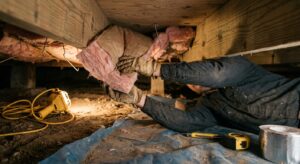
It can be more important in homes over unconditioned crawlspaces. Heat loss through uninsulated or poorly insulated crawlspace floors is significant, and moisture from the ground rising through an unsealed crawlspace causes wood rot, mold, and compressed insulation that underperforms badly. Start by verifying a ground vapor barrier is in place, then check that insulation fills the joist bays fully with no gaps or fallen batts, which is extremely common in crawlspaces after five or more years.
▼ Can I just add insulation over old insulation without removing it?
Usually yes, provided the existing insulation is dry, not compressed, and does not contain hazardous materials like asbestos-containing vermiculite. Blown-in cellulose or unfaced fiberglass batts laid perpendicular to the existing layer work well in most attics. Do not use faced batts on top of existing insulation, as the vapor barrier facing can trap moisture between layers.
▼ The report flagged insulation in my walls, not just the attic. Is that fixable without gutting the drywall?
Yes. Dense-pack cellulose or injection foam can be installed through small holes drilled in the exterior siding or interior drywall, then patched. This approach is called wall cavity insulation retrofit and is commonly done by professional insulation contractors for $1.50 to $4.00 per square foot of wall area. It is not a DIY job because it requires specialized equipment to achieve proper density without voids.
▼ How long after I fix the insulation will I actually see it on my utility bill?
Most homeowners see a measurable reduction within the first full billing cycle after the season change following the improvement. The clearest signal comes from comparing heating degree days normalized bills year over year. If you seal and insulate in October, compare your November through February bills to the same period the prior year, adjusting for any large price changes from your utility.
Quick Tips
- Take photos of every insulation issue you can access before doing any work. You may need them for insurance claims, contractor bids, or tax credit documentation.
- Check your utility company’s rebate programs before buying materials. Many utilities rebate $0.10 to $0.20 per square foot of insulation added, and some cover up to $500 of the total project cost.
- If the inspection report flagged only one area but your home feels uncomfortable in multiple rooms, consider a blower door test to find additional leaks before spending money on targeted repairs.
- Use the DOE’s Zip Code Lookup tool at energystar.gov to find the exact recommended R-value for your climate zone before purchasing any insulation material. Over-insulating is rare but under-insulating after spending money is a frustrating and avoidable outcome.
Variations for Your Situation
- Apartment or Condo: Renters and condo owners cannot modify attic or crawlspace insulation, but can address unit-level losses by sealing gaps around electrical outlets on exterior walls using foam gasket inserts available for under $10, adding door draft stoppers, and using thermal curtains on windows. These measures can reduce individual unit heating costs by 5 to 10 percent at minimal cost and without landlord permission.
- Tight Budget (under $50): Focus entirely on air sealing before spending anything on insulation material. A single can of spray foam costs about $8 and can seal dozens of pipe and wire penetrations. Add foam weather stripping to the attic hatch for another $5 to $10. These two steps alone address the highest-loss pathways in most homes and can deliver 10 to 15 percent savings before you spend a dollar on insulation material.
- Older Home (pre-1980): Homes of this era often have no insulation in wall cavities, knob-and-tube or aluminum wiring that complicates attic work, and settled or degraded insulation in whatever areas were insulated. Start with a professional energy audit rather than DIY work, since these homes have complex interaction effects between systems. Many states offer income-qualified weatherization assistance programs that can fund attic and crawlspace improvements at no cost to the homeowner.