Your attached garage might be the single most overlooked energy drain in your home. While you’ve probably weatherstripped your front door and added attic insulation, the garage shares a wall, ceiling, or floor with your living space and acts like a giant thermal sponge, pulling heat out of your home all winter long. In cold climates, an uninsulated garage can sit at 20 to 30 degrees Fahrenheit on a bitter January night, creating a massive temperature difference across the shared boundary that physics is determined to equalize at your expense.
The Department of Energy estimates that air leakage accounts for 25 to 40% of heating and cooling costs in a typical home, and the garage connection is one of the most porous boundaries in the building envelope. Between the door to the house, shared walls, and any HVAC ducts or water pipes running through the space, conditioned air is constantly escaping into a zone that costs you nothing to lose it but plenty to replace it. Homeowners with finished rooms above the garage often feel this most acutely in the form of cold floors and sky-high utility bills.
This post breaks down exactly where the heat loss is happening, how much it’s likely costing you in real dollars, and what you can do about it, from a free 15-minute audit to a weekend DIY project that can pay for itself within a single heating season. Whether you have a one-car garage in Minnesota or a three-car garage in the mid-Atlantic, the same principles apply and the savings are real.
What You’ll Need
Click on an item below to shop for the recommended items for this recipe on Amazon.
As an Amazon Associate, we earn from qualifying purchases.
How to Do It
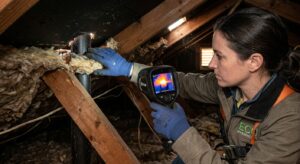
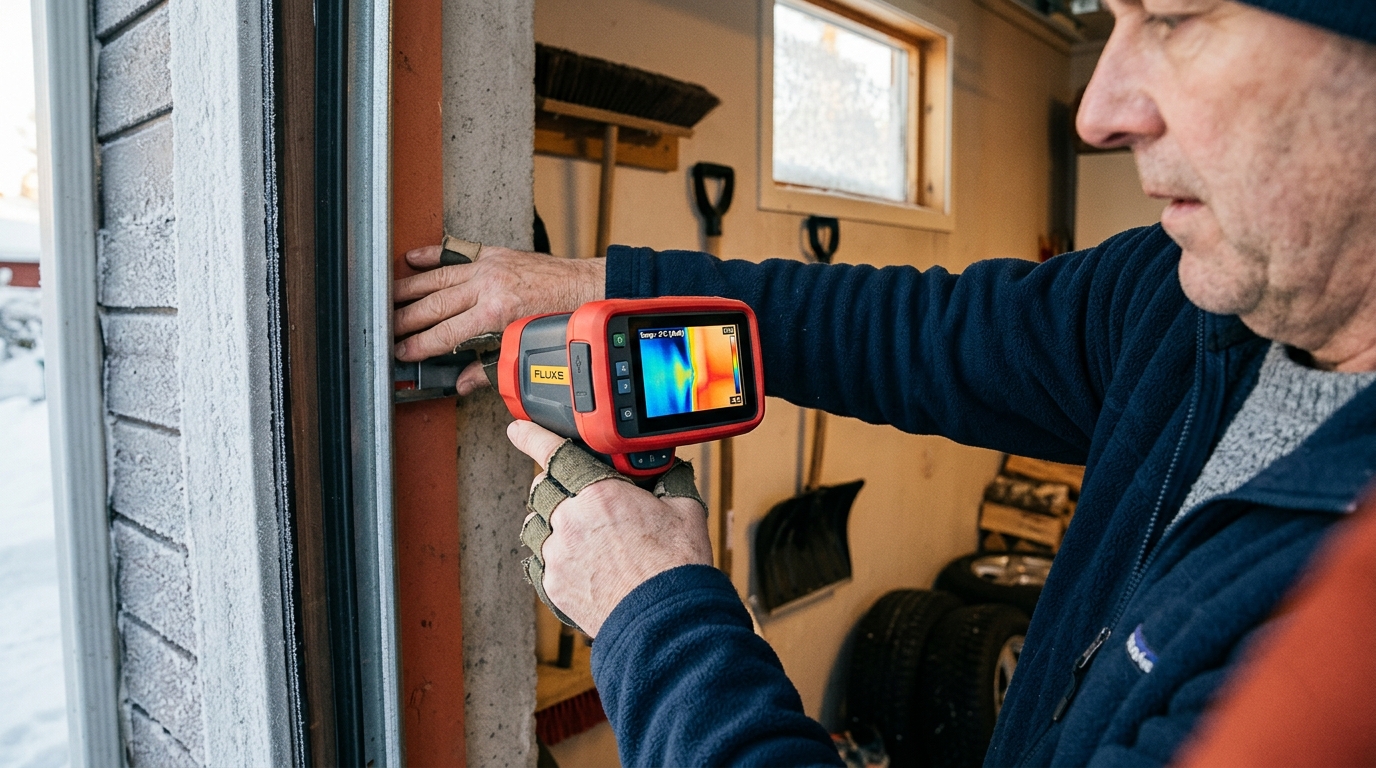
- On a cold day, close all garage doors and windows, then run your hand slowly around the perimeter of the door between the house and garage. Feel for cold drafts at the bottom, sides, and top of the door frame. Use a stick of incense or a smoke pen to confirm airflow at any suspect spots.
- Check the bottom of the house-to-garage door first. If daylight is visible or your hand feels a clear draft, replace the door sweep. A heavy-duty vinyl or rubber sweep costs $10 to $20 and installs with a screwdriver in under 15 minutes.
- Inspect the doorframe for gaps between the frame and the rough opening. Use foam backer rod for gaps larger than 1/4 inch, then apply paintable acrylic caulk over it. For smaller gaps, a single bead of caulk is sufficient.
- Look at wall penetrations where electrical conduit, water pipes, or gas lines pass through the shared wall. Use an appropriate fire-rated caulk or expanding foam labeled for fire stops in these locations, since the garage-to-living-space boundary is a fire-rated assembly in most building codes.
- Replace worn compression weatherstripping on the sides and top of the door. Self-adhesive EPDM rubber foam tape costs about $8 to $15 for a full door kit and can be pressed into place without tools. Close the door and check for even compression all the way around.
- Map your thermal boundary by identifying every surface the garage shares with conditioned space: the common wall, any ceiling area where living space sits above, and the door between spaces. Measure the square footage of each surface to estimate insulation quantities.
- For an unfinished shared wall with exposed studs on the garage side, install R-13 to R-15 fiberglass or mineral wool batts between studs. Mineral wool is preferred because it is fire resistant and does not absorb moisture. Cut batts to fit snugly without compression, which reduces their effective R-value.
- Before hanging drywall or leaving insulation exposed, seal all electrical boxes, top plates, and bottom plates with acoustical sealant or expanding foam. This critical air sealing step prevents insulation from being bypassed by air movement through framing cavities.
- Cover the insulated wall with 1/2-inch drywall on the garage side to meet the fire-separation requirement that most building codes mandate between garage and living space. Use drywall screws every 8 inches into studs and tape and mud the seams for a code-compliant assembly.
- For the garage ceiling under a living space above, install R-19 or R-21 friction-fit batts between the floor joists from below. Secure with wire insulation supports or wood furring strips spaced every 18 to 24 inches to prevent sagging. Then cover with 5/8-inch Type X drywall for fire separation.
- After the insulation and drywall are complete, apply a fresh bead of paintable caulk at every joint where drywall meets the concrete floor, sidewalls, and ceiling, closing the final air leakage paths.
- Measure your current garage door opening width and height precisely. Standard sizes are 8×7, 9×7, 16×7, and 16×8 feet. Note whether your door is a single or double and whether the opening is square by measuring both diagonals.
- Compare R-value ratings when shopping. Polystyrene-insulated doors typically reach R-6 to R-10, while polyurethane-injected doors achieve R-12 to R-18. For an attached garage in a climate with over 5,000 heating degree days, target at least R-12.
- Get at least two quotes from licensed garage door contractors. Ask each to show the manufacturer’s certified R-value and U-factor rather than self-reported marketing claims. DASMA (Door and Access Systems Manufacturers Association) certified ratings are the most reliable.
- During installation, ask the installer to replace the bottom seal and all side weatherstripping at the same time. New seals cost $30 to $60 extra at installation time and are far harder to add later.
- After installation, verify the door seals evenly on all four sides by shining a flashlight inside while someone watches from outside in the dark. Any visible light indicates a gap that needs to be corrected by adjusting the spring tension or adding additional seal material.
Why It Works: The Benefits
Properly sealing and insulating the garage-to-house boundary typically reduces whole-home heating costs by 10 to 20%, translating to $150 to $400 per winter for a home with average heating costs of $1,500 to $2,000 annually in a cold climate.
Rooms over an uninsulated garage can run 8 to 12 degrees colder than the rest of the house in winter. Adding R-19 or higher insulation in the garage ceiling often brings those rooms within 2 to 3 degrees of the rest of the home without any changes to the HVAC system.
When the shared boundary is properly sealed, the furnace no longer has to work against constant cold infiltration from the garage. Homeowners often report 15 to 25% shorter heating cycles after completing garage air sealing, which also extends furnace lifespan by reducing wear.
Garages contain carbon monoxide from vehicles, VOCs from stored chemicals, and pesticides. Sealing gaps between the garage and living space does double duty by reducing toxic air migration into your home, a health benefit the EPA specifically highlights for attached garages.
An insulated garage that holds moderate temperatures makes it usable as a workshop or storage space with far less supplemental heating, saving money if you currently run a space heater to work out there in winter.
💰 Savings Impact by Action
Sealing gaps in the shared garage boundary reduces infiltration-driven heat loss by up to 35% in a typical attached garage connection.
Adding R-13 to R-15 insulation to an uninsulated shared garage wall reduces conductive heat loss through that assembly by approximately 20%.
Installing R-19 insulation in the garage ceiling below a living space reduces heat loss from that floor assembly by 20 to 25% and can raise floor surface temperature by 6 to 10 degrees.
Replacing an uninsulated garage door with a polyurethane-core R-12 or higher door reduces heat loss through the door panel by up to 60%, contributing roughly 10 to 15% to total garage energy savings.
Fresh door sweeps and compression seals on the house-to-garage door reduce infiltration at that opening by up to 10% of total garage-related heating load.
🏠 Key Concepts Explained
The Science Behind It
Heat loss obeys three fundamental mechanisms: conduction, convection, and radiation. In an attached garage situation, all three are working against you simultaneously. Conduction pulls heat through the shared wall’s framing and drywall at a rate governed by the temperature difference and the assembly’s R-value. A 40-degree difference between your living room and garage drives roughly twice the conductive loss compared to a 20-degree difference, which is why the coldest nights of the year disproportionately spike your heating bill.
Convection is the mechanism behind air infiltration, and it is often more impactful than conduction. When cold garage air physically enters the conditioned space through gaps, your furnace must heat that air from ambient temperature up to your thermostat setpoint. On a 15-degree night with your thermostat at 68F, every cubic foot of garage air that infiltrates your home represents 53 degrees of heating load. Multiply that by hundreds of cubic feet per hour through an unsealed garage door frame, and the energy waste becomes enormous fast. This is why air sealing consistently delivers a better return than adding more insulation in a leaky home.
Radiation plays a smaller but real role, particularly through the garage door itself. An uninsulated metal garage door radiates heat from its inner surface much like a radiator in reverse, absorbing warmth from the garage air and transferring it to the cold outside surface where it dissipates. An insulated door with a polyurethane core interrupts this radiative pathway, keeping the inner surface temperature closer to the garage air temperature and dramatically reducing the rate of heat loss through the door panel. Together, addressing all three mechanisms through air sealing, insulation, and an upgraded door can reduce your garage-related heat loss by 60 to 80%.
Frequently Asked Questions
▼ I sealed the garage door and added insulation but my heating bill barely changed. What am I missing?
The most common culprit is the attic bypass above the shared garage wall, where the wall cavity opens directly into unconditioned attic space. Head into your attic and look for the top plates of the wall separating the garage from the house, then seal any open cavities with expanding foam or rigid foam board. Also check whether you have any HVAC ducts running through the garage, since leaky ducts in an unconditioned space can account for 20 to 30% of heating loss on their own.
▼ My room above the garage is always freezing even with the heat running. Is this a duct problem or an insulation problem?
It is usually both working together. First, confirm that the supply register in that room is actually delivering adequate airflow by holding a tissue near it when the furnace is running. If airflow is weak, a duct balance issue may be the primary problem. If airflow is strong but the room is still cold, insufficient insulation in the garage ceiling (the floor of that room) is the likely culprit, and you should target at least R-19 in that assembly, with air sealing done before the insulation is installed.
▼ Can I just put rigid foam board on the inside of my garage door instead of buying a new door?
Yes, this is a practical and popular option. Rigid polyisocyanurate foam board cut to fit the recessed panels of your existing door and held in place with adhesive or commercial garage door insulation kit clips can add R-6 to R-8 for around $50 to $100. Be aware that adding weight to the door panels may require a spring tension adjustment by a garage door technician, and some manufacturers void warranties if the door is modified. Measure the added weight (typically 4 to 8 pounds per panel) and check your opener’s capacity.
▼ My garage shares a wall with my bedroom. Is there a health risk from garage air leaking in?
Yes, this is a legitimate concern. Garages contain carbon monoxide from vehicles, benzene and other VOCs from gasoline storage, and pesticides or solvents from stored containers. The EPA recommends that garage-to-house connections be as airtight as possible for this reason, not just energy efficiency. Seal all penetrations with fire-rated caulk, ensure the door between spaces has a solid sweep and compression seals, and consider a carbon monoxide detector on the shared wall side inside your home if you do not already have one.
▼ How do I know if my current shared wall already has insulation in it?
Remove a standard electrical outlet cover plate on the shared wall and look into the gap around the electrical box with a flashlight. You should be able to see whether there is insulation material behind the drywall. Alternatively, use a stud finder to locate a stud bay, drill a small 3/4-inch inspection hole between outlets, and use a bent wire or borescope camera to look inside the cavity. Patch the hole with a drywall plug kit afterward.
Quick Tips
- Install a simple digital thermometer on the shared wall inside the garage to track temperature swings. If you see the garage dropping below 20F regularly, you are likely losing significant heat through the shared boundary regardless of how warm your living space feels.
- Insulate the shared wall before the garage ceiling. The wall is typically the larger thermal boundary and easier to access, and you will see measurable results faster.
- If you heat your garage with a space heater, insulating the garage envelope first and then the shared boundary can let you maintain 40 to 45F in the garage at a fraction of the current cost, protecting pipes and vehicles without breaking the budget.
- Check whether your municipality offers a rebate for garage door insulation or weatherstripping materials. Many utility companies offer $25 to $75 rebates for air sealing supplies, and some states include attached garage insulation in their weatherization assistance programs.
Variations for Your Situation
- Apartment or Condo with a Shared Parking Structure: You cannot insulate a shared boundary you do not own, but you can place a heavy thermal curtain or insulated door panel on the interior side of any door connecting to the parking structure. A floor-length thermal curtain rated for cold rooms costs $40 to $80 and can reduce convective heat loss through the door by 30 to 40% with no landlord permission required. Add a door sweep to the bottom for maximum effect.
- Tight Budget (under $75): Focus entirely on air sealing, which delivers the highest return per dollar. Buy one can of expanding foam ($8), one tube of fire-rated caulk ($10), and a replacement door sweep ($15) and address every gap in the house-to-garage door frame and any visible pipe or wire penetrations. This alone commonly reduces heating-season heat loss from the garage boundary by 25 to 35% at minimal cost.
- Older Home (pre-1980): Homes built before 1980 often have no insulation in the shared garage wall at all and may lack the fire-separation drywall now required by code. Before adding insulation, have the wall assembly inspected since opening it up may trigger a code compliance requirement for updated fire separation. In many cases, adding rigid foam board to the garage side surface without disturbing the existing wall avoids a permit requirement while still adding meaningful R-value, typically R-6 per inch of polyisocyanurate board.