Your home has holes in it. Not dramatic, visible holes, but dozens of small gaps around pipes, wires, outlets, window frames, and attic hatches that collectively act like leaving a window open year-round. The U.S. Department of Energy estimates that air leakage accounts for 25 to 40% of the energy used for heating and cooling in a typical home, and the average household spends roughly $900 to $2,000 per year on those systems. That means air leaks could easily be costing you $200 to $400 annually, with some older or poorly sealed homes losing even more.
The frustrating part is that most of this leakage is invisible and unfelt. Cold drafts near windows are obvious, but the real culprits are often behind walls, under attic insulation, and in basement rim joists where warm or cool air silently escapes 24 hours a day. Sealing these gaps does not require expensive equipment or a contractor. A tube of caulk, a can of spray foam, and about 60 minutes of focused effort can close the gaps that matter most.
This guide walks you through how to find air leaks using simple DIY detection methods, which leaks to prioritize for maximum savings, and exactly how to seal them using the right material for each location. We include a quick-fix approach for beginners and a deeper DIY audit method for homeowners who want to go further. Real payback timelines and savings estimates are included so you know exactly what to expect.
What You’ll Need
Click on an item below to shop for the recommended items for this recipe on Amazon.
As an Amazon Associate, we earn from qualifying purchases.
How to Do It
- Buy one tube of paintable latex caulk for interior gaps and one 12-ounce can of expanding spray foam for larger gaps. Total cost is roughly $15 to $25 at any hardware store.
- Seal around every electrical outlet and switch plate on exterior walls. Remove the cover plate, stuff a pre-cut foam gasket behind it (sold in packs of 10 for about $3), then replace the plate. This alone can reduce infiltration noticeably in older homes.
- Check where pipes and wires enter your home under sinks, behind the washing machine, and at the water heater. Apply spray foam around any gap larger than 1/4 inch. Use caulk for smaller gaps. These penetrations are a top-five leak source in most homes.
- Inspect the bottom of all exterior doors with a flashlight at night and have someone shine a light from outside. Visible light means significant air gap. Install a door sweep on any door showing daylight. Sweeps cost $10 to $20 and take 10 minutes to install.
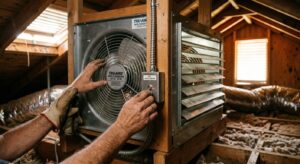
- Pull down your attic access hatch and check whether it has any weatherstripping around the frame. Add adhesive foam tape weatherstripping around the perimeter and consider adding a rigid foam board on top of the hatch door to add insulation value. Attic hatches are among the leakiest spots in the entire home.
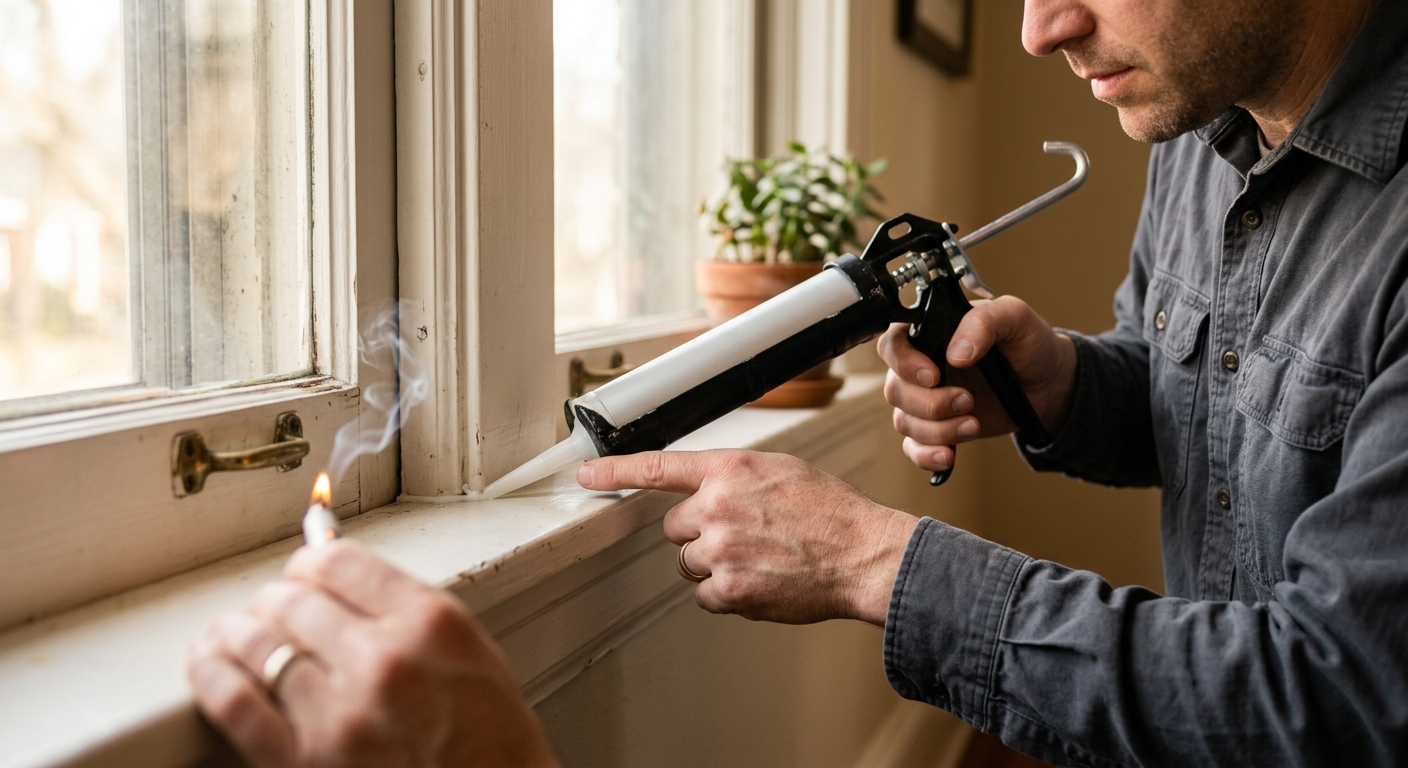
- Perform a smoke test to find hidden leaks. Light an incense stick or use a smoke pencil and slowly move it along baseboards, window frames, electrical boxes, and ceiling light fixtures. Watch for the smoke to pull toward or push away from surfaces, indicating airflow. Mark each leak location with painter’s tape before sealing.
- Start in the attic since it is the single highest-impact area. Using spray foam or caulk, seal around every wire, pipe, and duct penetration through the ceiling drywall. Pay special attention to the top plates of interior walls, which often have large open cavities connecting directly to the attic. A well-sealed attic can deliver 10 to 15% total energy savings on its own.
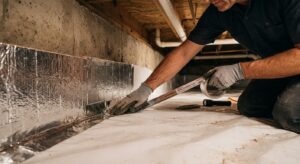
- Move to the basement or crawl space and seal the rim joist, the wood framing sitting on top of your foundation wall. Cut rigid foam board to fit each bay and seal the edges with spray foam. This area is responsible for up to 15% of a home’s total air leakage.
- Caulk around every window and door frame on the interior side where the frame meets the drywall. Use paintable latex caulk and tool it smooth. Also check the exterior side and re-caulk any cracked or missing exterior caulk around window and door frames.
- Seal around recessed can lights in the ceiling from the attic side using a fire-rated caulk or an approved airtight baffle box. Standard recessed lights are major air leak points and many are not rated for insulation contact.
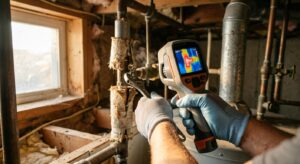
- After sealing, do a final walkthrough with the incense stick or smoke pencil on a windy day to confirm the biggest leaks are addressed. Note any remaining locations for a future project or professional blower door test, which typically costs $150 to $400 and can identify leaks invisible to the naked eye.
Why It Works: The Benefits
DOE data shows that sealing air leaks and adding insulation can save 10 to 30% on total heating and cooling costs. For a household spending $1,500 per year on those systems, that is $150 to $450 in annual savings.
Rooms that feel stuffy in summer or drafty in winter are often victims of uncontrolled air infiltration. Sealing key leaks reduces hot and cold spots, making the entire home more comfortable without adjusting the thermostat.
Uncontrolled air leaks bring in pollen, dust, car exhaust, and outdoor humidity along with outside air. Sealing gaps reduces the pathways for these pollutants, improving indoor air quality especially for allergy sufferers.
Every degree of setback and every hour of reduced runtime adds life to your furnace and AC compressor. Reducing infiltration load can cut system runtime by 15 to 20%, lowering wear and pushing back costly replacement timelines.
A basic air sealing project using caulk and spray foam typically costs $30 to $80 in materials. At even $200 in annual savings, the payback period is 2 to 5 months, and the savings continue every year with no maintenance required.
💰 Savings Impact by Action
Sealing top plates and penetrations in the attic reduces total home air leakage by up to 15% and is consistently the highest single-area return in most homes.
Insulating and air sealing the basement rim joist addresses up to 15% of total home air leakage, with rigid foam and spray foam delivering lasting results.
Foam gaskets behind exterior wall outlet and switch covers reduce infiltration through electrical boxes, which account for roughly 2 to 5% of total leakage in older homes.
Re-caulking window frames and adding door sweeps and weatherstripping reduces infiltration at these common locations by up to 8% of total home air leakage.
A comprehensive air sealing project addressing attic, basement, windows, doors, and penetrations can reduce total heating and cooling energy use by 15 to 30% according to DOE estimates.
🏠 Key Concepts Explained
The Science Behind It
Air leakage in homes is driven by pressure differences, and there are three main forces creating those differences: the stack effect, wind pressure, and mechanical pressure from fans and exhaust systems. The stack effect is the most consistent. Because warm air is less dense than cold air, it naturally rises and accumulates at the top of your home. This creates a slight positive pressure near the ceiling and a slight negative pressure near the floor, which means warm indoor air is constantly trying to escape through high gaps in winter while cold outside air is drawn in through low gaps. This process runs around the clock regardless of wind conditions.
The critical concept that makes air sealing so valuable is thermal bypass. Insulation works by trapping still air in tiny pockets within the material, slowing conductive heat transfer. But when air is actually moving through gaps in the building envelope, it bypasses the insulation completely. A gap as small as 1/8 inch running 8 feet along a top plate can allow enough airflow to negate the thermal value of the insulation above it. This is why building scientists say air sealing and insulation must work together. Adding insulation over unsealed gaps is like insulating a screen door.
Modern building codes target an air tightness of 3 air changes per hour at 50 Pascals of pressure (written as 3 ACH50), measured with a blower door test. Older homes commonly test at 8 to 15 ACH50 or higher. The difference represents enormous amounts of conditioned air being lost every hour. Research from Lawrence Berkeley National Laboratory estimates that residential air infiltration accounts for about one-third of heating energy use in cold climates, which is why the DOE consistently ranks air sealing as one of the highest return-on-investment improvements a homeowner can make before any equipment upgrade.
Frequently Asked Questions
▼ I sealed everything I could find but my energy bills are still high. What am I missing?
The leaks with the biggest impact are often in the attic and basement, not around windows and doors where most people look first. If you have not sealed attic top plates, rim joists, and pipe penetrations in the basement, those areas alone can account for 50 to 60% of total home air leakage. Consider scheduling a professional blower door test, which costs $150 to $400, to locate leaks you cannot find by hand or with incense.
▼ Can I seal around my gas furnace or water heater to stop drafts near them?
Do not seal the immediate area around combustion appliances without understanding how they draw combustion air. Atmospheric-vented gas appliances need a supply of fresh air to burn fuel safely. Sealing too aggressively around them can cause backdrafting, which pulls carbon monoxide into the living space. Contact a licensed HVAC technician before sealing any area within 10 feet of a gas combustion appliance.
▼ How long will it take before I see the savings on my actual utility bill?
Most homeowners notice a measurable reduction within one full billing cycle after sealing, typically 30 days. The savings are most obvious in the first cold or hot month following the project since that is when infiltration load is highest. Compare the same month year-over-year rather than month-to-month for the most accurate read, accounting for any difference in outdoor temperatures.
▼ What if my home is older than 30 years? Is air sealing still worth it?
Older homes are typically the best candidates for air sealing because they were built before modern tightness standards and have had decades for caulk and weatherstripping to degrade. An older home testing at 10 to 15 ACH50 versus a code-built home at 3 ACH50 has three to five times the leakage, meaning the savings potential from sealing is proportionally higher. Just confirm there is no asbestos or lead paint in areas you plan to disturb before starting.
▼ Is it possible to seal a home too tightly and create air quality problems?
Yes, this is a real concern in very well-sealed homes. The general building science guideline is to build as tight as possible and then ventilate intentionally with controlled fresh air. If your home tests below 3 ACH50 after sealing, consider adding a simple bathroom exhaust fan timer or a heat recovery ventilator to bring in controlled fresh air. For most older homes that start at 8 ACH50 or above, reaching a problematically tight level through DIY sealing alone is unlikely.
Quick Tips
- Work on air sealing on a cold and windy day so leaks are easier to feel with your hand before using a smoke source.
- Seal from the inside first since interior sealing is easier, cleaner, and more durable than exterior caulk which degrades in UV and weather.
- Use foam backer rod in any gap wider than 1/2 inch before applying caulk. Caulk is not designed to bridge wide gaps and will crack over time without backing.
- After sealing your attic hatch, add a rigid foam board cut to size and taped to the back of the hatch door with foil tape. Even 2 inches of rigid foam adds R-10, dramatically reducing heat loss through this often-forgotten gap.
Variations for Your Situation
- Apartment/Rental: Renters cannot modify central systems but can still address significant leaks within their unit. Focus on sealing around interior window frames with removable rope caulk (peels off cleanly at move-out, costs about $5), installing draft snakes at door bottoms, and adding foam gaskets behind outlet covers on exterior walls. These no-damage steps can reduce drafts noticeably and cost under $30 total.
- Tight Budget (under $50): Prioritize the five highest-impact, lowest-cost fixes: foam outlet gaskets ($3 to $5 per pack), one can of spray foam for pipe penetrations ($8 to $12), one tube of latex caulk for window and door frames ($5 to $8), adhesive weatherstripping for the attic hatch ($6 to $10), and a door sweep for the leakiest exterior door ($10 to $20). These five items address the majority of leakage in most homes for well under $50.
- Older Home (pre-1980): Homes built before modern energy codes often have balloon framing with open stud cavities running from basement to attic, uninsulated rim joists, and degraded or absent weatherstripping throughout. Start with the rim joist since it is commonly both the most accessible and most impactful location in older construction. Use rigid foam board cut to fit each bay and seal edges with spray foam for an estimated 10 to 15% reduction in heating costs from that single area. Budget $100 to $200 for a full rim joist project in a typical home.