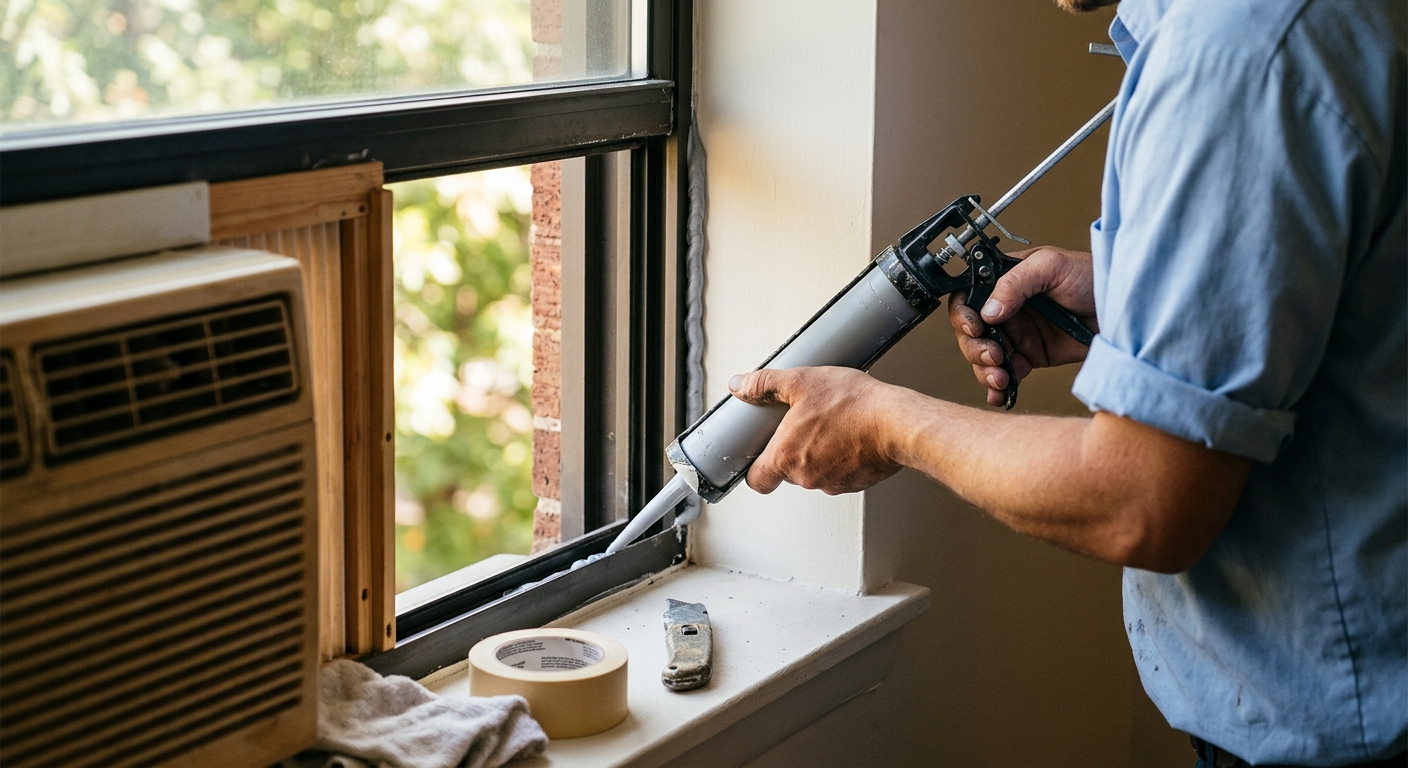
Your AC is running constantly, the house still feels sticky and warm, and a contractor has just quoted you $5,000 to $12,000 for a new, larger unit. Before you sign anything, consider this: in most homes, the cooling system is not the core problem. The building itself is the problem. Heat pouring in through gaps, under-insulated attics, and sun-baked windows forces your AC to fight a battle it was never sized to win.
Cooling load is the total amount of heat your home gains from all sources during a hot day: solar radiation through windows, conduction through walls and ceilings, and hot outdoor air sneaking in through every crack. The higher your cooling load, the harder your AC works and the bigger the unit you think you need. But a bigger unit in a leaky, poorly shaded house just cycles on and off faster, wastes energy, and leaves you with a humid, uncomfortable home.
This guide walks you through the highest-impact steps to reduce your home’s cooling load before spending thousands on new equipment. Many homeowners who follow these steps find their existing AC keeps up just fine, and at worst, they qualify for a smaller, cheaper replacement unit that runs more efficiently. We cover everything from free fixes you can do today to smart DIY upgrades in the $150 to $500 range, with real payback numbers at every step.
What You’ll Need
Click on an item below to shop for the recommended items for this recipe on Amazon.
As an Amazon Associate, we earn from qualifying purchases.
How to Do It
- Close blinds and curtains on south and west-facing windows by 10am and keep them closed until after 5pm. Cellular or blackout shades can block 35 to 45% of solar heat gain through glass at zero cost if you already own them.
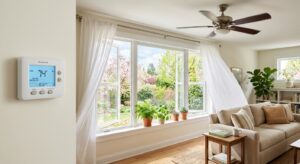
- Set your thermostat to 78 degrees when home and 85 degrees when away for more than 2 hours. Each degree you raise the setpoint reduces cooling energy use by approximately 3%, so a 7-degree setback saves roughly 21% during unoccupied hours.
- Switch your ceiling fans to counterclockwise rotation and set them to medium or high. Moving air creates a wind-chill effect that makes 78 degrees feel like 72 to 74 degrees, letting you raise the thermostat 4 degrees with no comfort loss.
- Move heat-producing appliances away from the thermostat and avoid using the oven, dishwasher, or clothes dryer between noon and 7pm on hot days. Shifting these loads to morning or evening reduces peak indoor heat gain by 10 to 15%.
- Check every exterior door for daylight gaps around the frame. Slide a piece of paper under closed doors: if it moves freely with no resistance, you have a significant air leak. Temporary foam door draft stoppers cost $8 to $12 and eliminate that infiltration immediately.
- Air seal your attic floor before adding insulation. Use canned spray foam to seal around all electrical boxes, plumbing pipes, and any gap where interior walls meet the attic floor. Focus especially on the top plates of interior walls, which are often completely open to the attic in homes built before 1990. A $20 can of foam can seal enough gaps to eliminate the equivalent of a 2-square-foot hole in your ceiling.
- Add blown-in attic insulation to reach R-38 to R-60 depending on your climate zone. Bag-and-blow insulation kits are available at home improvement stores for $200 to $350 and include free blower rental. Going from R-11 to R-38 in a typical 1,500-square-foot attic can reduce ceiling heat gain by 20 to 25%.
- Install reflective window film on south and west-facing windows. Quality solar control film ($50 to $120 for a typical home) blocks 55 to 70% of solar heat gain while maintaining visibility, unlike dark tinting. Apply to clean, dry glass using the manufacturer’s soap solution and a squeegee.
- Replace worn weatherstripping on all exterior doors. Foam compression strips or V-strip weatherstripping cost $10 to $20 per door and install in under 30 minutes. Pay extra attention to the door bottom sweep, which is responsible for the largest single gap on most doors.
- Seal electrical outlets and switch plates on exterior walls using foam outlet gaskets ($5 for a pack of 10). These often-overlooked penetrations allow a surprising amount of conditioned air to escape and hot outdoor air to enter.
- Insulate your attic hatch or pull-down stair with a rigid foam lid or an insulated tent cover ($50 to $80 at hardware stores). Uninsulated attic hatches are the equivalent of a hole in your ceiling since they typically have R-0 insulation and zero air sealing.
- Hire a certified home energy auditor to perform a blower door test before any work begins. This pressurization test identifies exactly where your home is leaking and quantifies the total air leakage in ACH50 (air changes per hour at 50 pascals). Most older homes measure 8 to 15 ACH50; the target is 3 to 5. The audit typically costs $300 to $500 and guides every subsequent investment.
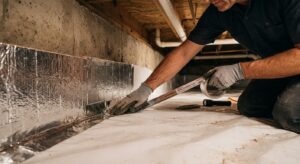
- Have a weatherization contractor professionally air seal the attic, rim joists, and basement ceiling based on the blower door results. Professional foam and mastic sealing of hard-to-reach areas can reduce infiltration by 30 to 50% beyond what DIY methods achieve. Cost is typically $500 to $1,500 depending on home size.
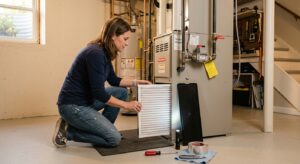
- Contract an HVAC technician to perform a duct leakage test (duct blaster test). If your ducts leak more than 15% of airflow, professional duct sealing with Aeroseal or mastic pays back in 2 to 4 years. Expect to pay $800 to $1,800 for professional duct sealing, but the result is recovering 20 to 30% of lost cooling capacity from your existing equipment.
- Install exterior solar shades or a pergola with shade fabric on the west and south sides of the home. Exterior shading blocks solar heat before it reaches the glass, making it 3 to 5 times more effective than interior blinds. Fixed exterior overhangs designed to the correct depth for your latitude can reduce summer solar gain by 70 to 90% while still admitting low winter sun.
- Request a Manual J load calculation from an HVAC contractor before authorizing any new equipment purchase. This calculation uses your actual house dimensions, insulation levels, window area, and local climate data to determine the minimum AC size needed. Many contractors skip this and simply match or upsize the existing unit, which leads to the short-cycling and humidity problems described above.
Why It Works: The Benefits
A properly sized AC for a tightened, well-insulated home may be one or two tons smaller than what you would have purchased for the leaky version of your house. That difference can save $2,000 to $5,000 on equipment and installation costs alone.
Combining air sealing, improved attic insulation, and window shading typically reduces cooling energy use by 25 to 40%, which translates to $40 to $120 per month in savings for an average home in a hot climate running central AC.
High cooling loads concentrated in specific areas like west-facing rooms or rooms above the garage create hot spots. Reducing the load at the source makes your existing system more capable of maintaining a consistent 75 degrees throughout the house rather than 71 near the thermostat and 82 in the back bedroom.
An oversized AC short-cycles, running in brief bursts that cool the air but do not run long enough to remove moisture. Reducing the cooling load so your existing system runs longer, steadier cycles can drop indoor relative humidity from an uncomfortable 60 to 65% down to a comfortable 45 to 55%.
Every short-cycle start puts wear on the compressor. A home with a reduced cooling load allows the AC to run in longer, smoother cycles, which HVAC technicians consistently associate with compressor lifespans 30 to 50% longer than in oversized or overworked systems.
💰 Savings Impact by Action
Upgrading attic insulation from R-11 to R-38 reduces ceiling heat gain by 20 to 25%, directly cutting the work your AC must do during peak afternoon hours.
Sealing attic bypasses, rim joists, and penetrations reduces infiltration-related cooling load by up to 20% and is the single highest-return weatherization investment.
Exterior shades or quality solar film on west and south windows blocks 55 to 70% of direct solar gain through glass, reducing total cooling load by 10 to 15%.
Sealing leaky ducts in unconditioned attics recovers 20 to 30% of cooling capacity that was being lost before reaching living spaces.
Raising the setpoint by 7 degrees during unoccupied hours saves approximately 10% on annual cooling costs with no equipment or materials required.
🏠 Key Concepts Explained
The Science Behind It
Your home’s cooling load is governed by two physics principles: heat transfer and mass flow. Heat moves from hot to cold through three mechanisms: conduction (through solid materials like walls and ceilings), convection (through air movement carrying heat with it), and radiation (solar energy transmitted directly through or absorbed by windows and surfaces). Every insulation upgrade targets conduction, every air sealing project targets convection, and every shading improvement targets radiation. Addressing all three simultaneously produces results that are larger than the sum of their parts.
The concept of the cooling load specifically means the rate at which heat enters your home measured in BTUs per hour. Your AC unit is rated to remove a specific number of BTUs per hour, expressed in tons (one ton equals 12,000 BTU/hr). When your actual cooling load exceeds the AC’s capacity, the unit runs continuously without reaching setpoint. When the load is reduced through envelope improvements, the same capacity unit can now cycle off periodically, giving the indoor coil time to drain condensate and properly dehumidify the air. This is why load reduction improves comfort, not just energy bills.
Duct losses add a compounding effect that most homeowners underestimate. If a duct system loses 25% of its airflow to leakage in a 130-degree attic, your 3-ton AC is effectively delivering only 2.25 tons of cooling to your living space, while simultaneously pumping cold air into the attic, which raises attic temperature and increases ceiling heat gain. Sealing those ducts does not just recover lost cooling capacity, it also reduces the heat source driving conduction through your ceiling. This feedback loop explains why professional duct sealing often produces savings that exceed what the raw numbers suggest on paper.
Frequently Asked Questions
▼ Why is my AC still running all day even after I tried these fixes?
If your AC runs continuously without reaching the set temperature, the most likely remaining culprits are duct leakage in an unconditioned space, an undersized unit that was already too small before any fixes, or a refrigerant charge issue reducing the system’s actual capacity. Start by having an HVAC technician check the refrigerant level and perform a duct leakage test. Either issue is repairable for far less than a new system.
▼ My house feels cool but humid. Will reducing the cooling load help?
Yes, high humidity is almost always a sign of short-cycling, meaning the AC cools the air quickly but shuts off before the coil has time to condense and drain moisture. Reducing the cooling load so the system runs in longer, steadier cycles is exactly the fix. In the meantime, setting the fan to AUTO rather than ON prevents the blower from re-evaporating condensate off the coil between cycles.
▼ Can I do these fixes in a rental without landlord permission?
Most renters can legally do the same-day fixes (blinds, thermostat setbacks, ceiling fans, appliance scheduling) with no permission required. Window film is reversible and typically allowed. Air sealing and insulation require landlord approval, but you can make a compelling case by presenting the energy savings data. Some landlords will cover materials costs if you provide the labor.
▼ How do I know if my current AC is actually undersized or if the load is just too high?
The quickest diagnostic is to check your system’s capacity against a Manual J calculation for your home’s current, post-improvement specs. If a properly done Manual J says you need 2.5 tons and you have a 2-ton unit, the unit is undersized. If the calculation says 2 tons and you have a 2-ton unit that still struggles, the envelope improvements have not been completed yet or there is a mechanical issue. Most HVAC contractors will run a basic load calc for free as part of a replacement quote.
▼ How long before I see the savings on my electricity bill?
Behavioral changes like thermostat setbacks and window shading show up in your very next billing cycle. Attic insulation and air sealing savings appear within one to two billing cycles once temperatures normalize. Utility bills fluctuate with weather, so compare your usage in kilowatt-hours to the same month last year rather than comparing dollar amounts, which vary with rate changes.
Quick Tips
- Plant deciduous trees on the west side of your home. Mature trees reduce summer solar gain by up to 70% and still allow winter sun through bare branches, combining seasonal benefits no window film can replicate.
- Run your bathroom and kitchen exhaust fans sparingly during peak heat hours. Each cubic foot of air they exhaust is replaced by hot outdoor air drawn in through gaps elsewhere in the envelope.
- If you have a fireplace, confirm the damper is fully closed during summer. An open damper is a direct opening to the outdoors and can account for as much air leakage as a window left cracked open.
- Check your refrigerator and freezer door seals by placing a dollar bill in the door and closing it. If the bill slides out easily, the gasket is failing and adding unnecessary heat to your kitchen, which your AC then has to remove.
Variations for Your Situation
- Apartment or Condo: Renters cannot modify central HVAC, add insulation, or seal ducts, but they can control a surprising share of their cooling load. Focus on window treatments first: interior cellular shades with a tight fit to the window frame block 35 to 45% of solar heat gain and cost $25 to $60 per window. Add removable window film for west-facing glass, run ceiling fans consistently, and shift heat-producing activities to evenings. Combined, these steps can reduce cooling energy use by 15 to 20% with zero permanent modifications.
- Tight Budget (under $50): Prioritize in this order: thermostat setbacks (free, saves up to 15%), closing window coverings during peak sun hours (free), door draft stoppers ($8 to $12 each), and foam outlet gaskets on exterior walls ($5 for a pack of 10). These four steps together cost under $30 and address infiltration and solar gain without any skilled labor. They will not replace insulation upgrades but deliver immediate, measurable bill reductions.
- Older Home (pre-1980): Homes built before modern energy codes typically have R-11 or less in the attic (sometimes nothing), single-pane windows, and air leakage rates of 15 to 25 ACH50, roughly three to five times leakier than a modern home. Start with a professional energy audit since the number of gaps and bypasses in older construction makes DIY air sealing incomplete without a blower door to guide the work. Prioritize attic insulation and air sealing first since the return on investment is highest. Expect total load reduction of 35 to 50% from a full weatherization package, which almost always eliminates the need to upsize the AC.