Walk into any home improvement store and you will find shelves of products promising to slash your energy bills. Spray foam, smart thermostats, solar panels, heat pumps, triple-pane windows – the options are overwhelming and the marketing is rarely specific about what you will actually save or how long it will take to see that money back. The result is that homeowners routinely spend thousands on upgrades that take 20 years to pay off while ignoring $200 fixes that pay back in under 12 months.
The truth is that home energy upgrades follow a clear hierarchy. Air sealing and insulation almost always deliver the fastest payback because they fix the root cause of energy loss. HVAC upgrades come next. Appliances and solar sit further out on the timeline but can still make financial sense depending on your utility rates, climate, and how long you plan to stay in your home. Knowing the real numbers before you spend is the single most valuable thing you can do.
This post lays out honest, defensible payback periods and annual savings estimates for every major category of home energy upgrade, based on DOE, ENERGY STAR, and Lawrence Berkeley National Laboratory data. We also walk through how to prioritize upgrades based on your budget and timeline so that every dollar you spend is working as hard as possible.
What You’ll Need
Click on an item below to shop for the recommended items for this recipe on Amazon.
As an Amazon Associate, we earn from qualifying purchases.
How to Do It
- Set your thermostat to 68F in winter and 78F in summer when home, and shift it 7 to 10 degrees when away or sleeping. The DOE estimates this alone saves about 10 percent annually on heating and cooling, or $100 to $200 per year in a typical home.
- Locate and seal obvious air leaks around electrical outlets on exterior walls, around pipe penetrations under sinks, and around the attic hatch using foam gaskets and weatherstripping. These are among the highest-leakage points in most homes and cost under $20 to address.
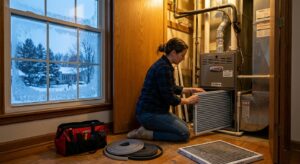
- Replace your HVAC filter if it has not been changed in 3 months. A clogged filter forces the blower to work harder and can reduce system efficiency by 5 to 15 percent. MERV 8 to 11 filters balance air quality and airflow well.
- Switch to LED bulbs in your 5 most-used light fixtures. LEDs use 75 percent less electricity than incandescent bulbs and last 15 to 25 times longer. The payback on a $5 LED replacing a $1 incandescent is typically under 3 months at average utility rates.
- Check your water heater temperature. Most are shipped set to 140F. Dropping to 120F saves 4 to 22 percent on water heating energy with no comfort sacrifice for most households, and takes 2 minutes to adjust.
- Perform a room-by-room draft audit on a windy day: hold a lit incense stick near outlets, window frames, baseboards, and recessed lights. Mark every spot where smoke wavers with painter’s tape. These are your targets.
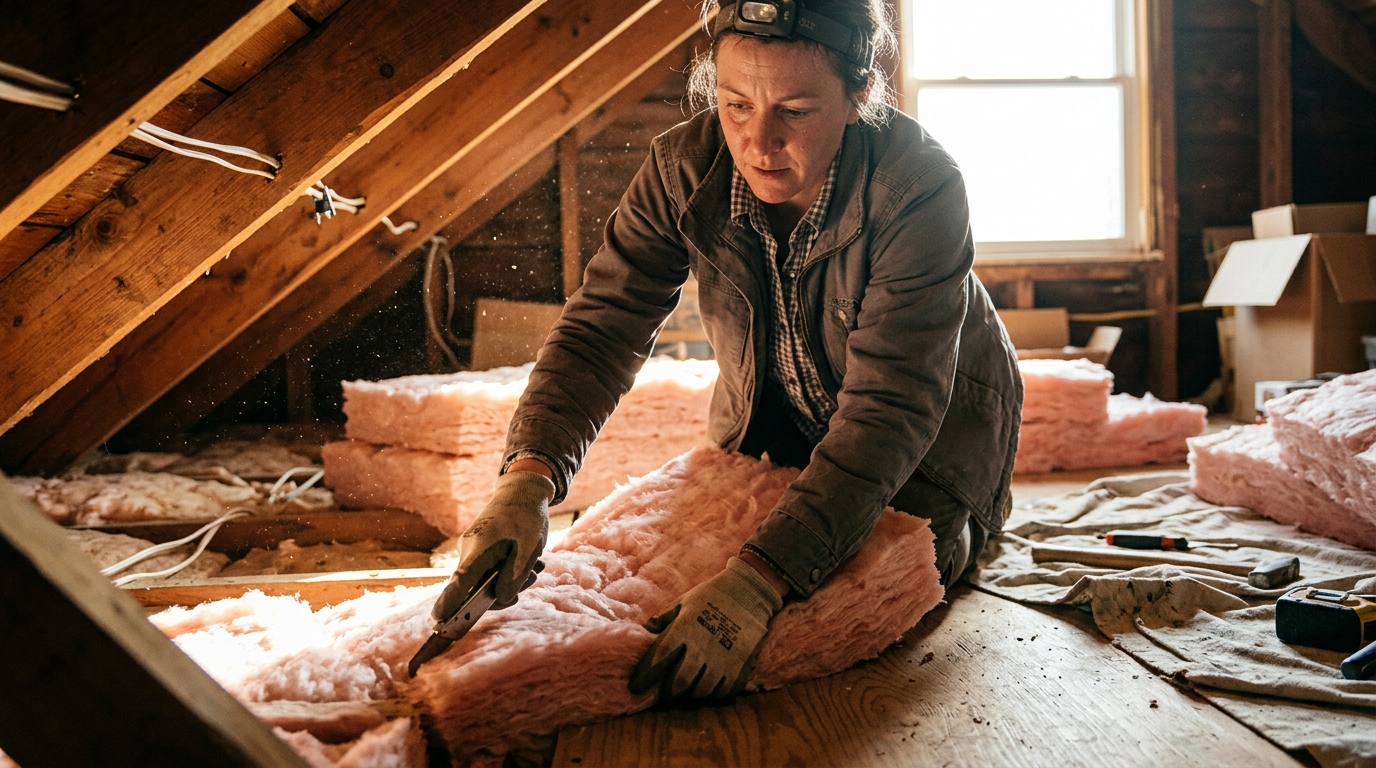
- Seal attic bypasses first. Pull back existing attic insulation to expose the top plates of interior walls, and use canned spray foam or acoustical sealant to close gaps around wiring, plumbing, and framing. This single step can reduce air infiltration by 20 to 30 percent in older homes.
- Seal the attic hatch with weatherstripping around the perimeter and glue rigid foam board (R-10 minimum) to the back of the hatch door. Uninsulated attic hatches are a disproportionate source of heat loss given their small size.
- Add blown-in fiberglass or cellulose insulation to bring your attic to R-38 in moderate climates or R-49 to R-60 in cold climates. Rental blowers are available at most home improvement stores for $50 to $75 per day. Material costs for a 1,200 square foot attic typically run $200 to $400.
- Seal around all window and door frames from the interior using low-expansion foam or paintable caulk. Pay special attention to the junction between the window frame and rough framing, not just the glass-to-frame seal.
- After completing air sealing, verify improvement by feel on the next cold or windy day, or hire an energy auditor for a before-and-after blower door test ($150 to $300) to confirm the reduction in air changes per hour.
- Get a professional energy audit with a blower door and infrared camera before scheduling any system upgrade. The $300 to $500 audit prevents oversizing equipment and identifies where to focus first. Many utilities offer this service free or subsidized.
- If your furnace or AC is over 15 years old or under 80 AFUE or 13 SEER, request quotes for replacement when it needs major repair. At that decision point, upgrading to a 96 AFUE furnace or 18+ SEER2 heat pump adds $800 to $2,000 over a standard replacement but often pays back the premium in 3 to 5 years.
- For homes with electric resistance heat or oil heat, get quotes for an air-source heat pump. Modern cold-climate heat pumps (HSPF2 of 9 or higher) operate efficiently down to -13F and typically cut heating energy use by 50 percent compared to electric resistance, paying back in 4 to 8 years depending on climate and utility rates.
- Replace a water heater nearing end of life (10 to 12 years) with a heat pump water heater rather than a standard electric unit. Heat pump water heaters use 60 to 70 percent less electricity, saving $300 to $500 per year. After the 30 percent federal tax credit, the payback period is typically 3 to 5 years.
- Evaluate solar only after completing envelope and HVAC upgrades. A tighter home needs a smaller, less expensive solar array to achieve net-zero. Get at least 3 installer quotes, check your net metering policy, and model 25-year payback using the current utility rate plus a 3 percent annual escalator. Grid-tied residential solar currently averages 7 to 10 years payback before incentives.
Why It Works: The Benefits
Unlike market investments, energy upgrades deliver a guaranteed, compounding return every month. A properly air-sealed and insulated home typically saves $300 to $600 per year on heating and cooling alone, with returns that increase as utility rates rise over time.
Most energy upgrades eliminate the root causes of discomfort, cold drafts in winter, hot spots in summer, and humidity swings. Homeowners who air seal and insulate consistently report comfort improvements even before they check their first lower utility bill.
DOE and Lawrence Berkeley studies show that each $1 reduction in annual energy costs adds roughly $20 to a home’s resale value. A $500 annual savings improvement can translate to $10,000 in appraised value, making efficiency upgrades one of the few home improvements that pay twice.
When the thermal envelope is tight, your HVAC system runs fewer cycles and for shorter durations. This reduced runtime can extend equipment life by 2 to 5 years, deferring a $5,000 to $15,000 replacement cost and adding thousands to the effective ROI of upstream insulation and air sealing work.
The Inflation Reduction Act (2022) provides federal tax credits of up to 30 percent on insulation, air sealing, heat pumps, and other upgrades, with annual caps of $1,200 for envelope improvements and $2,000 for heat pumps. Many utilities stack additional rebates on top, sometimes cutting payback periods by 30 to 50 percent.
💰 Savings Impact by Action
Professionally sealing all attic bypasses and major penetrations reduces whole-home energy use by 15 to 25 percent by eliminating the largest single source of conditioned air loss.
Upgrading attic insulation to the DOE-recommended R-value for your climate reduces heating and cooling load by 10 to 20 percent by dramatically slowing conductive heat transfer through the ceiling plane.
Replacing electric resistance heating with a cold-climate heat pump reduces heating electricity consumption by 40 to 60 percent because heat pumps move heat rather than generate it.
Setting back the thermostat 7 to 10 degrees for 8 hours per day saves approximately 10 percent annually on heating and cooling costs with no capital investment required.
A heat pump water heater uses 60 to 70 percent less electricity than a standard electric resistance water heater, saving $300 to $500 per year in a typical household.
🏠 Key Concepts Explained
The Science Behind It
Heat moves in three ways: conduction (through solid materials), convection (through moving air), and radiation (through space as infrared energy). A typical unimproved home loses energy through all three simultaneously. Insulation addresses conduction by slowing heat flow through walls, ceilings, and floors. Air sealing addresses convection by stopping conditioned air from escaping and unconditioned air from entering. Radiant barriers and low-emissivity window coatings address radiation. Most homeowners focus only on insulation because it is the most visible upgrade, but air infiltration accounts for 25 to 40 percent of heating and cooling energy in a typical home, making air sealing the higher-priority first step.
The payback period for any upgrade is simply the upfront cost divided by the annual energy savings in dollars. But the real financial picture is more nuanced. Utility rates have risen at an average of 2.5 to 3 percent per year over the past two decades, which means the dollar savings from a fixed efficiency improvement grow every year. A heat pump that saves you $800 per year today will save you roughly $1,080 per year in 10 years at a 3 percent annual rate increase. This compounding effect makes the true long-term ROI of efficiency upgrades significantly better than simple payback math suggests, and is why the DOE recommends treating efficiency as a long-term investment rather than a short-term expense.
Equipment sizing also has a profound effect on both comfort and energy use that most homeowners never consider. An oversized air conditioner cools a home quickly but then shuts off before completing a full dehumidification cycle, leaving the air feeling clammy and uncomfortable even at the correct temperature. Short-cycling also causes more wear on the compressor. Proper Manual J load calculations, which account for envelope tightness, window area, local climate data, and occupant count, ensure the right-sized system is installed. A home that has been properly air sealed and insulated needs a smaller, cheaper system, which is another reason to sequence envelope improvements before HVAC replacement.
Frequently Asked Questions
▼ I added insulation and my bills barely changed. What went wrong?
In most cases this means significant air leaks were not addressed before the insulation was installed. Insulation cannot stop air movement, only conductive heat flow. Pull back your attic insulation in a few spots and look for gaps around top plates, wiring, and plumbing penetrations. Seal those bypasses with spray foam, re-cover with insulation, and you should see a meaningful improvement.
▼ How do I know which upgrades to do first if I have a limited budget?
Always prioritize by payback period, not by upgrade size. For most homes the order is: thermostat scheduling (free), air sealing ($50 to $300, pays back in under 1 year), attic insulation ($300 to $800, pays back in 2 to 4 years), then HVAC upgrades when equipment reaches end of life. Avoid windows and solar until the envelope and mechanical systems are optimized.
▼ Are the federal tax credits worth factoring into my payback calculation?
Yes, and they can be substantial. The Inflation Reduction Act provides a 30 percent tax credit (not a deduction) for heat pumps, heat pump water heaters, insulation, and air sealing, up to $2,000 for heat pumps and $1,200 for envelope improvements annually. A $4,000 heat pump water heater becomes effectively $2,800 after the credit, cutting the payback period from roughly 7 years to about 5. Consult a tax professional to confirm eligibility based on your tax liability.
▼ Do windows ever make financial sense as an efficiency upgrade?
Rarely as a standalone investment. Window replacement typically costs $400 to $1,000 per window and saves $15 to $30 per window per year in energy, resulting in payback periods of 15 to 40 years in most climates. They make more sense when windows are failing structurally, causing comfort complaints from radiant cold, or when bundled with other renovations. If comfort near windows is the issue, low-cost interior window insulator film kits ($10 to $20 per window) deliver most of the thermal benefit at a fraction of the cost.
▼ My home is only 10 years old. Are efficiency upgrades still worth it?
Possibly, but the baseline is already higher so the marginal gains are smaller. Start with a utility bill audit and a DIY air leak test before spending anything. Homes built to code in the 2010s are better sealed than older homes, but builder-grade insulation levels are often the minimum required, not the optimal amount. Check your attic depth against your climate zone’s recommended R-value using the DOE’s ZIP code tool, as many newer homes have room to improve at low cost.
Quick Tips
- Stack your savings: apply for your utility company’s rebate, then claim the federal Inflation Reduction Act tax credit on the same upgrade. Both can apply to the same project in most cases.
- Prioritize upgrades by cost per therm or kilowatt-hour saved, not by upfront cost alone. A $300 air sealing project that saves $400 per year beats a $5,000 window replacement that saves $150 per year by a wide margin.
- Document your utility bills for 12 months before any major upgrade, then compare the same 12-month period afterward, adjusting for heating degree days to account for weather variation. This is the only accurate way to measure real savings.
- When replacing any appliance, look up its ENERGY STAR Most Efficient list rather than just the standard ENERGY STAR label. The top tier of certified products often costs only $100 to $200 more than the baseline and can meaningfully cut payback time.
Variations for Your Situation
- Apartment/Rental: Renters cannot modify insulation or HVAC systems, but can still capture meaningful savings through thermostat scheduling (a smart plug-in thermostat requires no wiring), draft snakes at exterior doors, removable window insulation film, and LED bulb swaps. Total cost under $100 with annual savings potential of $80 to $150 on electricity. Ask your landlord to share utility rebate information for improvements that benefit both parties.
- Tight Budget (under $50): Focus entirely on zero-cost behavioral changes and low-cost sealing. Set thermostat schedules manually, drop water heater to 120F, replace the air filter, seal outlet gaps with foam gaskets from the hardware store, and add door weatherstripping where drafts are obvious. These steps together typically save $150 to $300 per year with a payback measured in weeks, not years.
- Older Home (pre-1980): Homes built before 1980 often have little or no wall insulation, single-pane windows, and significant attic bypasses around balloon framing. Start with a professional energy audit ($300 to $500) rather than guessing, as these homes have complex air pathways that a blower door and infrared camera will reveal. Prioritize attic air sealing and insulation first, then crawlspace encapsulation if applicable, before touching windows or HVAC. Rebates and tax credits are particularly impactful here because the savings potential from a low baseline is large.