If you’ve ever climbed the stairs on a July afternoon and felt a wall of heat hit you at the top, your attic is the culprit. Attics routinely reach 130°F to 150°F during summer, and that heat radiates downward through your ceiling into the living space below. Your air conditioner is fighting a losing battle against a superheated ceiling acting like a giant radiant heater, and the result is an upstairs that stays 8°F to 12°F warmer than the ground floor no matter how long the AC runs.
The root causes are almost always the same: too little insulation, too few air sealing details, and inadequate attic ventilation. Together, these three problems allow attic heat to bake into your home’s structure all day and then slowly release that stored heat into your bedrooms all night. It’s not just a comfort problem. The DOE estimates that a poorly insulated, unventilated attic can account for 25% to 35% of a home’s total cooling load, meaning your AC is doing a third of its work just to fight your own attic.
This post breaks down exactly why attic heat trapping happens, how to diagnose your specific situation, and three proven approaches from free fixes you can do today to a professional upgrade that pays for itself in two to four years. Whether you’re a renter with no power over the HVAC or an owner ready to tackle a weekend project, there’s an actionable path forward for you here.
What You’ll Need
Click on an item below to shop for the recommended items for this recipe on Amazon.
As an Amazon Associate, we earn from qualifying purchases.
How to Do It
- Close attic hatch tightly and press your hand along its edges to feel for warm air leaking into the home. If you feel airflow, place a folded moving blanket or weatherstripping foam tape around the hatch frame to reduce bypass leakage today.
- Set your thermostat to 78°F during the day and 75°F at night. Reducing the temperature delta between your target and the attic makes the system run shorter cycles, and using a schedule prevents overcooling an already heat-loaded upstairs.
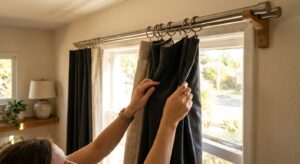
- Install reflective window film or close blinds on south and west-facing upstairs windows between noon and 5 PM. Windows contribute 25% to 30% of summer heat gain, and blocking direct solar before it enters keeps the upstairs cooler by 3°F to 5°F without touching the attic.
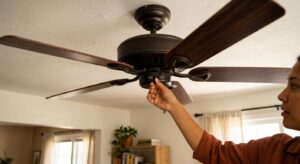
- Turn ceiling fans to counterclockwise rotation at medium speed in upstairs rooms. Fans create a wind-chill effect that makes 78°F feel like 74°F, allowing you to raise the thermostat setpoint by 4°F with no comfort loss.
- Check that all soffit vents on the exterior eaves are clear of insulation and debris. Blocked soffits cut off the cool intake air an attic needs to flush heat, and clearing them takes five minutes and costs nothing.
- Start with air sealing before adding insulation. Use fire-rated caulk or intumescent sealant to fill gaps around every recessed light housing, plumbing stack, electrical wire penetration, and interior wall top plate you can access from the attic floor. This step alone can reduce air leakage by 15% to 20%.
- Install an insulation dam (a piece of rigid foam board cut to fit) at each soffit bay before adding insulation. This keeps blown-in or batt insulation from blocking the soffit intake vents you need for ventilation.
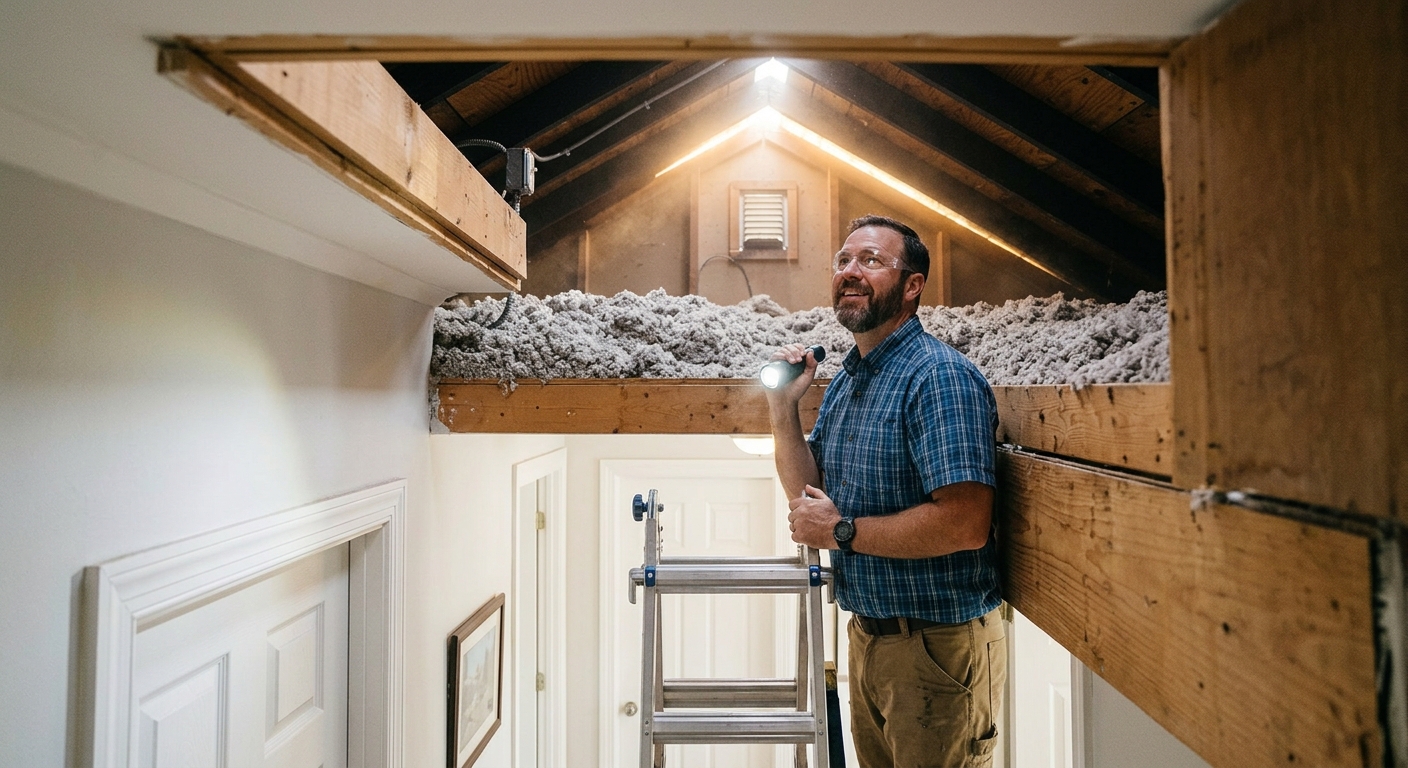
- Add blown-in fiberglass or cellulose insulation on top of existing attic insulation to bring your total depth to R-38 (approximately 12 inches of cellulose or 15 inches of fiberglass). Most home improvement stores rent blower machines for free with a minimum bag purchase of around 20 to 30 bags.
- Install a radiant barrier on the underside of your attic rafters using perforated reflective foil stapled every 12 inches. A radiant barrier reflects up to 97% of radiant heat and can reduce attic temperatures by 20°F to 30°F on its own, cutting the cooling load by an additional 5% to 10%.
- Check your attic’s ventilation balance. Count net free area of soffit vents versus ridge or roof vents. For a 1,500 sq ft attic you need roughly 10 square feet of net free area split evenly between intake and exhaust. Add baffled soffit vent inserts or a ridge vent extension if the ratio is off.
- Replace an existing passive roof vent with a solar-powered attic fan (approximately $150 to $250) if ventilation area is adequate but airflow is still low. These fans move 800 to 1,200 CFM of hot air out of the attic at zero operating cost and can drop attic temperatures by 20°F to 40°F.
- Schedule a professional energy audit ($150 to $400, often subsidized by utilities) with a blower door test and infrared camera scan. This identifies every major bypass leak and insulation void before you spend money on the fix, ensuring contractor work addresses actual problem areas.
- Hire an insulation contractor to perform professional air sealing using two-part spray foam on all major penetrations, top plates, and the attic hatch or pull-down stair assembly. Spray foam seals irregular gaps that caulk and batt cannot address, cutting air leakage by up to 40%.
- Have blown-in insulation professionally installed to R-49 to R-60 in climates with 2,000 or more cooling degree days. Depth gauges are installed to verify coverage and the contractor will provide a certification card for permit and rebate documentation.
- Request that the contractor install a continuous ridge vent system with proper baffles at every rafter bay if your home lacks one. A continuous ridge-to-soffit ventilation path can flush the entire attic air volume every two to three minutes on a breezy day, keeping peak temperatures 30°F to 40°F lower than a poorly ventilated attic.
- Ask about air sealing and insulating the attic knee walls and stairwell ceiling if your home has a finished bonus room or dormers above the second floor. These areas are often completely missed and account for disproportionate heat gain in homes with complex rooflines.
Why It Works: The Benefits
Bringing attic insulation from R-19 to R-38 combined with basic air sealing reduces cooling energy use by 20% to 30%, translating to $150 to $400 in annual savings for a typical 2,000 sq ft home in a warm climate.
Homeowners who add attic insulation and seal bypass leaks typically report a 6°F to 10°F reduction in the upstairs-to-downstairs temperature gap, making bedrooms comfortable without cranking the thermostat lower.
When the attic is no longer dumping heat into the living space, the AC cycles less frequently. Shorter run cycles reduce compressor wear and can extend equipment lifespan by two to four years.
Reducing the thermal mass effect in upstairs ceilings means bedrooms cool down by 9 PM instead of staying warm until midnight, which directly improves sleep quality for households with second-floor bedrooms.
Homes with properly insulated and ventilated attics score higher on energy audits and appraisals. ENERGY STAR certified attic upgrades can add $1.50 to $2.00 of home value per $1 of energy savings they generate annually.
💰 Savings Impact by Action
Sealing attic bypass leaks around penetrations and top plates reduces conditioned air loss by up to 20% and is the highest-return step before adding insulation.
Bringing attic insulation from R-19 to R-38 reduces ceiling heat gain by 25% to 30%, directly cutting the cooling load on the AC system.
A reflective radiant barrier installed on rafter undersides reflects up to 97% of radiant heat and reduces cooling energy use by 5% to 10% in hot climates.
Correcting soffit-to-ridge ventilation to code ratios can lower peak attic temperatures by 30°F to 40°F, reducing the thermal load driving heat through the ceiling by up to 15%.
A solar-powered attic fan exhausting 1,000 CFM of hot air reduces peak attic temperature by an additional 20°F at zero operating cost, trimming cooling bills by 5% to 8%.
🏠 Key Concepts Explained
The Science Behind It
Your roof absorbs solar radiation all day, heating the sheathing and framing to temperatures that can exceed outdoor air temperature by 50°F to 70°F. That energy moves in two ways: through convection (hot air circulating inside the attic space) and through radiation (infrared energy emitting from hot surfaces directly toward the cooler ceiling below). Standard fiberglass insulation slows conductive and convective heat transfer well, but it does almost nothing to block radiant heat because it is not a reflective surface. That is why an attic can feel brutally hot even when insulation is present.
The second physics problem is thermal mass and time lag. Wood framing, OSB sheathing, and the gypsum board of your ceiling absorb heat energy throughout the day like a slow battery charging. By 6 PM, even as outdoor temperatures begin to drop, these materials are at peak stored energy and begin radiating that heat downward into your living space. This time-lag effect explains why upstairs rooms hit their highest indoor temperature around 8 PM to 10 PM, hours after the sun has set. Adding more insulation mass slows the rate of this charge-and-discharge cycle, reducing peak indoor temperatures and the dreaded late-night heat release.
Ventilation addresses the convective side of the problem. When soffit vents admit cooler exterior air at the eave level and ridge vents exhaust hot air at the peak, a natural thermal chimney effect (driven by the same stack-effect physics that makes hot air rise) continuously flushes the attic. A well-ventilated attic on a 95°F day might sit at 110°F to 115°F instead of 140°F to 150°F. That 30°F to 40°F difference in the attic dramatically reduces the temperature gradient driving heat into your living space, giving your insulation a far easier job and your AC a fighting chance.
Frequently Asked Questions
▼ I added insulation but the upstairs is still 8 degrees hotter than downstairs. What am I missing?
Insulation alone rarely solves the problem if air sealing was skipped first. Conditioned air escaping through bypass leaks around recessed lights and wall top plates creates a pressure imbalance that overwhelms insulation. Go back and seal every penetration with fire-rated caulk or spray foam before assuming the insulation level is the issue. Also verify that soffit vents are not blocked by the new insulation.
▼ My AC runs constantly all afternoon but the upstairs never gets below 78°F. Is my AC undersized?
Before blaming the equipment, rule out attic heat load first, because an attic at 145°F can add two to three tons of effective cooling load to a home that only has a two-ton system. Insulate and ventilate the attic, then re-evaluate over two to three weeks of similar weather. If temperatures still lag, request a Manual J load calculation from an HVAC contractor to determine if sizing is genuinely the problem.
▼ Can I just install a powered attic fan and skip the insulation?
A powered attic fan alone is not sufficient and can actually worsen things if your attic is not well-sealed from the living space. By depressurizing the attic, the fan can pull conditioned air up through ceiling bypasses, increasing your cooling load. Always air seal first, ensure soffit vents provide adequate makeup air for the fan, and treat ventilation as a complement to insulation rather than a replacement.
▼ How long after making these changes will I see a difference on my electricity bill?
You will notice comfort improvement within 24 to 48 hours on a hot day. Measurable bill savings appear on the first full billing cycle after the work, typically 15% to 25% lower for that month compared to the same month the prior year. Compare bills to the same period in the previous year rather than the prior month to account for seasonal variation.
▼ My house is a single-story ranch. Does this advice still apply?
Yes, and the impact can be even more direct. In a single-story home the entire ceiling is in contact with the attic, so attic heat affects every room rather than just the upstairs. The same sequence applies: air seal first, then add insulation to R-38 or higher, then verify ventilation. Ranch homes often see some of the biggest percentage improvements from attic work because there is no buffer floor between the living space and the heat source.
Quick Tips
- Use a laser infrared thermometer to measure your attic floor surface and ceiling drywall from below before and after improvements. It is the fastest way to confirm the fixes are actually working.
- If you add a solar attic fan, install it on the north or east slope of the roof so the panel still captures indirect light without overheating itself or becoming a visual eyesore from the street.
- Cellulose blown-in insulation is made from recycled paper and is slightly better at blocking air movement between fibers than fiberglass. In leaky older attics it often outperforms fiberglass batt at the same R-value rating.
- Paint your attic hatch cover with reflective white paint or line it with a foil-faced rigid foam board. The hatch is typically zero insulation and direct thermal contact between your finished ceiling and attic air.
Variations for Your Situation
- Apartment or Renter: If you live on the top floor of an apartment or rental and the attic is not your responsibility, focus on what you can control. Install blackout cellular shades on south and west windows ($25 to $60 per window) to cut solar gain by 40%. Use a window unit or portable AC with a timer to pre-cool bedrooms before peak attic heat builds in late afternoon. A box fan exhausting hot air out a north-facing window in the evening creates cross-ventilation that drops indoor temps by 4°F to 6°F without any landlord involvement.
- Tight Budget (Under $50): Focus on free and near-free actions first. Clear all soffit vents from outside with a brush. Install a pre-cut foam attic hatch cover ($30 to $40). Apply reflective window film to the two or three windows that get the most afternoon sun ($15 to $20 per window). Run ceiling fans counterclockwise. These steps combined can reduce the temperature gap by 3°F to 5°F at minimal cost, and they make every future upgrade more effective.
- Older Home (Pre-1980): Homes built before 1980 often have original R-11 to R-19 insulation that has settled and degraded, and attic bypasses that were never addressed because air sealing was not standard practice. Have an energy auditor identify knob-and-tube wiring before any insulation work. Prioritize air sealing even more heavily than in newer homes, as leakage rates can be two to three times higher. Some utilities offer free or subsidized weatherization programs specifically for homes in this age range. Check with your local utility’s low-income or older home weatherization program before paying out of pocket.