A cold snap does not care whether your insulation is up to the job. When outdoor temps drop 30 or 40 degrees in a single day, the thermal envelope of your home gets stress-tested in real time. If your attic insulation is thin, your crawl space is unprotected, or your walls are full of hidden gaps, your furnace will run almost continuously just to keep up, and your energy bill will reflect every degree of heat that escaped.
The good news is that most insulation vulnerabilities are predictable and fixable. Attics account for up to 25% of a home’s total heat loss, according to the U.S. Department of Energy. Add in drafty rim joists, uninsulated basement band joists, and gaps around pipes and wires, and a typical older home can lose 30 to 40% of its conditioned air before it ever reaches the living space. Addressing even a few of these problem areas before a cold snap can meaningfully reduce how hard your heating system has to work.
This guide walks you through the most impactful insulation checks and fixes you can do in a weekend or less. You will find a quick triage approach for immediate results, a deeper DIY upgrade path, and guidance on when a professional energy audit or insulation contractor makes more sense. Whether you have an afternoon or a full weekend, there is something here that will make a real difference when the temperature drops.
What You’ll Need
Click on an item below to shop for the recommended items for this recipe on Amazon.
As an Amazon Associate, we earn from qualifying purchases.
How to Do It
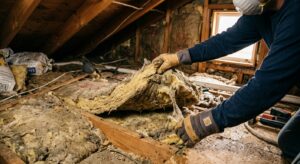
- Check your attic hatch first: lift it and look at the insulation depth. If you can see or nearly see the ceiling joists, your R-value is likely below R-19. Lay a pre-cut piece of rigid foam board (R-10) directly on top of the hatch cover and tape the edges with foil tape to add immediate resistance.
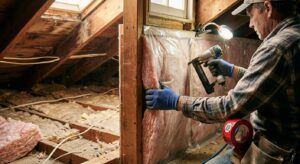
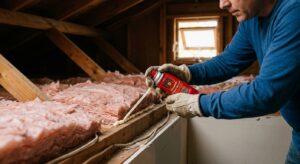
- Walk your attic perimeter with a flashlight and look for gaps where the top plate of the wall meets the attic floor. Stuff these with fiberglass batt scraps or seal them with a can of low-expansion spray foam, which costs about $8 and seals dozens of small gaps.
- Go to your basement or crawl space and visually inspect the rim joist, the horizontal framing member sitting on top of your foundation wall. If it is exposed wood with no insulation, press cut-to-fit rigid foam board (2-inch thick, R-10) into each bay and seal the edges with foam or caulk. This is one of the single highest-return insulation tasks in any home.
- Check all attic bypasses: the areas where plumbing pipes, electrical wires, and duct chases pass through the top floor ceiling into the attic. Use a caulk gun with fire-rated caulk or low-expansion foam to seal these penetrations before air sealing compound cures too slowly in cold temps.
- Inspect the weatherstripping on your attic hatch door or pull-down stairs. Replace it with self-adhesive foam tape if it is cracked, compressed, or missing. This costs under $10 and takes 10 minutes.
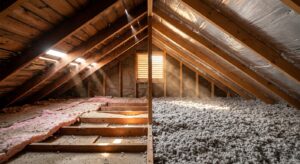
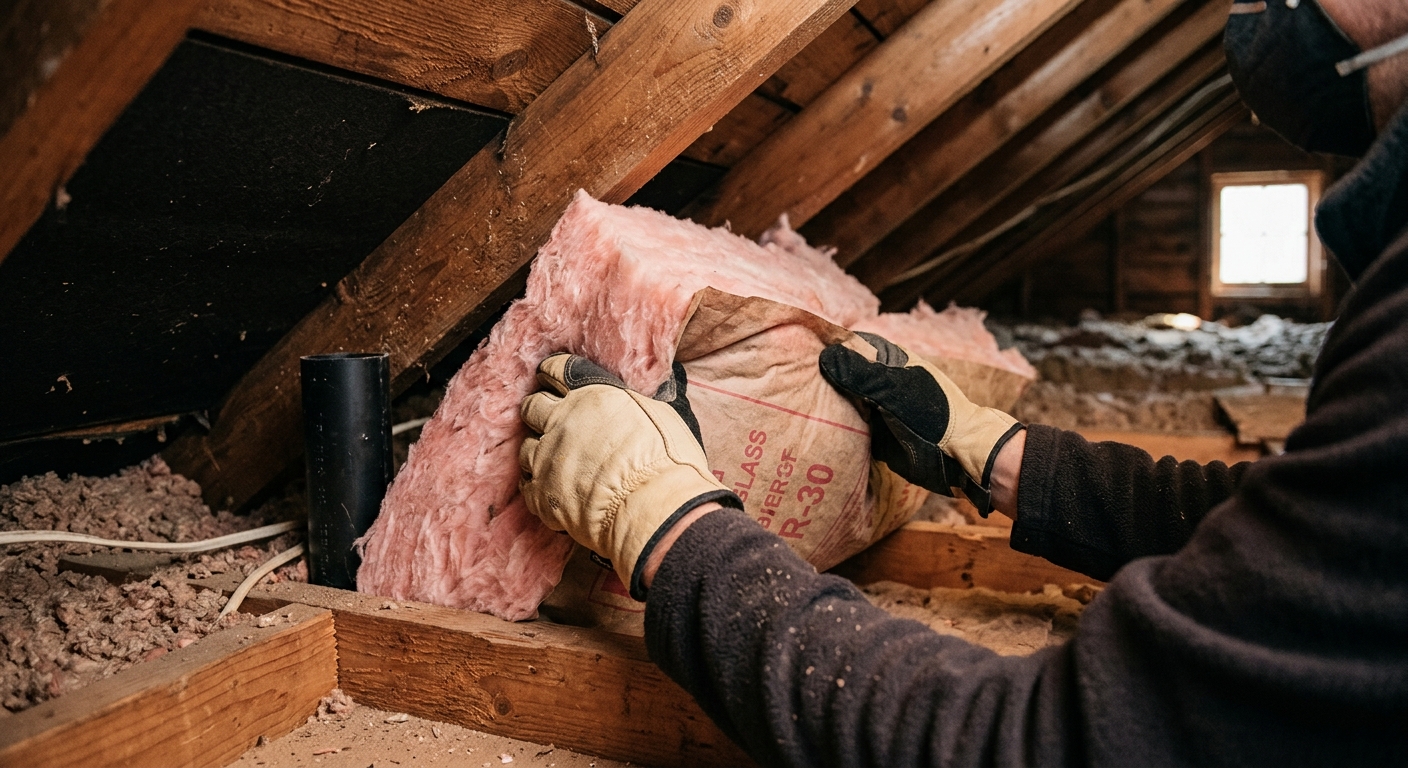
- Measure your attic square footage and existing insulation depth. Calculate the additional R-value needed to reach R-38 for most of the U.S. or R-49 to R-60 for climate zones 6 and 7. Blown-in cellulose or fiberglass insulation is the most practical DIY choice for attic floors and many stores offer free blower rental with purchase of a minimum quantity of bags.
- Before adding blown insulation, install attic baffles (cardboard or foam baffles stapled to the rafters) at every eave to maintain a clear air channel from the soffit vents to the attic ridge. Without baffles, added insulation blocks soffit ventilation and can cause moisture damage and ice dams.
- Seal all major attic bypasses with fire-rated caulk or two-part foam before blowing in insulation. This step alone can reduce air infiltration by 15 to 20% and makes the subsequent insulation far more effective since insulation stops conduction but not air movement.
- Install blown-in insulation to the target depth, using depth markers (wooden stakes with depth lines marked in inches) placed every 50 to 100 square feet so you can confirm even coverage. For R-38 using cellulose, you need approximately 10 to 11 inches of settled material.
- Return to the rim joist and install cut-to-fit 2-inch rigid foam (R-10) in every bay around the full perimeter of the basement. Seal all four edges of each piece with canned foam or acoustical sealant. For extra performance, add a second 2-inch layer for R-20, which meets code in many cold climates.
- If you have a vented crawl space, staple unfaced fiberglass batts between floor joists above the crawl space with the insulation held up against the subfloor. Use wire insulation supports or chicken wire to hold batts in place. This adds R-19 to R-21 under the living space floor at a cost of roughly $0.50 to $0.80 per square foot.
- Schedule a home energy audit with a BPI-certified auditor or through your utility company’s rebate program. The auditor uses a blower door test to measure your home’s actual air leakage in ACH50 (air changes per hour at 50 pascals). Most older homes test at 8 to 15 ACH50; modern efficient homes target 3 or below.
- Review the audit report and prioritize upgrades by cost per energy unit saved. Attic air sealing and insulation typically top the list, followed by rim joists, basement walls, and wall insulation. The auditor can also identify issues like missing insulation inside finished walls that you cannot detect visually.
- Hire an insulation contractor to dense-pack existing wall cavities with cellulose if your walls are uninsulated. This is done by drilling small holes in the exterior or interior, inserting a fill tube, and blowing in material under pressure to fill the cavity completely. It raises wall R-value from near zero to R-13 and costs $1.50 to $3.00 per square foot.
- Ask about spray foam for rim joists and band joists if your contractor offers it. Closed-cell spray foam at 2 inches delivers R-12 to R-14 with a built-in air barrier, combining two upgrades in one application and often performing better than cut-and-cobble rigid foam over the long term.
- Check for available rebates before signing contracts. ENERGY STAR and the Inflation Reduction Act offer a 30% federal tax credit (up to $1,200 per year) for insulation and air sealing improvements, and many state and utility programs stack on top of that, dramatically shortening payback periods.
Why It Works: The Benefits
Bringing attic insulation from R-11 to R-38 can reduce heating energy use by 15 to 25% annually, according to DOE estimates. Combined with air sealing, total savings can reach 30% in a single heating season.
Proper insulation eliminates the cold floors, drafty corners, and temperature swings between rooms that are common in under-insulated homes, reducing the gap between the thermostat setpoint and what you actually feel by several degrees.
When heat loss is slowed, your furnace runs fewer and shorter cycles. This extends equipment life and can reduce the likelihood of a mid-winter breakdown when demand on HVAC systems peaks.
Insulating rim joists, crawl spaces, and areas near exterior walls keeps those zones above freezing during cold snaps, directly reducing the risk of burst pipes that can cost $5,000 to $15,000 in damage.
Sealing the air leaks that accompany poor insulation reduces the infiltration of outdoor allergens, combustion gases from attached garages, and moisture-laden air that can feed mold growth inside wall cavities.
💰 Savings Impact by Action
Upgrading attic insulation from R-11 to R-38 reduces heating energy loss through the ceiling by up to 25% annually according to DOE modeling.
Sealing attic bypasses and rim joists can reduce whole-home air infiltration by 15 to 20%, directly lowering the heating load on your furnace.
Insulating and air sealing the rim joist alone can account for 10% of a home’s total heat loss reduction since this zone is often completely uninsulated in older construction.
Dense-packing empty wall cavities with cellulose raises wall R-value from near R-1 to R-13, reducing wall heat transmission by up to 15% of total envelope loss.
Adding R-19 insulation under floors above vented crawl spaces reduces floor heat loss by 8 to 10% and eliminates cold-floor discomfort in first-floor rooms.
🏠 Key Concepts Explained
The Science Behind It
Heat always moves from warm to cold, and it does so through three mechanisms simultaneously: conduction (heat traveling through solid materials), convection (heat carried by moving air), and radiation (heat transmitted through space as infrared energy). Insulation primarily addresses conduction by trapping tiny pockets of air in its matrix so heat cannot easily pass through. However, if air can move freely through gaps in the building envelope, convection bypasses the insulation entirely, which is why air sealing and insulation must be treated as a system rather than independent upgrades.
The stack effect is the dominant driver of winter heat loss in multi-story homes. Because warm air is less dense than cold air, it rises continuously inside the home and escapes through any opening it can find near the ceiling level: attic hatches, recessed light fixtures, plumbing and electrical penetrations, and gaps at the top of interior partition walls. This creates a slight negative pressure at the lower levels of the home, drawing cold outside air in through cracks in the foundation, around basement windows, and through the rim joist. Sealing the top and bottom of this stack is what stops the convective loop and makes insulation work as intended.
R-value is additive, meaning that layering two R-19 batts gives you roughly R-38, and it is also consistent regardless of the material used to achieve it. A 10-inch layer of blown cellulose and a 10-inch layer of fiberglass both deliver approximately R-38, though cellulose’s slightly higher density gives it a marginal edge in blocking air movement within the insulation layer itself. The DOE’s recommended R-values range from R-38 in climate zone 3 (the Gulf Coast) up to R-60 in zones 6 and 7 (northern states and mountain regions). Every R-value point below that target is a gap in your home’s thermal armor that grows more costly every time a cold snap hits.
Frequently Asked Questions
▼ I added insulation to my attic but my heating bill barely changed. What went wrong?
The most common reason is that air leaks were not sealed before the insulation was added. Insulation resists heat conduction but does not stop air moving through gaps around penetrations, attic hatches, and wall top plates. Go back into the attic and look for any visible gaps or daylight coming from below, then seal them with foam or fire-rated caulk before expecting the insulation to do its full job.
▼ How do I know if my walls have any insulation at all without tearing them open?
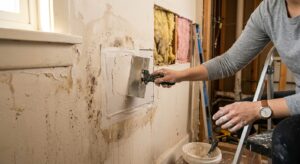
Remove the cover plate from an exterior wall outlet or switch box and shine a flashlight into the gap around the electrical box. If you see a pink, yellow, or gray material, insulation is present. If you see empty dark space, the cavity is likely empty. A thermal imaging camera or an infrared thermometer scan of the wall surface during cold weather is more definitive and many energy auditors include this in a standard audit.
▼ Can I add blown-in insulation on top of my existing batts in the attic?
Yes, in most cases this is the recommended approach. Leave the existing batts in place and blow cellulose or fiberglass over them to reach your target depth. The exception is if the existing batts are wet, moldy, or heavily compressed, in which case they should be removed first since compressed insulation loses R-value and wet insulation can harbor mold.
▼ My crawl space already has insulation between the floor joists but the floors still feel cold. Why?
Fiberglass batt insulation in crawl spaces is notorious for falling down over time, leaving gaps and losing contact with the subfloor above. Check that every batt is still in full contact with the subfloor and that none have sagged or fallen. If the crawl space is vented and the batts look intact, the cold floors may be driven by cold air movement through the crawl space itself, in which case encapsulating the crawl space with a sealed vapor barrier and closing foundation vents is a more effective long-term solution.
▼ Is it worth insulating before a cold snap if the temperatures are already dropping?
Absolutely, even partial improvements deliver real savings the same day they are installed. Start with the fastest, highest-impact fixes: sealing the attic hatch, foaming rim joist gaps, and stuffing large attic bypasses. These take two hours and can reduce heat loss measurably within the first cold night. More comprehensive work can follow in the next weather window.
Quick Tips
- Check your insulation depth in early fall before temps drop, when attic work is still comfortable. Attic temperatures can exceed 120 degrees Fahrenheit in summer and fall to below freezing in winter.
- Use a laser thermometer to scan your ceiling and floor surfaces from inside the living space. Cold spots below 60 degrees Fahrenheit on an interior ceiling surface during winter almost always indicate missing or damaged insulation directly above.
- Insulate your attic access hatch or pull-down stairs with a pre-made insulated cover box. These cost $50 to $150 and address one of the most overlooked heat-loss points in a home since most attic hatches have zero insulation.
- Pay attention to exterior wall outlets and switch plates on outside walls. Remove the cover plate and press a lit incense stick near the opening to check for air movement, a sign of missing or settled wall insulation. Foam gaskets behind the plate cost under $1 each and take seconds to install.
Variations for Your Situation
- Apartment/Rental: Renters cannot modify attic or wall insulation, but they can address significant heat loss at the unit level. Focus on draft-proofing your front door and windows with removable rope caulk (under $5 and peel-off in spring), placing door draft stoppers, and using insulating cellular window shades which can reduce window heat loss by up to 40%. If your unit has a basement or exposed floor, request that management address crawl space insulation, framing it as a habitability and pipe-freeze concern.
- Tight Budget (under $50): Prioritize the rim joist and attic hatch since these are the two highest-return spots per dollar spent. A can of spray foam ($8), a roll of foil tape ($10), and a sheet of 2-inch rigid foam board ($25 to $30 cut into pieces) can address both and reduce heating costs by 8 to 12% on their own. Skip blown-in insulation until you have the budget and focus entirely on stopping air movement first.
- Older Home (pre-1980): Homes built before 1980 often have vermiculite insulation (potentially asbestos-containing), knob-and-tube wiring that cannot be covered with insulation per code, and no vapor retarder in the walls. Have a professional assess these conditions before any DIY insulation work. A BPI-certified energy auditor will identify code restrictions and hazardous materials, and many utility rebate programs cover audit costs for older homes specifically because the energy savings potential is highest.