Insulation is one of the highest-return investments you can make in your home, but the full list of potential upgrades, attic, walls, crawlspace, basement, rim joists, can feel overwhelming when your budget is tight. The good news is that not all insulation projects are created equal. Some deliver dramatic results for a few hundred dollars, while others cost thousands and barely move the needle on your energy bill.
The key is understanding where your home is losing the most conditioned air and heat, and tackling those spots first. Building scientists and DOE research consistently show that air sealing combined with attic insulation delivers the fastest payback of any envelope improvement, often recovering the cost within 1 to 3 years through lower heating and cooling bills. Knowing this lets you skip the guesswork and put your limited dollars exactly where they count.
This post walks you through a practical, budget-first framework for prioritizing insulation projects. Whether you have $50, $500, or $2,000 to work with, you will find a clear starting point, realistic savings numbers, and step-by-step actions you can take this weekend.
What You’ll Need
Click on an item below to shop for the recommended items for this recipe on Amazon.
As an Amazon Associate, we earn from qualifying purchases.
How to Do It
- On a cold or hot day, walk slowly through your home with your hand held near baseboards, electrical outlets on exterior walls, attic hatches, and around recessed lights. Drafts you can feel represent significant air leakage that bypasses insulation completely.
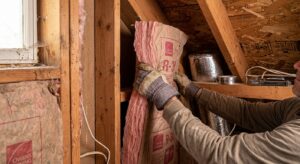
- Go into your attic with a flashlight and a tape measure. Measure the depth of existing insulation. Fiberglass batts at 6 inches are roughly R-19, blown cellulose at 10 inches is roughly R-38. DOE recommends R-49 to R-60 for most U.S. climate zones, so anything under 10 inches is a priority target.
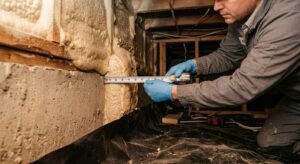
- Check your crawlspace or basement rim joists, the short wood framing sections where the floor meets the foundation wall. If you see bare wood or only thin fiberglass batts with no rigid foam, this is one of the highest-impact and lowest-cost DIY fixes available.
- Write down your three biggest findings ranked by size of exposed area and apparent airflow. This list is your priority order. Do not skip directly to purchasing materials until you have completed this step.
- Look up your utility’s insulation rebate program online or call the number on your bill. Many programs cover 10 to 30% of material costs and some offer free energy audits. Confirm eligibility before purchasing anything.
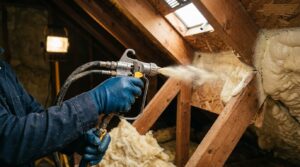
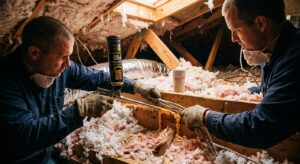
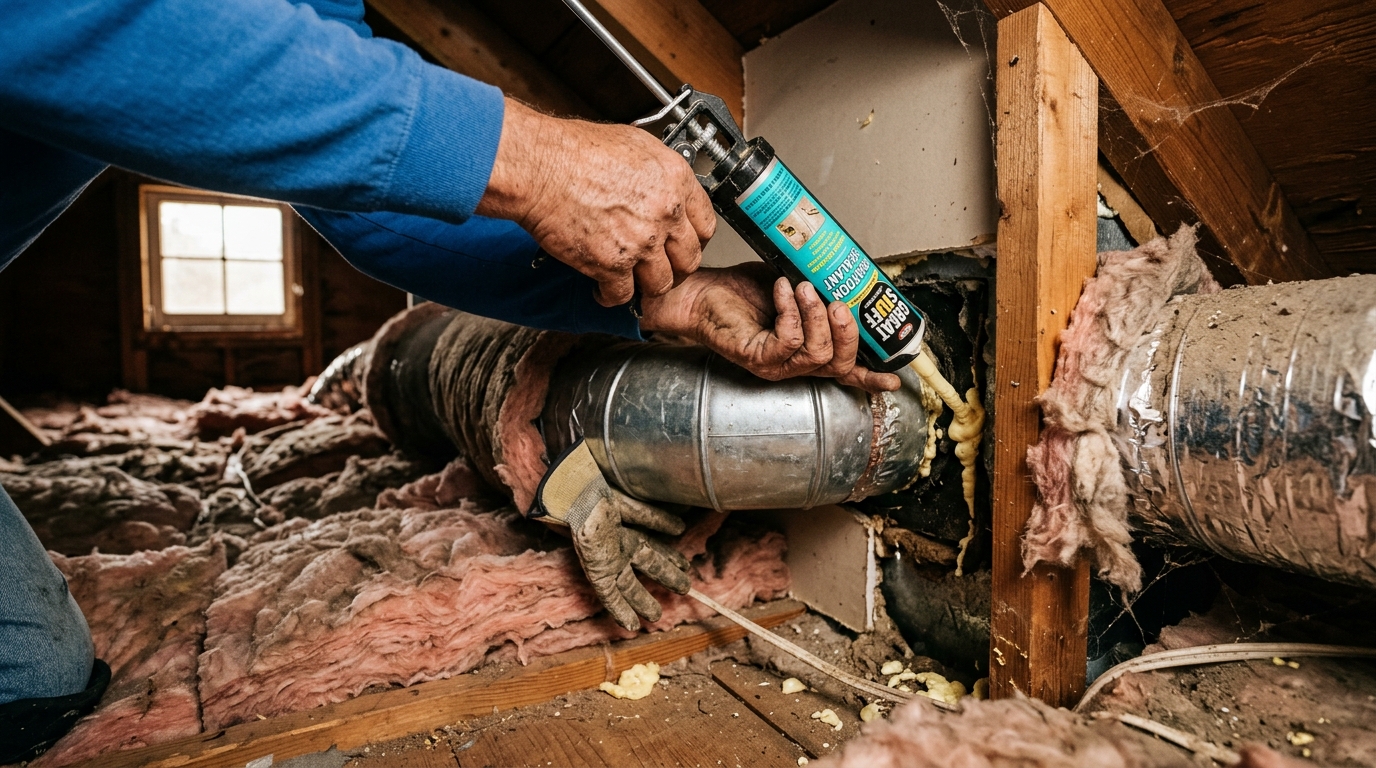
- Start with attic air sealing before adding any insulation. Use a can of low-expanding spray foam to seal around all plumbing penetrations, electrical boxes, and top plates visible from the attic floor. Use fire-rated caulk around any chimney or flue pipes. This step alone can reduce air leakage by 20 to 30% and costs under $30 in materials.
- Seal your attic hatch with adhesive-backed foam weatherstripping around the frame perimeter. For pull-down stairs, add an insulated cover box on the attic side, available for $50 to $100, or build one from rigid foam board. Attic hatches are often completely uninsulated and can account for a disproportionate share of heat loss.
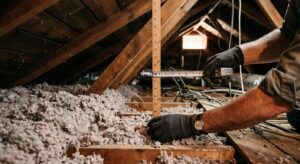
- Add blown-in insulation to your attic floor if existing depth is below 10 inches. Home improvement stores rent blower machines free with purchase of 10 or more bags of insulation. One bag of blown cellulose covers roughly 40 square feet at R-19 depth and costs about $12 to $15 per bag. A 1,200-square-foot attic needing to go from R-11 to R-38 typically requires 20 to 30 bags, or $240 to $450 in materials.
- Cut rigid foam board insulation to fit your rim joists. Use 2-inch polyisocyanurate foam board (R-13) cut to fit snugly between joists, then seal all four edges with low-expanding spray foam. This is far more effective than replacing old fiberglass batts, which sag and allow air movement. Budget about $80 to $150 for a typical house perimeter.
- After completing attic and rim joist work, reassess your budget. If funds remain, weatherstrip and insulate any exterior doors showing daylight around the frame or cold to the touch in winter. A $20 door sweep and $10 foam tape kit can reduce draft losses by 30 to 50% at each door.
- Track your energy bills for 2 to 3 months after completing the work and compare to the same period in the prior year. Adjust your thermostat settings to capture maximum savings and confirm the improvements are working as expected.
- Hire a certified energy auditor (look for BPI or RESNET credentials) to perform a blower door test. This pressurizes your home and reveals exactly where air is escaping, giving you a ranked list of targets rather than guessing. Audits typically cost $200 to $400 but many utilities subsidize or waive this fee.
- Request itemized quotes from at least two weatherization contractors. Ask them to quote attic air sealing and insulation, rim joist work, and dense-pack wall insulation separately so you can choose only what fits your budget rather than accepting an all-or-nothing package.
- Ask each contractor about utility rebates and whether they handle the rebate paperwork on your behalf. Many do, and it can reduce your net cost by $200 to $800 on a mid-sized project.
- If wall insulation is recommended, dense-pack cellulose blown through small holes in the siding or drywall is the least disruptive retrofit method and costs $1.50 to $3.50 per square foot. This is a professional-only job due to the specialized equipment and technique required to avoid voids.
- After work is complete, request a post-installation blower door test to confirm the air sealing results met targets. Reputable contractors include this or charge a small fee. It is your proof that the work was done correctly.
Why It Works: The Benefits
Properly sequenced insulation projects can cut annual HVAC energy use by 15 to 50% depending on your starting point. Homes with little or no attic insulation often see 30 to 40% reductions on heating bills alone after a single attic project.
Attic air sealing and insulation typically pays back in 1 to 3 years at current energy prices, making it one of the few home improvements that earns a return before most financing terms even end.
Rooms that are too hot in summer or too cold in winter are almost always suffering from inadequate insulation or air sealing at the boundary. Fixing the right spots eliminates cold floors, drafty corners, and overworked HVAC equipment.
When your building envelope holds conditioned air better, your furnace and AC run shorter cycles. This reduces mechanical wear and can extend equipment life by 3 to 5 years, delaying a $5,000 to $15,000 replacement cost.
Under the 2022 Inflation Reduction Act, homeowners can claim a 30% federal tax credit on insulation materials up to $1,200 per year. Many utilities also offer rebates of $0.10 to $0.50 per square foot for attic insulation, reducing out-of-pocket costs significantly.
💰 Savings Impact by Action
Sealing attic floor penetrations before adding insulation reduces whole-house air leakage by up to 25% and unlocks the full value of any insulation added on top.
Upgrading an under-insulated attic from R-11 to R-38 can cut heating and cooling losses through the ceiling by 30 to 40% depending on climate.
Insulating and air sealing rim joists with rigid foam reduces basement and crawlspace heat loss by 20 to 40% at one of the lowest costs per square foot of any project.
Dense-pack cellulose retrofit in uninsulated 2×4 walls delivers R-13 and reduces wall heat loss by roughly 15% of total building load in cold climates.
Weatherstripping exterior doors and insulating the attic hatch eliminates high-leakage points that can account for 10% of total air infiltration losses despite their small size.
🏠 Key Concepts Explained
The Science Behind It
Heat moves through building materials by three mechanisms: conduction (direct transfer through solid materials), convection (movement through air), and radiation (electromagnetic transfer across gaps). Insulation primarily resists conduction, but air leakage drives convective heat loss that completely bypasses even high-R-value insulation. This is why two homes with identical R-values can have drastically different energy bills depending on how well the air barrier is maintained. Sealing air leaks before adding insulation is not just good practice, it is the only way to capture the full value of the R-value you are paying for.
The concept of marginal return explains why budget prioritization matters so much. The relationship between R-value and heat loss follows a curve, not a straight line. Moving from R-0 to R-13 eliminates roughly 80% of conductive heat loss through that surface. Moving from R-13 to R-38 captures most of the remaining 20%. Adding more insulation beyond R-38 to R-60 saves only a fraction of that. This means your highest-impact dollar is always the one that goes into an uninsulated or severely under-insulated space, not into adding more to an already-adequate area.
Rim joists are among the most overlooked insulation opportunities in existing homes. They represent a large surface area of wood framing in direct contact with the cold foundation, often with no insulation or only a poorly fitted fiberglass batt. Closed-cell rigid foam or spray foam works best here because it simultaneously insulates and air seals, and it resists the moisture that concrete foundations release. Studies from Oak Ridge National Laboratory show that properly insulated rim joists can reduce basement heat loss by 20 to 40%, contributing meaningfully to whole-house efficiency at a fraction of the cost of larger projects.
Frequently Asked Questions
▼ I added attic insulation but my energy bills barely changed. What went wrong?
The most common cause is skipping attic air sealing before adding insulation. If air is still moving freely through penetrations in the attic floor, additional insulation has limited effect because convective losses dominate. Go back into the attic and look for bypasses around top plates, plumbing stacks, and electrical boxes, then seal them with spray foam or fire-rated caulk before reassessing.
▼ How do I know if my walls need insulation or if I should focus on the attic first?
Start with the attic in nearly every case. The attic has the largest temperature differential and the greatest accessible surface area, and DIY attic work is straightforward. Walls are a meaningful second priority, but retrofitting them requires either opening drywall or hiring a professional for dense-pack work. Get your attic to DOE-recommended levels first, then evaluate walls based on remaining budget and comfort issues.
▼ Can renters do any of these insulation projects without landlord permission?
Renters can safely do several no-modification fixes: foam tape on drafty window frames, door sweeps on exterior doors (removable with a screwdriver), and insulating outlet covers on exterior walls. These cost under $50 total and leave no permanent changes. For anything involving the attic or crawlspace, written landlord permission is required and you should ask your landlord to apply for utility rebates since the building benefits.
▼ My house is older with knob-and-tube wiring. Can I still insulate?
Not without an electrician’s sign-off. Many jurisdictions prohibit covering active knob-and-tube wiring with insulation because the wires rely on open air for heat dissipation. Have a licensed electrician assess the system first. If the wiring is inactive or replaced, you can proceed. This may add $500 to $2,000 to your project cost but it is non-negotiable from a safety and code standpoint.
▼ How long before I see the savings on my utility bill after doing these projects?
You should see a measurable difference within the first full billing cycle after the project, especially if you completed work before a heating or cooling season. A fair comparison is the same month in the prior year, adjusted for degree days if weather was unusually mild or severe. Most homeowners report clearly noticeable bill reductions within 1 to 3 months after completing attic and rim joist work.
Quick Tips
- Always air seal before you insulate. Adding more insulation over unaddressed air leaks is like putting a thick blanket over a screen window.
- Attic insulation and air sealing qualify for the 30% federal tax credit (up to $1,200 per year) under current IRA rules. Save all receipts and file IRS Form 5695.
- If your home was built before 1980, assume the walls have little to no insulation. Dense-pack retrofit is worth getting a quote for, especially if you plan to stay in the home more than 5 years.
- Check your local utility’s website before buying any materials. Many programs offer free insulation blower machines, subsidized materials, or contractor programs that cut costs dramatically for qualifying households.
Variations for Your Situation
- Apartment or Rental: Renters cannot touch the attic or crawlspace, but can still cut drafts and save meaningfully. Install foam gaskets behind all electrical outlet covers on exterior walls ($8 for a 10-pack), add adhesive door sweeps to exterior doors, and use interior window insulation film kits on single-pane windows ($25 to $40 per kit). Together these measures can reduce infiltration losses by 10 to 20% with no permanent changes and no landlord approval needed.
- Tight Budget Under $100: Focus entirely on air sealing, which costs almost nothing and delivers outsized returns. Buy two cans of low-expanding spray foam ($10 each), a tube of fire-rated caulk ($8), and foam weatherstripping for doors ($12 to $20). Spend a Saturday sealing every visible gap in your attic floor, around plumbing penetrations, and along door frames. This one step can cut air leakage by 15 to 25% at a total material cost under $60.
- Older Home Pre-1980: Assume you are starting from a low baseline. These homes typically have little or no wall insulation, attic insulation well below current standards, and significant air leakage from decades of settling and penetrations. Prioritize the attic first with air sealing and blown-in insulation to reach R-38 minimum. Then get a professional energy audit to identify whether dense-pack wall insulation is justified. Many state weatherization programs offer free or income-qualified services for homes in this category, so check your state energy office website before paying out of pocket.