You can feel it every winter: that cold ribbon of air sneaking in under the front door, around the frame, or through the keyhole. It is easy to dismiss as just a minor annoyance, but that gap is a direct connection between your heated living space and the freezing outdoors. According to the U.S. Department of Energy, air leakage through gaps around doors and windows accounts for 25 to 30% of a home’s heating and cooling energy use. Exterior doors are one of the biggest single contributors to that number.
The good news is that unlike replacing insulation or upgrading your HVAC system, fixing a drafty door is a genuinely beginner-friendly project. You do not need special skills, and most of the materials cost less than a dinner out. Whether your door is letting in a whisper of cold air or a noticeable draft you can see with a candle, there is a fix that works and a payback period measured in weeks, not years.
This guide covers everything from the fastest 20-minute patch job to a thorough 3-hour door overhaul. You will learn exactly which products to buy, how to measure and apply them correctly, and how to confirm your work actually sealed the gap. By the end, your exterior doors will hold heat the way they were designed to.
What You’ll Need
Click on an item below to shop for the recommended items for this recipe on Amazon.
As an Amazon Associate, we earn from qualifying purchases.
How to Do It
- Roll up a tightly packed bath towel or blanket and press it firmly against the bottom of the door on the interior side. This alone blocks the majority of under-door drafts and costs nothing.
- Buy a foam draft snake or door draft stopper (available at any hardware store for $8 to $12) as a more durable version of the towel method. Look for ones with a clip or strap that holds them to the door so they move with it.
- Inspect the door frame by holding a lit candle or incense stick 1 to 2 inches from the perimeter of the closed door on a cold windy day. Watch for the flame to flicker, marking exactly where cold air is entering.
- Press self-adhesive foam tape (available in rolls for $3 to $6) over any gaps identified in the frame. This foam compresses when the door closes and creates an immediate air seal. Focus on the top and sides first, since these gaps are the easiest to cover without removing hardware.
- Check your work by repeating the candle test after applying the tape. A steady flame confirms the draft is stopped.
- Remove the old weatherstripping from the door stop on all three sides of the frame by pulling it free or unscrewing it. Scrape away any adhesive residue with a putty knife so the new seal bonds to a clean surface.
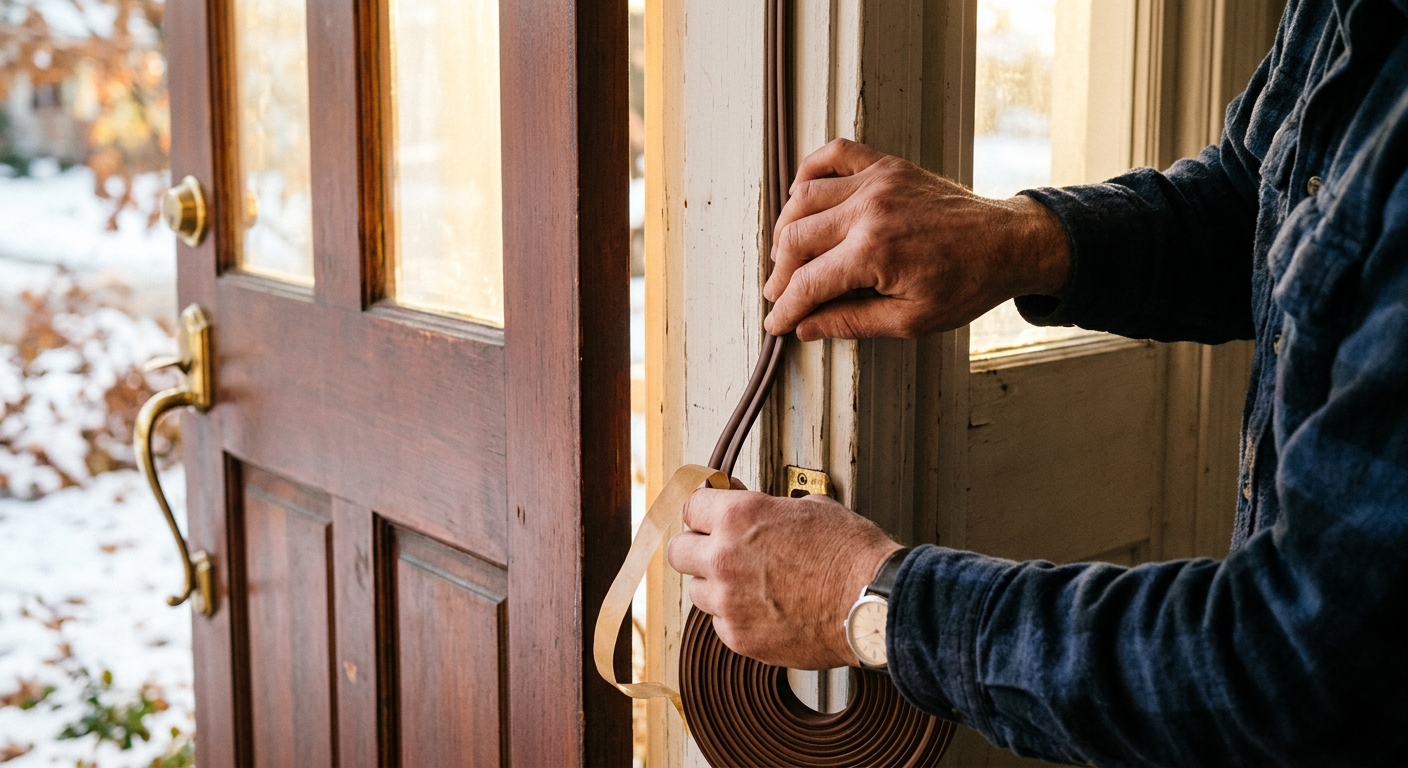
- Measure each side of the door opening (top and both sides) and cut your new V-strip or tubular rubber weatherstripping to length using scissors or tin snips. V-strip is more durable than foam tape and typically lasts 5 to 10 years versus 1 to 3 years for foam.
- Install the new weatherstripping by pressing the adhesive side into the door stop channel or screwing the flanged type directly into the wood, starting at one corner and working toward the other. Make sure the seal compresses slightly when the door is closed but does not prevent the door from latching.
- Remove your existing door sweep from the bottom of the door by unscrewing the two to four screws holding it in place. If there is no existing sweep, measure the door width and buy an automatic door sweep (about $15 to $25) which rises when the door opens and drops to seal when it closes, preventing wear on carpet.
- Install the new door sweep flush with the bottom of the door so it lightly contacts the threshold when closed. Test by sliding a piece of paper under the door. You should feel resistance across the full width of the door. Adjust the sweep mounting height until the paper test shows consistent contact.
- Apply paintable acrylic caulk around the exterior perimeter of the door frame where the brick mold or casing meets the siding. This seals the gap between the frame and the wall, which is a major infiltration path that weatherstripping alone cannot address. Smooth the caulk with a wet finger and let it cure for 24 hours before painting.
- Remove the old threshold by unscrewing the fasteners and prying it up from the subfloor. If it is nailed down, use a reciprocating saw to cut it in sections for easier removal without damaging the floor or door frame.
- Clean the subfloor area where the old threshold sat, removing old caulk and adhesive. Inspect the subfloor for any rot or moisture damage before proceeding. If rot is present, address it before installing the new threshold.
- Purchase an adjustable aluminum or oak threshold with an integrated vinyl seal (available at home centers for $40 to $80). These allow you to fine-tune the height for a perfect seal against the door bottom sweep.
- Install the new threshold by setting it in place and adjusting the height screws until the door closes firmly against the vinyl seal without excessive force. Drill pilot holes and fasten securely to the subfloor. Apply a bead of silicone caulk under the threshold flanges before final tightening to seal the joint between the threshold and the subfloor.
- Re-check the full door system with the candle test: door bottom, all four sides of the frame, and the exterior casing. At this stage you should detect no movement of the flame at any point around the closed door.
- If the door frame itself is bowed or the door sags, adjust the door hinges before declaring the project complete. Tightening or replacing hinge screws with longer 3-inch screws that reach the structural framing can correct a sagging door that refuses to seal evenly.
Why It Works: The Benefits
Properly sealing exterior doors can reduce total home air leakage by 10 to 20%, translating to $100 to $200 in annual savings for a typical home spending $1,500 per year on energy. Homes with multiple drafty doors or older weatherstripping see savings at the high end of that range.
Cold drafts near entryways make rooms feel 3 to 5 degrees colder than the thermostat reads, because moving air accelerates heat loss from your skin. Sealing doors eliminates that wind chill effect inside your home and makes the area near entryways genuinely comfortable again.
Stopping cold air infiltration around door frames prevents condensation from forming on interior surfaces, protecting wood framing, drywall, and flooring from rot and mold. This can prevent repair costs ranging from a few hundred to several thousand dollars over the life of the home.
When cold air infiltration is controlled, your furnace does not need to fire as often to maintain the set temperature. Less cycling means less wear on the heat exchanger, blower motor, and controls, potentially extending equipment life by 2 to 4 years.
Uncontrolled air infiltration brings in unconditioned outside air, pollen, dust, vehicle exhaust, and pollutants. Sealing door gaps gives you control over where ventilation air enters, which is especially important for allergy sufferers and homes near busy roads.
💰 Savings Impact by Action
Sealing gaps around all exterior doors can reduce whole-home air infiltration by up to 15%, directly lowering heating and cooling energy consumption.
Installing or replacing an automatic door sweep stops under-door drafts that account for up to 10% of total door assembly heat loss.
Caulking the perimeter where door casing meets siding eliminates hidden wall cavity infiltration pathways, reducing frame leakage by up to 8%.
A properly adjusted threshold with an intact vinyl seal can cut door assembly infiltration by up to 7% compared to a worn or misaligned threshold.
🏠 Key Concepts Explained
The Science Behind It
Air moves from areas of high pressure to areas of low pressure through any available opening, following the path of least resistance. In winter, the warm air inside your home is less dense than the cold air outside, which creates two simultaneous pressure effects. First, the stack effect pushes warm air upward and out through higher gaps while pulling cold air in through lower openings like door bottoms and thresholds. Second, wind striking the exterior of your home creates a zone of positive pressure on the windward face and negative pressure on the sheltered sides, driving air through every gap it can find. Your exterior door, with its four sides of weatherstripping and a threshold to seal, has more potential failure points than almost any other single element of the building envelope.
Weatherstripping works by creating a compressed gasket between the moving door and the fixed frame, eliminating the pressure pathway. The key word is compressed. Weatherstripping that merely touches the frame without compression allows air to channel around it under any meaningful pressure differential. This is why the foam tape sold in big-box stores often disappoints after a year or two: it loses its memory and no longer springs back to fill the gap. Dense rubber tubular weatherstripping, V-strip metal, and automatic door sweeps maintain compression over thousands of open-and-close cycles because they are engineered with more durable materials and a geometry that keeps them in firm contact with the opposing surface.
The exterior caulk bead around the door casing addresses a different but equally important pathway. The joint between the door frame and the surrounding wall sheathing is rarely airtight, even in newer construction. Air can enter behind the brick mold or casing, travel through the wall cavity, and emerge inside the home at electrical outlets, baseboard gaps, or floor joints. This pathway is invisible and impossible to address with interior weatherstripping alone. A properly applied bead of exterior caulk, renewed every 5 to 7 years as it ages and cracks, is the only way to stop this perimeter leakage at its source.
Frequently Asked Questions
▼ I installed new weatherstripping but the door still feels cold near the bottom. What did I miss?
The most common culprit after a weatherstrip install is the threshold seal, not the side and top strips. Close the door and check whether the door bottom sweep makes firm contact with the threshold across its entire width by using the paper slip test. If the paper slides through on one side, the sweep mounting screws need to be loosened and the sweep repositioned lower. Also check the exterior caulk bead around the casing, since perimeter leakage behind the frame will still cause cold air to appear at the door bottom even with a good sweep installed.
▼ Can renters fix drafty doors without landlord permission?
Yes, most draft-stopping measures are completely renter-safe and reversible. A door draft snake or foam draft stopper requires no installation at all. Self-adhesive V-strip weatherstripping can be applied and removed without damaging paint if you use a plastic scraper and adhesive remover at move-out. Save your receipt and take before-and-after photos. For anything requiring screw installation like a door sweep, ask your landlord in writing since that improvement adds value to the property and many landlords will approve it or do it themselves.
▼ How long before I see the savings on my energy bill?
Most homeowners notice a reduction within the first full billing cycle after sealing, typically 30 days. The savings are most visible during the coldest months when the temperature difference between inside and outside is greatest and your furnace would otherwise be running most frequently. For a home with two or three poorly sealed exterior doors, expect a $15 to $40 reduction in monthly heating costs depending on your local energy rates and how severe the drafts were.
▼ What if the gap around my door is uneven, bigger at the top than the bottom?
An uneven gap almost always means the door has sagged on its hinges or the frame has settled. Before replacing weatherstripping, tighten all hinge screws and replace any that spin freely with longer 3-inch screws that bite into the structural framing behind the door jamb. This often brings a sagging door back into square, evening out the gap. If the door is still uneven after tightening hinges, you may need to plane the high spots or have the door rehung by a carpenter before weatherstripping will seal evenly across the full perimeter.
▼ My garage entry door leaks a lot of cold air into the house. Is it treated the same way?
Yes, treat your garage-to-house door exactly like any exterior door since an attached garage is essentially an uninsulated outdoor space in winter and that door is a major source of cold air into your living space. Apply the same weatherstripping and sweep approach described in this guide. One additional consideration: ensure the door is fire-rated (solid core, no gaps) since garage-to-house doors have building code requirements for fire separation. Do not replace a fire-rated door with a standard hollow-core door even if the drafts seem worse.
Quick Tips
- Replace weatherstripping on a mild weather day so the door frame is at a middle temperature and the wood is not contracted by extreme cold, giving you a more accurate gap measurement.
- If your door has a mail slot, it is one of the largest single draft sources on any door. Install a mail slot cover with a spring-loaded flap on the interior side to block airflow when mail is not being delivered.
- Keyholes in older deadbolts can leak measurable amounts of cold air. A simple keyhole cover plate with a spring flap (available for under $5) eliminates this often-overlooked infiltration path.
- Check your door sweep annually in early fall by sliding a dollar bill under the closed door at several points across the width. If it slides freely anywhere, the sweep needs adjustment or replacement before heating season begins.
Variations for Your Situation
- Apartment/Rental: Focus on tool-free solutions that leave no marks. A weighted door draft stopper ($10 to $20) handles under-door gaps immediately. For frame gaps, 3M Indoor Window Insulator Kit plastic film applied to the interior door frame area can block drafts without damaging paint. Ask your building manager to inspect door seals, since in most jurisdictions landlords are legally required to maintain weatherstripping as part of habitability standards.
- Tight Budget (under $50): Start with a candle draft test to identify the single worst door in your home and focus all resources there. A $6 roll of foam tape for the frame sides and top plus a $12 door sweep for the bottom covers the complete perimeter of one door for under $20. Improving one badly leaking door delivers most of the savings at a fraction of the full-house cost. Use rolled towels on secondary doors until budget allows proper weatherstripping.
- Older Home (pre-1980): Homes of this era often have original wood door frames that have been painted over many times, making the door stop channel shallow or irregular and causing adhesive weatherstripping to fail quickly. Use screw-on V-strip or tubular weatherstripping rather than peel-and-stick products. Also inspect the exterior brick mold for cracks and gaps filled with old hardened caulk. Remove all old caulk with a utility knife and recaulk fresh, since 40-year-old caulk is certain to have failed and is a larger infiltration source than the weatherstripping itself.