Most homeowners never think twice about the thin gap between their front door and the frame, but that small crack is doing serious damage to their energy bills. The U.S. Department of Energy estimates that air leaks through doors, windows, and other openings account for 25 to 40% of a home’s heating and cooling loss. Your exterior doors, especially older ones, are some of the biggest offenders. A worn or missing weatherstrip lets conditioned air escape and outside air infiltrate, forcing your HVAC system to work overtime 24 hours a day.
The good news is that weatherstripping is one of the highest-return home improvements you can make. Materials cost $30 to $60 for a standard exterior door, installation takes an afternoon with basic tools, and the annual savings typically land between $100 and $200 depending on your climate and energy rates. That puts the payback period at under six months in most cases. Compare that to a window replacement project that can take years to pay off, and weatherstripping looks like a no-brainer.
This guide walks you through everything you need to know: how to spot failing weatherstripping, which type of material works best for each part of the door, and how to install it correctly the first time. Whether you want a fast $0 fix today or a thorough DIY upgrade this weekend, there is a path here for you.
What You’ll Need
Click on an item below to shop for the recommended items for this recipe on Amazon.
As an Amazon Associate, we earn from qualifying purchases.
How to Do It
- Do the dollar bill test first: close the door on a dollar bill at several points around the frame. If you can pull it out without resistance, that section has a gap that needs sealing.
- Clean the door stop surfaces on the top and both sides of the frame with a damp cloth and let them dry completely. Adhesive will not stick to dirty or oily surfaces.
- Purchase self-adhesive closed-cell foam tape in 3/8-inch width. Open-cell foam absorbs moisture and degrades faster, so always choose closed-cell for exterior doors.
- Measure and cut lengths for the top of the door frame and both sides. Press the tape firmly onto the door stop, starting at a corner and working in one continuous strip to avoid gaps.
- Check the door sweep at the bottom. If you can see daylight under the door or feel a draft, slide a piece of paper under the closed door. If it moves freely, the sweep needs replacement or adjustment.
- Close the door and repeat the dollar bill test. The bill should have clear resistance at all points. If not, add a second layer of foam tape where the seal is still weak.
- Remove the old weatherstripping completely by pulling it away from the frame. Use a flathead screwdriver to pry out staples or pull out old adhesive-backed foam. Scrape any adhesive residue with a plastic scraper and clean the surface with isopropyl alcohol.
- Measure the door opening carefully: height of both side jambs and width of the top jamb. Add 2 inches to each measurement before cutting, so you can trim to exact fit rather than cutting short.
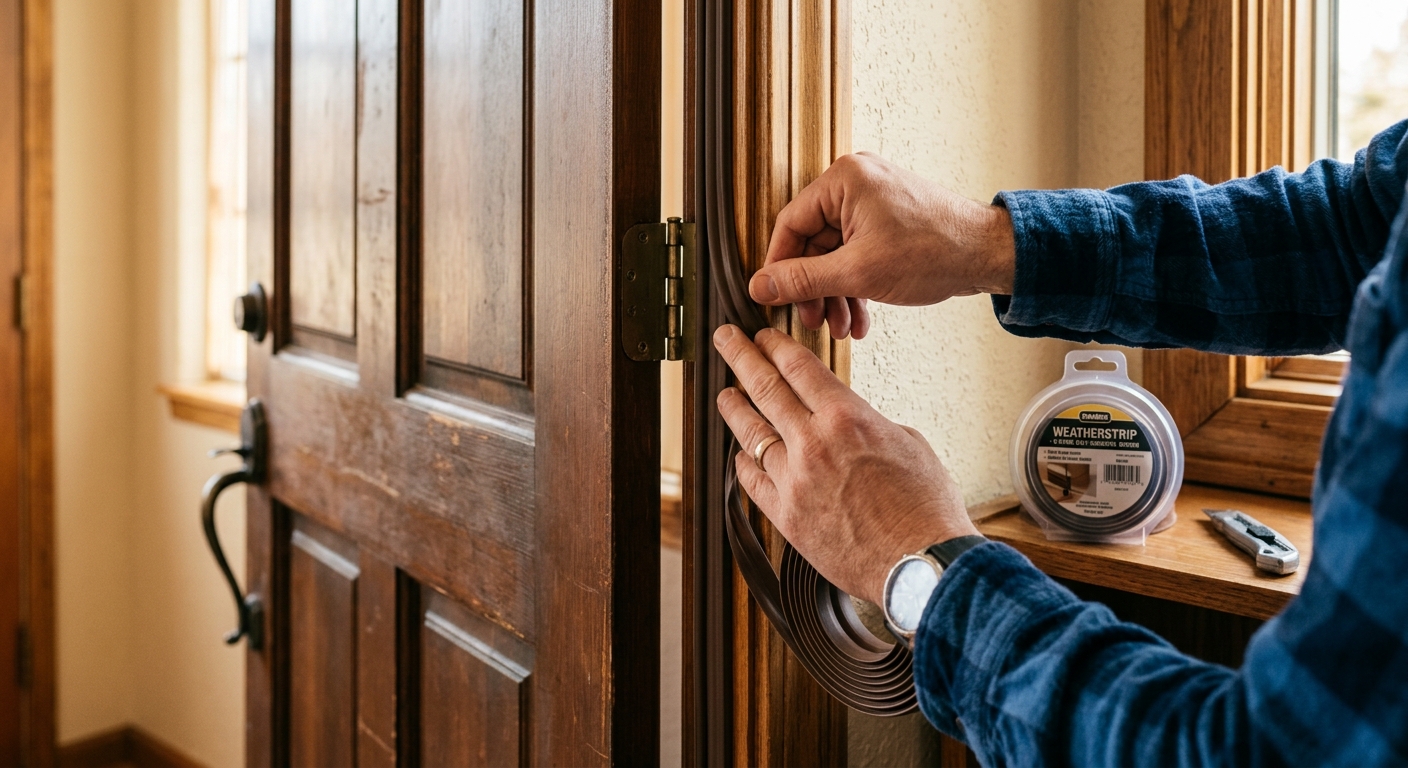
- Choose the right material. V-strip (tension seal) made of metal or durable plastic is the best long-term choice for the sides and top of wood door frames. Compression rubber bulb or D-profile works well on door stops for a tight seal against the door face.
- Install V-strip on the side jambs by pressing it into the gap between the door and the door stop with the open side of the V facing outward. Nail or staple every 2 inches if using metal strip, or press firmly if using adhesive-backed plastic.
- Cut and install the top jamb strip the same way. Overlap the corners slightly rather than cutting perfectly flush, to prevent any corner gaps.
- Replace the door sweep at the bottom. Choose an automatic door sweep that lifts slightly when the door opens (to clear carpet) or an adhesive-mounted heavy-duty rubber sweep for hard floors. Align it so it compresses lightly against the threshold when the door closes, then secure the screws.
- Test the completed seal by turning off interior lights at night and checking for light bleed around the frame from the outside, or repeat the dollar bill test at 6-inch intervals around the entire door perimeter.
- Schedule a home energy audit or hire a weatherization contractor. Many utilities offer free or subsidized audits, and the auditor will use a blower door test to quantify air leakage and pinpoint the worst areas.
- Have the contractor inspect the door slab itself for warping by holding a straightedge along the face of the door. A warped door cannot seal properly regardless of weatherstripping quality and may need rehinging or replacement.
- Request installation of a full compression weatherstrip kit with an interlocking threshold and door sweep rather than adhesive products, as professional-grade compression systems last 10 to 15 years and create a tighter seal.
- Ask the contractor to check and adjust door hinges for proper alignment. A door that does not hang square will compress the weatherstrip unevenly and wear it out in as little as one to two years.
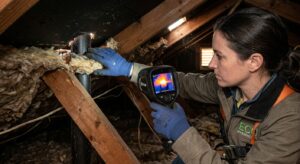
- Get a post-installation check with a thermal camera or blower door retest to confirm the seal is effective before paying the final invoice.
Why It Works: The Benefits
Properly sealed exterior doors can reduce heating and cooling loss through that opening by 30 to 40%, translating to $100 to $200 annually for a typical home with two to three exterior doors.
Eliminating cold drafts in winter and warm air infiltration in summer makes rooms near exterior doors noticeably more comfortable, reducing the hot and cold spots that frustrate many homeowners.
Every degree of air infiltration adds run time to your furnace or AC compressor. Sealing leaks means shorter, less frequent cycles, which can extend equipment life and reduce maintenance costs over time.
Gaps in door frames allow dust, pollen, humidity, and even pests to enter. A tight weatherstrip seal keeps outdoor contaminants out, which is especially valuable for allergy sufferers.
A properly compressed door seal acts as a modest acoustic barrier. Homeowners near busy streets often notice a 3 to 5 decibel reduction in exterior noise after installing quality foam or rubber compression weatherstripping.
💰 Savings Impact by Action
Sealing gaps around exterior doors reduces air infiltration through those openings by 30 to 40%, directly lowering heating and cooling load.
Replacing or adding a door sweep at the bottom gap alone accounts for roughly 15% of total door air leakage reduction since the bottom gap is typically the largest single opening.
The DOE estimates that comprehensive air sealing of doors, windows, and penetrations reduces total HVAC energy use by up to 20% annually.
Reducing air infiltration through door sealing can cut furnace and AC run time by 10 to 15%, extending equipment life and reducing maintenance frequency.
🏠 Key Concepts Explained
The Science Behind It
At the heart of weatherstripping science is a concept called air infiltration, the uncontrolled movement of air through gaps and cracks in a building envelope. Air moves from high pressure to low pressure, and your home constantly experiences small pressure differences caused by wind, the temperature-driven stack effect, and your HVAC system. Even a gap as narrow as 1/8 inch around a door perimeter adds up to a surprisingly large opening. A standard 36-inch door with a 1/8-inch gap on all four sides has roughly 18 square inches of total open area, which is comparable to leaving a window open several inches all winter long.
The stack effect is especially important for understanding why door drafts feel so severe in cold weather. Warm air is less dense than cold air, so it rises and escapes through upper-level gaps including the tops of door frames. As it escapes, it creates a slight negative pressure at lower levels, pulling cold outside air in through gaps at the door bottom and sides. This self-reinforcing cycle accelerates as the temperature difference between inside and outside increases, which is exactly why drafts feel worst on the coldest days. Sealing both the top and the bottom of a door is critical because they work as a pair in this airflow loop.
The material physics of weatherstripping compression matter more than most homeowners realize. A good seal depends on the weatherstrip material being compressed to roughly 20 to 30% of its original thickness when the door closes. Too little compression and air bypasses the seal. Too much and the door is hard to close and the material wears out prematurely. Closed-cell foam, rubber bulb seals, and metal V-strips each achieve this compression in different ways, which is why matching the material type to the specific part of the door (stop, jamb, or threshold) makes the difference between a seal that lasts one season and one that lasts a decade.
Frequently Asked Questions
▼ I just installed new weatherstripping but I can still feel a draft. What did I do wrong?
The most common cause is insufficient compression. Check that the weatherstrip is contacting the door face firmly at all points by doing the dollar bill test again. If the bill slides freely anywhere, that spot needs a thicker profile or a second layer. Also check the door sweep separately, as the bottom gap is often the biggest remaining leak even after the sides and top are sealed.
▼ My door is really hard to close after I added weatherstripping. Is that normal?
Some increased resistance is expected and normal with compression-style weatherstripping, but if the door requires a hard push or does not latch easily, the profile is too thick for your gap. Try removing one layer if you doubled up, or switch to a V-strip which creates less closing resistance than bulb or foam profiles. A door that fights you will wear out the weatherstrip and the latch hardware faster.
▼ How long will new weatherstripping actually last before I need to replace it again?
Quality rubber or EPDM compression weatherstripping lasts 5 to 8 years on a frequently used door and up to 10 years on a secondary door. Cheap foam tape typically lasts only one to two seasons. You can extend lifespan by wiping the weatherstrip clean once a year and applying a thin coat of silicone spray to rubber seals to prevent cracking from UV exposure.
▼ Can I weatherstrip my door if I am a renter without landlord permission?
Peel-and-stick foam tape and adhesive-backed door sweeps are generally considered reversible repairs that most landlords will not object to, and they leave no permanent damage if removed carefully. For anything involving screws or nails, check your lease or get written permission first. The quick fix approach in this guide is specifically designed to be renter-safe and easily removed at move-out.
▼ My door frame is old and the wood is uneven. Will standard weatherstripping still work?
Uneven wood frames are a real challenge because rigid V-strip cannot conform to surface irregularities. Switch to a compressible foam or rubber bulb profile that can bridge small surface variations. For severe unevenness or rot, fill low spots with exterior wood filler, let it cure fully, and sand smooth before installing the new seal. Rotted wood should be repaired or replaced before any weatherstripping will hold adhesive reliably.
Quick Tips
- Replace weatherstripping on all exterior doors at the same time so you can compare results and buy materials in bulk, typically saving 10 to 15% on cost.
- In climates with both hot summers and cold winters, inspect weatherstripping every fall before heating season starts and every spring. UV and temperature cycling are the main causes of premature degradation.
- If your door has a storm door in front of it, the weatherstripping on the storm door is doing most of the air sealing work. Keep that seal in good shape and your interior door weatherstripping is more of a secondary backup.
- For sliding glass doors, use a different strategy: pile weatherstripping along the top track and V-strip on the sides. The bottom track seal is separate and uses a specialized fin seal or brush strip designed for sliding contact.
Variations for Your Situation
- Apartment or Rental: Focus on peel-and-stick closed-cell foam tape ($5 to $10 at any hardware store) for the door stop and an adhesive-mounted door sweep ($10 to $15) for the bottom gap. These products require no tools and leave no damage, making them safe for most leases. Remove them carefully with a plastic scraper and adhesive remover when you move out. Together they can cut door air leakage by 40 to 60% and are absolutely worth the investment even for a short-term rental.
- Tight Budget (under $20): Start with only the door bottom since it is almost always the largest single gap. A $10 to $15 adhesive rubber door sweep from a hardware store takes 10 minutes to install and delivers the biggest bang per dollar. Next, do the dollar bill test to find the one or two worst spots on the frame and apply a single roll of closed-cell foam tape ($5 to $8) only there. This targeted approach can achieve 60 to 70% of the savings of a full replacement at a fraction of the cost.
- Older Home (pre-1980): Homes built before 1980 often have wood door frames that have shifted, settled, or experienced repeated paint buildup, creating irregular gaps that vary from nearly zero to 1/4 inch or more around the same door. Use a profile weatherstrip with a wider compression range such as a large D-profile or P-profile rubber seal rather than thin foam tape. Also check whether the door slab itself has warped by holding a straightedge across the face. Warped doors over 1/4 inch out of flat should be rehung or replaced before weatherstripping, as no seal can bridge that kind of gap consistently.