If one end of your home feels like a sauna while the other needs a sweater, or if you’re paying to condition rooms nobody uses, your HVAC system is working against you. Most central forced-air systems treat every room the same, blasting the same amount of conditioned air whether a room is occupied or not. That’s a massive inefficiency, and it’s the core problem that HVAC zoning is designed to fix.
Zoning divides your home into independently controlled areas, each with its own thermostat or sensor. Motorized dampers in your ductwork open and close to direct airflow only where it’s needed. The result is better comfort room by room, and real reductions in energy consumption. According to the U.S. Department of Energy, zoning systems can save homeowners up to 30% on heating and cooling costs, though actual results depend heavily on your home’s layout, existing ductwork, and how the system is used.
This post breaks down exactly what HVAC zoning costs for different home types and budgets, the two main paths to getting there (duct-based zoning versus ductless mini-splits), and an honest look at payback periods so you can decide whether it makes financial sense for your situation.
What You’ll Need
Click on an item below to shop for the recommended items for this recipe on Amazon.
As an Amazon Associate, we earn from qualifying purchases.
How to Do It
- Identify the 2 to 3 rooms or areas that are consistently too hot or too cold. These are your target zones for airflow adjustment.
- Install smart vent covers (such as Keen Home or Flair brand) in the rooms that receive too much conditioned air. These motorized vents connect to a smartphone app and can be scheduled or automated. Budget $80 to $130 per vent.
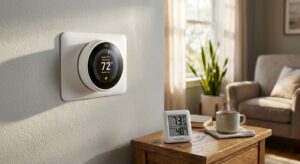
- Install a smart thermostat (Ecobee or Honeywell T6 Pro with remote sensors) in $150 to $250 range. Place remote sensors in the rooms that are hardest to condition, so the thermostat reads temperature where comfort matters most rather than only at the main unit.
- In the app or thermostat settings, create a schedule that weights the sensor readings toward occupied rooms. For example, weight the bedroom sensors at night and the living area sensors during the day.
- Partially close traditional manual dampers (the levers on duct boots or inline dampers in the basement) on branches feeding rooms that are always comfortable. Never fully close any vent. Aim for 20 to 30% restriction maximum.
- Monitor your HVAC system for any new noises such as whistling or banging over the first two weeks. These indicate excessive static pressure and mean you need to reopen some vents.
- Hire a licensed HVAC contractor with documented zoning system experience. Ask specifically whether they design duct systems to ACCA Manual D standards and whether they will install a bypass damper or use a variable-speed air handler to manage excess static pressure.
- Request a load calculation (ACCA Manual J) for each proposed zone before any equipment is ordered. This determines how much heating and cooling capacity each zone actually needs and prevents over- or undersizing.
- Have the contractor install a zoning control panel (brands include Honeywell TrueZONE, EWC Controls, or Arzel) that coordinates multiple thermostats with motorized duct dampers. Each zone gets its own thermostat.
- Confirm that a bypass damper or a variable-speed air handler is included in the design. Without one of these, a single-speed furnace or AC will build destructive pressure in partially closed ductwork.
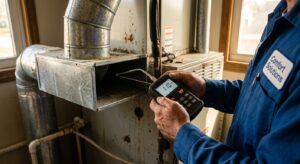
- After installation, ask the contractor to balance the system by measuring airflow at each supply register with an airflow hood or anemometer. Each zone should receive designed CFM within 10% of the target.
- Set each zone thermostat to a schedule matching occupancy. Use wider setbacks of 4 to 8 degrees in rarely used zones to maximize savings. Verify actual energy savings against your prior 12 months of utility bills after the first full year.
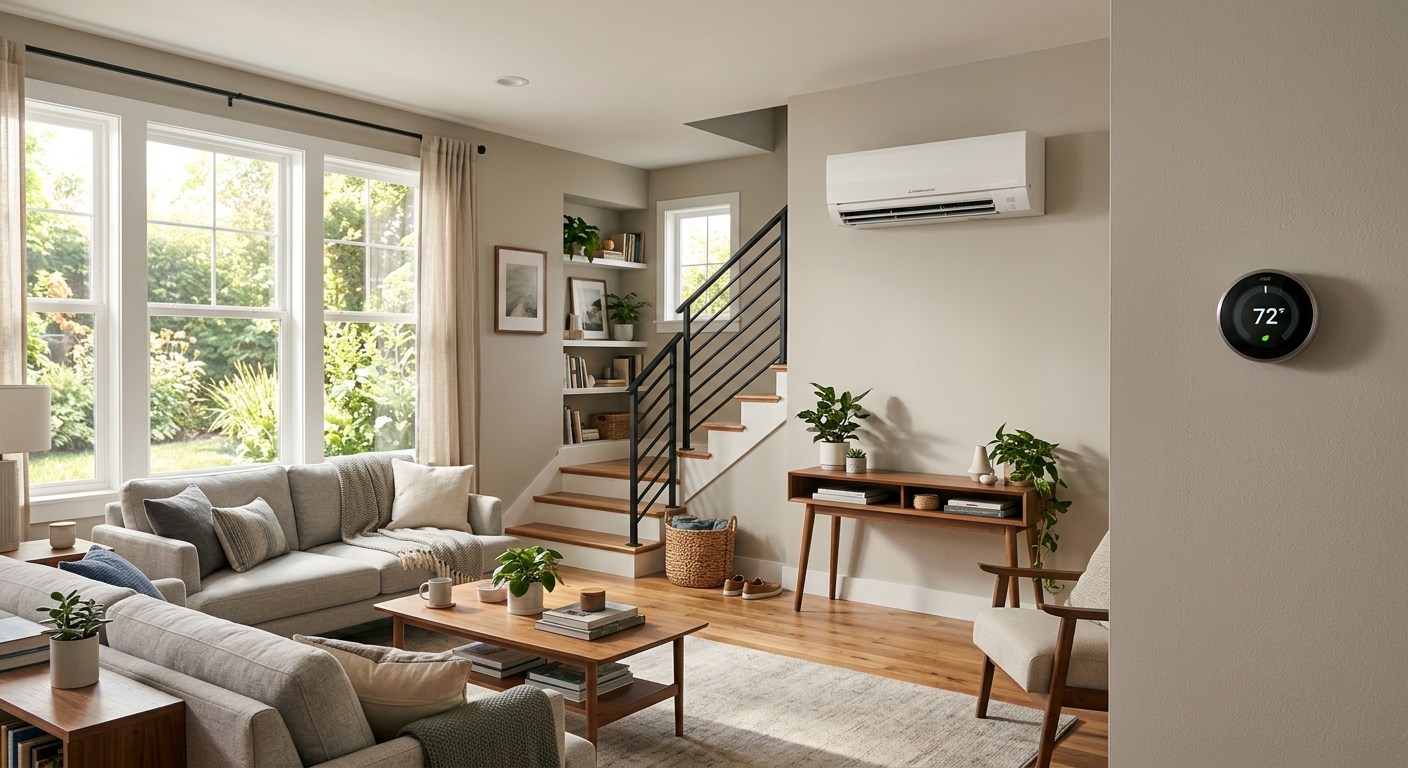
- Identify the zones you want to condition. Each zone gets a dedicated indoor air handler (wall-mount, ceiling cassette, or floor unit) connected by refrigerant lines to one outdoor compressor unit.
- Select a multi-zone mini-split system sized for your total load. Common configurations are 2-zone (18,000 to 24,000 BTU outdoor unit) and 4-zone (36,000 to 48,000 BTU outdoor unit). Brands with strong reliability records include Mitsubishi, Daikin, and Fujitsu.
- Hire a licensed HVAC contractor certified in mini-split installation. This work involves refrigerant handling, which requires EPA 608 certification. The contractor will core holes through exterior walls for refrigerant lines, drain lines, and electrical conduit.
- Ensure a dedicated 240V circuit is run to the outdoor unit by a licensed electrician if one does not already exist. This is typically included in installer quotes but confirm it.
- After installation, each indoor unit has its own remote or wall controller. Set up schedules or use the manufacturer app to create setback temperatures in unused zones. Mini-splits are most efficient at 68 to 78 degrees F, and setbacks of 4 degrees or more when a room is unoccupied yield measurable savings.
- File for the federal 30% tax credit (IRS Form 5695) for the portion of the system meeting ENERGY STAR efficiency requirements. Keep all receipts and the AHRI certificate from your installer.
Why It Works: The Benefits
The DOE estimates properly installed zoning systems save 15 to 30% on heating and cooling costs. For a home with a $2,400 annual HVAC bill, that’s $360 to $720 per year back in your pocket.
Zoning eliminates the hot-upstairs, cold-downstairs problem that plagues two-story homes, and lets each family member control the temperature in their own space without fighting over one thermostat.
Because the system conditions only what’s needed rather than running full-blast to overcome whole-house imbalances, compressor and blower run times can decrease, potentially extending equipment life by several years.
Multi-zone systems with individual air handlers or dedicated returns improve air circulation in specific areas, reducing humidity buildup and stale air in rooms that previously got poor airflow.
Ductless mini-split zoning systems in particular are increasingly recognized by appraisers and buyers as premium upgrades, with some real estate studies suggesting a return of 60 to 75 cents on the dollar in resale value.
💰 Savings Impact by Action
Setting unoccupied zones to a 6 to 8 degree setback reduces HVAC runtime for those areas by up to 30%, directly cutting heating and cooling energy.
Switching from a ducted system to ductless mini-splits eliminates the 25% of cooling energy the EPA attributes to duct leakage and conduction losses in unconditioned spaces.
Using remote room sensors with a smart thermostat to condition only occupied spaces saves an average of 12% annually compared to a fixed single-point thermostat.
Pairing zoning controls with a variable-speed air handler reduces blower energy consumption by up to 20% compared to a standard single-speed motor running at full power.
Delivering conditioned air only to zones with active demand reduces compressor cycling and improves system efficiency by 15% compared to whole-home single-zone operation.
🏠 Key Concepts Explained
The Science Behind It
The reason a single thermostat fails to keep an entire home comfortable comes down to the fact that every room has a unique thermal load. A room’s load is determined by its insulation levels, window area and orientation, air leakage, occupancy, and internal heat sources like electronics and lighting. A south-facing living room with large windows on a July afternoon may need three to four times more cooling capacity per square foot than a shaded north-facing bedroom. When one thermostat controls both, one room is always wrong.
Zoning addresses this by using motorized dampers to vary the volume of conditioned air delivered to each zone in proportion to its current load. The control panel reads temperatures from multiple thermostats and opens or closes dampers accordingly. This is fundamentally more efficient because the system only moves air where thermodynamic demand exists. The HVAC equipment runs fewer total hours, the refrigerant cycle operates at steadier, more efficient conditions, and the distribution system delivers air closer to where it is actually needed rather than mixing it throughout the house.
Ductless mini-splits take this a step further by eliminating the shared duct system entirely. Each indoor unit has its own refrigerant circuit and fan coil, so there is no pressure balancing problem and no duct heat loss, which accounts for 25 to 30% of cooling energy in a typical ducted system according to the EPA. Inverter-driven compressors in modern mini-splits also modulate refrigerant flow in tiny increments, maintaining a zone’s set temperature without the on-off cycling that wastes energy and creates the uncomfortable temperature swings most homeowners associate with conventional central air.
Frequently Asked Questions
▼ How much does HVAC zoning actually cost to install?
Ducted zoning systems typically cost $2,500 to $7,500 installed for a 2 to 4 zone retrofit, depending on the number of zones, ductwork access, and whether a new control panel and dampers or a new air handler is required. Ductless mini-split systems run $5,000 to $15,000 installed for 2 to 4 zones, but the federal 30% tax credit can reduce that by $1,500 to $4,500 for qualifying systems. Get at least three bids and ask each contractor to show you their Manual J load calculations.
▼ Will zoning actually save me money or is it just for comfort?
It delivers both, but the savings depend on how much of your home you can set back. The DOE cites 15 to 30% savings potential, but homes where all zones are occupied most of the day will land at the lower end. The strongest savings cases are large homes over 2,500 square feet, homes with a guest wing or finished basement that is rarely used, and two-story homes with persistent hot-upstairs problems. Run your average annual HVAC bill times 0.20 to estimate realistic savings.
▼ Can I add zoning to my existing furnace and AC without replacing them?
Yes, if your existing equipment is a two-stage or variable-speed system, retrofit zoning is straightforward. If you have a single-stage system, it can still be done but requires careful design, including a properly sized bypass damper to prevent pressure buildup. Ask your contractor directly whether your existing equipment is compatible and get the answer in writing before signing a contract.
▼ Why are some rooms still not comfortable after the zoning system was installed?
The most common cause is improper system balancing after installation. Each zone’s dampers need to be adjusted so that the designed airflow in CFM reaches every register. Ask your contractor to perform a post-installation airflow test with an airflow hood. The second most common cause is duct leakage, where conditioned air escapes into unconditioned attic or crawlspace before it reaches the room. Have duct leakage tested and sealed before assuming the zoning system is at fault.
▼ Is a zoning system worth it in a smaller home under 1,500 square feet?
Usually not for a full ducted zoning retrofit, where the payback period can stretch to 8 to 12 years in a small, well-insulated home. In a small home with persistent comfort complaints, a single ductless mini-split in the problem room ($1,500 to $3,000 installed) combined with a smart thermostat in the main system is almost always a better investment with a 4 to 6 year payback.
Quick Tips
- Set unoccupied zones to a 6 to 8 degree setback rather than turning them off completely. Extreme setbacks force the system to do recovery work that cancels out savings.
- In a ducted zoning system, make sure every zone has a dedicated return air path. A common installation error is adding supply zones without adding returns, which creates pressure imbalances and poor air distribution.
- If you have a two-story home, make upstairs versus downstairs your first two zones. This single change addresses the most common temperature complaint and delivers the fastest comfort payback.
- Check whether your utility offers rebates for zoning systems or smart thermostats. Many utilities offer $50 to $200 for smart thermostat installation and some offer $200 to $500 for qualifying multi-zone systems.
Variations for Your Situation
- Apartment/Rental: Renters cannot modify central HVAC or ductwork, but portable or window-mounted mini-split units from brands like Midea or LG offer single-room zoning without permanent installation. A portable unit runs $300 to $700 and can reduce cooling costs in a frequently used room by 20 to 30% compared to running central air for the whole unit. Pair with smart plug-in thermostats and window insulation film to maximize results.
- Tight Budget (under $500): Start with a smart thermostat with remote sensors ($150 to $250) and 2 to 3 smart vent covers ($80 to $130 each) in the rooms that get too much airflow. This pseudo-zoning approach costs under $500 total and can deliver 8 to 12% energy savings with no contractor required. Focus sensors on the rooms where you spend the most time so the thermostat optimizes for comfort where it matters.
- Older Home (pre-1980): Homes built before 1980 typically have undersized, leaky ductwork that makes retrofitting a ducted zoning system expensive and less effective. A better first investment is duct sealing with mastic (not tape) and attic insulation before adding zoning controls. Once ducts are sealed and the thermal envelope is improved, zoning delivers its full savings potential. Consider ductless mini-splits for any addition or room conversion since running new ductwork in an older home often costs as much as the mini-split system itself.