If your air conditioner runs constantly, your home never quite reaches the set temperature, or your energy bills spike every summer, your first instinct might be to replace the AC. But before you spend $5,000 to $12,000 on a new system, a home energy audit can tell you exactly where your cooling dollars are actually going. Many homes lose 25 to 40% of their conditioned air before it ever reaches the living space, and no new AC unit can fix that problem.
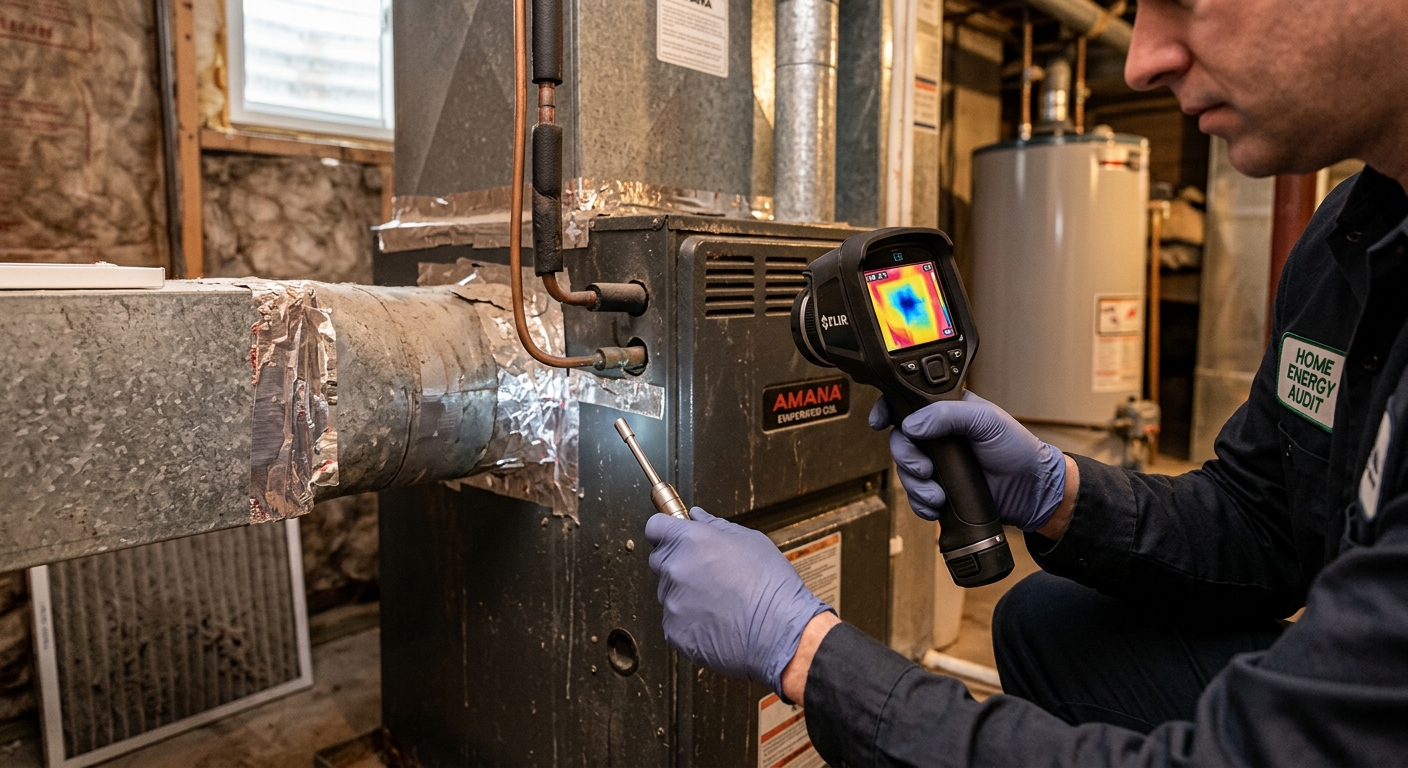
A home energy audit uses tools like blower door tests, infrared cameras, and duct leakage diagnostics to expose the invisible weak points in your home’s thermal envelope and distribution system. These aren’t guesses or estimates. They’re measured data that show you precisely where heat is sneaking in, where cool air is escaping, and how hard your equipment is working to compensate. The results almost always surprise homeowners, because the biggest problems are rarely the ones you can see.
This post walks you through what a home energy audit actually reveals about your cooling system, which findings have the biggest impact on comfort and cost, and how to prioritize fixes whether you’re a DIYer on a tight budget or ready to hire a professional. You’ll come away knowing exactly which improvements deliver the fastest payback and which ones to tackle first.
What You’ll Need
Click on an item below to shop for the recommended items for this recipe on Amazon.
As an Amazon Associate, we earn from qualifying purchases.
How to Do It
- Pull your last 12 months of utility bills and calculate your average monthly cooling cost. This becomes your baseline to measure savings against after improvements.
- Inspect every supply and return register in your home. Hold a tissue or thin piece of paper near duct connections in accessible areas like the attic access or basement. Visible flutter or air movement indicates duct leakage at joints.
- Walk your home’s perimeter on a hot afternoon with your AC running and feel for warm air near electrical outlets on exterior walls, around window and door frames, and at the base of exterior walls. These are infiltration points your AC is constantly fighting.
- Apply foam gaskets behind every electrical outlet and switch plate on exterior walls. A pack of 20 gaskets costs under $5 and takes 30 minutes to install, with no tools required beyond a screwdriver.
- Check your attic hatch or pull-down stairs. If it feels warm to the touch in summer, it lacks insulation. Add a pre-made insulated attic stair cover ($30 to $60) or cut rigid foam insulation to fit and secure it with hook-and-loop tape.
- Set your thermostat to a schedule, raising the setpoint to 78 to 80 degrees when the home is unoccupied during peak afternoon heat (typically 2 to 6 PM), then returning to 74 to 75 degrees before you arrive home. This alone saves 10% on cooling costs annually.
- Perform a DIY pressurization test on a windy day: close all windows and exterior doors, turn off the AC and any combustion appliances, turn on all exhaust fans (kitchen, bathrooms, dryer) simultaneously to depressurize the house, then move a lit incense stick slowly along suspected leak points. Smoke drawn inward reveals infiltration.
- In the attic, look for open top plates (the gap where interior walls meet the attic floor), recessed light cans poking through the drywall, and gaps around plumbing or electrical penetrations. These are the highest-priority sealing targets because warm attic air falls directly into living space through them.
- Seal attic top plate gaps and penetrations with fire-rated caulk or canned spray foam rated for attic use. A single tube of caulk ($5 to $8) or a can of spray foam ($8 to $12) can seal dozens of small penetrations in an afternoon.
- In accessible duct runs (attic, basement, or crawlspace), wrap every connection joint and seam with UL 181-rated foil mastic tape or apply paintable mastic duct sealant with a brush. Do not use standard gray fabric duct tape, as it fails within a few years.
- Add or replace weatherstripping on all exterior doors. A door you can see daylight around is adding meaningfully to your cooling load. Self-adhesive foam weatherstripping costs $8 to $15 per door and installs in under 20 minutes.
- After completing sealing work, perform the pressurization test again to confirm air movement is reduced. Document your work with photos and notes so a future professional audit can verify the improvement.
- Contact your utility company first. Many offer free or heavily discounted energy audits ($0 to $150) for customers, and the auditor will have a calibrated blower door and infrared camera that reveal problems impossible to find by eye.
- During the audit, ask the auditor specifically to test duct leakage using a duct blaster test, not just a visual inspection. Duct blaster results are reported as CFM25 (cubic feet per minute at 25 Pascals) and directly quantify how much conditioned air you’re losing.
- Review the audit report’s prioritized list of improvements. A good report ranks fixes by cost-effectiveness (dollars of annual savings per dollar spent), not just by total savings. The top three findings are almost always air sealing, duct sealing, and attic insulation.
- Get three quotes from building performance contractors (look for BPI-certified professionals) specifically for the measures the audit recommends. Avoid contractors who skip the audit and jump straight to selling equipment.
- Have the contractor perform post-remediation blower door testing after completing work to verify the improvements hit their targets. A responsible contractor includes this verification test in their scope.
- Apply for available incentives before and after the project. The federal 25C tax credit covers 30% of insulation and air sealing up to $1,200 annually. Many states and utilities stack additional rebates on top, sometimes cutting your net cost by 40 to 60%.
Why It Works: The Benefits
Addressing the top findings from a home energy audit, including air sealing, duct sealing, and insulation, typically reduces annual cooling costs by 20 to 40%, saving the average homeowner $150 to $400 per cooling season depending on climate and home size.
Duct leakage and envelope gaps cause hot spots and rooms that never cool properly. Sealing ducts and air-sealing the envelope can eliminate temperature differentials of 5 to 8 degrees between rooms, making every space comfortable at the same thermostat setting.
When your home holds conditioned air more effectively, your AC runs shorter, more efficient cycles. This directly extends equipment lifespan, as compressors and blower motors suffer most from the constant short-cycling caused by high heat loads.
Air infiltration carries moisture along with heat. Sealing a leaky home can reduce indoor relative humidity by 10 to 15 percentage points in humid climates, meaning your AC doesn’t have to work overtime just to wring moisture out of the air before it can cool it.
An audit gives you measured data before you spend money. Homeowners who audit before replacing equipment save an average of $1,000 to $3,000 by right-sizing their new AC to a reduced actual load rather than replacing oversized equipment with more oversized equipment.
💰 Savings Impact by Action
Sealing ducts in unconditioned spaces reduces conditioned air loss by 20 to 30%, directly cutting the runtime needed to maintain setpoint.
Reducing envelope infiltration from a typical 10 ACH50 to under 5 ACH50 cuts cooling-related infiltration load by up to 20%.
Upgrading attic insulation to R-38 or higher reduces heat gain through the ceiling by 15 to 20% in hot climates.
Setting a proper occupied and unoccupied temperature schedule reduces annual cooling energy use by approximately 10% per DOE data.
Adding exterior shading or low-SHGC window film to west and south-facing windows reduces solar heat gain through glass by up to 35%, cutting afternoon peak load by roughly 15%.
🏠 Key Concepts Explained
The Science Behind It
Your cooling system is fighting two separate battles simultaneously: removing heat that enters from outside, and maintaining the pressure balance that keeps conditioned air inside. A blower door test quantifies the second battle by depressurizing your home to a standard 50 Pascals and measuring how many cubic feet per minute of air rushes in to equalize pressure. Every cubic foot of hot, humid outdoor air that infiltrates your home must be cooled and dehumidified by your AC at a real energy cost, so reducing infiltration directly and proportionally reduces cooling load.
Duct leakage adds another layer of thermodynamic loss specific to forced-air cooling systems. Most residential duct systems run through unconditioned spaces like attics, where summer temperatures can exceed 140 degrees Fahrenheit. When supply ducts leak into this hot environment, two things happen: you lose pressurized cool air into a space you’re not trying to cool, and you simultaneously create negative pressure in the living space that pulls additional hot outdoor air in through every crack and gap in the envelope. A duct system leaking 25% of its airflow effectively makes your AC’s real-world performance 25% worse than its rated capacity, independent of any other variable.
Infrared thermography makes these invisible losses visible by detecting surface temperature differences as small as 0.1 degrees Celsius. During a blower door test, a camera scanning your walls and ceiling will show infiltrating air as cool or warm streaks depending on season, and missing insulation as distinct warm patches in a uniform ceiling plane. This is why auditors combine the blower door test with infrared scanning simultaneously: the pressure difference created by the blower door amplifies small temperature signals, making minor defects visible that would be undetectable under normal conditions. The result is a precise, quantified map of your home’s weak points rather than a best guess.
Frequently Asked Questions
▼ My energy audit said my duct leakage is high but my AC still cools the house okay. Do I really need to fix it?
High duct leakage means your AC is cooling your attic instead of your home, so the system is working much harder than it should even if it technically reaches setpoint. You’re paying for 100% of the electricity to run that system but getting only 70 to 80% of the cooling benefit. Sealing the ducts is typically one of the fastest-payback improvements on the list, often returning your investment within one to two cooling seasons.
▼ How do I know if I need more insulation or if air sealing is the bigger problem?
Your blower door result tells you this directly. An ACH50 above 7 means air sealing will deliver more savings than insulation alone, because adding insulation to a leaky envelope is like putting a lid on a colander. Most auditors also separate the two in their cost-effectiveness rankings. Do air sealing first, then add insulation on top of a tighter envelope for maximum return.
▼ Can I skip the professional audit and just do the DIY fixes? Will I get most of the savings?
You can capture a meaningful share of savings, probably 30 to 50% of what a full audit-plus-remediation delivers, by targeting the most common weak points like outlet gaskets, attic hatch insulation, duct tape at accessible joints, and weatherstripping. However, the highest-impact leaks (attic top plates, plumbing chases, recessed lights) are invisible without attic access and a methodical search, and duct leakage inside wall cavities is undetectable without a duct blaster test. The professional audit is especially worth it if your blower door result is high or your bills are significantly above average for your climate.
▼ My house is a 1960s ranch with no basement and ducts in the attic. Is this harder to fix?
Attic duct systems in older homes are among the worst performers, because the ducts are directly exposed to peak heat in a space that can reach 150 degrees Fahrenheit. The fix is either sealing and heavily insulating the existing duct runs, or encapsulating the attic by bringing the duct system inside the conditioned envelope with closed-cell spray foam on the roofline. The second option is more expensive ($3,000 to $8,000) but often the only way to get full performance from an existing duct layout, and it qualifies for the 30% federal tax credit.
▼ Will fixing my home’s envelope mean my existing AC is now oversized?
Yes, and that is actually a good thing in the short term, because an oversized system in a tight, well-insulated home runs longer cycles and dehumidifies more effectively than it did before. If you eventually replace the equipment, have a contractor perform a Manual J load calculation using your post-improvement infiltration and insulation data to right-size the new system. Installing a smaller, correctly sized unit at that point will cost less upfront and run even more efficiently.
Quick Tips
- Check your audit report for the blower door result expressed in ACH50 (air changes per hour at 50 Pascals). A result above 7 ACH50 means air sealing should be your first priority before any equipment upgrade.
- Duct leakage to outside (leaks into unconditioned spaces) matters far more than duct leakage to inside (leaks within the conditioned envelope). Make sure your auditor distinguishes between the two in their report.
- If your utility offers a free or low-cost audit, schedule it in summer so the auditor can use infrared scanning to find heat gain through your ceiling and walls while the temperature differential is greatest.
- After air sealing and insulation work, wait one full billing cycle before comparing energy bills, and adjust for outdoor temperature differences using heating and cooling degree days from weather.gov for a fair comparison.
Variations for Your Situation
- Apartment/Rental: Renters cannot modify duct systems or insulation, but can still act on several audit-style findings. Use foam outlet gaskets on exterior walls ($5), add window insulating film to reduce solar heat gain by up to 30%, install a smart plug-in thermostat fan controller for window AC units, and ask your landlord in writing to address duct leakage if you share a central system, since the savings benefit them too through reduced equipment wear.
- Tight Budget (under $50): Focus on the three zero-to-low-cost moves that deliver the highest returns: foam gaskets behind outlet and switch covers on exterior walls ($5), a programmable thermostat schedule if you have a basic programmable unit already ($0), and UL 181 foil tape over visible duct joints in your basement or crawlspace ($12 to $18 for a roll). These three steps alone can cut cooling bills by 10 to 15% with no professional help.
- Older Home (pre-1980): Homes built before modern energy codes have dramatically higher baseline infiltration, often 15 to 20 ACH50, and almost universally have under-insulated attics and no vapor control at the rim joist. Prioritize a professional audit that includes combustion safety testing, because aggressive air sealing in a home with older gas appliances can create backdrafting hazards. Budget $1,500 to $4,000 for professional-grade air sealing and attic insulation, and check for state-level weatherization assistance programs that may cover part or all of the cost for qualifying households.