Your windows are either your best ally or your worst enemy when it comes to summer cooling, and most homeowners are unknowingly using them against themselves. Opening windows in the morning before the outdoor air has cooled, or leaving them shut at night when temperatures finally drop, means your home absorbs and holds heat it never needed to collect. The result is an overworked AC system, higher utility bills, and rooms that never quite feel comfortable.
The good news is that fixing this costs nothing. A strategic window routine, timed to outdoor temperature swings, can reduce your indoor temperature by 4 to 7 degrees in many climates. In moderate regions like the Pacific Coast, the Mountain West, and much of the Midwest, this approach alone can let you turn off the AC for weeks at a time during shoulder seasons. Even in hot and humid Southern climates, pairing the right window habits with low-cost accessories like reflective film or blackout curtains can cut cooling loads significantly.
This post walks you through the exact timing, techniques, and low-cost upgrades that make the biggest difference. Whether you want a free fix you can start today or a weekend project that adds long-term comfort, there is a practical approach here for your home and climate.
What You’ll Need
Click on an item below to shop for the recommended items for this recipe on Amazon.
As an Amazon Associate, we earn from qualifying purchases.
How to Do It
- Download a free weather app and check tonight’s forecasted low temperature. If it drops below 70 degrees, you have a ventilation opportunity worth using.
- At 8 to 10 PM, when outdoor temps fall below your indoor temperature, open windows on opposite sides of your home to create cross ventilation. Focus on bedrooms and common areas first.
- On upper floors or two-story homes, open a low window on the shaded or windward side and a high window or bathroom exhaust vent on the opposite side to use the stack effect and pull cool air upward through the house.
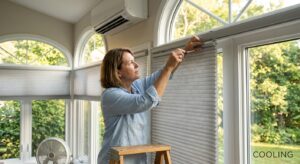
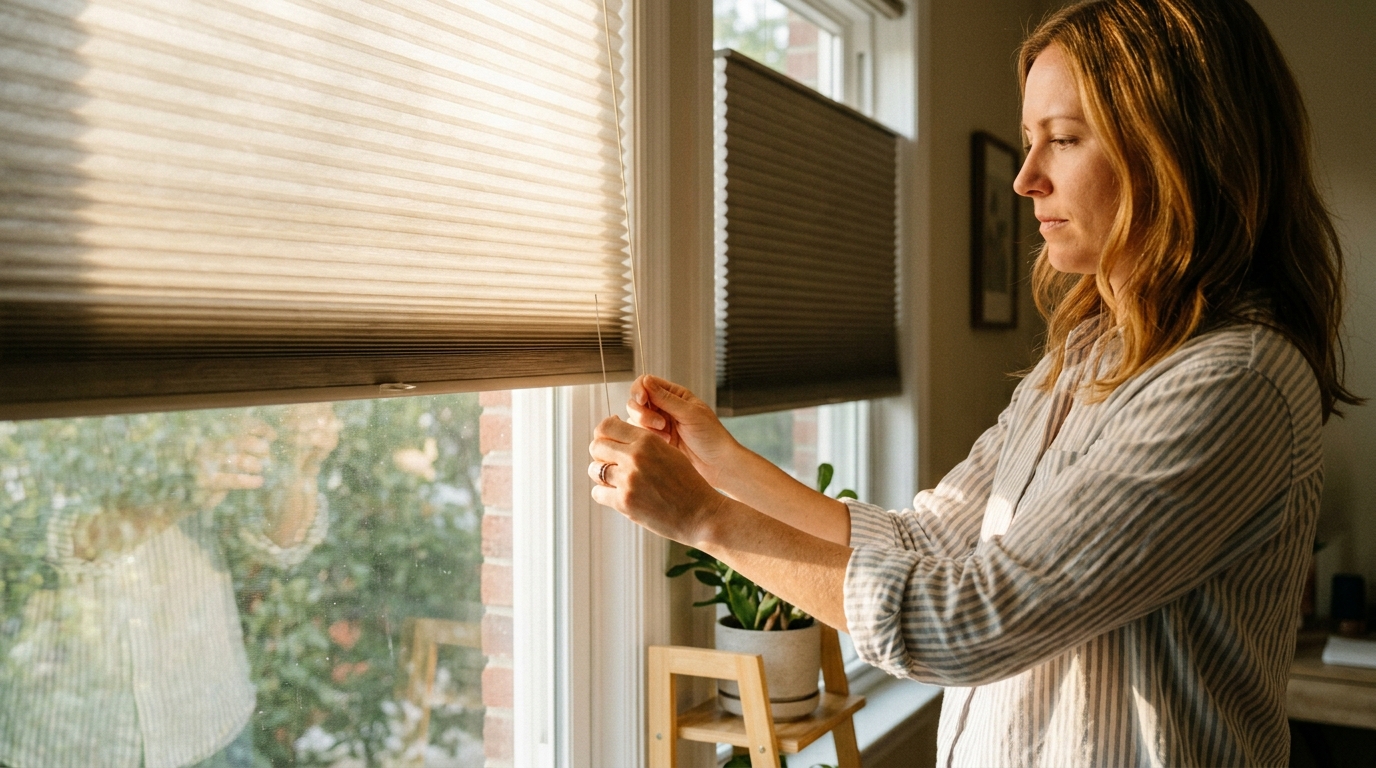
- Set a phone alarm for 30 minutes before your area’s forecasted daily high, typically around 9 to 11 AM. When the alarm goes off, close all windows and pull blinds or curtains shut on south and west-facing windows.
- Keep south and west windows covered from mid-morning through late afternoon. East-facing windows can be uncovered after about noon when the sun has moved past them.
- Repeat daily. Within 2 to 3 days, your home’s thermal mass will be consistently pre-cooled, and you will notice your indoor peak temperature dropping measurably.
- Identify your problem windows. Stand inside during late morning or afternoon and find windows where you can feel radiant heat on your skin from several feet away. South and west-facing windows are almost always the priority.
- Purchase solar control window film rated for at least 50% solar heat gain reduction. Look for products labeled with a low Solar Heat Gain Coefficient (SHGC), ideally 0.25 to 0.40. One roll typically covers one to two standard windows and costs $15 to $30.
- Clean the window glass thoroughly with a streak-free cleaner and let it dry completely. Even small dust particles under the film will cause bubbles that reduce effectiveness and appearance.
- Cut the film slightly larger than the pane, mist the glass with a soap and water solution (one drop of dish soap per quart of water), and apply the film. Use a squeegee or credit card to smooth outward from the center, pushing bubbles and water to the edges.
- For rooms where film alone is not enough, add blackout or thermal curtains on the same south and west windows. Thermal lined curtains reduce heat gain by an additional 15 to 25% compared to sheer or standard curtains, and they also provide an insulating air gap.
- After installation, check film edges after 24 hours and press down any lifting corners with a firm card. Full cure takes 3 to 5 days during which some haze or water pockets are normal and will clear on their own.
- Determine whether a whole-house fan or a quieter, insulated attic fan is right for your situation. Whole-house fans move 3,000 to 5,000 CFM and cool large homes quickly. Newer insulated models like those from QuietCool or Air Vent have R-22 dampers that prevent heat loss in winter.
- Check your attic venting before installation. The rule of thumb is 1 square foot of net free vent area for every 150 CFM of fan capacity. Insufficient venting causes backdrafting and negates the fan’s effectiveness.
- Have the unit installed in a central hallway ceiling or a main living area ceiling for maximum air distribution. The installer will cut the ceiling opening, mount the fan housing, and connect it to a wall switch or timer.
- Program the fan to run automatically from 9 PM to midnight and again from 5 to 7 AM when outdoor temps are at their coolest. Many newer units include a built-in timer or smartphone control.
- Operate the fan only when outdoor air is cooler than indoor air and humidity is below 60%. In humid climates, use a hygrometer to check before running the fan, since pulling in humid air defeats the cooling benefit and can cause moisture issues.
Why It Works: The Benefits
Strategic night ventilation combined with daytime window blocking can reduce cooling energy use by 10 to 30% in climates with a meaningful temperature swing, translating to $30 to $120 in savings over a summer depending on your home size and local rates.
Homes that flush heat overnight and block solar gain during the day routinely measure 4 to 7 degrees cooler by mid-afternoon compared to homes with no window management, according to building science field studies from Lawrence Berkeley National Laboratory.
Every degree you pre-cool your home overnight is a degree your AC does not have to fight to reclaim. Pre-cooling with free outdoor air can delay AC startup by 2 to 4 hours on warm mornings, extending your equipment’s lifespan and reducing compressor cycles.
Bedrooms that are allowed to cool overnight reach the 65 to 68 degree range that sleep researchers identify as optimal for deep sleep, without running the AC all night. Cooler, fresher air also improves indoor air quality compared to recirculated conditioned air.
Unlike insulation or HVAC upgrades, changing your window routine costs nothing and starts working the same day. Most homeowners notice a perceptible difference in comfort within the first one or two days of following a temperature-based schedule.
💰 Savings Impact by Action
Flushing stored heat with cool overnight air reduces the next day’s AC load by up to 20% in climates with a 15-plus degree overnight temperature swing.
Quality solar control window film with an SHGC of 0.30 reduces incoming solar heat by up to 50%, cutting total cooling load by 10 to 15% in sun-exposed homes.
Thermal-lined blackout curtains on south and west windows reduce solar heat gain by 25 to 45%, translating to roughly 7 to 10% lower cooling energy use.
Closing windows before outdoor air exceeds indoor temperature and keeping them sealed through peak hours prevents 12% or more of daytime heat gain in a typical home.
A properly sized whole-house fan used nightly in place of AC can reduce summer cooling energy use by 25 to 30% in climates where overnight lows regularly drop below 68 degrees.
🏠 Key Concepts Explained
The Science Behind It
The physics behind this strategy comes down to heat storage and timing. Your home acts like a giant thermal battery, absorbing heat from sunlight through windows and from warm air infiltration throughout the day. Dense materials like concrete floors, drywall, and furniture can hold that heat for 6 to 10 hours and release it slowly back into your living space. This is why a room can feel stuffy at 10 PM even though the sun set hours ago. The goal of a smart window routine is to discharge that battery overnight using free cool air and prevent it from charging again the next day by blocking solar gain.
Solar heat gain through glass is a particularly aggressive heat source. A single unshaded south-facing window measuring 3 by 5 feet can admit 750 to 1,000 BTUs of solar energy per hour on a clear summer afternoon. For reference, a standard window AC unit removes heat at a rate of roughly 5,000 to 10,000 BTUs per hour total for an entire room. Several unshaded windows can easily add up to a meaningful fraction of your AC’s capacity, meaning your AC is fighting a constant uphill battle just to counteract the windows it is trying to cool around. Blocking that radiation at the glass surface, before it becomes convective heat in your room, is dramatically more efficient than removing it with mechanical cooling after the fact.
Cross ventilation amplifies the effect by replacing warm indoor air with cooler outdoor air rather than just circulating existing warm air with a ceiling fan. When you open a low window on the shaded windward side of your home and a high window or vent on the opposite side, you create both a pressure differential and a thermal chimney effect. Cool, denser air enters low and pushes warmer, lighter air out high. In homes with a 20-degree overnight temperature swing, this passive ventilation can remove as much heat as running a 1,500-watt portable AC unit for several hours, at zero operating cost.
Frequently Asked Questions
▼ I tried opening windows at night but my house still feels hot in the afternoon. What am I doing wrong?
The most common issue is closing windows too late in the morning. Once outdoor air exceeds your indoor temperature, every minute of delay lets warm air in and erases your overnight cooling. Set a firm alarm to close up by 9 to 10 AM regardless of how the air feels. Also check whether your south and west windows are fully covered during peak hours from 11 AM to 5 PM, since uncovered glass alone can raise a room’s temperature by 5 to 8 degrees even with windows closed.
▼ Can renters do this without landlord permission?
Yes, the timed window routine and most window coverings require zero landlord permission and zero permanent modifications. For window film, choose a static-cling or removable version rather than adhesive film, and it can be removed without leaving any marks when you move. Freestanding blackout curtain panels hung with tension rods are another fully renter-safe option that costs $20 to $60 per window and can move with you.
▼ My climate is hot and humid. Will this strategy still work for me?
Night ventilation is most effective in dry or semi-arid climates where overnight lows reliably drop below 68 to 70 degrees with low humidity. In humid climates like the Gulf Coast or the Southeast, focus primarily on the solar blocking side of this strategy rather than aggressive window opening, since bringing in humid air can raise indoor moisture levels and make your home feel warmer even at lower temperatures. In those regions, tightly sealed windows with blackout curtains and window film will typically deliver more comfort than ventilation.
▼ How long before I actually see savings on my electricity bill?
You should notice lower indoor temperatures within the first 2 to 3 days of consistently following the routine, since the thermal mass of your home needs a few cycles to fully pre-cool. Savings will appear on your next monthly electric bill, typically showing a 10 to 20% reduction in summer cooling usage compared to the same billing period the prior year. For window film and curtains, the payback period is typically 6 to 18 months depending on your climate and how many south or west-facing windows you treated.
▼ What if my windows are old or do not open easily?
If windows are painted shut or have broken hardware, focus entirely on the solar blocking side of this strategy using window film and thermal curtains, which do not require the windows to open at all. For windows that are just stiff, a few minutes with a putty knife along the frame and some silicone lubricant on the tracks usually frees them up. If hardware is broken, window operators and latches are widely available at hardware stores for $5 to $25 per window and are typically a 20-minute DIY fix.
Quick Tips
- Use a box fan facing outward in one window while opening an opposite window with no fan. The outward-facing fan creates negative pressure that actively pulls cool air through the house instead of just mixing indoor air.
- Close interior doors to rooms you are not using at night. This concentrates airflow through occupied bedrooms and makes the cooling effect noticeably stronger where you actually need it.
- Light-colored or reflective window coverings outperform dark ones. White or silver-backed curtains can reflect up to 45% of incoming solar energy, while dark curtains absorb it and radiate it into the room even when closed.
- On days when outdoor temps never drop below 72 degrees, skip night ventilation and rely on the closed-house strategy with window coverings instead. Bringing in 74-degree air when your AC has already cooled the house to 72 defeats the purpose.
Variations for Your Situation
- Apartment or Rental: Start with the no-permission changes first. Hang thermal blackout curtains using tension or damage-free curtain rods on south and west-facing windows for $25 to $60 per window. Apply static-cling solar film (no adhesive, fully removable) to problem windows for $15 to $25 per pane. Use the timed opening routine for any operable windows. These three steps alone can reduce your apartment’s peak afternoon temperature by 3 to 5 degrees at virtually zero risk to your security deposit.
- Tight Budget Under $50: Focus entirely on the free window routine and one targeted investment. A single roll of solar window film ($15 to $25) applied to your worst west-facing window delivers the highest return for the lowest cost. Add a $10 clip-on outdoor thermometer so you can accurately time your window crossover each evening. The routine itself costs nothing and is the single highest-impact action in this guide regardless of budget.
- Older Home Pre-1980: Older single-pane windows transmit significantly more solar heat than modern low-e double-pane glass, making the solar blocking steps even more critical. Prioritize window film on single-pane glass, and look for film specifically rated for single-pane use. Also check for gaps around window frames where conditioned air escapes. A tube of clear acrylic caulk ($5) around leaky window frames prevents warm infiltration air from defeating your cooling strategy. In homes this age, combined air sealing and window management often reduces cooling loads by 25 to 35%.