If you have ever walked into a bedroom at 9 p.m. and felt like you stepped into an oven, the culprit is probably not your air conditioner. It is the windows. Up to 76 percent of sunlight hitting standard double-pane windows becomes heat inside your home, according to the U.S. Department of Energy. A single west-facing window can add several thousand BTUs of cooling load to a room during the late afternoon, exactly when you are least able to recover before bedtime.
The good news is that window placement is not just about the glass itself. Compass direction, overhang depth, which windows face each other, and how high or low they sit all control how much heat enters and how well hot air leaves. Rooms with a smart mix of shading and cross-ventilation routinely run 5 to 15 degrees cooler than rooms with the same windows left unmanaged.
In this post we break down the science of window orientation and airflow, then give you two practical approaches: a no-cost quick fix you can start tonight, and a DIY upgrade that adds exterior shading and a night-flush ventilation setup. You will get real numbers, realistic payback periods, and troubleshooting answers for the most common problems, including what to do if you rent or live in an older home.
What You’ll Need
Click on an item below to shop for the recommended items for this recipe on Amazon.
As an Amazon Associate, we earn from qualifying purchases.
How to Do It
- Identify your problem windows. Note which bedroom windows face west or east, and check the room at 4 to 6 p.m. to see which one gets direct sun. That is your priority window.
- Close blinds, shades, or curtains on sun-facing windows before the sun hits them, usually by mid-morning for east windows and by noon for west windows. Closing them after the room is already hot is far less effective.
- Use light-colored, reflective-backed or cellular shades if you have a choice. White or reflective backing can reject a noticeably larger share of solar heat than dark fabric.
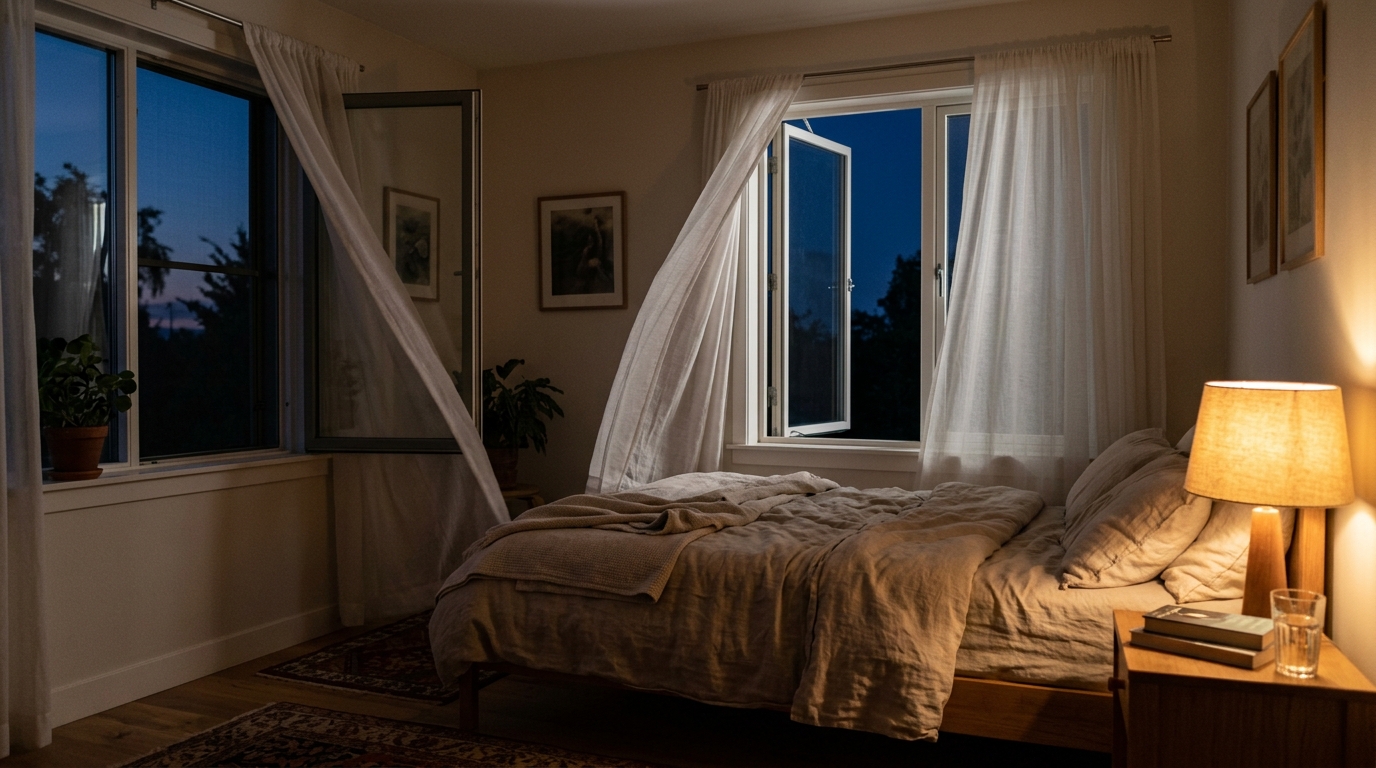
- After sunset, once outdoor air is cooler than indoor air, open windows on opposite sides of the room or house to create a cross-breeze. Open one low and one high if possible to encourage stack ventilation.
- Place a box fan in a window facing outward on the leeward side to exhaust hot air while another window opens inward on the windward side. Run it for 1 to 3 hours in the evening.
- Close windows and blinds again in the morning before outdoor air warms up to trap the cool air inside.
- Choose your exterior shading type. Options include solar screens (blocking 65 to 90 percent of solar heat), exterior roller shades, fixed awnings, or removable shade cloth. Solar screens usually give the best value for a standard window at roughly $25 to $60 per window.
- Measure the window frame precisely, including depth, and order screens or awnings sized for the exterior frame. Order 1 to 2 inches of overlap so no gaps let sunlight leak around the edges.
- Mount solar screens in the existing screen track or with the manufacturer’s hardware. For awnings, fasten into wall studs or solid framing with exterior-grade screws and caulk the fastener holes to keep water out.
- On south-facing windows, consider a fixed overhang or awning that is deep enough to shade the glass in summer but still lets lower winter sun in. A rule of thumb is an overhang projecting about one-third to one-half of the window height.
- Add vertical shade on east and west windows with trellises, deciduous vines, or shrubs placed 3 to 5 feet from the glass. Deciduous plants shade in summer and drop leaves in winter to let sun in.
- Improve ventilation by making sure at least two windows can open on different walls. Remove screens only if safe, and add a window fan to boost airflow on still nights.
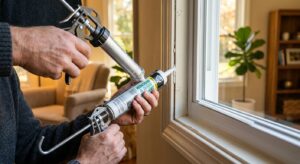
- Seal gaps around window frames with caulk and weatherstripping so that when windows are closed during the day, hot outdoor air cannot leak in.
- Get a window assessment from a licensed contractor to check glazing type, frame condition, and orientation. Ask for SHGC and U-factor values for any proposed product.
- For a lower-cost professional option, have a spectrally selective window film installed on the problem window. Quality films can reject 50 to 70 percent of solar heat with minimal loss of daylight.
- If replacing windows, look for ENERGY STAR certified products rated for your climate zone, targeting an SHGC of 0.25 or lower for hot-climate west and east exposures.
- Ask the installer to flash and seal the rough opening properly and insulate the gap around the frame with low-expansion foam so the new window does not create air leaks.
- Keep documentation and warranties. Some utilities and federal programs offer rebates or tax credits for qualifying window upgrades, so check current eligibility before purchasing.
Why It Works: The Benefits
The DOE estimates that well-managed window shading can reduce cooling costs by 5 to 15 percent for the whole home, and in a single sun-exposed bedroom the effect is often higher. Exterior shading on a hot west window can cut heat gain by 65 to 77 percent.
Sleep research generally points to a bedroom temperature of roughly 60 to 67 degrees F as best for sleep. Keeping the room from baking all afternoon makes that range easier to reach at night.
When a bedroom starts the evening 5 to 10 degrees cooler, your AC or window unit cycles less. That reduces wear on the equipment and extends its working life.
Night flushing uses outdoor air as a free cooling source in climates where nighttime lows drop into the 60s. A box fan running at 50 to 100 watts costs a few cents per night.
Controlling direct sun also protects flooring, furniture, and fabrics from UV damage and cuts the glare that makes rooms feel uncomfortable even when the thermometer looks fine.
💰 Savings Impact by Action
Exterior solar screens and awnings can block 65 to 77 percent of solar heat gain on a sun-exposed window.
Pre-cooling the room with cool night air can reduce next-day AC runtime by roughly 15 to 25 percent in dry climates.
Spectrally selective films and low-E coatings reject roughly 30 to 50 percent of solar heat gain compared with clear glass.
Caulking and weatherstripping window frames can reduce overall heating and cooling loss by about 5 to 10 percent.
Interior cellular shades can reduce summer heat gain through a window by roughly 15 to 25 percent.
🏠 Key Concepts Explained
The Science Behind It
Windows heat rooms through three pathways: direct solar radiation passing through the glass, conduction through the frame and glazing, and air leakage around the edges. In summer, solar radiation is by far the biggest contributor. When sunlight strikes glass, short-wave radiation passes through, hits interior surfaces, and gets converted into long-wave heat that cannot easily escape back out through the same glass. This is the same greenhouse effect that makes a parked car so hot, and it is why blocking sun outside the glass is so much more effective than managing it inside.
Orientation matters because the sun’s path changes through the day. East windows get intense, low-angle sun in the morning, south windows get high-angle sun at midday that is easy to block with an overhang, and west windows get intense low-angle sun during the late afternoon when outdoor temperatures peak. That late-day timing makes west exposures especially hard on bedrooms, since the heat soaks into walls and furniture and radiates back out for hours after sunset.
Airflow works on a different principle. Wind-driven cross-ventilation relies on pressure differences between the windward and leeward sides of a building, while stack ventilation relies on buoyancy, with warm air rising out of high openings and drawing cooler air in through low ones. Combining both, plus pre-cooling the room’s thermal mass at night, gives you a bedroom that starts the next day cooler and takes longer to heat up. The key rule is simple: let heat out and cool air in only when the outdoor air is actually cooler than the indoor air.
Frequently Asked Questions
▼ Why is my bedroom still hot even after I closed the blinds?
Interior blinds only block part of the heat because the sun’s energy has already passed through the glass and warmed the blind itself. Add exterior shading such as solar screens or an awning, or at minimum switch to reflective or cellular interior shades. Also check for air leaks around the frame and attic heat above the room, which can keep a bedroom hot regardless of window treatments.
▼ Can renters do this without landlord permission?
Yes, most of the quick fix is rental friendly. Use removable solar shade cloth or tension-mounted exterior shades, reflective window film that peels off, blackout cellular shades with no-drill brackets, and a box fan for night flushing. Avoid anything that requires drilling into siding or altering the window itself without written approval.
▼ How long before I actually notice savings on my bill?
The comfort improvement is usually noticeable the first hot day. Bill savings show up in the next billing cycle, though they are easiest to see if you compare same-month usage year over year or track runtime on a window AC. Expect roughly 5 to 15 percent lower cooling costs for the affected zone, and more if the bedroom has a large west-facing window.
▼ What if my home is older than 30 years?
Older homes often have single-pane windows, leaky frames, and less attic insulation, so the same window fixes can have an even bigger impact. Prioritize exterior shading and sealing gaps first, since they give the best return. If your windows are original and failing, replacement with ENERGY STAR rated low-E units is worth planning, but fix shading and air sealing before spending big.
▼ Is night flushing worth it in a humid climate?
Often not. If nighttime lows stay above about 70 degrees F or the dew point stays high, opening windows can bring in moisture and make the room feel clammy without cooling it much. In humid climates, focus on exterior shading, air sealing, and running your AC or a dehumidifier efficiently instead.
Quick Tips
- Use a cheap indoor/outdoor thermometer so you know exactly when outside air drops below inside air for night flushing.
- Choose light-colored exterior window trim and nearby surfaces. Dark surfaces next to a window absorb heat and radiate it toward the glass.
- Place a box fan in the window pointing outward on hot evenings to exhaust warm air, while opening a window on the opposite side of the home for makeup air.
- Plant a deciduous tree or trellised vine on the west side of the house. A mature shade tree can reduce nearby wall and window temperatures significantly, and it loses its leaves to let in winter sun.
Variations for Your Situation
- Apartment/Rental: Start with removable tools. Install adhesive-free reflective window film ($15 to $30 per window), tension-mounted or clip-on solar shade cloth ($20 to $50), and blackout cellular shades on no-drill brackets ($30 to $80). Pair these with a box fan ($25 to $40) for night flushing, and everything comes with you when you move.
- Tight Budget (under $50): Close sun-facing blinds before direct sun arrives, run a box fan in the window at night, and hang a reflective car windshield sunshade or white bed sheet against the glass on the worst window. Add door-sock or rolled-towel draft blockers and a $5 caulk tube for visible gaps, and you can drop room temperature several degrees for almost nothing.
- Older Home (pre-1980): Expect higher air leakage and single-pane glass. Seal and weatherstrip first, add exterior solar screens or storm windows, and consider interior cellular shades for an added insulating layer. Check attic insulation above the bedroom too, because a hot, under-insulated attic can overwhelm even good window management.
- Hot-Dry Climate: Night flushing works especially well where overnight temperatures drop 25 to 30 degrees from daytime highs. Open windows after sunset, run a fan, and close everything tight and shaded before sunrise to trap the cool air for most of the day.