You spent thousands of dollars on new windows, and you can still feel cold air seeping in on a winter evening. You are not imagining it. New windows are only as effective as their installation, and the most common culprit is not the window unit itself but the gaps, cracks, and voids left behind during or after the installation process. A window frame sealed only on the exterior but not the interior, or packed with the wrong type of foam, can leak nearly as much air as the old unit it replaced.
According to the U.S. Department of Energy, air infiltration through windows and doors accounts for 25 to 30 percent of residential heating and cooling losses. Even a single poorly sealed window in a bedroom can raise your heating bill noticeably and create uncomfortable cold spots that no thermostat adjustment can fix. The frustrating part is that the fix is almost always simple, low-cost, and something a homeowner can do in an afternoon.
This post covers exactly why new windows still draft, which spots to check first, and two practical approaches for sealing them properly. Whether you want a quick weekend fix or a thorough DIY upgrade, you will find specific steps, real cost estimates, and the building science behind why each method works.
What You’ll Need
Click on an item below to shop for the recommended items for this recipe on Amazon.
As an Amazon Associate, we earn from qualifying purchases.
How to Do It
- Run a lit incense stick or a damp hand slowly along the interior perimeter of the window frame where it meets the drywall or trim. Note anywhere the smoke wavers or you feel air movement.
- Check the exterior caulk line around the window flange or brick mold. Look for cracks, separation from the siding, or areas where the caulk has pulled away from the frame.
- Using a utility knife, remove any cracked or peeling caulk from both interior and exterior seams. Clean the surface with isopropyl alcohol and let it dry for 15 minutes.
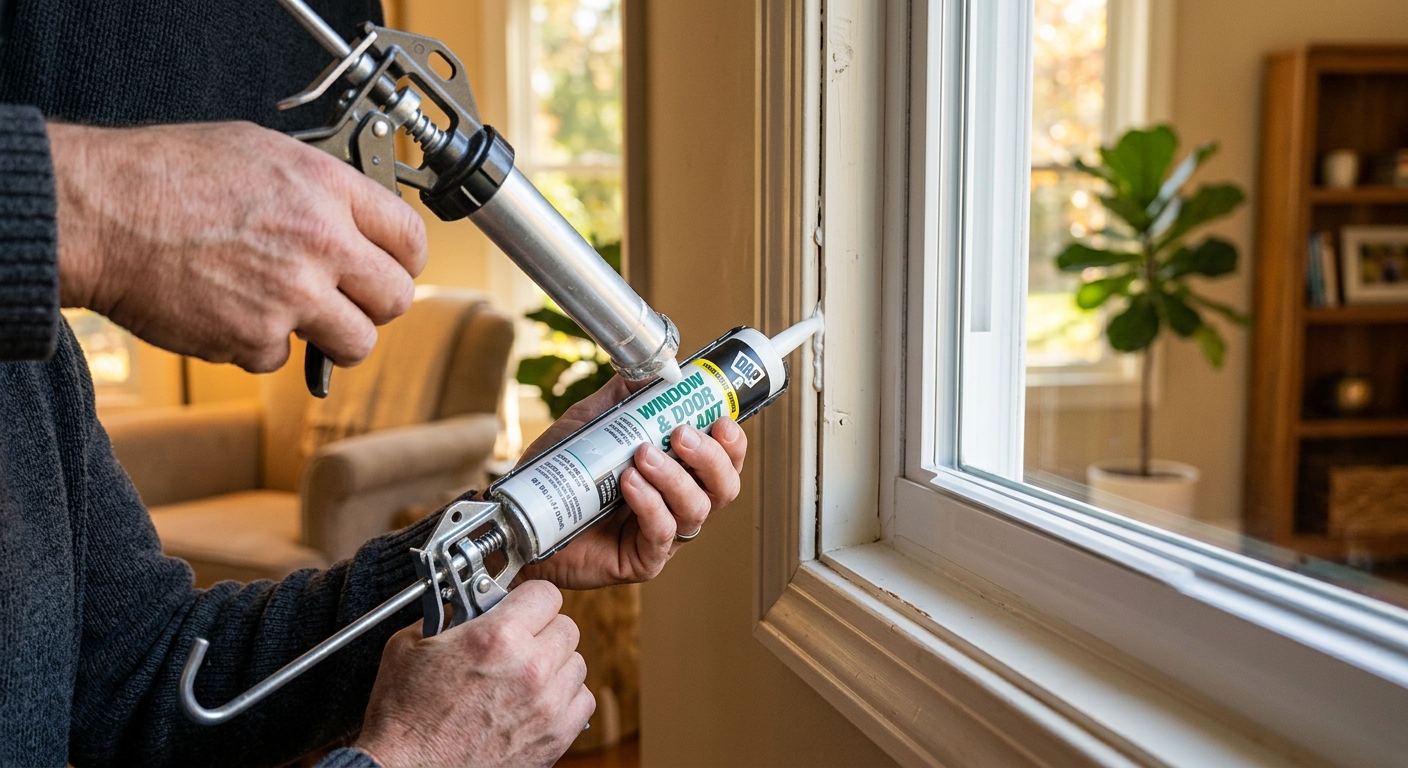
- Apply a continuous bead of silicone or siliconized latex caulk (rated for windows and doors) along the interior joint between the window frame and the drywall or trim. Smooth with a wet finger.
- Apply a matching exterior-grade caulk to any gaps on the outside perimeter. Use a color that matches your siding or trim for a clean finish.
- Check the sash weatherstripping by closing the window and sliding a dollar bill between the sash and the frame. If it pulls out easily with no resistance, the weatherstrip is worn and should be replaced with a self-adhesive foam or V-strip weatherstrip cut to length.
- Remove the interior window trim carefully using a pry bar and utility knife. Score the paint line first to avoid tearing drywall. Set trim aside for reinstallation.
- Inspect the rough opening gap between the window frame and the framing lumber. If you see fiberglass batt stuffed in the gap, remove it. Fiberglass is not an air barrier and allows air to pass through freely.
- Insert foam backer rod (a cylindrical foam rope available at hardware stores) into any gap wider than half an inch. This gives the spray foam something to bond against and prevents it from expanding inward.
- Apply low-expansion window and door spray foam (not standard expanding foam, which can bow the frame) in a continuous bead around the entire perimeter of the rough opening gap. Fill to about half the depth of the gap and allow it to cure for 2 hours.
- Once cured, trim any excess foam flush with the framing using a utility knife. Apply a bead of paintable interior caulk over the foam surface before reinstalling trim for a clean, airtight finish.
- Reinstall the trim using finish nails or construction adhesive, then caulk the joint where trim meets drywall and where trim meets the window frame. Prime and paint for a finished appearance.
Why It Works: The Benefits
Properly sealed windows can reduce air infiltration losses by 15 to 25 percent, translating to $80 to $200 per year in savings for a typical 1,500 to 2,000 square foot home depending on climate and fuel costs.
Sealing the rough opening gap and both interior and exterior caulk lines removes the localized cold air movement that makes rooms near windows uncomfortable, allowing you to sit near a window without feeling a chill even at 15 degrees Fahrenheit outside.
Air leaks carry humid indoor air into the wall cavity where it condenses on cold surfaces. Sealing these gaps reduces the risk of mold growth, wood rot, and insulation degradation, which can cost thousands of dollars to remediate if left unchecked.
When the building envelope is tighter, your furnace or heat pump runs shorter cycles to maintain setpoint temperatures. This reduces wear on the system and can extend equipment life by two to four years, representing several hundred dollars in deferred replacement costs.
Air gaps that allow drafts also transmit sound. Sealing window perimeters with foam backer rod and flexible caulk reduces outdoor noise infiltration by 3 to 5 decibels, which is noticeable in homes near roads or busy neighborhoods.
💰 Savings Impact by Action
Filling unsealed rough opening gaps with low-expansion foam can eliminate up to 20 percent of total window-related air infiltration losses.
Replacing cracked or missing interior and exterior caulk lines seals the linear joint gaps that account for roughly 12 percent of window heat loss in improperly installed units.
Replacing worn sash weatherstripping restores the designed air seal between the operable sash and the frame, reducing infiltration at this joint by up to 10 percent of whole-window leakage.
Combining foam, perimeter caulk, and fresh weatherstripping as a complete system reduces total window air infiltration by 20 to 25 percent compared to an unsealed or degraded installation.
🏠 Key Concepts Explained
The Science Behind It
A window installation creates multiple potential air pathways through what building scientists call the thermal envelope. The most significant is the rough opening gap, a deliberate space left between the window frame and the structural framing to allow for leveling and shimming. This gap is typically 0.5 to 1 inch wide on all four sides. Without an air-impermeable fill material like low-expansion foam, outdoor air under pressure from wind or the stack effect travels through this gap and enters the conditioned space at the interior trim line.
The stack effect is especially relevant here. In winter, warm indoor air rises and exits through upper-level gaps, creating a slight negative pressure on lower floors that actively pulls cold air inward through any available opening. A gap of just one-quarter inch around a window perimeter creates an effective opening of several square inches, enough to feel as a noticeable draft at two to three miles per hour air velocity. Research from the Lawrence Berkeley National Laboratory found that window and door air leakage can account for up to 40 percent of total envelope infiltration in homes with otherwise average insulation levels.
Caulk and foam work differently but complement each other. Spray foam fills three-dimensional voids and bonds to irregular surfaces, providing both air sealing and a small amount of insulation (closed-cell foam reaches R-6 per inch). Flexible caulk bridges the linear joint between dissimilar materials that expand and contract at different rates, maintaining a continuous air barrier at the surface. Using both in the correct sequence, foam in the cavity first and caulk at the surface joint, creates a redundant seal that remains effective through seasonal movement and temperature extremes from negative 20 to 120 degrees Fahrenheit.
Frequently Asked Questions
▼ I re-caulked all around the window and I can still feel cold air. What am I missing?
The most likely cause is an unsealed rough opening gap behind the interior trim. Re-caulking the surface joints does not help if air is bypassing them through the wall cavity. Remove the interior trim on one side of the window and inspect the gap between the frame and framing lumber. If you see no foam or only fiberglass, apply low-expansion window foam and reseal before reinstalling the trim.
▼ My window is brand new and still under warranty. Can I seal it myself without voiding the warranty?
Window warranties typically cover the sealed glass unit and the frame hardware, not the installation. Sealing the rough opening and recaulking the perimeter is considered part of proper installation maintenance and should not affect coverage on the window itself. However, take dated photos before starting and review your specific warranty document to confirm. If the installer provided a separate labor warranty, contact them first to request a warranty repair.
▼ The draft seems to come from the bottom of the window even though I cannot see a gap. Why?
The bottom rough opening gap is often the largest because the window sits on a sill plate that may not be perfectly level, requiring extra shimming. Cold air also pools at floor level and infiltrates at low points preferentially. Remove the interior stool (the flat interior sill piece) to access and foam this gap, then recaulk and reinstall the stool with fresh caulk at all joints.
▼ How long before I see savings on my energy bill after sealing my windows?
You will see the impact on your first full billing cycle after sealing, typically 30 days. The savings will be most visible on your heating bill during the first cold month following the work. For a single window, the reduction may be small but measurable, roughly 2 to 5 percent per well-sealed window in a drafty home. Sealing all windows and doors together produces cumulative savings of 10 to 20 percent that are clearly visible on your bill.
Quick Tips
- Test for drafts on a cold, windy day when pressure differences are greatest. A calm mild day can make a significant air leak feel like nothing.
- Use a flashlight at night to check exterior gaps. Turn on interior lights, go outside, and look for light bleeding around the window perimeter. Any light visible means air is moving through.
- Match your caulk color to the window frame or trim. Most major brands offer white, almond, gray, and brown. A color-matched caulk line looks professional and avoids painting.
- Replace weatherstripping every 5 to 7 years regardless of how it looks. The foam compresses permanently over time and loses its sealing ability even when there are no visible cracks.
Variations for Your Situation
- Apartment/Rental: Renters cannot remove trim or foam rough openings, but can apply removable rope caulk (a pliable putty-style sealant that peels off cleanly) to interior gaps without causing damage. Self-adhesive foam weatherstrip on the sash is also renter-safe and costs under $10 per window. Both are acceptable to most landlords and can reduce drafts by 30 to 50 percent at the window sash level. Document with photos before applying anything.
- Tight Budget (under $50): Focus on re-caulking the visible interior and exterior joints with a $6 tube of siliconized latex caulk and replacing compressed weatherstripping on the sash. These two steps address the most common draft paths at minimal cost and typically deliver 60 to 70 percent of the benefit of a full perimeter seal. Prioritize windows on the windward side of your home and in bedrooms where comfort matters most.
- Older Home (pre-1980): Homes built before 1980 often have window openings with no house wrap or flashing tape behind the exterior trim. When removing trim for foam work, inspect for missing or deteriorated felt paper around the opening. Apply self-adhesive flashing tape to the rough opening perimeter before foaming to create a continuous water-resistive barrier. This step adds $15 to $25 in materials but prevents water intrusion that can ruin new foam work within a single rainy season.