If you have ever cranked the heat to 72°F only to still feel a chill near the windows, or run the AC all afternoon and still sweat through dinner, you are likely living in a poorly insulated rental. Older apartments and houses lose conditioned air through gaps around windows and doors, thin walls, uninsulated floors, and leaky electrical outlets. The result is higher utility bills and rooms that never quite reach the temperature on the thermostat.
Renters face a unique challenge: you cannot blow insulation into the walls, replace windows, or seal the attic without your landlord’s approval. But that does not mean you are stuck suffering. A surprising number of highly effective comfort improvements are completely reversible, require no tools or permission, and cost very little upfront. Some pay for themselves in a single billing cycle.
This guide covers the most impactful non-invasive strategies for renters, from sealing drafts with removable foam tape to using thermal curtains and interior window insulation film. We will walk through quick fixes you can do today, a more thorough DIY weekend approach, and the real numbers behind how much each method can improve both your comfort and your monthly bill.
What You’ll Need
Click on an item below to shop for the recommended items for this recipe on Amazon.
As an Amazon Associate, we earn from qualifying purchases.
How to Do It
- Do a hand-draft test: hold a lit incense stick or a damp hand near window edges, door frames, electrical outlets, and baseboards on exterior walls. Note every spot where the smoke wavers or you feel air movement. These are your targets.
- Roll up old towels or blankets and press them firmly against the base of exterior doors and any drafty interior doors separating unheated hallways. This single step can noticeably reduce cold air pooling on the floor within minutes.
- Close all window blinds and curtains, especially on north-facing and west-facing windows in winter. If you have thin curtains, layer a blanket over the rod temporarily to test how much radiant cold is coming through the glass.
- Move furniture at least 6 inches away from exterior walls. Sofas and beds pressed against cold exterior walls lose heat to that wall continuously, making you feel colder even though the air is warm.
- Set your ceiling fan to run clockwise at low speed in winter. This pushes warm air that has pooled at the ceiling back down along the walls, and can make the room feel 2 to 3 degrees warmer without touching the thermostat.
- Cover any unused fireplace openings with a folded moving blanket or a purpose-made fireplace draft stopper. An open damper is equivalent to leaving a window open and can account for 8% of total home heat loss on its own.
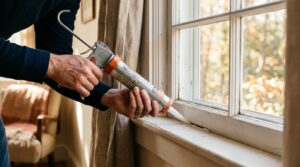
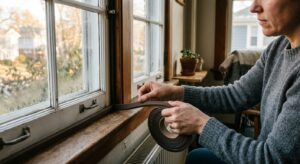
- Apply self-adhesive foam weatherstripping tape to the inside of window frames where the sash meets the frame. Choose V-strip or EPDM foam tape rated for your window gap size, usually 1/8 to 3/8 inch. This single step can reduce window air leakage by 30 to 40% and costs about $8 to $15 per window.
- Install a door sweep on exterior doors using an adhesive-backed or tension-fit model that requires no screws. Look for a sweep with a rubber or brush seal rated for gaps up to 1 inch. This eliminates the most common source of floor-level drafts and pays back its $12 to $20 cost within one billing cycle.
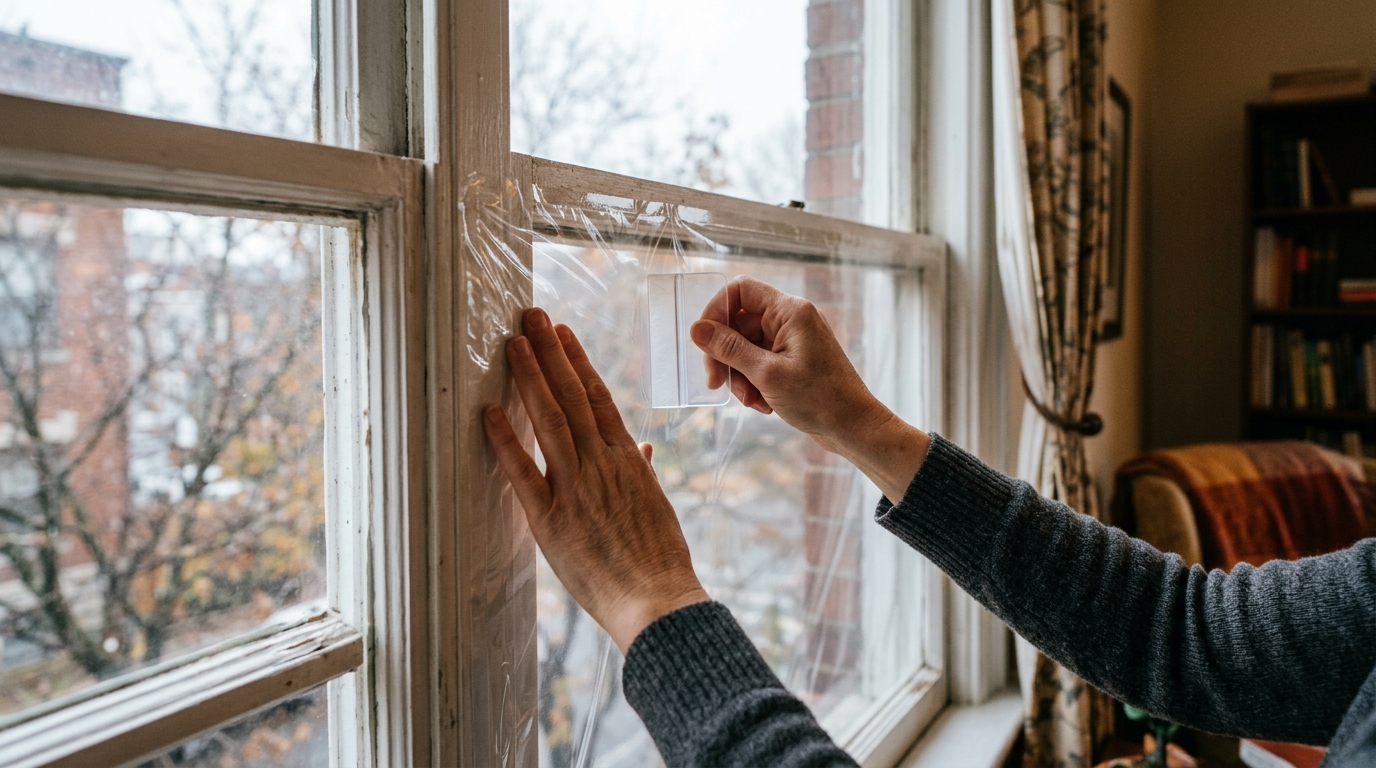
- Apply removable interior window insulation film to your single-pane or older double-pane windows. Brands like 3M Indoor Window Insulator Kit use double-sided tape and a hair dryer to create a tight air pocket that effectively raises the window’s insulating value from R-1 to approximately R-2. A kit covering three windows costs $25 to $35.
- Cover electrical outlets and light switch plates on exterior walls with foam outlet gaskets, available at hardware stores for about $3 for a pack of ten. These seal a surprisingly significant leakage path since electrical boxes often have direct gaps into the wall cavity.
- Hang thermal or blackout curtains on a tension rod over drafty windows, placing the rod as close to the ceiling as possible and letting the curtains pool slightly on the floor to create a sealed air buffer. Quality thermal curtains with a thermal backing reduce heat loss through windows by up to 25% compared to uncovered glass.
- Place thick area rugs over any hard floor surfaces above unconditioned spaces, such as floors over a garage, unheated basement, or crawl space. A 1-inch-thick rug with a felt pad underneath can add the equivalent of R-1 to R-2 of insulation underfoot, eliminating the cold-floor effect that makes rooms feel 4 to 6 degrees colder than they are.
Why It Works: The Benefits
Combining draft sealing and thermal curtains can reduce heating and cooling energy use by 10 to 25%, translating to $15 to $60 per month depending on your climate, energy rates, and how leaky the rental was to begin with.
Blocking drafts and radiant cold from windows can raise the perceived temperature near exterior walls by 3 to 6°F, eliminating cold spots that force you to overheat the center of the room just to feel comfortable in a chair by the window.
Many draft-sealing products, especially door sweeps and window foam tape, also reduce sound transmission. Heavy thermal curtains can cut outside noise by 10 to 15 decibels, which is meaningful if you rent near a busy street.
All methods in this guide use peel-and-stick, tension-based, or freestanding products that leave no permanent marks. You take everything with you when you move, protecting your security deposit.
A better-sealed and better-insulated space holds its temperature longer after the HVAC cycles off. In a poorly insulated rental, rooms can lose 5 to 8°F within an hour of the heat shutting down. These fixes can cut that loss rate nearly in half.
💰 Savings Impact by Action
Sealing gaps around windows, doors, and outlets with removable weatherstripping and foam gaskets reduces conditioned air infiltration by up to 20% in older rentals.
Closing thermal-backed curtains over single-pane windows reduces heat loss through glass surfaces by up to 25% compared to bare uncovered windows.
Interior window insulation film raises a single-pane window from R-0.9 to approximately R-2, cutting conductive heat loss through that window by up to 35%.
Setting back the thermostat 7 to 10 degrees for 8 hours per day during sleep or work hours saves approximately 10% annually on heating and cooling costs per DOE data.
Raising indoor relative humidity from 20% to 40% in winter allows a 2 to 3 degree thermostat reduction while maintaining the same perceived comfort, saving roughly 5% on heating.
🏠 Key Concepts Explained
The Science Behind It
Heat always moves from warm to cold through three mechanisms: conduction (through solid materials), convection (through air movement), and radiation (through space as infrared energy). In a poorly insulated rental, all three are working against you simultaneously. Thin walls conduct heat outdoors rapidly, gaps allow convective drafts to carry warm air out, and cold window glass radiates coldness toward anyone sitting near it. Addressing even one of these pathways meaningfully reduces the total heat loss rate.
The R-value system measures a material’s resistance to conductive heat flow. A typical older single-pane window has an R-value of about 0.9, meaning it loses heat roughly 20 times faster per square foot than a well-insulated wall at R-19. Adding interior window film doubles that value to approximately R-2, while thermal curtains with a closed air gap can push effective performance to R-3 or higher. That still is not great by modern standards, but it can cut window heat loss by 50 to 70% compared to bare glass with no coverings.
Air sealing works on a different principle: it reduces the infiltration rate, measured in air changes per hour (ACH). A leaky older rental might have a natural ACH of 0.8 to 1.5, meaning the entire volume of indoor air is replaced with outdoor air roughly once per hour. Every time that happens, your heating or cooling system has to bring that fresh air back to setpoint temperature, burning energy continuously. Sealing the highest-leakage points around windows, doors, and outlets can realistically cut infiltration by 20 to 35%, which translates directly into proportional heating and cooling savings.
Frequently Asked Questions
▼ I sealed my windows and added curtains but my apartment is still cold near the floor. What am I missing?
Cold floors are usually a sign that the space below yours is unheated, such as a basement, garage, or exterior crawl space. The floor assembly itself has little to no insulation in most older buildings. Layer thick rugs with a dense felt pad over every cold-floor area you regularly stand or sit near. If the cold is concentrated near baseboards on exterior walls, those walls have gaps between the baseboard and the subfloor that allow cold air to travel inside. Press foam backer rod into that gap for a removable, landlord-safe seal.
▼ My landlord won’t let me put anything on the windows. What can I still do?
Focus your energy on door sealing and interior strategies that touch only furniture and floor areas. A high-quality door sweep on the exterior door, outlet gaskets on all exterior-wall outlets, and thick area rugs with felt pads can collectively reduce heat loss by 10 to 15% without touching a single window. Adding a small ultrasonic humidifier in the main living area to raise humidity from 20% to 40% will also let you feel comfortable at 67 to 68°F instead of 71 to 72°F, cutting thermostat demand meaningfully.
▼ How long until I see the savings on my utility bill?
Most renters notice a bill reduction within the first full billing cycle after implementation, which is typically 30 days. The magnitude depends on your climate, energy rates, and how drafty the rental was before. In cold climates with high gas or electric rates, a full DIY weekend upgrade costing $80 to $120 commonly pays for itself within 6 to 8 weeks during peak heating season. Milder climates or rentals with newer windows may see more modest returns of $10 to $20 per month.
▼ Can I do any of this in a studio apartment where every wall is basically exterior?
Yes, and studios actually benefit more per dollar spent because you have a smaller total volume of air to keep conditioned. Focus first on any windows larger than 15 square feet, since those are the dominant heat loss pathway in a studio. A single large window insulation film kit and one set of thermal curtains can address 40 to 60% of the total envelope heat loss in a small studio. Door sealing is equally critical since a studio often has only one or two exterior doors relative to the total square footage.
Quick Tips
- Prioritize north-facing windows and any exterior door for your sealing efforts first. These surfaces lose the most heat in winter and offer the fastest payback on your investment.
- Use a plug-in energy monitor on your space heater or window AC unit for two weeks before and after making improvements. Real before-and-after watt-hour data is more motivating than estimated savings and helps you see exactly which changes made a difference.
- If your rental has a programmable or smart thermostat, set it to drop 7 to 10 degrees during the 8 hours you sleep or are away at work. The Department of Energy estimates this alone saves up to 10% annually on heating and cooling, and it costs absolutely nothing.
- When shopping for thermal curtains, look for products labeled with an independent thermal performance rating or Triple Weave construction. The label Blackout does not always mean thermal, and some blackout curtains offer very little insulating value despite their dark appearance.
Variations for Your Situation
- Apartment with No Thermostat Control: If your building controls the heat centrally and you have no thermostat access, your main levers are reducing heat loss through windows and controlling where that heat stays in your unit. Thermal curtains, window film, and outlet gaskets all reduce the rate at which the heat your radiators generate escapes back outside. A small portable fan can circulate radiator warmth more evenly. For overheated situations with no way to turn heat down, cracking a window while using thermal curtains on others maintains comfort without running up your landlord’s bill.
- Tight Budget Under $30: Start with the ceiling fan reversal and furniture repositioning, which cost nothing. Then buy one roll of V-strip foam weatherstripping tape ($8) and apply it to your single worst window. Add a towel draft stopper at the exterior door. Finish with a $3 pack of outlet gaskets for all exterior-wall outlets. This sequence addresses four of the five major heat loss pathways for under $15 and is completely reversible.
- Older Home Pre-1980 Rental: Pre-1980 construction typically has single-pane windows, no vapor barrier, and wall insulation that has settled or been omitted entirely. In these homes, prioritize window insulation film on every single-pane window as the single highest-return investment. Expect infiltration rates two to three times higher than in newer construction, so door sweeps and weatherstripping will deliver more dramatic results than in a 1990s or 2000s rental. Budget $100 to $150 for a full treatment and expect payback within 4 to 6 weeks during heating season.