Most of us treat the thermostat as the one dial that controls bedroom comfort. But your body does not just sense temperature. It cools itself by evaporating sweat, and how well that works depends heavily on the moisture already in the air. At 75 percent relative humidity, sweat barely evaporates, so a 72 degree room can feel clammy and sticky. At 20 percent humidity, that same room can leave your nose, throat, and skin dry and irritated by morning.
This matters more at night than during the day. Your core body temperature naturally drops about 1 to 2 degrees Fahrenheit as you fall asleep, and humid air interferes with that cooling process. Research on sleep environments consistently links high humidity to more wake-ups, lighter sleep, and less time in restorative stages. Humidity also drives dust mite populations, mold growth, and condensation on windows, all of which affect air quality while you sleep.
In this post, we cover the ideal humidity range for sleep, the hidden factors that push your bedroom out of it, and two practical approaches: a no-cost quick fix you can start tonight and a DIY upgrade that gives you lasting control. Along the way, you will see how fixing humidity can actually lower your energy bill instead of raising it.
What You’ll Need
Click on an item below to shop for the recommended items for this recipe on Amazon.
As an Amazon Associate, we earn from qualifying purchases.
How to Do It
- Place a digital hygrometer on your nightstand, at least a few feet from windows and vents, and check the reading at bedtime and again in the morning for three nights.
- If humidity reads above 55 percent, set your AC fan to Auto (not On) so moisture pulled from the coil drains away instead of blowing back into the room.
- Turn on the bathroom exhaust fan during showers and run it for 20 minutes afterward, and keep the bathroom door closed so steam does not drift into the bedroom.
- If humidity reads below 30 percent in winter, place a small bowl of water near a heat source or hang damp towels in the room to add moisture temporarily.
- Keep the bedroom door open slightly or run a ceiling fan so moist breath-laden air does not get trapped overnight.
- Remove indoor sources of moisture from the bedroom, such as drying laundry, large houseplants with wet soil, or open water containers.
- Choose a dehumidifier sized for your space: roughly 22 to 35 pint capacity for a bedroom up to 1,500 square feet, with a built-in humidistat and continuous drain option. Look for an ENERGY STAR model.
- Place it at least 6 inches from walls and furniture so air can circulate, ideally in or near the bedroom rather than a distant room.
- Set the target humidity to 45 to 50 percent and let it cycle automatically, then attach a drain hose to a floor drain or sink if you want to avoid emptying the tank daily.
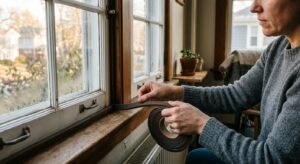
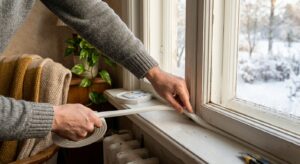
- Seal air leaks around bedroom windows and the door threshold with caulk and weather stripping so humid outdoor air is not constantly replacing the air you have dried.
- Check that your AC is properly sized and the evaporator coil and condensate drain line are clean, since a clogged drain or dirty coil sharply reduces moisture removal.
- Recheck your hygrometer after a week and fine tune the setpoint, then raise your thermostat 2 degrees at a time until you find the warmest comfortable setting.
Why It Works: The Benefits
Staying in the 40 to 50 percent humidity range helps your body shed heat naturally, which reduces night sweats and wake-ups tied to feeling clammy or overheated.
Drier air feels cooler, so you can raise the thermostat 2 to 3 degrees and stay comfortable. The DOE estimates roughly 3 percent savings per degree for cooling, so that adds up to 6 to 9 percent or more.
Dust mites thrive above 60 percent humidity and struggle below 50 percent. Holding bedroom humidity near 45 percent can significantly cut mite populations and reduce morning congestion.
Mold needs sustained humidity above about 60 percent to take hold. Controlling moisture protects bedding, closets, window frames, and drywall from costly damage and musty odors.
In heating season, indoor humidity can drop below 25 percent. Adding moisture back to the 35 to 45 percent range eases dry skin, scratchy throats, and nosebleeds.
💰 Savings Impact by Action
Drier air feels cooler, letting you raise the setpoint 3 degrees for roughly 9 percent cooling savings at about 3 percent per degree.
Eliminating short cycling improves moisture removal and efficiency, trimming wasted start-up energy by an estimated 5 to 10 percent.
Sealing leaks keeps humid outdoor air out, reducing the latent load your AC must handle by up to 10 to 15 percent.
Using Auto fan mode and bathroom exhaust fans prevents re-humidification and lowers overall moisture load by around 5 percent.
🏠 Key Concepts Explained
The Science Behind It
Your body maintains a core temperature near 98.6 degrees, and at night it needs to dump heat to the environment to enter and stay in deep sleep. It does this through convection, radiation, and evaporation of moisture from the skin. When humidity is high, the evaporation pathway slows because the air has less capacity to absorb more water vapor. Your body compensates by sweating more, but that extra sweat does not evaporate efficiently, so you end up wet and warm rather than cool.
This is why heat index charts exist. At 75 degrees and 40 percent humidity, the apparent temperature is about 73 degrees. Push the humidity to 80 percent and it feels closer to 78 degrees. That five degree difference comes entirely from moisture, not from the thermostat. Air conditioners help because the cold evaporator coil condenses water vapor out of the air, but only if the system runs long enough per cycle to do it.
At the other end of the spectrum, very dry air pulls moisture from your skin and mucous membranes, which can dry out nasal passages and make you more vulnerable to irritation and snoring. The 40 to 50 percent window balances both problems: enough moisture to keep airways comfortable, and low enough to allow efficient evaporative cooling while discouraging mold and dust mite growth.
Frequently Asked Questions
▼ Why is my bedroom still clammy even though the AC is running all night?
Your AC is likely oversized and short cycling, cooling the air without running long enough to remove moisture. Check your hygrometer, and if humidity stays above 55 percent, add a dehumidifier or ask an HVAC pro about a variable speed system or a whole-home dehumidifier. Also confirm the coil and condensate drain are clean.
▼ Can renters do this without landlord permission?
Yes. A hygrometer, a portable dehumidifier or humidifier, bathroom fan habits, and breathable bedding all require no modifications. Avoid permanent changes like caulking over landlord-installed weather stripping, and just use removable window film or draft stoppers if you need to reduce humid air infiltration.
▼ How long before I actually notice a difference in sleep and on my bill?
Most people notice better comfort within the first one to three nights once humidity lands in the 40 to 50 percent range. Energy savings show up on your next bill if you also raise the thermostat 2 to 3 degrees, typically a 5 to 10 percent reduction in cooling costs during summer.
▼ What if my home is older than 30 years?
Older homes tend to have more air leakage and less effective vapor control, so humid outdoor air gets in easily and moisture can collect in walls and basements. Start with air sealing around windows, doors, and attic penetrations, then use a dehumidifier sized for the space. If you notice musty smells or damp spots, have the crawlspace or basement checked for moisture sources.
▼ Is a dehumidifier or a humidifier better for sleep?
It depends on your reading. Use a dehumidifier if your hygrometer shows more than 55 percent, which is common in summer and humid climates, and a humidifier if it shows less than 30 percent, which is common in winter heating season. Let the hygrometer decide rather than guessing.
Quick Tips
- Use your AC’s fan setting on Auto, not On, so condensed moisture drains instead of re-evaporating into your bedroom.
- Choose breathable bedding like cotton or linen, which wicks moisture better than polyester and makes humid nights feel more comfortable.
- Check your hygrometer in the morning as well as at bedtime, since humidity often climbs overnight from breathing and perspiration.
- Check humidity in different seasons, since summer problems are usually too much moisture while winter problems are usually too little.
Variations for Your Situation
- Apartment/Rental: Start with a $12 hygrometer and a portable 20 to 35 pint dehumidifier ($150 to $250) that plugs into a standard outlet and needs no installation. Run it with the bedroom door closed, and use a continuous drain hose to a bathtub or sink if allowed. Skip permanent sealing and use removable weather stripping and window film instead.
- Tight Budget (under $50): Buy a hygrometer ($10 to $15), switch your AC fan to Auto, run the bathroom exhaust fan for 20 minutes after showers, and keep wet laundry out of the bedroom. Add cotton bedding and a ceiling fan, and raise your thermostat 2 degrees once humidity is under 55 percent. These steps alone can noticeably improve sleep comfort at almost no cost.
- Older Home (pre-1980): Expect higher baseline humidity from air leaks and weaker vapor barriers. Prioritize caulking and weather stripping around bedroom windows, sealing attic bypasses, and running a dehumidifier in the bedroom or basement below it. Check crawlspaces and basements for standing moisture, since ground moisture can raise humidity throughout the house.