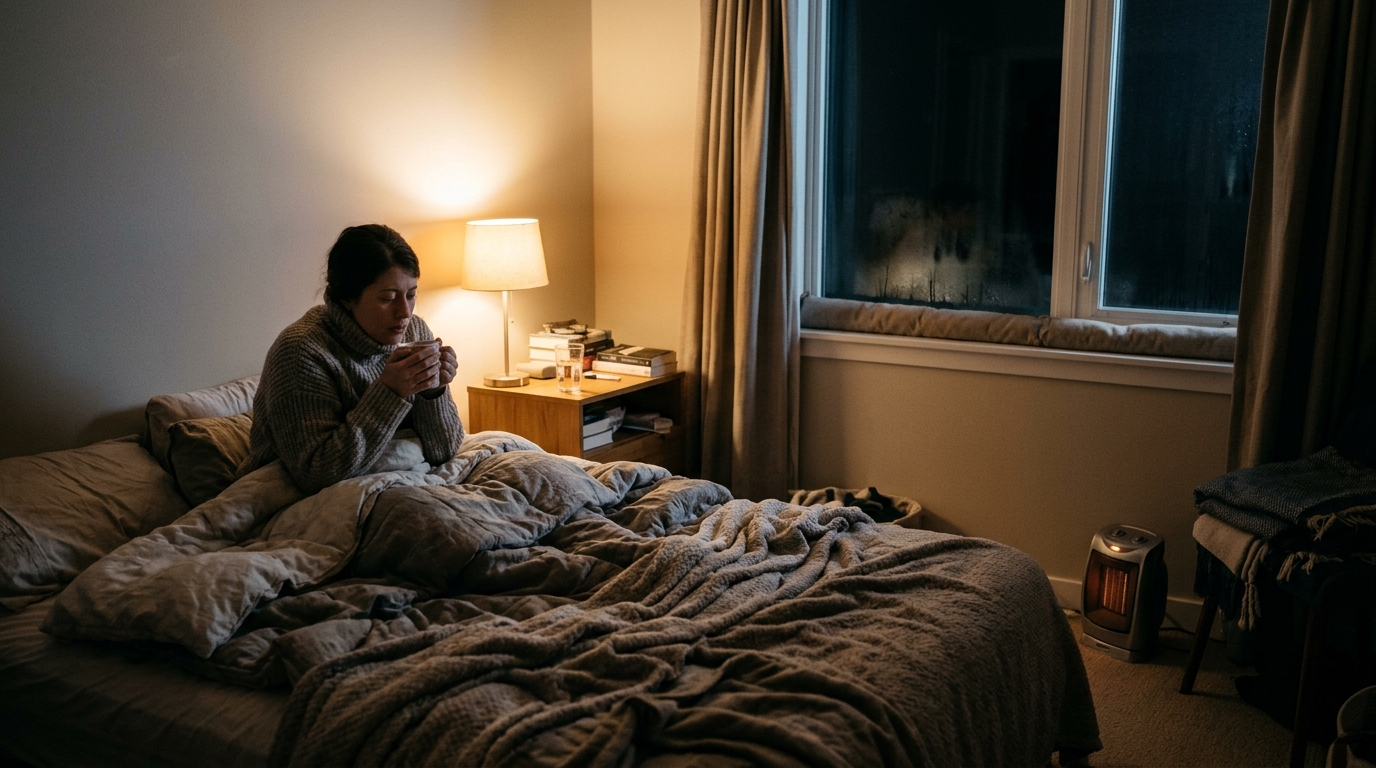
You set the thermostat to 70 degrees, the living room feels perfect, and then you walk into the bedroom and it feels like a different climate zone. You are not imagining it, and you are not alone. Uneven room temperatures are one of the most common comfort complaints homeowners have, and the usual response of cranking the thermostat up just overheats the rest of the house and wastes energy.
The good news is that a cold bedroom has a cause, and that cause can almost always be found and fixed. The culprits tend to fall into three buckets: not enough warm air reaching the room (duct and airflow problems), too much heat escaping (air leaks and thin insulation), or a room that is simply exposed to more of the outdoors than the others (extra exterior walls, a room over a garage, or a cold attic above).
In this post we will walk through how to diagnose the problem in about 20 minutes, a zero-cost quick fix you can do today, and a more thorough DIY upgrade that tackles the root cause. We will also cover what to do when the problem is bigger than a weekend project, including when it is worth calling an HVAC pro.
What You’ll Need
Click on an item below to shop for the recommended items for this recipe on Amazon.
As an Amazon Associate, we earn from qualifying purchases.
How to Do It
- Check the bedroom supply vent. Make sure it is fully open, not blocked by furniture, rugs, or curtains, and that you can feel air coming out when the furnace runs.
- Replace the furnace filter if it is dirty. A clogged filter restricts airflow to the entire house and hits the farthest rooms hardest. A new filter costs roughly $5 to $15.
- Check the door gap. If the door is closed and there is no return vent or gap at the bottom of 1/2 inch or more, air cannot circulate back to the furnace. Leave the door open at night as a test, or undercut the door slightly.
- On a cold day, run your hand along window frames, outlets on exterior walls, and baseboards to find drafts, or use a lit incense stick to watch the smoke bend toward leaks.
- Close curtains at night to add a layer of insulation over windows, and open them on sunny days to gain free solar heat.
- Seal gaps around windows and trim with paintable caulk. Replace worn weatherstripping on windows and the door with new foam or V-strip weatherstripping.
- Install foam gaskets behind outlet and switch plates on exterior walls, which are surprisingly leaky. This takes about 5 minutes per outlet and costs a few dollars total.
- Add a door sweep to the bottom of the bedroom door if it faces a cold hallway, or seal the exterior door if the room has one.
- If the room is under an attic, check insulation depth. Aim for R-38 to R-60 depending on your climate zone. Add unfaced batts or blown-in insulation on top of existing material to fill thin or compressed areas.
- Install heavy thermal curtains or cellular shades on cold windows, or apply a clear window insulation film kit for older single-pane windows.
- Seal visible gaps in accessible ductwork in the attic or crawl space using mastic sealant or foil tape (not standard cloth duct tape), which stops warm air from leaking out before it reaches the bedroom.
- Schedule a home energy audit or HVAC airflow assessment. A blower door test and duct leakage test pinpoint exactly where the problem lies, and some utilities offer these at a discount.
- Have a technician balance the dampers on your ductwork so more warm air is directed to the cold bedroom.
- If the duct run to the bedroom is too long, undersized, or kinked, ask about rerouting or adding a dedicated return air pathway or a transfer grille.
- For persistent problems, consider adding a small supplemental source such as a ductless mini-split head for that room, which can both heat and cool it independently.
Why It Works: The Benefits
Most homeowners can close a 5 to 8 degree gap between rooms by correcting airflow and sealing leaks, so the whole house feels consistent without raising the thermostat.
Air sealing and insulation upgrades typically cut whole-home heating and cooling costs by 10 to 15%, according to ENERGY STAR estimates.
Sleep research generally points to a bedroom temperature of roughly 60 to 67 degrees as ideal for most adults, and a stable temperature without cold drafts helps you stay asleep.
When the whole house heats evenly, the system cycles less and you stop overheating other rooms just to warm up the cold one.
Cold surfaces in a bedroom attract moisture. Warming and sealing the room reduces condensation on windows and walls, which helps prevent mold growth.
💰 Savings Impact by Action
Sealing gaps around windows, outlets, and trim can reduce whole-home heating and cooling costs by around 15% on average, per ENERGY STAR.
Fixing leaky ducts in unconditioned spaces can recover up to 20% of lost heated air, improving delivery to far rooms.
Bringing attic insulation up to recommended R-values can cut heating and cooling costs by roughly 10 to 15%.
Insulating curtains or cellular shades can reduce winter window heat loss by up to 10 to 25% in affected rooms.
🏠 Key Concepts Explained
The Science Behind It
Heat always moves from warmer areas to colder ones, and it does so in three ways: conduction (through solid materials like walls and glass), convection (through moving air), and radiation (from warm bodies to cold surfaces). A bedroom that feels colder than the rest of the house is almost always losing heat faster through one or more of these paths, or receiving less heat from the HVAC system, or both.
Insulation is rated by R-value, which measures resistance to heat flow. A wall with R-13 insulation loses far less heat than an uninsulated wall, and a window with an R-value of 2 loses heat roughly six times faster than that wall per square foot. This is why a room with large windows and an exterior corner feels cold even when the air temperature reads normal: your body radiates heat toward those cold surfaces, so you feel chilly.
Airflow matters just as much. Forced-air systems rely on a balanced loop: supply air goes in, return air comes back. When a bedroom door is closed with no return path, the room pressurizes slightly and the flow of warm air slows. Meanwhile, leaky ducts in an unconditioned attic or crawl space can lose 20 to 30% of the air that passes through them, according to the U.S. Department of Energy, and the rooms at the end of the run suffer first. Fixing airflow and sealing the envelope together delivers far better results than either fix alone.
Frequently Asked Questions
▼ Why is my bedroom still cold even after I opened the vent and replaced the filter?
That usually points to a duct problem or heat loss through the building envelope. Check for disconnected or crushed ductwork in the attic or crawl space, then look for drafts and thin insulation around the room. If you cannot find an obvious cause, a duct leakage test from an HVAC pro will pinpoint it.
▼ Can renters fix a cold bedroom without landlord permission?
Yes, many fixes are renter-friendly: removable window insulation film, thermal curtains, door sweeps, draft stoppers, outlet gaskets, and rugs. Avoid caulking or altering ductwork without permission, and tell your landlord if you suspect a duct or insulation problem, since those are their responsibility.
▼ How long before I notice savings on my heating bill?
Comfort improvements are typically noticeable the same day you seal gaps or fix airflow. Bill savings show up in your next one or two billing cycles, though they vary with weather. Sealing and insulation upgrades commonly pay for themselves in 1 to 3 years.
▼ What if my home is older than 30 years?
Older homes tend to have more air leakage, less insulation, and aging ductwork, so the same fixes often have an even bigger payoff. Start with air sealing and attic insulation, since those usually give the best return, and have a pro inspect old ducts and any vermiculite insulation before disturbing them.
▼ Is it normal for a bedroom over the garage to be colder?
Yes, it is one of the most common problem spots because the floor is exposed to unheated space. Insulating the garage ceiling (or adding spray foam or rigid foam to the floor cavity) and sealing the rim joist area can make a dramatic difference, often 5 to 10 degrees warmer.
Quick Tips
- Run your ceiling fan clockwise on low in winter to gently push warm air down from the ceiling without creating a draft.
- Keep furniture and heavy drapes at least 6 inches away from supply vents and baseboard heaters.
- Use a rug on bare floors, especially over a garage or crawl space, to reduce heat loss and make the room feel warmer underfoot.
- Schedule a furnace tune-up each fall, since a dirty blower or worn components can reduce airflow before you notice any symptoms.
Variations for Your Situation
- Apartment/Rental: Focus on removable fixes such as insulating window film ($10 to $20 per window), thermal curtains ($30 to $80), a door sweep ($10 to $15), foam outlet gaskets ($5), and a rug. Report cold-air drafts, broken weatherstripping, or duct problems to your landlord in writing.
- Tight Budget (under $50): Replace the furnace filter, make sure vents are open and unblocked, add weatherstripping or a rolled-towel draft stopper at the door, close curtains at night, and seal the worst drafts with rope caulk or foam tape. These steps often deliver most of the improvement.
- Older Home (pre-1980): Prioritize attic insulation to R-38 or higher and air sealing around the attic hatch, recessed lights, and top plates, which are major leak points in older construction. Have ducts inspected for leaks and old, unlined runs, and get any vermiculite or suspect insulation tested before touching it.