Run your hand along the bottom of your front door on a cold day and you may feel a river of icy air pouring in. That gap, often just a quarter inch wide, is doing more damage than you might think. The Department of Energy estimates that air leaks through doors and windows account for 25 to 30% of home heating and cooling energy use, and the door threshold is one of the most common and overlooked culprits in that figure.
The good news is that fixing it does not require a contractor, a full weekend, or much money at all. A basic door sweep costs $10 to $20 at any hardware store, installs with a screwdriver in about 20 minutes, and starts working the moment you close the door. For most homes, it pays for itself within a single heating season, sometimes within weeks.
This post walks you through exactly how to diagnose your door gap, choose the right product, and install it correctly the first time. We also cover a budget-friendly no-tool fix for renters, and a more durable threshold replacement for homeowners who want a permanent solution.
What You’ll Need
Click on an item below to shop for the recommended items for this recipe on Amazon.
As an Amazon Associate, we earn from qualifying purchases.
How to Do It
- Measure the width of your door at the base using a tape measure so you buy the right size draft stopper or door snake.
- Purchase a foam or fabric draft stopper designed to slide over the bottom of the door. Look for one with a silicone or rubber bottom strip for better floor contact.
- Slide the draft stopper over the door bottom so it sits snugly, with the seal contacting the floor when the door is closed.
- Open and close the door several times to confirm the stopper stays in position and does not bunch up or shift.
- Run your hand along the base of the closed door to check for remaining drafts and adjust the stopper position as needed.
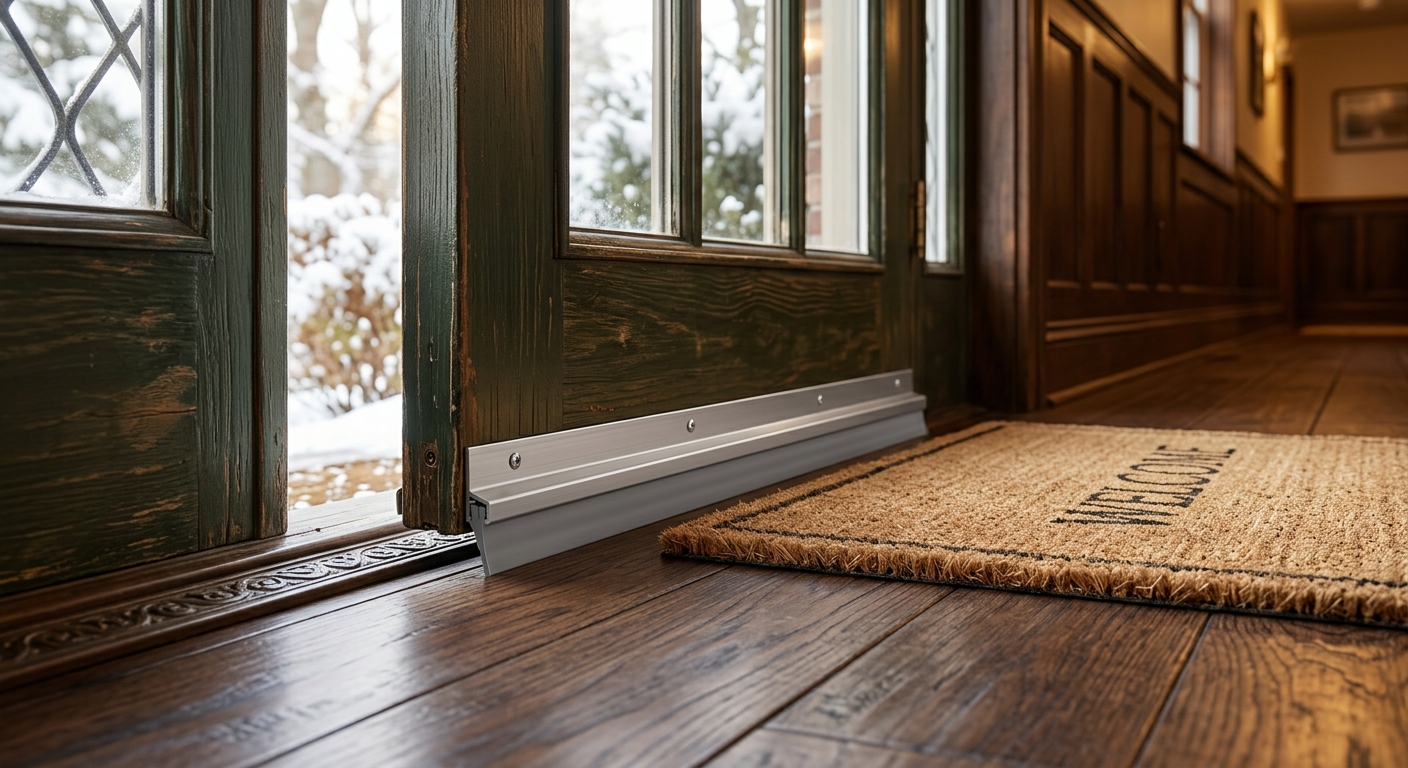
- Buy an automatic or standard door sweep sized for your door width. Automatic sweeps drop when the door closes and lift when it opens, reducing floor drag and wear.
- Open the door and clean the bottom edge and the floor threshold area with a damp cloth, removing any dirt, old adhesive, or debris.
- Hold the sweep against the interior face of the door bottom and mark the screw hole positions with a pencil. The sweep fin should just contact the threshold when the door is closed.
- Pre-drill pilot holes at your marks using a 1/16-inch bit to prevent the door from splitting, especially on hollow-core doors.
- Align the sweep with the pilot holes and drive the included screws snugly but not so tight that they strip the holes or warp the sweep bracket.
- Close the door and check the seal by sliding a piece of paper under the door. You should feel resistance all the way across. Adjust the sweep height if any section of paper slides freely.
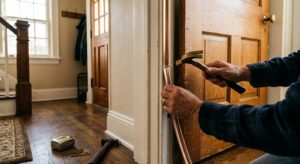
- Remove the old threshold by unscrewing any fasteners and prying it up carefully with a flat bar. Note the height and width before you go to the hardware store.
- Purchase an adjustable interlocking threshold set sized to your door width. These include a base plate and a vinyl or rubber insert that compresses against the door bottom.
- Clean the subfloor area where the old threshold sat, removing any old caulk, adhesive, or debris with a putty knife.
- Apply a thin bead of exterior-grade caulk along the back edge of the new threshold base before setting it in position to seal the joint to the floor.
- Set the threshold in place, pre-drill pilot holes, and secure it with the provided screws. Do not overtighten, as this can bow the threshold and create uneven contact.
- Adjust the height of the vinyl insert using the adjustment screws until it compresses evenly against the door bottom when closed. Run a paper test across the full width to confirm an even seal.
Why It Works: The Benefits
Sealing door gaps is one of the highest-return air sealing investments available. The DOE credits whole-home air sealing with saving 10 to 20% on energy bills, and the front door threshold is one of the top five leakage points in most homes.
Cold air pooling at floor level near an unsealed door can make the entryway feel 5 to 8 degrees colder than the rest of the room. A proper door sweep eliminates that cold draft within minutes of installation.
Gaps at the door bottom are an entry point for dust, pollen, and outdoor particulates. Sealing the threshold noticeably reduces the amount of dirt tracked in by air rather than foot traffic.
A tight door seal reduces sound transmission by blocking the air path that carries sound waves. Homes near busy streets often notice a meaningful reduction in traffic noise after installing a quality door sweep.
A gap as small as 1/4 inch is wide enough for insects and small rodents to enter. A door sweep closes that entry point and is one of the first steps pest control professionals recommend for gap sealing.
💰 Savings Impact by Action
Sealing the door bottom gap eliminates one of the top five air infiltration points in a home, reducing heating load by an estimated 5 to 10%.
Sealing all door and window gaps throughout the home collectively cuts heating and cooling energy use by 10 to 20% according to DOE data.
Replacing a worn or damaged threshold with an adjustable interlocking system improves the door seal by up to 40% compared to a sweep alone on a deteriorated threshold.
Combining a door sweep with new side and top weatherstripping seals the entire door perimeter and can cut door-specific infiltration by up to 75%.
🏠 Key Concepts Explained
The Science Behind It
Air moves from high pressure to low pressure, and the base of your front door sits at the intersection of two pressure gradients working against you in winter. First, wind pressure on the exterior wall pushes outdoor air inward through any available gap. Second, the stack effect inside your home creates negative pressure at lower levels as warm air rises and escapes through attic and upper-floor gaps, essentially vacuuming cold air in through the door bottom. These two forces combine to make that small threshold gap punch well above its size in terms of energy impact.
A properly installed door sweep works by creating a physical barrier that forces air to change direction and lose velocity before it can enter. The rubber or vinyl fin compresses against the threshold, eliminating the straight-line path that allows pressure-driven air movement. The tighter the compression contact across the full width of the door, the more resistance the seal creates. Even a 1-inch break in the seal, such as a warped sweep bracket or a worn fin tip, can account for 30 to 40% of the gap’s original leakage because air finds and exploits the path of least resistance.
From a heat transfer standpoint, sealing the air gap addresses convective heat loss, which is the movement of heat carried by moving air molecules. This is distinct from conductive loss through the door material itself or radiant loss from a cold surface. Convective loss through a drafty door threshold is typically the dominant mechanism in cold climates, which is why a $15 seal delivers a savings return that far exceeds its cost. The DOE classifies air sealing as one of the top three highest-return home efficiency measures, alongside attic insulation and HVAC servicing.
Frequently Asked Questions
▼ My door sweep is installed but I can still feel cold air coming in. What am I missing?
Check whether the sweep makes full contact across the entire door width by sliding a piece of paper underneath in several spots. If it passes freely on one side, the door may be warped or the sweep is mounted slightly off level. Loosen the screws, adjust the sweep angle, and retighten. Also inspect the side and top weatherstripping, because a properly sealed bottom combined with a leaky door frame will still feel drafty.
▼ Can I do this fix as a renter without my landlord’s permission?
Yes, in most cases the no-tool draft stopper approach requires zero modifications and leaves no marks, making it completely renter safe. Avoid screw-mounted sweeps unless your lease specifically permits minor repairs, though many landlords will actually approve a door sweep installation since it protects the property. When in doubt, ask in writing so you have documentation.
▼ How long until I actually see the savings on my energy bill?
You will feel the comfort difference immediately. The bill savings will show up in your next monthly statement if you install during active heating or cooling season. A $15 door sweep saving 5 to 10% on a $150 monthly heating bill saves $7 to $15 per month, meaning it pays for itself within 1 to 2 billing cycles.
▼ What if my door has a big gap because the threshold is broken or rotted?
A door sweep will not fix a damaged threshold because the sweep fin needs a flat, solid surface to compress against. In this case, go directly to the threshold replacement approach described above. A new adjustable threshold costs $30 to $80 and is a straightforward DIY project with basic tools.
▼ My front door is a sliding glass door. Does any of this apply?
Sliding glass doors have their own dedicated seal systems at the bottom track. Look for a sliding door bottom seal or pile weatherstrip replacement specific to your door brand. The same air leakage principles apply, but the products and installation steps are different from a standard hinged door sweep.
Quick Tips
- Replace door sweeps every 5 to 7 years even if they look fine. The rubber fin degrades and loses compression over time, often without visible cracking.
- Pair your door sweep installation with a check of the side and top door weatherstripping. A sealed bottom gap with leaky sides still allows significant infiltration.
- In climates with heavy rain, choose a sweep with a drip cap or rain deflector to prevent water from being driven under the door during storms.
- If your front door faces north or directly into prevailing winter winds, prioritize an automatic drop sweep over a standard sweep. The automatic mechanism reduces floor drag and maintains a tighter seal under wind pressure.
Variations for Your Situation
- Apartment/Rental: Skip the screw-mounted sweep entirely and buy a slip-on draft stopper with a silicone bottom strip for $8 to $15. Brands like Duck Brand and Frost King make sizes to fit most standard door widths. Place it on the door bottom before bed or before leaving the unit for extra savings. If your landlord is responsible for maintenance, document the gap with photos and submit a written maintenance request, as a drafty door is a habitability issue in most leases.
- Tight Budget (under $15): A tightly rolled bath towel or a fabric draft snake sewn from scrap material costs nothing and blocks most of the cold air immediately. For a step up, a foam self-adhesive door bottom seal strip costs $5 to $8 and requires no tools, though adhesive types last only 1 to 2 seasons before the foam compresses permanently. These are solid stopgap measures while saving up for a proper sweep.
- Older Home (pre-1980): Homes of this era often have uneven floors, settled door frames, and out-of-square doors that make standard sweeps seal poorly on one side. Measure the gap at three points across the door width before buying. If the gap varies by more than 1/4 inch, choose an adjustable automatic sweep with a flexible fin, or opt for a full threshold replacement with a height-adjustable vinyl insert that can compensate for an uneven floor surface.