When temperatures outside climb past 95°F for days at a time, most homeowners reach for the thermostat and brace for the electric bill. The problem is that a central AC system was never designed to be your only defense against a heat wave. It treats the symptom, not the cause, and running it at full blast can add hundreds of dollars to a single month’s bill while still leaving rooms that feel stuffy and uncomfortable.
The real solution is a layered approach that prevents heat from entering your home in the first place, manages airflow to flush out accumulated heat, and uses targeted cooling where you actually spend time. Building science research consistently shows that homes lose or gain heat through predictable pathways, and once you understand those pathways, you can block them strategically rather than just throwing more cooling power at the problem.
This guide covers practical, proven strategies ranging from free changes you can make right now to affordable upgrades that pay for themselves in a single summer. Whether you have central air, a window unit, or no AC at all, these techniques will help you stay cooler with less energy and more control.
What You’ll Need
Click on an item below to shop for the recommended items for this recipe on Amazon.
As an Amazon Associate, we earn from qualifying purchases.
How to Do It
- Close all windows, blinds, and curtains on the south and west sides of the house by 8 AM before direct sunlight hits those surfaces. Keep them closed until the sun moves off those exposures in the late afternoon.
- Switch your ceiling fans to run counterclockwise (the summer setting) at medium or high speed. This creates a wind chill effect that makes 78°F feel like 72°F, letting you raise the thermostat 4 to 6°F without discomfort.
- Eliminate internal heat sources during peak heat hours (11 AM to 6 PM). Use the microwave or outdoor grill instead of the oven, switch off incandescent or halogen lights that are not needed, and unplug electronics on standby.
- After sunset, when outdoor air drops below indoor temperature (usually below 75°F), open windows on opposite sides of the house low on one side and high on the other to trigger the stack effect and flush accumulated heat.
- Hang damp towels or sheets in front of open windows or fans overnight. As air passes through the moist fabric, evaporative cooling can drop the felt temperature by 3 to 5°F in dry climates.
- During the hottest afternoon hours, shift activity to the lowest level of your home. Basements and ground-floor rooms are typically 8 to 12°F cooler than upper floors due to natural heat stratification.
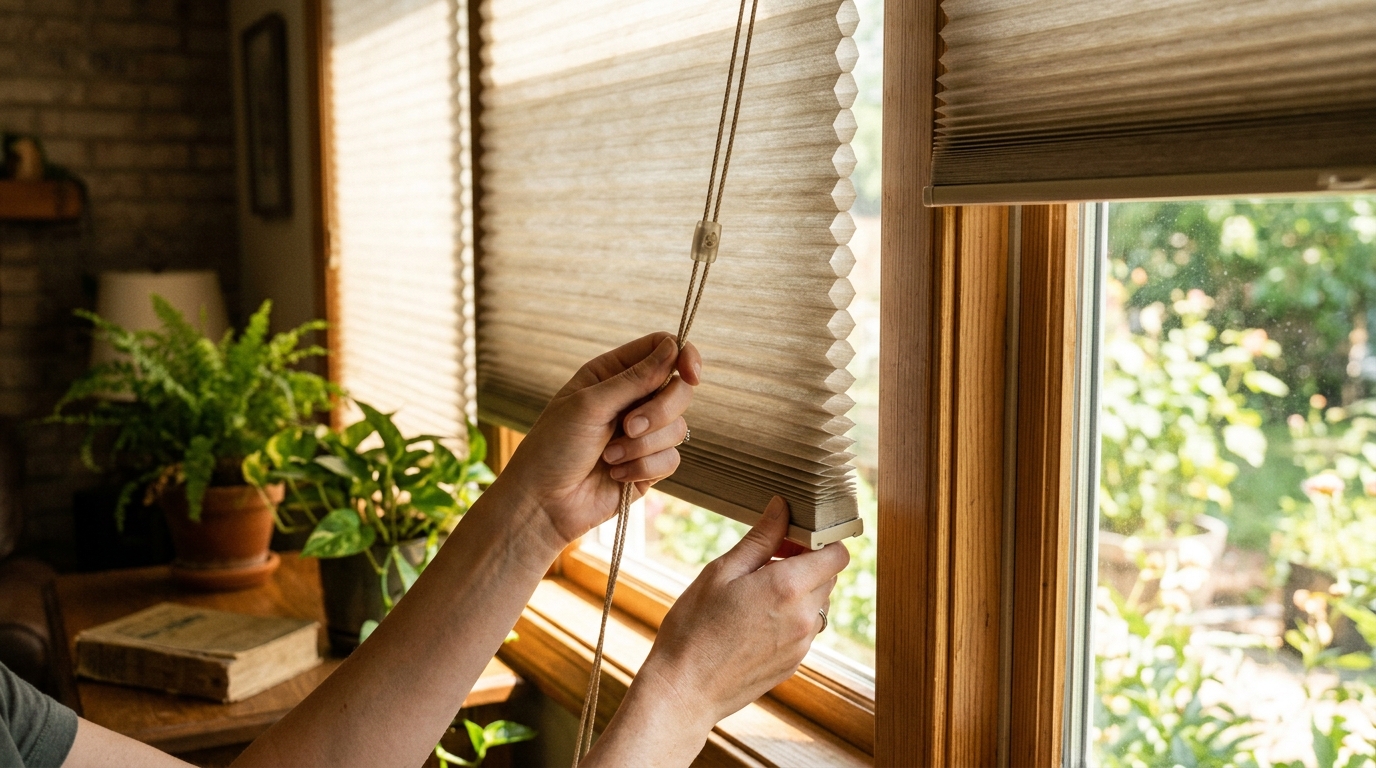
- Install reflective blackout or cellular honeycomb blinds on south and west-facing windows. Cellular shades with a white exterior face can reduce solar heat gain through those windows by up to 60%, costing $25 to $60 per window.
- Apply reflective window film to south and west-facing windows. Quality solar control film (look for Solar Heat Gain Coefficient ratings below 0.40) blocks 55 to 70% of solar heat and costs $1 to $3 per square foot as a DIY installation.
- Add a whole-house or attic fan if your attic lacks one. An attic fan ($150 to $300 installed DIY) exhausts superheated attic air that can reach 140 to 160°F on a hot day, reducing the heat radiating down through your ceiling by 10 to 25%.
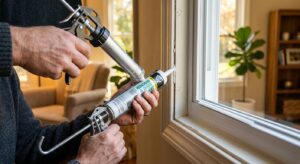
- Seal attic bypass leaks around light fixtures, plumbing penetrations, and the attic hatch using fire-rated caulk and foam. Hot attic air infiltrating living spaces can raise indoor temperatures by 3 to 5°F even with AC running.
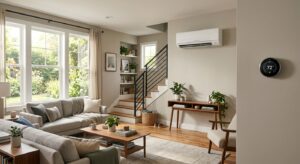
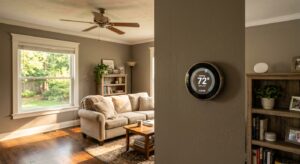
- Install a programmable or smart thermostat if you do not already have one. Set it to pre-cool your home to 72 to 74°F between 6 and 9 AM before peak rates kick in, then let it drift to 78°F during peak hours. This can reduce cooling costs by 10 to 15% during heat events.
- Place a portable or window AC unit in the one or two rooms where occupants spend the most time sleeping or working. Cooling a 250 to 400 square foot zone with a 6,000 to 8,000 BTU unit costs roughly $0.08 to $0.12 per hour, far less than cooling the entire home.
- Add blown-in attic insulation to bring your attic to R-49 to R-60 in hot climates. Every dollar spent on attic insulation returns $1.50 to $2.50 in energy savings, with an average payback period of 3 to 5 years.
- Install exterior solar shades or retractable awnings on south and west-facing windows. Exterior shading is three times more effective than interior blinds because it stops heat before it enters the glass, reducing solar gain by up to 80%.
- Plant deciduous trees or install shade structures on the south and west sides of the home. Mature shade trees can reduce cooling costs by 15 to 35% and increase home value by $5,000 to $15,000 according to USDA research.
- Have a professional apply a cool roof coating or install a light-colored or metal roof during your next re-roofing project. Cool roofs reflect 60 to 90% of solar radiation versus 5 to 15% for a standard dark asphalt shingle, reducing attic temperatures by 50 to 60°F.
- Install a whole-house fan (1,500 to 5,000 CFM capacity) in a central ceiling location. A properly sized whole-house fan can replace all the air in your home every minute or two, dropping indoor temperatures by 5 to 10°F within 15 minutes of operation on a cool evening, at a fraction of the cost of running central AC.
Why It Works: The Benefits
Blocking solar gain and reducing internal heat loads can cut your AC runtime by 20 to 40% during heat wave conditions, translating to $50 to $200 in savings over a single hot month depending on your utility rates and home size.
Targeted airflow and shading reduce hot spots in west-facing rooms by 6 to 10°F compared to AC-only cooling, making the whole home feel consistently comfortable rather than having one cold room and several warm ones.
Every degree you reduce the cooling load extends compressor run cycles and prolongs equipment life. Homes that implement passive cooling strategies typically see 15 to 25% fewer AC operating hours over a summer season.
Passive strategies like nighttime ventilation, exterior shading, and thermal mass management keep a well-prepared home 10 to 15°F cooler than outdoor air even without any powered cooling equipment running.
The human body needs core temperature to drop 1 to 2°F to initiate deep sleep. Keeping bedrooms below 68 to 70°F at night using fans and nighttime ventilation improves sleep quality without running AC all night.
💰 Savings Impact by Action
Blocking direct sunlight through south and west windows reduces solar heat gain by up to 30% of total cooling load, the single highest-impact passive strategy in most homes.
Upgrading attic insulation to R-49 reduces heat radiating through the ceiling into living spaces by 15 to 25%, cutting cooling runtime proportionally.
Using ceiling and whole-house fans effectively allows raising the thermostat 4 to 6°F without comfort loss, saving roughly 8 to 14% on cooling energy per degree of setback.
Pre-cooling during off-peak morning hours and allowing temperature drift during peak rate periods cuts peak-day cooling bills by 10 to 15% with no comfort sacrifice.
Eliminating oven use, switching to LED lighting, and unplugging standby electronics reduces internal heat gains that your AC would otherwise have to remove, saving 5 to 10% on cooling energy.
🏠 Key Concepts Explained
The Science Behind It
Your home gains heat through three mechanisms during a heat wave: radiation (sunlight passing through windows and heating surfaces), conduction (heat moving through walls, ceilings, and floors from hot outdoor air), and convection (warm air infiltrating through gaps and leaks). Understanding which pathway dominates in your home tells you exactly where to focus your efforts. In most homes, solar radiation through windows accounts for 25 to 35% of total summer cooling load, making window management the highest-leverage single action you can take.
The concept of thermal lag is your most powerful passive ally. Dense materials like concrete slab floors, brick walls, and tile absorb heat slowly over many hours before releasing it. A well-insulated home with good thermal mass can maintain a stable interior temperature for hours after outdoor temperatures spike, essentially borrowing coolness from the morning and repaying it slowly throughout the afternoon. The key is resetting that thermal mass every night by ventilating aggressively when outdoor air cools, ideally below 70°F, so the cycle can repeat the next day.
Evaporative cooling works on the principle that water absorbs 540 calories of heat per gram as it evaporates, drawing energy directly from the surrounding air. This is why a wet cloth on your neck or a fan blowing over a shallow pan of water feels dramatically cooler. In humid climates above 60% relative humidity, evaporative effects are reduced because the air is already saturated, but even there, increased air movement from fans lowers perceived temperature by 4 to 6°F through convective heat transfer from the skin, allowing you to tolerate a thermostat set 4 to 6°F higher without feeling warmer.
Frequently Asked Questions
▼ Why does my house feel hot even with the AC running constantly?
A continuously running AC that cannot keep up is usually overwhelmed by solar gain, air leaks, or an undersized system. Start by checking whether your attic is above 130°F on a hot afternoon, as this indicates poor insulation or ventilation. Close all south and west blinds by mid-morning and seal any obvious attic bypasses around light fixtures. If the system still cannot maintain 78°F on a 95°F day, have an HVAC technician check refrigerant charge and duct leakage.
▼ Is it better to leave the AC on all day or turn it off when I leave?
During a heat wave, turning AC off completely while you are away allows indoor temperatures to climb well above 85°F, and it can take 2 to 3 hours and significant energy to recover when you return. A better strategy is to set the thermostat to 82 to 84°F while away and return it to 78°F about 30 minutes before you arrive. A smart thermostat with geofencing handles this automatically and typically saves 10 to 15% compared to either extreme.
▼ Can I use fans instead of AC to stay comfortable above 95°F outside?
Fans alone cannot cool a room when outdoor temperatures exceed 95°F because they move hot air rather than remove heat from it. Above that threshold, fans are most effective when used in combination with AC set at 78°F, which lets you raise the thermostat 4 to 6°F without discomfort. If you have no AC, focus on blocking all solar gain, staying in the lowest level of the home, and using cool water on skin directly rather than relying on air movement alone.
▼ Why are my upstairs rooms so much hotter than downstairs during a heat wave?
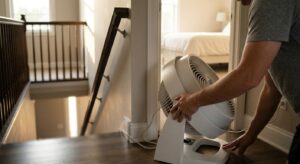
Hot air stratifies upward, and upper floors are directly below the attic which can reach 140 to 160°F on a hot day. This heat radiates through the ceiling into the room, raising temperatures 10 to 15°F above the ground floor. The fastest fix is adding a box fan in an upper hall window exhausting hot air outward, and a second fan on the ground floor drawing cooler air in. A longer-term solution is adding attic insulation to R-49 and improving attic ventilation.
▼ How do I know if nighttime ventilation will actually help or just bring in hot air?
Nighttime ventilation only helps when outdoor air temperature drops below your indoor temperature, typically below 75°F. Check your local weather app or a simple outdoor thermometer before opening windows. In most continental US climates, temperatures drop enough for effective nighttime ventilation at least a few hours between midnight and 6 AM even during heat waves. In coastal or desert climates this cooling window can be more predictable and longer.
Quick Tips
- Set your water heater to vacation mode during a heat wave if you are home during the day. A standard water heater radiates 300 to 500 BTUs per hour of waste heat into your living space, which your AC then has to remove.
- Use a laser thermometer to measure the surface temperature of your west-facing walls and ceiling in late afternoon. If they read above 85°F, that surface is actively radiating heat into the room and is a priority for shading or insulation.
- Freeze two-liter bottles of water and place them in front of a box fan pointed into the room. This improvised swamp cooler works best in dry climates and can drop air temperature by 3 to 5°F for about two hours per bottle.
- Run bath and kitchen exhaust fans for 15 minutes after cooking, showering, or any activity that generates heat or steam. These fans exhaust hot humid air directly outside and replace it with slightly cooler outdoor air when temperatures allow.
Variations for Your Situation
- Apartment or Rental: Focus on portable and reversible solutions since you cannot modify HVAC, windows, or attic access. A portable evaporative cooler ($80 to $200) works well in dry climates and requires no installation. Reflective window film applied with static cling (no adhesive) is removable and costs $15 to $40 per window. A high-quality box fan positioned to exhaust hot air from the unit in the evening combined with blackout curtains on west windows can drop apartment temperatures by 6 to 10°F with zero landlord involvement.
- Tight Budget (Under $50): Start with the free behavioral changes: close west blinds by 8 AM, shift all cooking to evening or microwave only, and use fans aggressively. For under $30, add a roll of reflective bubble wrap insulation taped inside south and west windows as a temporary heat shield during peak hours. For $10 to $20 more, pick up a box fan to enable nighttime cross-ventilation. These zero to minimal-cost steps alone can reduce perceived indoor temperature by 5 to 8°F on a peak heat day.
- Older Home (Pre-1980): Older homes typically have single-pane windows, little to no attic insulation, and significant air leakage, making them far more vulnerable to heat waves than modern construction. Prioritize attic insulation first since pre-1980 homes often have R-11 or less in the attic compared to the recommended R-49 to R-60. Weatherstrip all operable windows and exterior doors to reduce hot air infiltration, which is often 3 to 5 times higher than in a modern home. Budget $500 to $1,500 for attic insulation and air sealing and expect to see 25 to 35% reductions in cooling costs.