Your HVAC system works harder than it needs to if your home sits exposed to direct summer sun all day. Solar heat gain through windows and walls is one of the biggest drivers of cooling load, and the typical American home can see indoor temperatures rise 10 to 20 degrees Fahrenheit just from unshaded south and west-facing glass. The good news is that nature already has the best solution: trees, shrubs, and vines that intercept sunlight before it ever reaches your walls.
According to the U.S. Department of Energy, well-placed trees and shrubs can reduce residential cooling costs by 15 to 25% annually. A single mature shade tree on the west side of a house can cut afternoon air conditioning demand by as much as 30% on hot days. Unlike most energy upgrades, strategic landscaping gets more effective every year as plants mature, and it adds measurable curb appeal and property value at the same time.
This post walks you through the building science behind landscape cooling, practical steps you can take this season whether you rent or own, and a clear plan for both quick wins and long-term investments. Whether you have a full yard to work with or just a patio, there are real options here that pay off fast.
What You’ll Need
Click on an item below to shop for the recommended items for this recipe on Amazon.
As an Amazon Associate, we earn from qualifying purchases.
How to Do It
- Identify your problem windows: stand inside on a sunny afternoon and note which windows feel warm or allow direct sun. West and southwest-facing windows are the biggest culprits between noon and 6 PM.
- Install exterior solar shades or roller shades on the worst offenders. Exterior shades block 60 to 90% of solar heat before it enters the glass, far outperforming interior blinds which block only 10 to 20%.
- Set up a shade sail or portable canopy over a patio or deck on the west or south side of the home. A properly positioned 10×13 foot shade sail can cost $80 to $200 and noticeably reduce heat radiating from that wall.
- Lay down light-colored mulch or groundcover around the home’s foundation instead of bare gravel or dark soil. Light mulch reflects less heat and insulates the ground, reducing radiant heat gain at the base of your walls.
- Place large container plants, potted bamboo, or a potted tree such as a dwarf crape myrtle near west-facing windows or a sliding glass door to create partial shade this season.
- Map your home’s sun exposure: note which walls and windows receive direct afternoon sun from May through September. This is where your planting will have the greatest impact. South-facing walls get the most total sun; west-facing walls get the most intense afternoon heat.
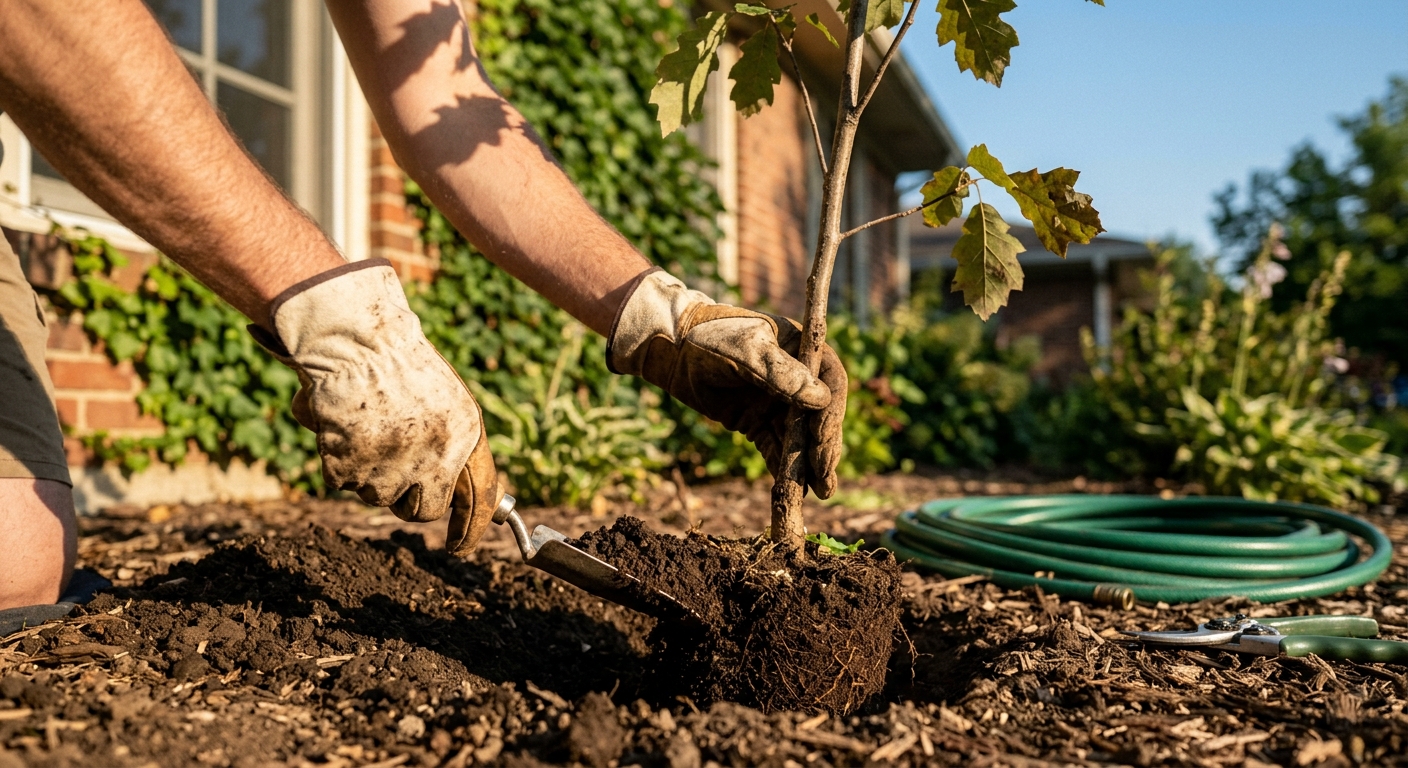
- Select a fast-growing deciduous shade tree for the west or southwest side of the home. Good options include red maple, tulip poplar, or green ash, which can grow 3 to 5 feet per year and provide meaningful shade within 5 to 7 years. Plant the tree 10 to 20 feet from the house depending on mature spread.
- Plant dense deciduous shrubs or a hedge row on the south side to shade lower windows and the foundation wall. Viburnums, native hollies, or ninebark can reach 6 to 8 feet tall within 4 years and provide excellent low-level shading.
- Add an evergreen windbreak of 3 to 5 arborvitae, white pine, or Eastern red cedar trees on the north or northwest side of the property. Space them 8 to 10 feet apart and plant at least 10 to 15 feet from the house to avoid root and moisture issues.
- Mulch all new plantings with 2 to 3 inches of wood chip mulch to retain moisture, regulate soil temperature, and reduce the reflective hardscape surface around your foundation.
- Replace or shade existing concrete or asphalt hardscaping on the south and west sides with groundcover plants such as creeping thyme or clover, which stay cool and add evapotranspiration cooling.
- Hire a certified arborist or landscape designer who has experience with energy-efficient landscaping. Ask specifically if they can assess solar angles, wind patterns, and existing tree health before recommending new plantings.
- Request a site analysis that identifies your home’s solar exposure by compass direction, existing shade gaps, prevailing summer and winter wind directions, and any soil or drainage issues that might limit plant selection.
- Review the proposed planting plan for both summer shading and winter solar access. Confirm that deciduous trees are proposed for the south and west sides rather than evergreens, which would block beneficial winter sun.
- Ask about fast-maturing native tree species suited to your USDA hardiness zone. Natives typically require less water and maintenance once established, reducing the long-term cost of the landscape.
- After installation, apply for any available utility rebates or state energy-efficiency incentives for landscape cooling. Several utilities in warm-climate states offer tree rebate programs ranging from $25 to $100 per tree.
- Schedule a follow-up assessment after two growing seasons to evaluate plant establishment and make any adjustments to the plan based on observed shade patterns.
Why It Works: The Benefits
DOE research shows strategic tree placement can cut air conditioning costs by 15 to 25% annually. On a $200 monthly summer electric bill, that translates to $30 to $50 in savings per month during peak cooling season.
Shading the west and southwest walls keeps afternoon temperatures lower, which means your AC cycles less during the hottest hours of the day. This reduces wear on the compressor and can extend equipment life by several years.
Trees and ground cover can lower the air temperature immediately surrounding your home by 2 to 9 degrees F through evapotranspiration, making outdoor spaces more comfortable and reducing heat entering through walls and windows.
Evergreen windbreaks on the north and northwest sides can reduce winter heating costs by 10 to 15% by blocking cold prevailing winds and reducing infiltration. Deciduous trees shed leaves in winter to allow passive solar gain where you actually want it.
Mature, well-placed trees add an estimated 10 to 15% to residential property values according to USDA Forest Service studies, meaning the investment pays dividends well beyond energy savings alone.
💰 Savings Impact by Action
A mature deciduous tree shading the west wall and roof can reduce afternoon cooling demand by up to 25% on the hottest days according to DOE research.
Exterior solar shades on west and south windows block 60 to 90% of solar heat gain at the glass, reducing whole-home cooling load by roughly 10 to 15%.
Trees and groundcover lower ambient air temperatures around the home by 2 to 9 degrees F, reducing the temperature of air the home exchanges with the outdoors.
Shading the outdoor AC condenser unit reduces the surrounding air temperature and improves condenser efficiency by 5 to 10% on peak summer afternoons.
Evergreen windbreaks on the north and northwest sides reduce cold-air infiltration in winter, cutting heating costs by 10 to 12% in climates with significant wind exposure.
🏠 Key Concepts Explained
The Science Behind It
Solar radiation is the primary driver of summer cooling loads in most American homes. When sunlight hits an unshaded dark roof or south-facing wall, that surface can reach 150 to 180 degrees F, compared to around 80 to 90 degrees F for a shaded surface. Heat then conducts through the building envelope into the living space, raising indoor temperatures and forcing your air conditioner to run longer cycles. Intercepting that radiation with a tree canopy before it ever reaches the structure is thermodynamically far more efficient than trying to remove the heat after it has entered.
Trees also cool the air around them through evapotranspiration, the process by which a tree pulls water from the soil and releases it as water vapor through tiny pores in its leaves called stomata. A single mature tree can transpire hundreds of gallons of water per day, consuming latent heat energy to do so and effectively cooling the surrounding air by 2 to 9 degrees F. This ambient temperature reduction lowers the temperature of the outdoor air your home interacts with, directly reducing conductive and convective heat transfer through walls and windows.
The seasonal geometry of the sun makes deciduous trees a near-perfect passive energy tool. In summer, the sun’s arc is high in the sky and a full leaf canopy intercepts 70 to 90% of incoming solar radiation. In winter, the sun rides low on the southern horizon and bare branches block only 30 to 40% of sunlight, allowing passive solar heat to warm south-facing windows when you actually want it. This built-in seasonal response is something no mechanical system can replicate, and it explains why deciduous trees on the south and west sides of a home are consistently cited by building scientists as one of the highest-return energy investments available to homeowners.
Frequently Asked Questions
▼ I planted trees three years ago but my cooling bills have not changed yet. Is something wrong?
Most trees take 5 to 10 years to reach a canopy size that delivers full shading benefit, though fast-growing species like silver maple or tulip poplar can make a noticeable difference in 4 to 5 years. Check that your trees are planted on the correct side of the home: west and southwest for afternoon shade is where you will see the biggest impact. If the trees are healthy and well-positioned, be patient; the savings will compound significantly as they grow.
▼ Can I do any of this as a renter without landlord permission?
Absolutely. Exterior solar shades and window film are renter-friendly options that require no permanent modification and can be removed when you move. Potted trees and large container plants placed on a patio or balcony facing west can provide partial shading at zero permanent impact. Shade sails attached to existing structures with removable hardware are another great renter option in the $80 to $200 range.
▼ How long before I see savings on my electric bill after planting?
You may see minor reductions in the first year or two from evapotranspiration cooling and partial shading, but meaningful bill reductions typically begin in years 4 to 7 as trees approach their mature canopy spread. Instant-impact strategies like exterior solar shades or window film show up on your very next bill. Combining quick fixes with long-term planting gives you savings now and growing benefits over time.
▼ Will trees or shrubs damage my foundation or sewer lines?
Root damage is a real risk if trees are planted too close to the structure. Keep large shade trees at least 15 to 20 feet from the foundation, and avoid planting any trees within 10 feet of sewer or water lines. Smaller ornamental trees and shrubs with non-invasive root systems can be planted 6 to 10 feet from the foundation safely. When in doubt, call 811 before digging and consult a certified arborist for site-specific advice.
▼ I live in a hot dry climate with water restrictions. Can I still use landscaping for cooling?
Yes, but choose drought-tolerant native trees adapted to your region such as desert willow, mesquite, or palo verde in the Southwest. These trees still provide shade and some evapotranspiration cooling while requiring minimal irrigation once established. Gravel is common in dry climates but contributes to heat gain; replacing it with decomposed granite in lighter colors or shading it with a canopy helps reduce radiant heat around the home.
Quick Tips
- Focus your first tree on the west or southwest side of the home. Afternoon sun from that direction is responsible for the majority of peak cooling demand between 2 and 6 PM.
- Choose trees native to your region when possible. Native species are adapted to local rainfall and soil, meaning lower watering costs and higher survival rates after planting.
- Shade your outdoor AC condenser unit with shrubs or a fence, but keep at least 18 to 24 inches of clearance around it. A shaded condenser runs 5 to 10% more efficiently because it rejects heat into cooler surrounding air.
- Use light-colored or reflective mulch and groundcover on the south and west sides of your home rather than dark gravel, which absorbs and re-radiates heat against your foundation all afternoon.
- If you cannot plant trees, window film applied to west and south-facing glass can block 50 to 70% of solar heat gain and costs $2 to $8 per square foot installed, with a payback period of 2 to 5 years.
Variations for Your Situation
- Apartment or Rental: Renters cannot plant in-ground trees but can place large potted trees or tall bamboo in containers on west-facing balconies or patios for immediate partial shading. Exterior solar shades and renter-safe window film costing $50 to $300 total are the most effective options and are fully reversible. Some landlords will agree to plant a tree if you propose it with the energy-saving data; it costs them nothing and improves the property.
- Tight Budget (under $50): Focus on repositioning existing outdoor furniture or a portable canopy to shade your most problematic west-facing window this season at no cost. Planting fast-growing annual vines like morning glory on a simple trellis against a west wall costs $5 to $15 in seeds and materials and can reduce wall surface temperature noticeably within one summer. Mulching bare soil around the foundation with wood chips from a tree service is often free and immediately reduces radiant heat gain.
- Older Home (pre-1980): Older homes typically have lower insulation levels and single-pane or older double-pane windows, meaning solar heat gain has an even larger proportional impact on cooling load. Prioritize shading the largest south and west-facing windows first, as the benefit per square foot of shaded glass is higher. Pair landscape cooling with low-e window film or exterior shutters on these homes for compounding savings, since reducing solar gain is more impactful than insulation upgrades alone when the envelope baseline is poor.