Tucked onto the side or top of your water heater is a small brass valve with a lever on top. It looks unimportant. It is not. The temperature and pressure relief valve, commonly called the T&P or TPR valve, is your water heater’s primary safety device. If the tank overheats or builds excessive pressure, this valve opens to release that pressure before the tank can rupture. A failed valve on an over-pressurized tank is not just a plumbing problem – it is a serious safety hazard.
The problem is that most homeowners never touch this valve from the day the water heater is installed until the day it fails. Sediment buildup, mineral deposits, and simple corrosion can cause the valve to seize in the closed position, meaning it would not open in an emergency. Worse, a valve that has been neglected for years can also fail in the open position when tested, meaning you will need to replace it immediately. Neither scenario is one you want to discover during an emergency.
This post walks you through why annual testing matters, how to do it safely yourself, when to replace the valve, and what signs indicate a bigger water heater problem. The test itself costs nothing and takes less than 5 minutes. The replacement valve costs $10 to $30 at any hardware store. This is one of the highest-value, lowest-effort maintenance tasks in your entire home.
What You’ll Need
Click on an item below to shop for the recommended items for this recipe on Amazon.
As an Amazon Associate, we earn from qualifying purchases.
How to Do It
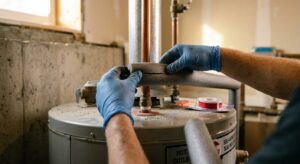
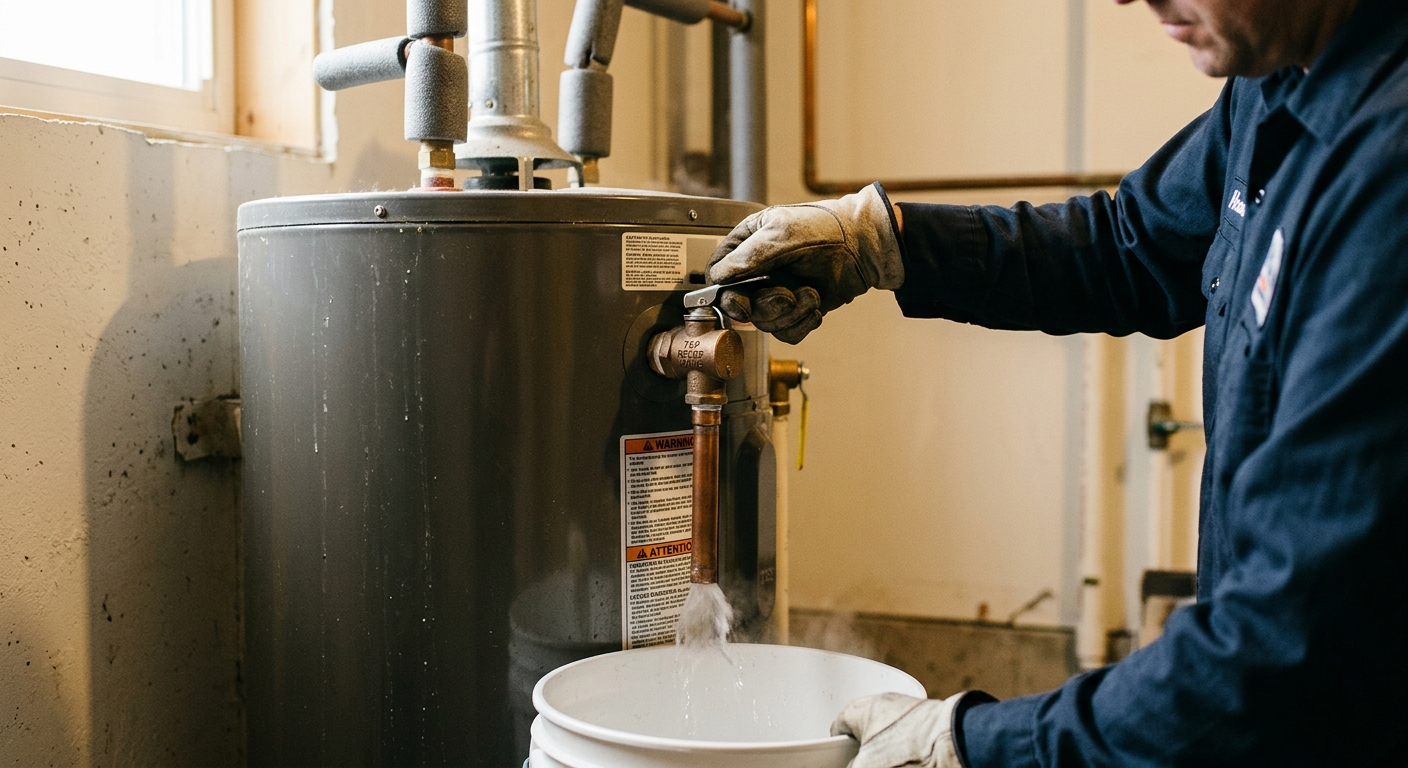
- Locate the TPR valve on the side or top of the water heater. It has a metal lever that flips up and a discharge pipe running downward from the valve outlet.
- Place a bucket under the discharge pipe outlet or confirm the pipe drains into a floor drain. You will be releasing a small amount of hot water.
- With the bucket in position, lift the test lever fully for 3 to 5 seconds. You should hear a rush of water or steam and see water discharge from the pipe. This confirms the valve opens.
- Release the lever and allow it to snap back to the closed position. The water discharge should stop completely within a few seconds.
- If the valve continues to drip after 30 to 60 seconds, it has failed to reseat. Mark the date on a piece of tape on the heater and replace the valve within 24 hours.
- Note any rust, corrosion, or mineral buildup around the valve body and write down the pressure rating stamped on the valve (typically 150 PSI at 210°F) so you can buy the correct replacement if needed.
- Purchase a replacement TPR valve that matches the pressure rating (150 PSI), temperature rating (210°F), and BTU rating on the label of your existing valve. Bring the old valve to the hardware store if unsure.
- Turn off the gas valve or flip the circuit breaker for the water heater. For gas, turn the control knob to the Pilot setting rather than fully off if you prefer, to avoid relighting the pilot.
- Shut off the cold water supply valve at the top of the water heater. Connect a garden hose to the drain valve at the base of the tank and drain 2 to 3 gallons to drop the water level below the TPR valve inlet port.
- Disconnect the discharge pipe from the old valve. It may be threaded, soldered, or secured with a push-fit connector. Use a pipe wrench to unscrew the old valve counterclockwise.
- Wrap 3 to 4 layers of PTFE thread tape clockwise around the threads of the new valve, then thread it in by hand and tighten with a pipe wrench to snug, typically one to two turns past hand tight. Do not overtighten.
- Reconnect or replace the discharge pipe so it terminates pointing downward and ends within 6 inches of the floor or above a drain. Turn the water supply back on, restore power or gas, and test the new valve using the Quick Fix steps above.
- Schedule an annual water heater service call with a licensed plumber. Many companies offer a combined inspection that includes TPR valve testing, anode rod inspection, sediment flush, and burner or element check.
- Ask the plumber to test system water pressure at the service valve. If pressure exceeds 80 PSI, request installation of a pressure reducing valve or expansion tank, which costs $150 to $350 installed and protects both the water heater and the TPR valve from chronic overpressure.
- Request a written inspection report noting the age of the water heater, condition of the anode rod, and whether the TPR valve passed the lift test. Use this report as documentation for home sale disclosures or insurance purposes.
Why It Works: The Benefits
A seized TPR valve on an over-pressurized tank can result in a rupture or, in extreme cases, a steam explosion. Annual testing confirms the valve will function in an actual emergency, protecting your home and family.
A failed water heater that floods a basement or utility room typically causes $500 to $4,000 in damage depending on flooring and contents. Homeowners insurance may not cover damage attributed to lack of maintenance on a component with a clear service requirement.
Catching a faulty TPR valve early, combined with annual sediment flushing, can add 2 to 4 years to a tank water heater’s service life, deferring a $700 to $1,500 replacement cost.
Properly maintained and correctly piped TPR valves are required by the International Plumbing Code and most local codes. A missing or non-functional valve can become a problem during a home sale inspection, potentially delaying closing or requiring emergency repairs at the worst possible time.
Testing the valve annually gives you a chance to spot corrosion, water staining around the valve body, or a weeping seat – all early signs that the water heater itself may be nearing end of life, giving you time to plan a replacement rather than react to an emergency.
💰 Savings Impact by Action
Annual testing catches failed valves before an emergency, preventing $500 to $4,000 in water damage in 95% of cases where tank failure is caused by a stuck valve.
Combining TPR valve testing with annual sediment flushing extends average tank water heater lifespan by 2 to 4 years, a roughly 20% increase over an unmaintained unit.
Routine valve inspection catches corrosion and pressure issues early, reducing the chance of unplanned emergency replacement (which costs 30% more on average than a planned swap).
🏠 Key Concepts Explained
The Science Behind It
Water is nearly incompressible, which is what makes pressure buildup inside a sealed tank so dangerous. When your water heater heats 40 to 50 gallons of water, that water expands in volume. In a home with a closed plumbing system (which includes any home with a pressure reducing valve, backflow preventer, or check valve on the main line), that expanded volume has nowhere to go. Pressure climbs. The water heater tank is a pressure vessel rated to hold this safely up to 150 PSI, but if the thermostat sticks or the gas valve malfunctions and the water overheats past 212°F, it can flash to steam – and steam occupies roughly 1,700 times the volume of liquid water at atmospheric pressure.
The TPR valve is engineered to interrupt this process. It is a spring-loaded valve calibrated to open when pressure exceeds 150 PSI or temperature exceeds 210°F at the valve sensor. When either threshold is crossed, the spring compresses, the valve seat lifts, and the over-pressurized water or steam is expelled through the discharge pipe before the tank can rupture. This is not a theoretical risk. Water heater explosions, while rare, do occur, and virtually every investigated case involves either a missing, modified, or non-functional TPR valve.
The reason annual testing matters from a materials science standpoint is that the valve seat is made of rubber or synthetic elastomer, and the valve body is brass operating in a warm, mineral-rich environment. Over time, calcium carbonate and magnesium deposits from hard water accumulate on the seat and in the valve orifice. The spring itself can weaken under constant thermal cycling. A valve that looks fine externally may have a seat that has bonded shut with scale, meaning it would not open at 200 PSI any more than a rusted hinge would swing. The annual lift test physically breaks that scale bond, verifies spring tension, and confirms the seat still seals cleanly – all in under 5 minutes.
Frequently Asked Questions
▼ My TPR valve is dripping after I tested it. Do I have to replace it right away?
Yes, replace it within 24 hours. A valve that weeps after testing has a failed seat seal and will not reseat reliably under emergency pressure. Replacement valves cost $10 to $30 at any hardware store and take about 30 to 60 minutes to swap out using the DIY approach described above. Do not tape over or plug the discharge pipe as a temporary fix – that creates a dangerous pressure hazard.
▼ What if I lifted the lever and nothing came out?
If no water discharged at all, the valve is likely seized shut from scale or corrosion and must be replaced immediately. A valve that will not open manually will not open in a pressure emergency either. Turn off the heater, drain a few gallons from the tank, and replace the valve before returning the heater to service.
▼ My water heater is in a finished basement. Can I still test it without making a mess?
Yes. Position a bucket directly under the end of the discharge pipe before lifting the lever. Most TPR valve tests release only a cup or two of water, so a standard 5-gallon bucket is more than sufficient. If the discharge pipe terminates into a floor drain, you do not need a bucket at all. The key is confirming water flows freely through the pipe before you start, so there are no blockages that would back water up into the finished space.
▼ How do I know if my water heater pressure is too high even when the valve is fine?
Buy an inexpensive water pressure gauge ($8 to $15) that screws onto a hose bib or laundry faucet and check your supply pressure. Readings consistently above 80 PSI put chronic stress on your TPR valve, tank welds, and all other plumbing fixtures. The fix is a pressure reducing valve installed on the main line, which costs $150 to $350 installed by a plumber and protects your entire plumbing system.
▼ Can renters test or replace a TPR valve in a rental unit?
Renters should not replace a TPR valve themselves, as the water heater is the landlord’s property and any work that goes wrong becomes a liability issue. However, you can and should test the valve using the lift test and immediately notify your landlord or property manager in writing if it fails to operate or drips afterward. Document it with a photo and dated message so there is a record of the maintenance request.
Quick Tips
- Test the TPR valve every year on a memorable date, like when you change HVAC filters or smoke detector batteries, so it never gets skipped.
- If your home has hard water above 120 mg/L (7 grains per gallon), consider replacing the TPR valve every 3 to 5 years proactively rather than waiting for it to fail a test.
- Check that the discharge pipe is made of metal, not PVC or CPVC. Flexible plastic pipe can melt during a high-temperature discharge event and is prohibited by most plumbing codes for this application.
- If the valve drips constantly even when not being tested, do not ignore it or wrap it in tape. A weeping valve usually indicates chronic high pressure in the system and should be evaluated by a plumber who can check for a failed expansion tank or excessive incoming water pressure.
Variations for Your Situation
- Apartment/Rental: Renters typically cannot access or service a shared or in-unit water heater without landlord permission. Test the valve if it is accessible and notify your landlord in writing if it drips or fails to open. Include a photo and the date in your message. If the landlord does not respond within 30 days, escalate through your local housing authority, since a non-functional TPR valve is a code violation in most jurisdictions.
- Tight Budget (under $50): The annual test is completely free and takes 5 minutes. If the valve fails and needs replacement, a standard 3/4-inch 150 PSI TPR valve costs $10 to $20 at a big-box hardware store. PTFE tape costs under $2. You can complete the full replacement for under $25 with no special tools beyond a pipe wrench. Do not defer replacement to save money – a $15 valve protecting a $1,000 appliance is always worth it.
- Older Home (pre-1990): Water heaters in older homes may have original TPR valves that have never been tested, corroded steel discharge pipes, or no discharge pipe at all. Before lifting the lever, check that a discharge pipe is present and intact. If the pipe is missing, corroded through, or made of plastic, have a plumber install a proper metal discharge pipe before testing. On tanks older than 10 years, consider having a plumber do the first valve replacement rather than DIY, since old threaded ports can corrode and may need professional attention to avoid damaging the tank.