A converted garage is one of the most common home improvement projects in America, adding square footage without the cost of a full addition. But there is a catch: garages were built to store cars, not to keep people comfortable. They typically have uninsulated walls, a concrete slab floor with no thermal break, a massive garage door that leaks air like a sieve, and no connection to the home’s central HVAC system. The result is a room that hits 95°F in July and drops below 50°F in January, no matter how hard a space heater works.
The good news is that the physics working against your converted garage are well understood, and the fixes are straightforward. This post walks you through a layered approach: starting with zero-cost air sealing tricks you can do today, moving into a weekend DIY insulation project, and covering when it makes sense to bring in a professional for a dedicated mini-split system. Each layer compounds on the last, so even partial improvements deliver real comfort and real savings.
Whether your garage conversion is already finished and just uncomfortable, or you are planning one from scratch, this guide gives you the building science context and the specific steps to make it work. You will find real cost ranges, payback periods, and temperature improvement numbers so you can decide exactly how far to take the project.
What You’ll Need
Click on an item below to shop for the recommended items for this recipe on Amazon.
As an Amazon Associate, we earn from qualifying purchases.
How to Do It
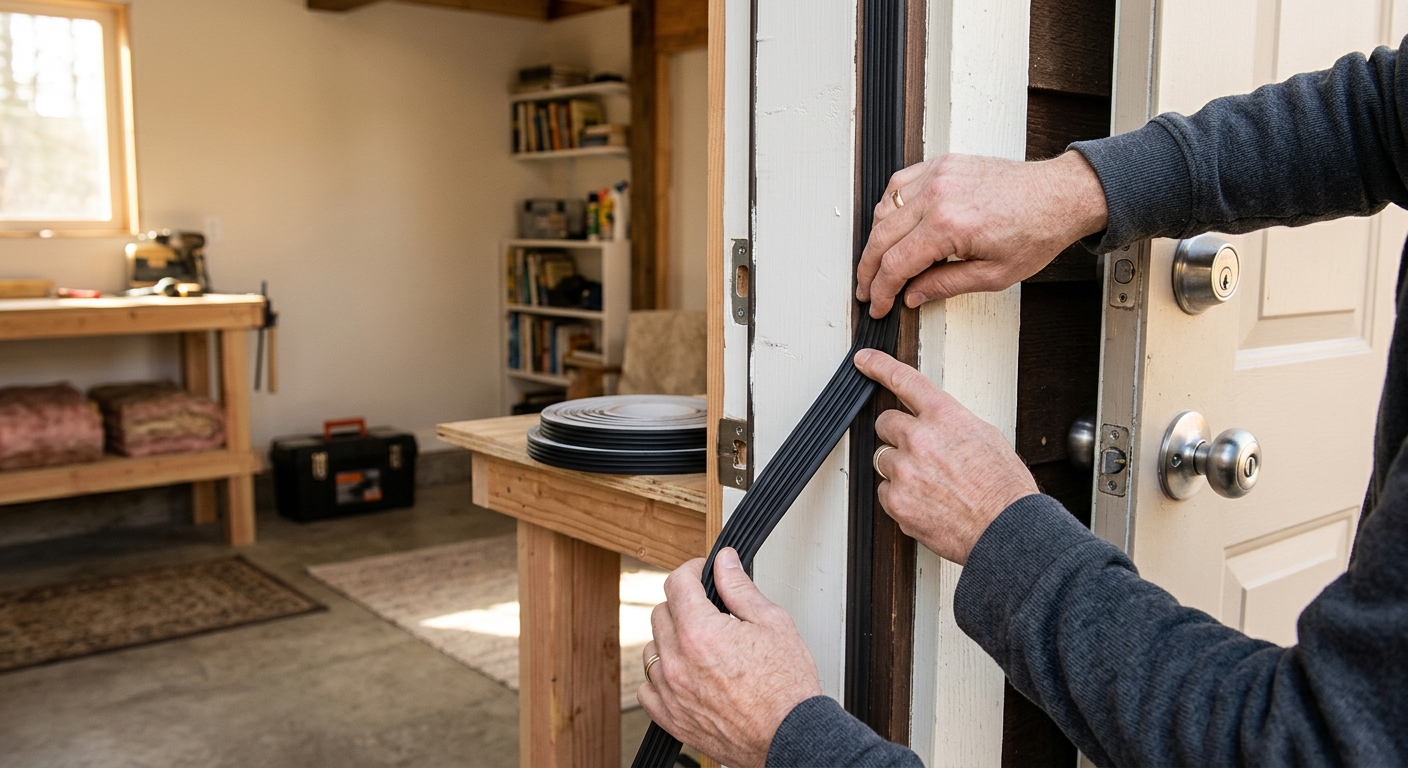
- Inspect the garage door perimeter on a sunny day: hold a stick of incense or a lighter near the edges and watch for flame movement indicating air leaks. Replace the bottom door sweep if it is cracked or stiff, and install foam compression tape along the side and top jambs where the door meets the frame.
- Locate the gap between the top plate of the garage wall and the ceiling above. In many conversions this area is left open, creating a direct conduit for attic air to enter. Use a can of low-expansion spray foam to seal any gaps larger than 1/4 inch, and acoustic caulk for smaller cracks along drywall seams.
- Seal around all electrical outlets and switch boxes on exterior walls using foam outlet gaskets, which cost about $5 for a pack of 10 and take 30 seconds each to install behind the cover plate.
- Apply paintable latex caulk along the joint where the wall meets the slab floor on all exterior walls. This gap is often overlooked and can be responsible for significant cold air infiltration in winter.
- Check the door between the garage and the main house. Install a door sweep on the bottom and weatherstripping on all three sides of the jamb if not already present. This protects the rest of your home from temperature and air quality issues in the converted space.
- If walls are unfinished, install R-13 or R-15 fiberglass or mineral wool batt insulation between studs on all exterior walls. For finished walls that feel cold, adding 1-inch rigid foam board (R-5) over the existing drywall before re-drywalling is the most effective retrofit option and eliminates thermal bridging at the studs.
- Address the garage door itself if it is still in place and uninsulated. Purchase a garage door insulation kit (fiberglass or foam panels sized for your door sections) for $50 to $150. These slip or glue into the door frame sections and add R-8 to R-10, dropping summer afternoon surface temperatures by 20°F or more.
- Install 2-inch extruded polystyrene (XPS) rigid foam panels directly on the concrete slab, then lay 3/4-inch plywood subfloor panels over the top, glued and screwed together. This combination delivers approximately R-10 underfoot, eliminates cold-floor complaints, and provides a nailing surface for finished flooring.
- Insulate the ceiling to at least R-30 if there is attic space above. Blown-in cellulose is the easiest DIY option: you can rent a blower from most home improvement stores for free when you purchase the required bags. For a 400 square foot space, budget about 25 to 30 bags of cellulose.
- Once insulation is complete, use a box fan and the blower door test shortcut: on a cold or windy day, close all windows and doors, turn on kitchen and bath exhaust fans to depressurize the house slightly, then walk the perimeter of the garage with your hand or a stick of incense to find any remaining gaps the insulation did not cover. Seal those with caulk or spray foam before finishing the walls.
- Calculate the required BTU capacity before purchasing. A well-insulated converted garage needs approximately 15 to 20 BTUs per square foot. For a 400 square foot space with proper insulation, a 9,000 BTU (0.75-ton) unit is usually sufficient. An undersized unit will run constantly and never reach setpoint; an oversized one will short-cycle and leave the space humid.
- Choose a single-zone ductless mini-split from a reputable brand such as Mitsubishi, Daikin, or LG. Look for a unit with a SEER rating of at least 18 and a heating mode that operates efficiently down to 5°F or lower (called a hyper-heat or cold-climate heat pump) if you are in a northern climate.
- Hire a licensed HVAC contractor to install the unit. The installation involves mounting the indoor air handler, running refrigerant lines through a 3-inch hole in the wall to the outdoor compressor, and connecting to a dedicated 240V circuit. Most installations take 4 to 8 hours.
- Set the mini-split to maintain 60°F in winter when the space is unoccupied, and 78°F in summer. Modern inverter-driven mini-splits are 25 to 40% more efficient than resistance electric heaters and window AC units, meaning they cost less to operate even though the upfront cost is higher.
- Register your unit with the manufacturer immediately after installation to activate the full warranty, which is typically 7 to 12 years on parts when professionally installed and registered.
Why It Works: The Benefits
A properly insulated and conditioned converted garage can maintain 68 to 72°F interior temperatures even when outdoor temps swing between 10°F and 100°F, turning a seasonal bonus room into a full-time living, working, or gym space.
Air sealing alone reduces conditioned air loss by up to 20%, and adding R-13 batt insulation to previously bare walls cuts heat transfer through those walls by roughly 75%, meaning your heating or cooling equipment runs significantly fewer hours.
The same insulation and air sealing that blocks heat transfer also blocks sound. Homeowners frequently report a 30 to 50% reduction in perceived street or driveway noise after properly insulating a converted garage.
A properly finished and conditioned bonus room or bedroom adds an average of $10,000 to $25,000 in appraised home value according to Remodeling Magazine’s Cost vs. Value report, with the highest returns in markets where square footage is at a premium.
Sealing the slab and walls against vapor infiltration eliminates the musty smell and condensation that plagues most garage conversions, protecting both the structure and any belongings or furniture stored in the space.
💰 Savings Impact by Action
Sealing the garage door perimeter, wall-to-slab joint, and outlet penetrations reduces uncontrolled air exchange by up to 20%, directly cutting heating and cooling runtime.
Adding R-15 insulation to previously bare exterior walls reduces conductive heat loss through those walls by approximately 75%, cutting the total space heating load by 30 to 35%.
Installing 2-inch rigid foam under a plywood subfloor breaks the thermal connection to the ground, eliminating 10 to 15% of winter heat loss in the average slab-on-grade conversion.
A high-efficiency heat pump mini-split with COP of 3.0 uses 65% less electricity than a resistance space heater to deliver the same amount of heat.
Adding an R-8 insulation kit to an uninsulated steel garage door reduces radiant and conductive heat gain through the door by up to 12% of total space cooling load on peak summer days.
🏠 Key Concepts Explained
The Science Behind It
A converted garage is essentially a big thermal short-circuit in your home’s building envelope. Every material in a traditional garage, concrete, steel door, single-layer wood framing, was chosen for durability and cost, not thermal resistance. Heat moves through these materials via three mechanisms simultaneously: conduction (direct heat transfer through solid materials), convection (air movement carrying heat through gaps and cracks), and radiation (infrared energy traveling through air from warm surfaces to cool ones). Solving the comfort problem requires interrupting all three pathways, not just one.
The air sealing steps target convection, which is actually the largest single source of heat loss in most garage conversions, accounting for 30 to 40% of total energy loss according to Department of Energy research. Air moves relentlessly from high pressure to low pressure and from warm to cold, and every gap in the garage envelope is a highway for that movement. The insulation steps target conduction by increasing the thermal resistance (R-value) of walls, floor, and ceiling. R-value is additive, so combining 1 inch of rigid foam (R-5) with a batt (R-13) gives you R-18 total, which cuts conductive heat flow to less than one-eighteenth of what an uninsulated wall would lose.
The mini-split addresses the third challenge: once the envelope is tight and well-insulated, you need a conditioned air source sized correctly for the new, smaller load. A heat pump mini-split works by moving heat rather than generating it. In heating mode, it extracts heat energy from outdoor air (even at temperatures as low as negative 13°F with modern cold-climate units) and concentrates it indoors. This process delivers 2 to 3 units of heat energy for every unit of electrical energy consumed, measured as a Coefficient of Performance (COP) of 2.0 to 3.5. By comparison, a standard electric resistance space heater has a COP of exactly 1.0. That difference is why mini-splits cost 50 to 70% less to operate than plug-in heaters for the same amount of warmth.
Frequently Asked Questions
▼ I insulated my converted garage but it is still cold in winter. What am I missing?
The most common culprit is an uninsulated or poorly insulated garage door still in place, combined with floor heat loss through the concrete slab. Check the door first: an uninsulated steel door loses heat at roughly R-2, which overwhelms even well-insulated walls. Add a door insulation kit and a tight bottom sweep. Then address the slab with rigid foam and a plywood subfloor. These two fixes together account for the majority of remaining heat loss in most garage conversions.
▼ Can I just extend my home’s existing ductwork into the converted garage?
In most cases, no. Your central HVAC system was sized for the original conditioned square footage, and adding a garage conversion without upgrading the system creates an overload that reduces efficiency and can shorten equipment life. You would also need to run new duct runs, which often means cutting through finished areas of the home. A dedicated mini-split is almost always the more cost-effective and code-compliant solution, and it gives you independent temperature control for the space.
▼ My converted garage smells musty even after insulating. What causes that?
Musty odors almost always point to moisture migrating up through the concrete slab or through unprotected walls. Concrete is porous and allows ground moisture to wick upward continuously. If you did not install a vapor barrier (6-mil polyethylene sheeting) before adding insulation or flooring, moisture is now being trapped inside the assembly. The fix is to remove flooring, apply a penetrating concrete sealer or epoxy coating directly to the slab, install poly sheeting, and then re-lay the subfloor. Address this before the moisture causes mold inside the wall or floor assembly.
▼ How do I know what size mini-split to buy for my converted garage?
The general rule is 15 to 20 BTUs per square foot for a well-insulated space. A 400 square foot garage conversion needs roughly 6,000 to 8,000 BTUs, making a 9,000 BTU single-zone unit the right fit with a small buffer. If the space has large south or west facing windows, or if you are in a climate with sustained temperatures above 95°F or below 10°F, add 10 to 15% to that estimate. Always round up to the next standard size rather than down, but do not go more than one size above the calculation or the unit will short-cycle.
▼ Do I need a building permit to insulate and condition a converted garage?
For the mini-split installation, almost certainly yes: electrical work on a new dedicated circuit and refrigerant line installation require permits in most jurisdictions. For insulation and air sealing alone, it depends on your municipality, but if you are changing the use of the space from garage to habitable room, a permit is typically required regardless of what work you do. Contact your local building department before starting. Unpermitted habitable conversions can complicate homeowner’s insurance claims and create issues when you sell the home.
Quick Tips
- Paint the interior walls and ceiling with a light color before finishing the conversion. Light surfaces reflect radiant heat in summer and improve the effectiveness of any insulation by reducing the temperature differential across the insulation layer.
- Install a ceiling fan rated for damp locations if the converted garage has any connection to outside air. Running it in reverse (clockwise) at low speed in winter pushes warm air that has risen to the ceiling back down to occupant level, reducing the heating load by 5 to 10%.
- If you keep the garage door as a feature of the conversion (for a studio or workshop look), add magnetic flexible foam tape to the inside perimeter to create a tighter seal when closed, and consider hanging an insulated curtain on the interior side for added R-value without permanent changes.
- Use rigid mineral wool (Rockwool Comfortboard) instead of XPS foam for exterior wall applications where fire code is a concern. Mineral wool is fire-resistant, vapor-permeable, and provides equivalent R-value without the environmental concerns associated with some foam blowing agents.
Variations for Your Situation
- Tight Budget (under $100): Focus entirely on the air sealing approach. Replace the garage door bottom sweep ($15 to $25), install foam compression tape on the door perimeter ($10), add outlet gaskets to all exterior wall outlets ($5), and seal the wall-to-slab joint with latex caulk ($5). This combination alone can reduce heating and cooling costs in the space by 15 to 20% and noticeably reduce drafts at zero risk and minimal skill requirement.
- Workshop or Gym Use (not a bedroom): If the space does not need to meet habitable room code requirements, you have more flexibility. Install a radiant propane or electric panel heater on the ceiling for instant spot heat when you are actively using the space, and pair it with a portable evaporative cooler (swamp cooler) for dry climates or a window AC unit for humid climates. This approach costs $300 to $600 total and avoids the permit and HVAC contractor requirement while still delivering a functional workspace.
- Older Home (pre-1980 garage): Garages built before 1980 often have thinner wall framing (2×4 at 16 inches on center at best) and no original insulation whatsoever in the walls or ceiling. Prioritize adding continuous rigid foam to the interior face of all exterior walls before adding batts, because the older framing provides less cavity depth and more thermal bridging per square foot than modern construction. Also check for asbestos in any existing floor tiles or ceiling texture before disturbing surfaces: tiles with a 9×9 inch pattern are a common indicator and should be tested before removal.